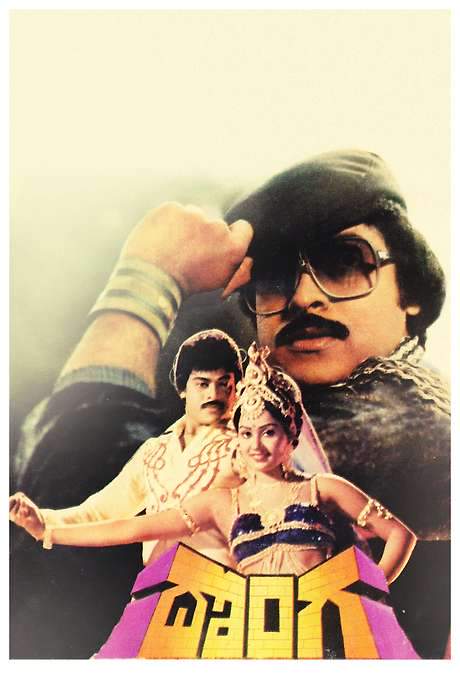
Veerendra is a figure in the city who draws both admiration and curiosity. Though he makes a living as a thief, he operates according to a personal code and consistently shows kindness to the poor, earning him a strange respect from many who cross his path. His reputation sets the stage for a story where crime, conscience, and opportunity intersect in surprising ways, and where the line between rogue and protector grows increasingly blurry.
Into this world step Suryam and Chandram, a father-and-son duo deeply entrenched in illicit activities. Their presence helps establish the corrupt backdrop that frames Veerendra’s choices and the consequences that follow. Against this shadows-filled landscape, Madhavi, a lawyer, enters the narrative. Madhavi is drawn to Veerendra not by romance alone but by a perception of his underlying humanity, a belief that even a thief can have a conscience and a touch of mercy for those who are ignored by the system. Her perspective introduces a moral counterpoint to Veerendra’s charisma and the criminal world around him.
The city’s balance is further disrupted when Vijaya, a friend of Madhavi, arrives as a police inspector. Vijaya brings a disciplined, no-nonsense energy to the tale, warning Veerendra about the risks of his activities while also sensing the complexity of his motives. The dynamic among the three women—Madhavi’s quiet support, Vijaya’s authoritative stance, and Veerendra’s enigmatic charm—creates a tension that propels the plot forward without easy answers.
The turning point comes when Veerendra steals a crucial piece of evidence from Gannayya, a man whose corruption mirrors the broader rot in the system. The stolen item contains the full details of Suryam and Chandram’s illicit operations, and Veerendra hands it over to inspector Vijaya. This act, framed as both a practical move to expose wrongdoing and a gesture of trust, earns Vijaya’s endorsement and sympathy. Her impression of him deepens as she recognizes the complexity behind his surface bravado, while Madhavi’s devotion remains steadfast, even as her own feelings take a back seat to a friend’s happiness.
As the narrative unfolds, the couple of songs that punctuate Veerendra’s life become a symbolic bridge between two paths. Veerendra’s plan to marry Vijaya materializes, casting a hopeful light on a future that seems possible despite the murky present. Yet Madhavi chooses selflessness, sacrificing her own quiet, unspoken love for the sake of her friend’s happiness. This emotional triangle is handled with a restrained tenderness, underscoring the film’s emphasis on integrity, loyalty, and the costs of staying true to one’s principles.
Ultimately, Veerendra makes a drastic turn toward accountability. He surrenders to the police and serves time in jail, a period that becomes a crucible for transformation. Inside, he dedicates himself to study and self-improvement, laying the groundwork for his later rebirth. Upon his release, he reenters the city not as a mere outlaw but as a determined force against anti-social elements, operating with a firm resolve and an unmistakable authority. His commitment to order is recognized with a prestigious honor—the coveted Sword of Honour—a tangible symbol of the journey from evasion to enforcement.
The film ends on a note that blends redemption with realism. Veerendra’s evolution from a well-liked thief to a disciplined guardian of the public trust illustrates how personal reform can reshape a life and touch the lives of those who stood by him. The story remains grounded in human complexity: it invites viewers to consider the motives behind crime, the toll of sacrifice, and the possibility that even imperfect choices can lead to a greater good when guided by conscience and courage.