Plot Explained Spoilers guaranteed!
Plot Explained

Browse by genre

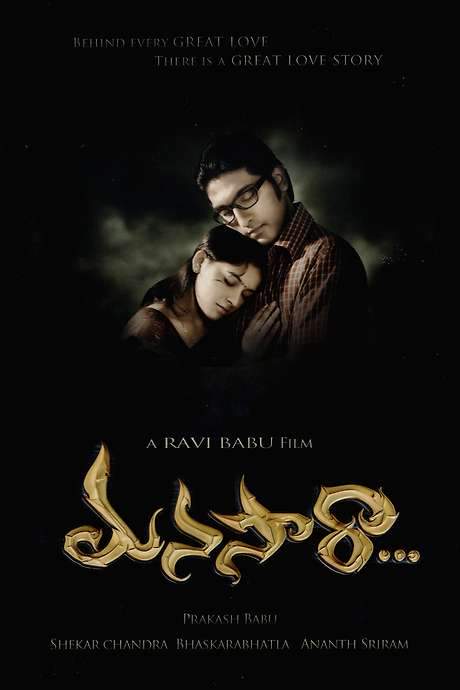
Manasara… (2010) movie poster

Plot Summary

Manasara… (2010) Plot Summary Explained

Release, runtime and language
2010 · More mins · Telugu
Loading streaming availability…
Directed by
Ravi Babu
Starring
Vikram, M. S. Narayana, Bhanuchander, Sri Divya, Annapoorna

A magnificent love story that tests the emotional strength of true love when it is pitted against the brutal force of the martial art, Kalaripayittu.

On this page (5)
  1. 1 Where to watch
  2. 2 What happens: full plot
  3. 3 Plot questions answered
  4. 4 Movie threads
  5. 5 Every angle
Loading streaming availability…

Full plot summary · contains spoilers

What Happens in Manasara…: Full Plot Summary

The whole story of Manasara… (2010) explained, from the opening scene to the final frame: every key event, every twist and what it all adds up to. Read it as a quick recap before the sequel, to check a scene you missed, or to finally understand what really happened.

In Rajapalayam, a Kerala village where time seems to stand still, life unfolds under a maternal, ritualistic code where honor sits high and the sword stands as both symbol and guardian of justice. The people breathe Kalaripayittu as their god, their life, and their law, and they largely keep the outside world at bay. Vikram and his family move here when his father is transferred, bringing a fresh presence into a tightly woven community rooted in age-old traditions.

Anjali is the village’s gentle and spirited belle, a teacher who dedicates her days to helping blind children discover the world around them. Vikram falls for her at first glance, yet he is unsure whether his ordinary looks could ever win the heart of a woman like her. The village’s steadfast mentor, Krishnan Kutty, offers him a blunt piece of wisdom: true charm comes from the heart, not the face. “Show her your heart, not your face,” Kutty counsels Vikram, and the newfound resolve leads Vikram to adopt a quiet, selfless persona to assist Anjali in moments of need. As his silent, good deeds accumulate, Anjali’s feelings begin to bloom, and she finds herself drawn to the kindness she sees in him.

Trouble soon shadows their budding romance. Anjali’s cunning step-mother schemes to push the young woman toward Rajan, the national Kalaripayittu champion, a formidable fighter whose charm hides a ruthless streak when it comes to women. Rajan is also the brother of Anjali’s step-mother, making the conflict intensely personal. When the couple’s relationship is exposed, Anjali is confined at home, and Rajan humiliates Vikram in a cruel public display—forcing him to lick his sandals to prove his cowardice in front of Anjali. The event shatters Vikram’s sense of belonging and prompts the family to prepare to leave the village at once.

Krishnan Kutty steps in again, calling a meeting of the elders to argue the case for love and choice. He reminds them that, in a society that places maternal values at the center, a girl’s wishes should be respected. The elders initially decree that Vikram is an outsider who must forget the girl, but after much persuasion they soften their stance and propose a dramatic test: the girl’s hand will go to the winner of a Kalaripayittu bout between Vikram and Rajan. The challenge pits a newcomer against the reigning champ, and the village agrees to let the bout settle their fate.

Training intensifies on opposite ends of the ridge. Vikram is mentored by [Krishnan Kutty], who has his own motives and a history tied to the discipline, while Rajan is trained by Anjali’s father, a man who shares a past with Kutty and whose elder-journaled grudges add layers to the rivalry. Both men have roots in the same master’s teachings, lending a personal edge to the competition beyond romance. The stage is set for a grueling ten-round showdown in Kalaripayittu—the ultimate test to decide who will win Anjali’s hand.

The ten rounds, fierce and unforgiving, combine skill, strategy, and ritual, with each strike carrying the weight of tradition and the hope of a future together. The arena becomes a crucible where pride, love, and loyalty collide, and every moment pushes Vikram and Rajan to their limits. The bloody climax of the sport will determine not only who claims Anjali’s heart but also how two families move forward in a world that still reveres custom over convenience.
Last updated: November 22, 2025 at 15:59

Was this helpful?

Plot questions answered

Manasara… Plot Explained: Your Questions Answered

The questions people ask most about Manasara… (2010): what happens in the confusing scenes, why the characters do what they do, the twists, hidden details and what the ending means. Each answer contains spoilers.

Q1

Why did Rajan target Vikram so aggressively after discovering his relationship with Anjali?

Rajan, Anjali's step-mother's brother and the village's national Kalaripayittu champion, had personal stakes in controlling Anjali's future. His step-sister had been scheming to marry Anjali off to Rajan, making Vikram's romance a direct threat to those plans. Additionally, as the community's proud champion, Rajan saw an outsider winning Anjali's heart as a personal insult to his status and honor.

Foreshadowing: Early scenes establish Rajan as someone whose charm hides a ruthless streak when it comes to women, hinting at his later cruelty.

  • rajan
  • anili
  • villain
  • motivation
  • jealousy
  • champion
Q2

Why did the village elders agree to settle the marriage dispute through a Kalaripayittu duel?

After Krishnan Kutty intervened and argued that a girl's wishes should be respected in a society that prides itself on maternal values, the elders needed a compromise. The duel served as a traditional solution that allowed both suitors to fight fairly while giving the village a ritualized way to resolve the conflict without outright rejecting their customs. The winner would earn Anjali's hand legitimately according to tradition.

Foreshadowing: Kutty's earlier argument about respecting the girl's choice created the moral foundation for the elders to accept this unusual compromise.

  • elders
  • tradition
  • duel
  • marriage
  • settlement
  • village customs
Q3

How could Vikram, an outsider with no Kalaripayittu background, stand a chance against champion Rajan?

Vikram trained intensively under Krishnan Kutty, who had his own history with the discipline and knew the art deeply. The story implies both fighters were disciples of the same master, making their competition a clash between two branches of the same tradition. Additionally, the bout was framed as a test of heart and courage, not just technical skill, suggesting that determination and love could level the playing field against superior experience.

Foreshadowing: The timeline notes that both men trained with disciples of the same master, creating a personal edge to the competition beyond romance.

  • vikram
  • rajan
  • training
  • fighting
  • outsider
  • champion
Q4

Why was Vikram publicly forced to lick Rajan's sandals after their confrontation?

Rajan orchestrated this brutal public humiliation to crush both Vikram's spirit and Anjali's affection for him. By forcing Vikram to lick his sandals in front of Anjali, Rajan intended to demonstrate that Vikram was a coward unworthy of love. The act was designed to publicly shame Vikram and break the couple apart, while asserting Rajan's dominance over the outsider in the village hierarchy.

Foreshadowing: Rajan was described as having a ruthless streak that emerges when it comes to women, foreshadowing this cruel display of power.

  • humiliation
  • public shame
  • rajan
  • vikram
  • cowardice
  • abuse
Q5

What motivated Krishnan Kutty to help Vikram win Anjali's hand against a local champion?

Krishnan Kutty served as Vikram's mentor throughout the story, offering guidance on both love and life. His motivation appears rooted in his belief that love should trump social status and that Vikram's sincerity deserved a fair chance. Kutty's intervention with the elders and his willingness to train Vikram suggest he valued the principle of choice over rigid tradition, acting as a moral compass who saw something worthy in the outsider.

Foreshadowing: Kutty's earlier advice to Vikram, 'Show her your heart, not your face', established his role as a wise mentor invested in Vikram's success.

  • krishnan kutty
  • mentor
  • vikram
  • guidance
  • support
  • motivation
Q6

What role does Kalaripayittu play in Rajapalayam's society and justice system?

Kalaripayittu is depicted as the spiritual and legal backbone of Rajapalayam, it is described as the villagers' god, life, and law. The martial art serves not just as combat training but as a mechanism for resolving disputes and determining fate. When traditional methods fail, the community turns to a Kalaripayittu bout as the ultimate arbiter, believing the outcome reflects divine will and cultural values.

Foreshadowing: The opening establishes the village as one where the sword stands as both symbol and guardian of justice, making the duel a natural narrative conclusion.

  • kalaripayittu
  • village
  • tradition
  • justice
  • martial art
  • customs
Q7

Why did Anjali's father agree to train Rajan for the duel against Vikram?

Anjali's father was tasked with training Rajan, despite knowing his character flaws, likely because of his obligation to the family and village traditions. The timeline reveals there were elder-journaled grudges between Anjali's father and Krishnan Kutty, suggesting complex personal history. This created a parallel rivalry, while Vikram trained under Kutty, Anjali's father prepared the man who sought to take her from someone else.

Foreshadowing: The narrative hints at past tensions between the two trainers, adding layers to the competition beyond the romantic triangle.

  • anjali's father
  • training
  • rajan
  • rivalry
  • obligation
  • family
Q8

Why did Vikram mask his appearance while courting Anjali instead of revealing himself directly?

Vikram initially felt insecure about his ordinary looks and believed Anjali would never notice him. Following Krishnan Kutty's advice that 'true charm comes from the heart, not the face,' Vikram chose to help Anjali anonymously. This selfless approach was meant to prove his character through actions rather than appearance, allowing Anjali to fall in love with his kindness before knowing his looks.

Foreshadowing: Vikram's early insecurity about his appearance establishes his motivation for the masked approach and makes his eventual reveal more meaningful.

  • vikram
  • anjali
  • masks
  • courtship
  • deception
  • heart over looks
Q9

Why was Vikram's family ordered to leave the village after their relationship was discovered?

After Rajan exposed the romance and publicly humiliated Vikram, the elders considered Vikram an outsider who had violated community norms by pursuing a local girl. The ancient codes of the village closed ranks against the outsider, and the family was sanctioned to leave as punishment for defying tradition. This harsh decree represented the village's rigid social order in action.

Foreshadowing: The story establishes early that the villagers 'largely keep the outside world at bay,' making outsiders vulnerable to expulsion.

  • vikram's family
  • expulsion
  • outsiders
  • village law
  • elders
  • shame
Q10

What is the significance of the ten-round Kalaripayittu bout in the story's climax?

The ten-round format represents the ultimate traditional test, carrying the weight of both ritual and fate. Each round combines skill, strategy, and tradition, making it a comprehensive evaluation of the fighters' abilities. The extended bout emphasizes the high stakes, Vikram's future with Anjali, Rajan's championship reputation, and the village's commitment to its customs. The grueling nature of ten rounds also underscores that winning requires not just talent but pure determination.

Foreshadowing: The narrative builds steadily toward this climax, with the ten rounds positioned as the inevitable conclusion to a story driven by tradition and love.

  • ten rounds
  • climax
  • duel
  • tradition
  • fighting
  • kalaripayittu

Movie threads

More Movies Like Manasara…, by Mood & Story

Curated lists built around what makes Manasara… tick: the same mood, the same kind of story or the same emotional payoff. Each list explains why these movies belong together.

Love Forged in Fire like in Manasara…

Romantic bonds are tested by extreme trials within a rigid society. Discover movies like Manasara… where forbidden love must endure harsh trials. These similar films feature intense, emotionally charged romances set against rigid traditions, where characters fight for their love through high-stakes cultural rituals and competitions for a triumphant ending.

  • forbidden love
  • tense
  • ritualistic
  • high-stakes
  • hopeful
  • emotionally-charged
  • Tone: tense, hopeful
  • Pacing: steady, building
Why these movies?

The story pattern: The narrative follows lovers who defy societal norms, only to have their relationship challenged by a formal, high-stakes trial. This trial, often physical or ritualistic, becomes the crucible that tests their emotional strength, culminating in a victory that secures their future together against all odds.

Why they belong together: These films are grouped by their core conflict: a heartfelt romance pitted against an unforgiving traditional system. They share a heavy emotional weight, a tense tone driven by high-stakes conflict, and a steady pacing that builds methodically from gentle love to intense trial and eventual triumph.

Rituals of Honor and Redemption like in Manasara…

Characters reclaim their honor through a grueling, traditional physical test. If you liked the martial arts trial in Manasara…, explore these movies about honor and redemption. These similar stories feature protagonists who must endure a grueling physical or ritual test to overcome public shame and reclaim their standing, blending intense action with heavy emotional drama.

  • honor-bound
  • anxious
  • ruthless
  • training montage
  • public humiliation
  • triumphant
  • Tone: tense, honor-bound
  • Pacing: steady, methodical
Why these movies?

The story pattern: The narrative arc involves a public fall from grace, followed by a determined pursuit of redemption through a specific, traditional practice. This often involves a training montage and a climactic, formal contest where the protagonist's physical and emotional endurance is pushed to the limit to achieve public vindication.

Why they belong together: This thread groups movies based on the specific narrative device of a ritualistic trial for honor. They share a high-intensity, tense viewing experience with a steady pacing that builds towards a climactic confrontation. The mood is consistently honor-bound, anxious, and ultimately triumphant.

Every angle

Manasara… (2010) Explained: Plot, Timeline & Characters

Everything about Manasara… in one place: what happens in the plot summary, the timeline in chronological order, the characters and meaning and a spoiler-free summary. What's After the Movie adds the cast, box office and post-credit scenes.

Coming soon on iOS and Android

The Plot Explained Movie Summary App

Plot summaries, endings explained and timelines on your phone. Catch up on any movie in minutes, save your favorites and never miss a twist again.

Be the first to know when we launch. Your email stays private, always.

Learn more about the app