Plot Explained Spoilers guaranteed!
Plot Explained

Browse by genre

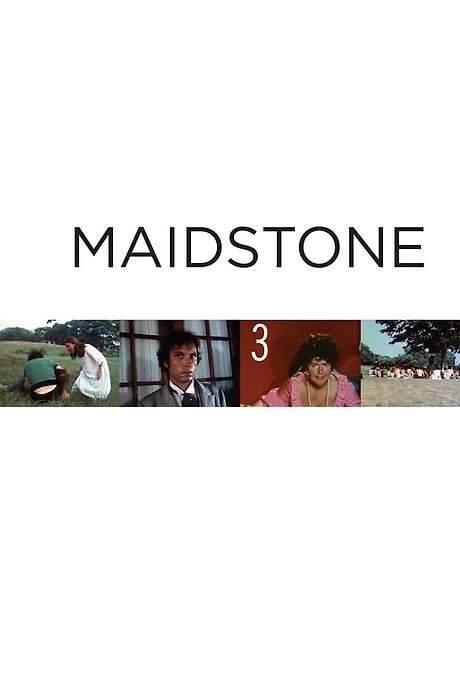
Maidstone (1970) movie poster

Timeline

Maidstone (1970) Timeline Explained – Every Event in Order

Release, runtime and language
1970 · 106 mins · English
Loading streaming availability…
Starring
Penelope Milford, Harris Yulin, Rip Torn, Joy Bang, Lane Smith, Lucy Saroyan

Over a booze‑fueled, chaotic five‑day shoot in East Hampton, Norman Mailer and his crew spontaneously recorded a lurid, loony chronicle of fictional U.S. presidential candidate and filmmaker Norman T. Kingsley as he debates and attacks his hangers‑on and enemies. The gonzo narrative, called “an inkblot test of Mailer’s own subconscious” by Time, veers toward documentary when co‑star Rip Torn shatters the fourth wall in one of cinema’s most startling on‑screen outbursts.

On this page (6)
  1. 1 Where to watch
  2. 2 Events in order (12)
  3. 3 Timeline questions answered
  4. 4 Movie threads
  5. 5 Movies like Maidstone
  6. 6 Every angle
Loading streaming availability…

12 events in order · contains spoilers

Maidstone Timeline: Events in Chronological Order

Every key event of Maidstone (1970) in order, scene by scene, with when and where it takes place. Use it to untangle flashbacks, time jumps and parallel storylines, to refresh your memory before the sequel or to find the exact scene you are thinking of.

  1. Arrival at the East Hampton estate

    Kingsley arrives at his East Hampton estate with friends, actors, and aspiring actresses to begin the provocative drama. The setting is established as a documentary-like workspace where participants are both making and observing the process. The atmosphere is charged with anticipation as auditions and conversations set the stage for the film’s meta-narrative.

    Where
    East Hampton, New York
  2. Auditions begin for the provocative drama

    Actresses audition for the role in Kingsley’s sexually charged drama, and Kingsley scrutinizes each performance with biting critique. He uses caustic commentary to shape expectations and reveal his aesthetic standards. The process blends genuine auditioning with performative judgment that mirrors his controlling artistic style.

    When
    During auditions
    Where
    East Hampton, New York
  3. Kingsley inserts himself into the film’s action

    Kingsley places himself within the film’s narrative to demonstrate exactly what he is looking for from the actresses. He directs scenes from inside the action, showing a self-constructed vision of authenticity and power. This blurs the line between director, actor, and subject, making the process visibly theatrical.

    When
    During filming
    Where
    East Hampton, New York
  4. Kingsley proclaims himself a narcissist

    In dialogue and monologue, Kingsley declares his own narcissistic perspective as part of his artistic persona. The film uses this self-portrait to challenge viewers and participants alike. The admission sets the tone for his interactions with the cast and the viewers of the production.

    Where
    East Hampton, New York
  5. Campaign for president begins within the project

    Kingsley launches a fictional or symbolic presidential campaign as part of the narrative. He leverages the production to draw attention, turning the estate into a stage for political spectacle. The campaign intertwines with the filmmaking process, amplifying tensions around power and influence.

    Where
    East Hampton, New York
  6. Media and scholars probe Kingsley’s aims

    Journalists and scholars arrive to question Kingsley about his campaign and artistic intentions. They scrutinize his rhetoric, ethics, and the relationship between his art and politics. The scrutiny increases the pressure on Kingsley and exposes competing interpretations of his work.

    Where
    East Hampton, New York
  7. African-American radicals challenge the campaign

    Some African-American radicals join the discussion, probing the politics of Kingsley’s campaign. They question his understanding of race, power, and representation within his provocative project. Their critique adds another layer of tension to the escalating spectacle.

    Where
    East Hampton, New York
  8. PAX-C forms in response to the attention

    A group known as PAX-C emerges in reaction to the public interest around Kingsley. They become a voice within the orbit of the project, signaling that the production has outgrown a private rehearsal and entered a charged political arena. Their involvement foreshadows darker undercurrents in the narrative.

    Where
    East Hampton, New York
  9. Assassination is discussed as a possible course

    Within the circles drawn to Kingsley, members of PAX-C discuss the possibility of assassinating him. The conversation reveals how threat and danger begin to color the atmosphere around the production. The idea underscores the extreme consequences that the film’s power dynamics may invite.

    Where
    East Hampton, New York
  10. The twelve chapters unfold in documentary form

    The film presents itself as twelve chapters filmed in a documentary style, detailing Kingsley’s everyday life as both actor and filmmaker. The structure emphasizes process over traditional plot, inviting viewers to observe a self-referential creative world. The chapters function as a window into his methods and personality.

    Where
    East Hampton, New York
  11. Kingsley’s on-camera performance deepens

    Kingsley’s performance grows increasingly convincing, and he uses the boundary between reality and fiction to reinforce his artistic vision. The act of performance becomes a means to illustrate what he wants from others and from the world around him. The line between director, actor, and subject becomes more porous.

    Where
    East Hampton, New York
  12. A sense of looming danger lingers as the film closes

    As tensions rise, ambiguity remains about what will come of Kingsley’s project and the threats surrounding him. The documentary-style approach leaves viewers with an unsettled impression of power, art, and politics intersecting in unsettling ways. The ending emphasizes the fragility of art when confronted by real-world hostility.

    Where
    East Hampton, New York

Last updated: February 24, 2026 at 13:51

Was this helpful?

Timeline questions answered

Maidstone Timeline Explained: Your Questions Answered

When does it happen, and why in that order? The questions people ask about the chronology of Maidstone (1970): time jumps, flashbacks, cause and effect between scenes and the correct order of events, each answered with spoilers.

Q1

Why does Norman Kingsley act in his own movie while directing it?

Kingsley places himself in front of the camera to demonstrate exactly what he wants from the actresses, using himself as both director and actor. This technique blurs the line between creator and creation, making the filmmaking process itself part of the art. His self-assured, hyper-realistic acting becomes a statement about artistic control and the relationship between the artist and his work.

Foreshadowing: Early scenes show Kingsley already describing himself as a narcissistic artist, establishing his need to be at the center of every aspect of the project.

  • norman kingsley
  • director actor
  • self-insertion
  • filmmaking process
  • artistic control
Q2

What is the project Kingsley is making throughout the movie?

Kingsley is making a sexually provocative drama about a brothel, which he describes as his attempt to craft challenging art similar to Buñuel. The auditions and filming of this underground drama form the documentary's primary narrative thread. The project serves as both a genuine artistic endeavor and a vehicle for Kingsley's ego and political ambitions.

Foreshadowing: The opening establishes Kingsley as an 'American Buñuel' known for provocative work, setting expectations for the controversial content that follows.

  • brothel film
  • underground drama
  • audition
  • provocative art
  • artistic vision
Q3

Why does Kingsley start a presidential campaign during filming?

Kingsley launches a fictional presidential campaign that becomes intertwined with his filmmaking, turning his East Hampton estate into a stage for political spectacle. The campaign allows him to merge art, politics, and personal ambition into one unified performance. It also attracts media attention and creates a forum for discussing power, influence, and the ethics of celebrity.

Foreshadowing: The tension between Kingsley's artistic ego and his desire for public influence is established from the moment he gathers a circle of observers around him.

  • presidential campaign
  • political ambition
  • celebrity
  • power
  • media spectacle
Q4

What is PAX-C and why does the group discuss killing Kingsley?

PAX-C emerges as a faction responding to Kingsley's growing celebrity and controversial rhetoric. Some members debate whether violence, specifically assassination, could be a legitimate response to his political messaging and artistic influence. The discussion reveals how Kingsley's provocative presence creates real hostility and danger, pushing the narrative from artistic experimentation into genuine threat.

Foreshadowing: African-American radicals already challenge Kingsley's campaign earlier, showing mounting opposition before PAX-C forms.

  • pax-c
  • assassination
  • radical group
  • threat
  • political violence
Q5

What happens during the famous on-screen attack?

Rip Torn shatters the fourth wall in one of cinema's most startling moments by launching a real, physical attack on Norman Mailer (who plays Kingsley). This eruption destroys the film's fictional pretense, blurring the boundary between documentary observation and lived reality. The attack transforms the movie from a controlled artistic statement into something raw and unpredictable.

Foreshadowing: Tensions rise progressively throughout the film as PAX-C discusses assassination, building toward a violent confrontation.

  • rip torn
  • norman mailer
  • on-screen attack
  • fourth wall
  • real violence
Q6

Why is Maidstone called a gonzo film?

Maidstone exemplifies gonzo cinema because it abandons traditional script and direction, letting the chaotic, alcohol-fueled reality of the five-day shoot become the narrative. Norman Mailer participates as both filmmaker and subject, refusing to maintain objective distance. The result is an 'inkblot test' of the filmmaker's subconscious, where reality and fiction merge unpredictably.

Foreshadowing: The documentary style from the start captures spontaneous, unscripted moments rather than controlled narrative.

  • gonzo cinema
  • documentary style
  • improvisation
  • norman mailer
  • chaos filming
Q7

What is the significance of the film being divided into twelve chapters?

The twelve-chapter documentary structure emphasizes process over traditional plot, inviting viewers to observe Kingsley's methods and personality unfold in real time. Each chapter functions as a window into different aspects of his artistic and political projects. The structure reinforces the film's self-referential nature, making the act of watching itself part of the experience.

Foreshadowing: The chapters progressively reveal more of Kingsley's character, from artistic control to political ambition to vulnerability.

  • twelve chapters
  • documentary structure
  • narrative form
  • self-referential film
  • process over plot
Q8

Why does Kingsley critique actresses so harshly during auditions?

Kingsley uses caustic commentary to shape performances according to his exacting aesthetic standards, treating the auditions as extensions of his artistic vision. His critique style reveals his need for total control over every element of his project. The harsh judgment also serves as performance art itself, demonstrating the power dynamic between the director and those seeking to participate in his work.

Foreshadowing: Kingsley already proclaimed himself a narcissistic artist early in the film, explaining his demanding approach.

  • auditions
  • director control
  • artistic standards
  • power dynamic
  • norman kingsley
Q9

Why do African-American radicals confront Kingsley about his campaign?

African-American radicals challenge Kingsley to examine his understanding of race, power, and representation within his provocative artistic project. Their critique adds a layer of social and political tension to the film, questioning whether a white artist can authentically address such topics. This confrontation foreshadows the deeper ethical conflicts that emerge as the project attracts diverse reactions.

Foreshadowing: The political campaign itself draws different groups into Kingsley's orbit, each bringing their own agenda.

  • african american radicals
  • race criticism
  • political campaign
  • representation
  • social tension
Q10

What happens at the end of Maidstone?

The film ends with lingering ambiguity about Kingsley's fate and the outcome of both his artistic and political projects. The documentary-style approach preserves the unsettled impression of power, art, and politics intersecting in unsettling ways. The real-life attack by Rip Torn leaves viewers with an open-ended, jarring conclusion that refuses to resolve the tension between fiction and reality.

Foreshadowing: Tensions escalate progressively throughout the film, building toward the violent climax that shatters the narrative's control.

  • ending
  • ambiguity
  • unresolved plot
  • reality vs fiction
  • cliffhanger
Q11

How does the film blur the line between reality and fiction?

Maidstone deliberately blurs reality and fiction through its documentary format, Norman Mailer's dual role as filmmaker and subject, and the unplanned chaos of the production. The fictional presidential campaign becomes indistinguishable from genuine political commentary. The ultimate collapse of this boundary occurs when real violence erupts on screen, destroying any pretense of artistic control.

Foreshadowing: Kingsley himself blurs lines from the start by inserting himself into the film while simultaneously directing it.

  • reality vs fiction
  • documentary
  • meta film
  • boundary breaking
  • norman mailer
Q12

What makes Maidstone a controversial film?

Maidstone provokes controversy through its explicit content, narcissistic self-portrait, and the genuine threat of violence that permeates its production. The film combines explicit material about sexuality and power with real political discourse about assassination and radical action. Its refusal to distinguish between art and reality, combined with the actual on-screen attack, makes it a uniquely unsettling viewing experience.

Foreshadowing: The meta notes describe the atmosphere as volatile, with a 'very real threat of assassination' discussed by characters.

  • controversy
  • explicit content
  • violence
  • political discourse
  • scandal

Movie threads

More Movies Like Maidstone, by Mood & Story

Curated lists built around what makes Maidstone tick: the same mood, the same kind of story or the same emotional payoff. Each list explains why these movies belong together.

Meta-cinematic collapse movies like Maidstone

Films where the line between documentary and fiction violently breaks down. If you liked the raw, boundary-pushing nature of Maidstone, explore more films where documentary and fiction collide. These movies challenge filmmaking itself, often resulting in tense, unpredictable viewing experiences.

  • meta
  • raw
  • improvisational
  • tense
  • unpredictable
  • provocative
  • Tone: tense, unsettling, provocative
  • Pacing: variable, unpredictable
Why these movies?

The story pattern: Narratives in this thread often follow artists, filmmakers, or performers as their controlled project descends into chaos. The structure typically starts with a planned fiction but becomes a real document of collapse, either through improvisation, psychological tension, or actual conflict spilling into the film.

Why they belong together: Movies are grouped here by their shared commitment to breaking cinematic conventions. They share a raw, often uncomfortable energy born from the high-risk approach of blending real life with narrative, creating an experience that feels both voyeuristic and immediate.

Power and ego thrillers with chaotic tension like Maidstone

Stories of charismatic, narcissistic leaders surrounded by paranoia and betrayal. Fans of the tense political power struggle in Maidstone will find more movies exploring narcissistic leaders and their volatile followers. These narratives focus on the psychological warfare within a charismatic figure's orbit.

  • narcissistic
  • chaotic
  • tense
  • unsettling
  • political
  • power struggle
  • Tone: tense, chaotic, unsettling
  • Pacing: variable, building to eruption
Why these movies?

The story pattern: The narrative follows a charismatic but flawed leader—a politician, artist, or mogul—as they manipulate their followers. Tension builds through debates, personal attacks, and a growing sense of paranoia, often culminating in a shocking act of betrayal or violence that questions the nature of loyalty and power.

Why they belong together: These films share a core focus on the toxic dynamics of power and the fragility of the ego. They create a chaotic, anxious mood by placing a volatile character at the center of a world that could explode at any moment.

If you liked this

Movies Like Maidstone

Similar movies to Maidstone: the same genre, themes or kind of story. Each one comes with its own plot summary, timeline and ending explained.

Browse all movie summaries

Every angle

Maidstone (1970) Explained: Plot, Timeline & Characters

Everything about Maidstone in one place: what happens in the plot summary, the timeline in chronological order, the characters and meaning and a spoiler-free summary. What's After the Movie adds the cast, box office and post-credit scenes.

Coming soon on iOS and Android

The Plot Explained Movie Summary App

Plot summaries, endings explained and timelines on your phone. Catch up on any movie in minutes, save your favorites and never miss a twist again.

Be the first to know when we launch. Your email stays private, always.

Learn more about the app