Plot Explained Spoilers guaranteed!
Plot Explained

Browse by genre

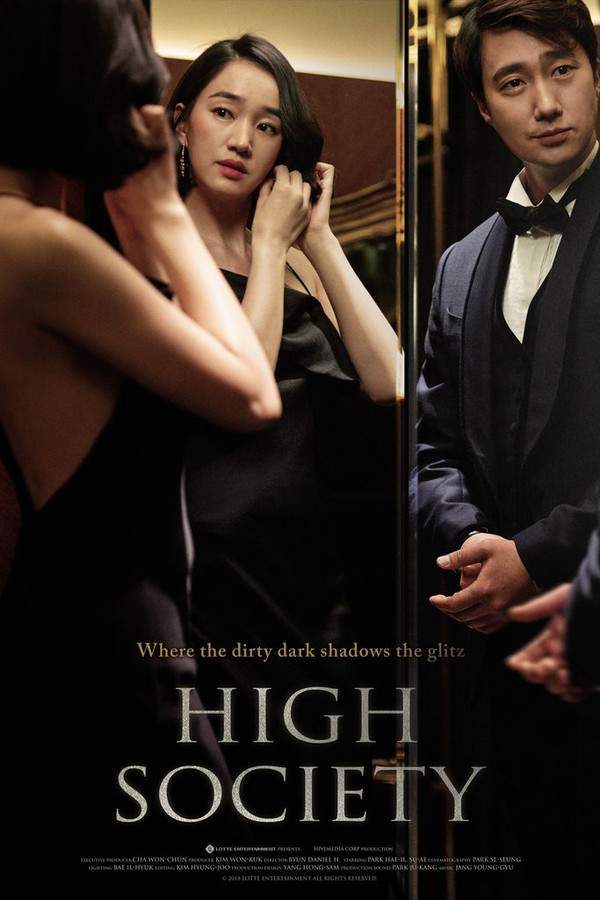
High Society (2017) movie poster

Plot Summary

High Society (2017) Plot Summary Explained

Release, runtime and language
2017 · 100 mins · German
Directed by
Anika Decker
Starring
Jannis Niewöhner, Langston Uibel, Iris Berben, Gizem Emre, Caro Cult, Manuel Rubey

Opposites attract Two girls from very different social backgrounds discover, at the age of 25, that they had been switched at birth.

On this page (5)
  1. 1 What happens: full plot
  2. 2 Plot questions answered
  3. 3 Movie threads
  4. 4 Movies like High Society
  5. 5 Every angle

Full plot summary · contains spoilers

What Happens in High Society: Full Plot Summary

The whole story of High Society (2017) explained, from the opening scene to the final frame: every key event, every twist and what it all adds up to. Read it as a quick recap before the sequel, to check a scene you missed, or to finally understand what really happened.

Tae-jun and Soo-yeon are a married couple who have swiftly climbed the ranks of high society through a rare blend of talent and ambition. He is a respected professor at Seoul National University, and she serves as the deputy director of a prominent art gallery. Together, they navigate the corridors of power with a shared eye to reach even greater influence, driven by the belief that their intelligence and drive deserve a greater share of the spotlight.

Tae-jun’s star rises when he proposes a low-interest citizen’s bank as a practical solution to the pressures of gentrification, a move that captures national attention. In a dramatic turn, he also saves an elderly man from a self-destructive act during a protest, a moment that helps him secure a nomination from a conservative party. His public image becomes a beacon for those who crave reform, and his name begins to echo through political and cultural circles.

Soo-yeon, meanwhile, contends with a ceiling that has long prevented her from attaining the director role she desires. She is surrounded by a conglomerate-backed director and a junior staff who seem to block her ascent at every turn. Rather than retreat, she decides to leverage her husband’s rising political profile to amplify her own influence, throwing her support behind Tae-jun’s bid for parliament and positioning herself to shape policy from behind the scenes.

But the couple’s ascent is complicated by the intimate consequences of their ambitions. Tae-jun embarks on an affair with a young aide who was once his student, a private transgression that nonetheless does not derail their public partnership. Soo-yeon, for her part, remains stoically pragmatic, choosing to overlook the affair in the name of power and opportunity.

Simultaneously, Soo-yeon rekindles a relationship with her ex-boyfriend, a talented artist whose promise continues to haunt her. Their renewed romance travels to Paris and culminates in a secretly filmed encounter—an explicit moment that ends up circulating as a shocking record of her private life. The footage lands in the hands of Chief Min, a rival in the race for the director’s chair, threatening to derail Soo-yeon’s plans just as they reach a critical moment.

Desperation leads Soo-yeon to a dramatic gambit: she targets the chairman of the conglomerate that owns the gallery, offering herself in exchange for the directorship. The chairman, who believes “art” can be produced by the intimate imprint of celebrity bodies on canvas, uses this transactional underworld to exert power. The plan is complicated by the director’s presence and the shifting loyalties within the hierarchy of the gallery.

On the political front, Tae-jun—now an aspirant for the conservative party—seeks corporate funding to anchor the citizen bank. He soon uncovers a troubling truth: the party is colluding with those same corporations, using the citizen bank as little more than a political tool. The plot twist deepens when it’s revealed that the elderly man Tae-jun rescued was also part of a staged arrangement designed to manufacture sympathy and legitimacy for political narratives.

Just as Soo-yeon prepares to seal her deal with the gallery’s chairman, the current director and his wife dramatically crash the room, turning the tables once more. In a bold counterstrike, Soo-yeon presents a compromising video of the chairman to the director, subverting the power balance and securing a position as co-director alongside the chairman’s own son.

In the climax, unable to tolerate the rot of their lives any longer, Soo-yeon and Tae-jun make a fearless choice. On the opening day of a new exhibition, Soo-yeon publicly screens her sex tape as a provocative work of art, delivering a candid self-confession that denounces the corruption simmering beneath the gallery’s glossy surface. The room erupts in applause, a moment that marks both defiance and reconciliation.

Tae-jun responds by relinquishing his parliamentary seat and providing prosecutors with evidence of the conservative party’s corruption. The pair emerge as transformed individuals, liberated from the trappings of ambition and elite status. Tae-jun begins again with a modest, citizen-focused bank, while Soo-yeon carves out her own independent exhibition space, turning away from the old power structures toward a more self-directed future. The story closes on a note of uneasy peace—two once-dominant figures choosing authenticity over ascent, and choosing to define success on their own terms.


Last updated: October 09, 2025 at 15:58

Was this helpful?

Plot questions answered

High Society Plot Explained: Your Questions Answered

The questions people ask most about High Society (2017): what happens in the confusing scenes, why the characters do what they do, the twists, hidden details and what the ending means. Each answer contains spoilers.

Q1

Why does Soo-yeon ignore Tae-jun's affair with his former student?

Soo-yeon deliberately overlooks the affair because she prioritizes her own political ambitions over marital fidelity. She recognizes that maintaining their public partnership is essential for advancing their shared goals of power and influence in both political and art worlds.

Foreshadowing: Early in the story, Soo-yeon already demonstrates a pragmatic approach to her marriage, treating it as a strategic alliance rather than a romantic bond.

  • soo-yeon
  • tae-jun
  • affair
  • marriage
  • ambition
  • tolerance
Q2

How does Soo-yeon's sex tape end up with Chief Min?

The explicit footage from Soo-yeon's Paris encounter with her ex-boyfriend was secretly recorded and circulated, eventually landing in the hands of Chief Min, who used it as leverage against Soo-yeon in their competition for the gallery director position.

Foreshadowing: The secretly filmed encounter in Paris is presented as an intimate moment that unknowingly creates dangerous leverage for her rivals.

  • sex tape
  • chief min
  • paris
  • soo-yeon
  • leak
  • blackmail
Q4

What is the citizen's bank that Tae-jun proposes?

Tae-jun proposes a low-interest citizen's bank as a practical solution to combat gentrification and reduce financial pressure on ordinary citizens. The proposal gains national attention and becomes a central platform of his political campaign.

Foreshadowing: The citizen's bank is introduced early as Tae-jun's signature policy initiative that propels him into the national political spotlight.

  • citizen's bank
  • gentrification
  • tae-jun
  • policy
  • finance
Q5

Was the elderly man's rescue actually staged?

Yes, Tae-jun discovers that the elderly man he rescued from self-immolation during a protest was actually paid to stage the incident. This revelation exposes how the conservative party manufactured political sympathy to legitimize Tae-jun's candidacy.

Foreshadowing: The heroic rescue is presented as a pivotal moment that secures Tae-jun's nomination, making the later reveal of its orchestration particularly shocking.

  • elderly man
  • rescue
  • staged
  • protest
  • manipulation
  • conspiracy
Q6

Why does Soo-yeon screen her own sex tape at the exhibition?

On the opening day of the exhibition, Soo-yeon deliberately screens the sex tape as a provocative work of art, using it as a self-confession to publicly denounce the corruption and exploitation she participated in. The act is both an expose of the gallery's rot and her own reckoning with personal compromises.

Foreshadowing: The earlier acquisition of the compromising video of the chairman foreshadows Soo-yeon's willingness to weaponize scandal for liberation rather than control.

  • sex tape
  • exhibition
  • confession
  • art
  • soo-yeon
  • exposure
Q7

How does Tae-jun uncover the party's corruption?

While seeking corporate funding for his citizen's bank as a conservative candidate, Tae-jun discovers the party is colluding with those same corporations, using the bank as nothing more than a political tool to manipulate voters rather than help citizens.

Foreshadowing: Tae-jun's initial success with the party and corporations sets up the irony of his discovery that those he trusted were manipulating him.

  • tae-jun
  • corruption
  • party
  • corporations
  • citizen's bank
  • discovery
Q9

Why does Tae-jun give up his parliamentary seat?

After discovering the conservative party's corruption and their manipulation of the citizen's bank proposal, Tae-jun resigns his parliamentary seat and provides prosecutors with evidence of the party's illegal activities. He chooses integrity over political ambition.

Foreshadowing: The revelation about the staged elderly man's rescue and corporate collusion directly triggers Tae-jun's decision to turn against the party.

  • tae-jun
  • resignation
  • parliament
  • corruption
  • evidence
  • integrity
Q10

What is the gallery chairman's philosophy about celebrity bodies in art?

The chairman believes that "art" can be produced from the intimate imprints of celebrity bodies on canvas, specifically referring to celebrity sex as a form of artistic production. This twisted ideology justifies his transactional approach to power and his exploitation of ambitious women like Soo-yeon.

Foreshadowing: The chairman's ideology is revealed during Soo-yeon's negotiation with him, explaining the corrupt sexual economy of the gallery.

  • chairman
  • art
  • celebrity
  • bodies
  • philosophy
  • canvas
Q11

How does Soo-yeon become co-director of the gallery?

When the current director confronts Soo-yeon about her deal with the chairman, Soo-yeon pivots by presenting a compromising video of the chairman to the director. She trades this leverage for actual power, securing a position as co-director alongside the chairman's son.

Foreshadowing: Earlier, Soo-yeon obtains the video of the chairman, foreshadowing her strategic use of it as a power play.

  • soo-yeon
  • co-director
  • gallery
  • chairman
  • video
  • power move
Q12

What is the final transformation that Tae-jun and Soo-yeon undergo?

By the end, both characters reject their previous ambitions for elite status and power. Tae-jun starts a modest citizen-focused bank outside politics, while Soo-yeon opens her own independent exhibition space. They choose authenticity and integrity over ascent, finding liberation in simpler, self-directed lives.

Foreshadowing: Their earlier constant power struggles and moral compromises make this final rejection of ambition feel like a necessary breaking point.

  • transformation
  • liberation
  • ambition
  • independence
  • tae-jun
  • soo-yeon

Movie threads

More Movies Like High Society, by Mood & Story

Curated lists built around what makes High Society tick: the same mood, the same kind of story or the same emotional payoff. Each list explains why these movies belong together.

Movies about ruthless social climbing like High Society

Stories of cynical characters clawing their way to the top of elite circles. If you enjoyed the cynical power plays and high-stakes ambition of High Society, explore more movies like it. This section features tense dramas about characters using manipulation and betrayal to climb the social ladder, perfect for fans of stories about transactional relationships and moral decay in elite settings.

  • calculating
  • corrupt
  • pragmatic
  • uncompromising
  • tense
  • defiant
  • Tone: tense, calculating, defiant
  • Pacing: fast, relentless
Why these movies?

The story pattern: These narratives typically follow a relentless upward trajectory, punctuated by scandals, betrayals, and quid-pro-quo deals. Characters often start from a position of disadvantage and employ morally ambiguous or outright corrupt tactics to gain influence, wealth, or status, leading to a precarious existence where one misstep can cause a catastrophic fall.

Why they belong together: Movies are grouped here based on their shared focus on ambition as a driving, often destructive, force. They feature a tense, pragmatic tone, fast-paced plots filled with power moves, and a heavy emotional weight stemming from the dehumanizing cost of success within corrupt systems.

Movies with bittersweet liberation endings like High Society

Characters who reclaim their authenticity by destroying the gilded cages they built. For viewers who appreciated the defiant yet costly finale of High Society, this section collects similar movies with bittersweet endings. These films feature characters who break free from morally compromising situations, achieving authentic freedom but losing their prestigious positions, offering a complex mix of hope and sobering realism.

  • defiant
  • bittersweet
  • cathartic
  • solemn
  • hopeful
  • sobering
  • Tone: bittersweet, defiant, heavy
  • Pacing: variable, building to a climax
Why these movies?

The story pattern: The journey often involves a protagonist deeply entangled in a web of corruption or exploitation, who reaches a breaking point. Their act of defiance—whether burning bridges, exposing truths, or walking away—is cathartic but leaves them to rebuild from scratch. The focus is on the emotional weight of choosing integrity over influence.

Why they belong together: These films are united by a specific emotional arc: a heavy narrative leading to a conclusion that is both hopeful and sobering. They share a tone that mixes defiance with melancholy, and a thematic focus on the price of authenticity in a transactional world.

If you liked this

Movies Like High Society

Similar movies to High Society: the same genre, themes or kind of story. Each one comes with its own plot summary, timeline and ending explained.

Browse all movie summaries

Every angle

High Society (2017) Explained: Plot, Timeline & Characters

Everything about High Society in one place: what happens in the plot summary, the timeline in chronological order, the characters and meaning and a spoiler-free summary. What's After the Movie adds the cast, box office and post-credit scenes.

Coming soon on iOS and Android

The Plot Explained Movie Summary App

Plot summaries, endings explained and timelines on your phone. Catch up on any movie in minutes, save your favorites and never miss a twist again.

Be the first to know when we launch. Your email stays private, always.

Learn more about the app