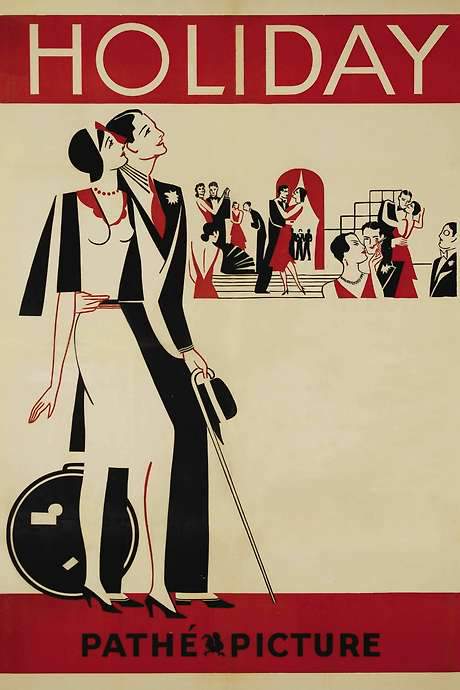
In this sharp social drama set on Park Avenue, Lizzie has spent years as the loyal servant of an affluent family, but she walks away after months without pay. Her departure leads her to an employment agency where she meets Joan Smith and her young son Bobby Smith. [Lizzie] quickly takes a liking to the pair and negotiates a salary that is more generous than Joan hoped for, yet far below what Lizzie once earned. John 'Jimmy' Smith, Joan’s husband and a struggling insurance salesman, is initially startled by the arrangement, but with his wife’s persuasion he slowly comes around.
With Lizzie’s guidance, the family begins to elevate their lifestyle so they can mingle with the city’s elite, and Jimmy discovers that these new connections can translate into real business, helping him sell large policies to their new acquaintances. The plan unfolds as the couple navigates the social ladder while keeping their dignity intact, and the cash flow from these new associations gives them a taste of a world they had only glimpsed before.
Meanwhile, Kent Fletcher, Joan’s inventive brother, falls for Diana Abercrombie, newly returned from a European finishing school. Diana, however, is drawn to the married, worldly Warren Sherrill, even as she also feels a spark with Kent. The triangle adds a layer of complexity to the narrative, highlighting how affection and ambition coexist within a family excursion into the upper crust.
Late one night, [Lizzie] encounters Diana and Warren together, and her attempt to separate them only sets the stage for a life-altering confession. She reveals that she is Diana’s mother, having secretly married Diana’s father the day before he left for World War I. He later died, and Lizzie chose to let his wealthy parents raise Diana, since Lizzie, then an upstairs maid, could not provide what they could. The revelation initially shocks Diana, but over time it reshapes their relationship, edging Diana toward a deeper understanding of Lizzie and the choices that shaped their lives.
As the truth settles in, Diana begins to treat Lizzie not as an obstacle but as a rightful partner in a shared history. She ends her relationship with Warren and starts to see Kent in a new light, a trajectory that points toward genuine affection rather than social convenience. Throughout this upheaval, Lizzie also finds love again, this time with Owen, the former butler of her former employer, whose steady presence offers a quiet, hopeful counterbalance to the era’s struggles and schemes.
In the end, the story weaves together family secrets, class aspirations, and the possibility of renewal. It remains grounded in intimate relationships—the bonds between mother and daughter, between lovers, and between former servants and their longtime patrons—while painting a compassionate portrait of people who navigate the tensions between duty, desire, and dignity.