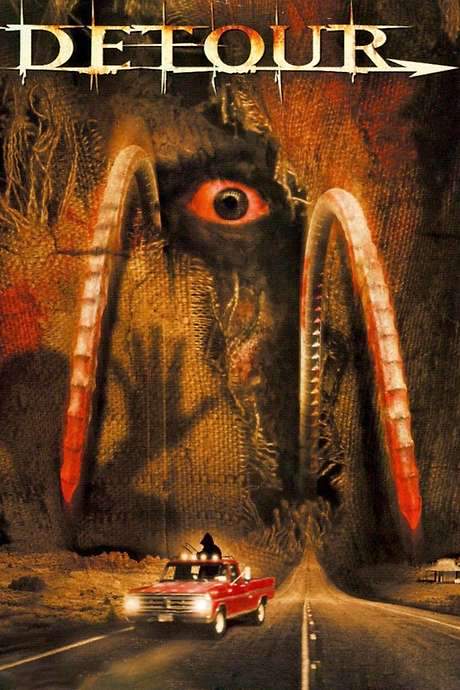
Harsh Tandon, Javed Jaffrey is introduced as a tireless, money-minded businessman who announces a major merger to his subordinates, setting the tone for a family pulled between duty and ambition. His wife, Shalini, and their daughter, Tanu, a model who is dating a photographer, Rahul Saxena, live under this high-pressure radar. When Tanu returns home after a long day, the lights flicker and a chilling voice seems to drift from Sam’s room. She discovers a skull in his closet and a lurking, ominous figure that vanishes as quickly as it appears, leaving her shaken and calling for her mother. Sam, who has a knack for pranks, cools the tension with his jokes, but his behavior hints at something darker beneath the surface.
Tanu’s relationship with Rahul becomes a quiet point of friction as Harsh’s focus on work widens the emotional distance at home. Meanwhile, Harsh uses a routine day to mask escalating tension: he sees a young girl cross a road and finds no one there when he halts the car, an incident that unsettles him deeply. A visit to a psychiatrist confirms his suspicion of hallucinations and urges him to slow down, offering a clinical lens on his fear rather than clear explanations. As Tanu is questioned about her father’s aloofness on a date with Rahul, Harsh’s office is filled with the same unnerving vision—a spectral figure that seems to watch him from the margins of his perception.
Deciding to retreat from the gnawing pressure, Harsh opts for a family vacation, though tragedy soon shadows the plan. A manager’s death at work leaves Harsh shouldering even more responsibility, and he entrusts a subordinate, Tyagi, with crucial duties while he speaks briefly with a man named Satish, a person who crops up again and again in the course of the investigation into what is really happening around him. Tanu, wanting to escape the mounting stress, invites Rahul to join them on their trip, and the family makes a stop at a petrol station along the way. There, Tanu encounters a mysterious man dressed entirely in black. In a moment of tension, Sam attempts to rouse the mood with a joke, but the car’s quiet is heavier than any punchline. After fueling, the route becomes blocked by an earlier accident, forcing Harsh to choose a longer, darker road with no clear signs. The encounter with the man in black repeats itself, and a sense of inevitability grows as the family’s sense of safety deteriorates.
The road grows more surreal as a stroller with a doll appears on the highway, and Sam’s attempts to scare the others backfire, resulting in a slap from his father, who has grown wary of Sam’s antics. A sudden, stubborn déjà vu hits when a real doll seems to materialize again on the road, and a sense of malevolent persistence takes hold. A series of eerie events follow: Harsh hallucinates a ghost, the car’s engine falters, and the radio crackles with static and a chilling message, “everyone will die,” despite no signal in the area. A return to the cottage is invited by Dev Shukla, a man who offers shelter for the night, and the family accepts his hospitality. Dev, a writer who later hints at a more spectral understanding of the events, leads them to a cottage where a swing sways on its own, and the air hums with unspoken dread.
Inside, the tension thickens. Tanu voices discomfort in this unfamiliar space, while Sam notices a doll’s foot that echoes the earlier doll in the road. The doll’s eerie transformation—its feet turning to blood and the doll crying a bloody tear—unsettles everyone. A young girl appears briefly, only to vanish when looked at directly, and Tanu brushes off Sam’s fear as another prank. Sam’s impulse control deteriorates; he begins to slash at the wall with a knife, an act so reckless it causes his father to disown him in a moment of raw fury. The line between reality and nightmare blurs as Sam’s voice shifts, repeating a haunting warning: “Everyone will die.”
Now isolated in the cottage, the family experiences a cascade of paranormal signs. Harsh encounters a woman in red, the lights flicker, and disturbing photographs line the walls as if peering into their souls. Sam, who has become increasingly unhinged, rushes out to face the unknown and is gravely injured in the ensuing chaos, leaving the car in a state of mechanical distress. A desperate ambulance call echoes through the phone as Tanu struggles to breathe, and Sam utters a chilling line, “the girl,” just before his life slips away. The car’s trunk becomes a repository for the dark secret—Sam’s lifeless body hidden away as the family grapples with a new level of fear and guilt.
Shalini’s fear drives a desperate pursuit of Sam, and she reappears in the tense, claustrophobic journey, threatening Harsh with a gun as she searches for Sam. The car’s occupants are forced to confront the possibility that Sam’s death was not an accident but connected to a larger malevolent force. Shalini’s own fate becomes sealed when she witnesses a ghost and lunges toward a fatal moment at a roadside tree, collapsing from exhaustion and terror. As the trio—Harsh, Tanu, and Rahul—press onward, the road to a sense of normalcy seems increasingly distant, and guilt gnaws at Harsh about the past.
Harsh’s eventual confrontation with the cottage’s enigmatic owner, Dev, reveals a shocking twist: Dev explains that he is a writer and that the family lingered at his home after leaving behind their baggage. The backstory unspools with spectral precision. A fatal accident two years earlier ties the present terror to Harsh’s bitter past: Harsh, who had been drunk at a party, drove recklessly and crashed Vinod Kumar’s car, injuring Vinod and his wife Geeta and their young daughter Riya. Satish pleads with Harsh to help, but Harsh fails to intervene, a moral failure that haunts him thereafter. This revelation ties the stroller, the doll, the doll’s crying blood, and the ghostly appearances to the unresolved guilt Harsh carried.
The haunting escalates as the family learns that the restless spirits, Geeta and her daughter, seek release and justice. Geeta’s spirit, a red-dressed presence that the family sees at pivotal moments, confronts Harsh with the memory of that fateful night and the consequences of his choices. Harsh, consumed by guilt, pleads for Geeta’s mercy and begs for his own forgiveness, hoping to spare his remaining daughter, Tanu. In a climactic moment, Geeta’s spirit spares Tanu’s life, a cruel mercy that emphasizes the fragility of forgiveness and the weight of remorse.
The arc culminates with Dev’s interpretation of what happened and the transformation of his beliefs about the afterlife. He writes a new book titled Lupt, reflecting on the experience and the revelation that spirits can influence the living when guilt and unresolved pain linger. The film closes on a note of uneasy acceptance—Dev’s work marks a shift from skepticism to a nuanced belief in the possibility of spectral forces, leaving viewers with a tempered, haunting reminder of the costs of neglecting family and the consequences of choices made in the heat of ambition.