Plot Explained Spoilers guaranteed!
Plot Explained

Browse by genre

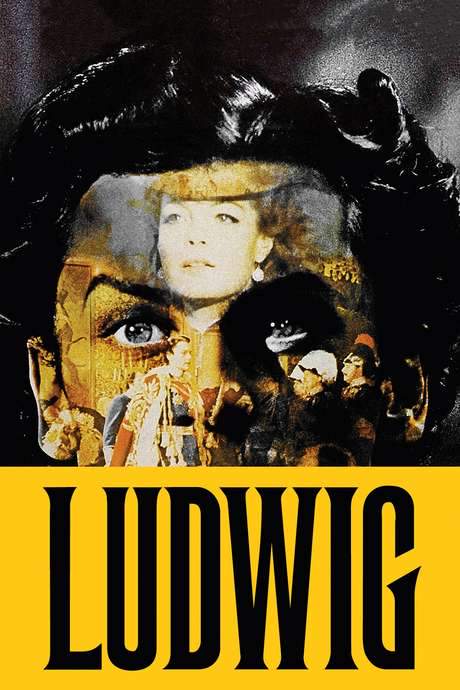
Ludwig – Requiem for a Virgin King (1972) movie poster

Timeline

Ludwig – Requiem for a Virgin King (1972) Timeline Explained – Every Event in Order

Release, runtime and language
1972 · 135 mins · German
Directed by
Hans-Jürgen Syberberg
Starring
Daniel Schmid, Monica Bleibtreu, Ingrid Caven, Peter Kern, Günther Kaufmann, Harry Baer

Set in an artificial, bombastically staged illusion that fuses Wagnerian music with glossy, satirical nods to contemporary time, the film revisits 19th‑century German figures and traditions. Stripped of mythic aura, they are reinterpreted through a 1972 German lens, revealing cultural contradictions in a stylized, larger‑than‑life world.

On this page (6)
  1. 1 Events in order (15)
  2. 2 Timeline questions answered
  3. 3 Movie threads
  4. 4 Movies like Ludwig – Requiem for a Virgin King
  5. 5 Categories
  6. 6 Every angle

15 events in order · contains spoilers

Ludwig – Requiem for a Virgin King Timeline: Events in Chronological Order

Every key event of Ludwig – Requiem for a Virgin King (1972) in order, scene by scene, with when and where it takes place. Use it to untangle flashbacks, time jumps and parallel storylines, to refresh your memory before the sequel or to find the exact scene you are thinking of.

  1. The Norns' Curse on Ludwig

    Three norns introduce Ludwig as suffering from a curse, foretelling that he will be the last king of Bavaria. The curse casts a shadow over his reign from the outset, coloring how courtiers and rivals perceive him. It frames his life as a perpetual struggle between fate and a rapidly changing world.

    When
    early life
  2. A Court Built on Infatuations and Aesthetics

    Ludwig organises his court around personal infatuations and his own aesthetic preferences rather than traditional governance. He makes art and whimsy central to state life while opposing industrialization and the growth of mass society. His rule becomes a theatre of beauty more than a machine of politics.

    When
    early reign
    Where
    Bavarian court
  3. A Strange Demeanour Yet Human Connection

    He complains about painful teeth and behaves eccentrically at times. Yet he seeks contact with ordinary people to stay in touch with life beyond the court.

    When
    early reign
    Where
    Bavarian court
  4. Patronage of Wagner

    Early in his life he protects and finances Richard Wagner, providing crucial support. Wagner deeply appreciates the backing, even as others view the arrangement as scandalous and risky.

    When
    early life
  5. Elisabeth of Austria's Affection

    Elisabeth, Ludwig's cousin, sympathises with him and respects his temperament. She even compares him to Sitting Bull, highlighting his outsider status within court politics.

    When
    late 19th century
    Where
    Austria
  6. Conspirators Plot the King’s Downfall

    A group of ministers led by Luitpold plot to assassinate Ludwig in order to push through industrial reforms. They discuss how to remove him without triggering wider upheaval.

    When
    during reign
    Where
    Bavaria
  7. Dance of Dissonance: Folk, Wagner, and a Choreography of Power

    A Bavarian folk dance unfolds in the court as a cultural backdrop to political plans. Wagner discusses his future with the king, illustrating the composer-patron dynamic. In a jarring moment, Ernst Röhm and Adolf Hitler dance the rhumba, signaling the film's provocative juxtaposition of history.

    When
    late 19th/early 20th
    Where
    Court
  8. Annexation by the German Empire

    Ludwig yields to Otto von Bismarck and agrees to Bavaria's incorporation into the German Empire. The move marks a dramatic shift away from Bavarian independence and the king’s anti-modern stance.

    When
    late 19th century
    Where
    Bavaria/Germany
  9. Conspirators Refine Their Plan

    The conspirators discuss the mechanics of removing Ludwig and fear that the Bavarian monarchy itself could be jeopardized. Their dialogue reveals the tension between industrialization aims and traditional sovereignty.

    When
    late reign
    Where
    Bavaria
  10. A Voice of the People Objects

    A man of the people opposes the plan to kill Ludwig, challenging the moral and political premises of the coup. His stance complicates the conspirators' resolve and highlights concerns about legitimacy and public support.

    When
    late reign
    Where
    Bavaria
  11. Debts and Insanity Label

    Ludwig's financial debts are held against him and the press labels him insane. The narrative weaponizes his finances to undermine confidence in his leadership and justify opposition.

    When
    late reign
    Where
    Bavaria
  12. Ludwig Acknowledges Failure

    He admits that his struggle against the progressives has failed and concedes that change is coming. He hints that others will follow him, suggesting the futility of resisting a rising modern order.

    When
    late reign
    Where
    Bavaria
  13. Drowning and Death

    The king is found drowned in an apparent suicide, ending his life under mysterious circumstances. The mysterious death fuels rumors and casts a pall over his legacy.

    When
    end of reign
    Where
    Bavaria
  14. Aftermath: Otto’s Kingship and Regent

    Ludwig's brother Otto becomes the new king, but Luitpold rules as Prince Regent due to Otto's mental illness. The discovery that Ludwig's debts were smaller than previously thought shifts the historical narrative around his governance.

    When
    immediately after death
    Where
    Bavaria
  15. Final Beheading and Return Motif

    Ludwig is taken to a guillotine and beheaded in the film's climactic finale. A peasant woman promises that he will return, while the scene closes with Ludwig standing on the guillotine surrounded by motorcyclists as he yodels.

    When
    final scene
    Where
    Bavaria

Last updated: October 09, 2025 at 12:30

Was this helpful?

Timeline questions answered

Ludwig – Requiem for a Virgin King Timeline Explained: Your Questions Answered

When does it happen, and why in that order? The questions people ask about the chronology of Ludwig – Requiem for a Virgin King (1972): time jumps, flashbacks, cause and effect between scenes and the correct order of events, each answered with spoilers.

Q1

Why did Ludwig fund Wagner despite the scandal?

Ludwig funded Wagner because he genuinely believed in the composer's artistic vision and saw himself as a patron of revolutionary art. The support was not merely political, he valued Wagner's work personally and believed his patronage could help create transformative music. Others viewed it as scandalous favoritism, but for Ludwig it was a genuine investment in art over industrial progress.

  • Wagner patronage
  • Bavarian king
  • musical funding
  • art patron
Q2

Why did Ludwig yield to Bismarck and allow Bavaria's annexation?

Ludwig conceded to Bismarck because he recognized that resisting the German Empire's formation was futile. His personal battle against industrialization and modernism had already failed, and he understood that political realities made Bavaria's independence unsustainable. He admitted this failure explicitly, suggesting he saw the annexation as an inevitable consequence of the changing times.

  • Bismarck
  • German Empire
  • Bavaria annexation
  • political surrender
Q3

Why did Ludwig's uncle Luitpold plot to assassinate him?

Luitpold led a cabal of ministers who wanted to remove Ludwig because they believed his anti-industrial, aesthetic-driven rule was obstructing Bavaria's modernization. They saw his resistance to progressivism and mass society as dangerous, and they hoped to accelerate industrialization by eliminating a king who stood in their way. The conspirators feared the monarchy itself could be endangered if they didn't act.

  • Luitpold
  • assassination plot
  • conspiracy
  • Bavarian ministers
Q4

What caused Ludwig's death and was it really suicide?

Ludwig was found drowned in an apparent suicide, but the circumstances remain mysterious given the political tensions surrounding his reign. The conspirators had been planning to remove him, and his death came at a moment when many forces wanted him gone. The ambiguity reflects the film's portrayal of how power, perception, and reality blur in historical narratives.

  • death
  • mysterious circumstances
  • suicide
  • conspiracy
Q5

What does the peasant woman mean when she promises Ludwig will return?

The peasant woman promises Ludwig will return because she sees him as a mythic, larger-than-life figure, a savior archetype who transcends ordinary political defeat. This echoes the norns' curse that framed his entire reign and positions him as a legendary figure rather than just a failed king. The promise suggests his spirit or legacy will endure despite his execution.

Foreshadowing: The norns' curse at the beginning establishes Ludwig as a mythic figure destined for tragedy.

  • mythic return
  • savior archetype
  • prophecy
  • folk tradition
Q6

What is the significance of Ernst Röhm and Adolf Hitler dancing the rhumba?

The anachronistic scene places Ernst Röhm and Adolf Hitler together in a dance that signals how art, power, and danger swirl together in the era the film depicts. It serves as a provocative metafictional comment, showing how the seeds of future tyranny were already present in Bavaria's political landscape. The jarring choreography emphasizes the film's blend of history and avant-garde commentary.

  • Hitler
  • Röhm
  • anachronism
  • political symbolism
  • danger
Q7

Why does Elisabeth of Austria compare Ludwig to Sitting Bull?

Elisabeth compares Ludwig to Sitting Bull because both were misunderstood outsiders whom the mainstream culture eagerly tried to pigeonhole. Just as Sitting Bull was reduced to a stereotype by expanding American society, Ludwig was being dismissed by a world that couldn't understand his resistance to modernization. The comparison underscores his isolation and the unfair characterization of him as insane.

  • Sitting Bull
  • Elisabeth Austria
  • outsider
  • misunderstood leader
Q8

Why was Ludwig declared insane and was he actually mentally ill?

The press labeled Ludwig insane as a political weapon to undermine his rule and justify the conspirators' plans. His eccentric behavior, including his focus on aesthetics, his resistance to industrial progress, and his personal quirks, were reframed as mental instability. Later evidence showed his debts were smaller than reported, suggesting the narrative of his insanity was manipulated to serve political ends.

  • insanity claim
  • propaganda
  • financial debts
  • political manipulation
Q9

What does the final scene with Ludwig yodeling on the guillotine mean?

The final image shows Ludwig yodeling on the guillotine surrounded by motorcycles, a surreal, defiant moment that blends tragedy, legend, and irrepressible spirit. Even in defeat and execution, he remains larger than life, rejecting the shame his enemies tried to impose. The motorcycles represent the modern industrial world that defeated him, yet he transcends this by maintaining his eccentric, artistic identity to the end.

  • yodel
  • guillotine
  • defiance
  • mythic ending
  • execution
Q10

What was the norns' curse that haunted Ludwig?

Three norns introduced Ludwig as suffering from a curse foretelling he would be the last king of Bavaria. This mythic framing cast a shadow over his entire reign from the start, coloring how rivals and courtiers perceived him. The curse positioned his life as a perpetual struggle between fate and a rapidly changing world, establishing the film's exploration of myth versus history.

  • norns
  • curse
  • Bavarian mythology
  • fate
  • last king
Q11

Who opposed the plan to assassinate Ludwig?

A fearless man from the people stepped forward to oppose the assassination plan, offering a counterweight to the elite scheming of Luitpold's cabal. His intervention highlighted the tension between popular sentiment and royal authority, complicating the conspirators' resolve by raising concerns about legitimacy and public support for the king.

  • people's opposition
  • assassination plot
  • public support
  • legitimacy
Q12

Why did Ludwig seek contact with ordinary people outside the palace?

Despite his eccentric behavior and painful toothaches, Ludwig made a point of stepping beyond palace walls to connect with ordinary life. This reflected his tension between decadence and genuine human connection, he clung to aesthetic theater while also valuing authentic, ordinary humanity over isolation. It distinguished him from a purely detached monarch.

  • common people
  • human connection
  • royal isolation
  • aesthetic king

Movie threads

More Movies Like Ludwig – Requiem for a Virgin King, by Mood & Story

Curated lists built around what makes Ludwig – Requiem for a Virgin King tick: the same mood, the same kind of story or the same emotional payoff. Each list explains why these movies belong together.

Stylized historical dramas like Ludwig – Requiem for a Virgin King

Historical figures and events reimagined through a bold, artificial, and satirical lens. Explore movies like Ludwig – Requiem for a Virgin King that use artificial staging and a satirical perspective to revisit historical events. These similar films share a complex, melancholic tone and create a stylized world to deconstruct myths and explore cultural contradictions.

  • stylized
  • dreamlike
  • mythic
  • satirical
  • melancholic
  • oppressive
  • Tone: melancholic, satirical
  • Pacing: variable, reflective
Why these movies?

The story pattern: These narratives typically follow a historical figure or event, but the story unfolds within a consciously artificial world. The plot is often less about linear events and more about exploring themes of power, decay, and the construction of myth. The journey is intellectual and aesthetic, leading to a critical, and often bleak, conclusion about the nature of history.

Why they belong together: They are grouped by their shared approach to history: a deliberate departure from realism in favor of a stylized, often theatrical presentation. They connect through their complex, melancholic mood, their use of satire, and their focus on deconstructing established legends to reveal darker truths.

Movies about the tragic downfall of a king like in Ludwig – Requiem for a Virgin King

Stories of eccentric leaders crushed by the political realities they cannot escape. If you liked the story of King Ludwig's isolation and tragic end, discover other films about lonely rulers and eccentric leaders. These movies share a heavy emotional weight, a melancholic tone, and explore themes of artistic patronage versus political duty.

  • lonely
  • oppressive
  • melancholic
  • tragic
  • defiant
  • conspiratorial
  • Tone: melancholic, bleak
  • Pacing: variable, with slow introspection and tense climax
Why these movies?

The story pattern: The plot follows the arc of a singular, often eccentric leader who is out of step with their court or government. As external pressures mount through political scheming and debt, the protagonist's mental state deteriorates. The story is a slow-burn tragedy, culminating in a climax of betrayal, assassination, or forced abdication, highlighting the fragility of power and the cost of idealism.

Why they belong together: These films are connected by their core character arc: the tragic demise of a lonely ruler. They share a heavy emotional weight, a bleak ending feel, and a high intensity driven by political conspiracy and psychological decline. The central conflict between artistic obsession and political reality is a key unifying element.

If you liked this

Movies Like Ludwig – Requiem for a Virgin King

Similar movies to Ludwig – Requiem for a Virgin King: the same genre, themes or kind of story. Each one comes with its own plot summary, timeline and ending explained.

Browse all movie summaries

Categories

Movie Lists Featuring Ludwig – Requiem for a Virgin King

Ludwig – Requiem for a Virgin King appears in these hand-built movie categories. Each one groups movies by a specific mood, theme or story type, with their plot summaries and endings explained.

View all movie categories

Every angle

Ludwig – Requiem for a Virgin King (1972) Explained: Plot, Timeline & Characters

Everything about Ludwig – Requiem for a Virgin King in one place: what happens in the plot summary, the timeline in chronological order, the characters and meaning and a spoiler-free summary. What's After the Movie adds the cast, box office and post-credit scenes.

Coming soon on iOS and Android

The Plot Explained Movie Summary App

Plot summaries, endings explained and timelines on your phone. Catch up on any movie in minutes, save your favorites and never miss a twist again.

Be the first to know when we launch. Your email stays private, always.

Learn more about the app