Plot Explained Spoilers guaranteed!
Plot Explained

Browse by genre

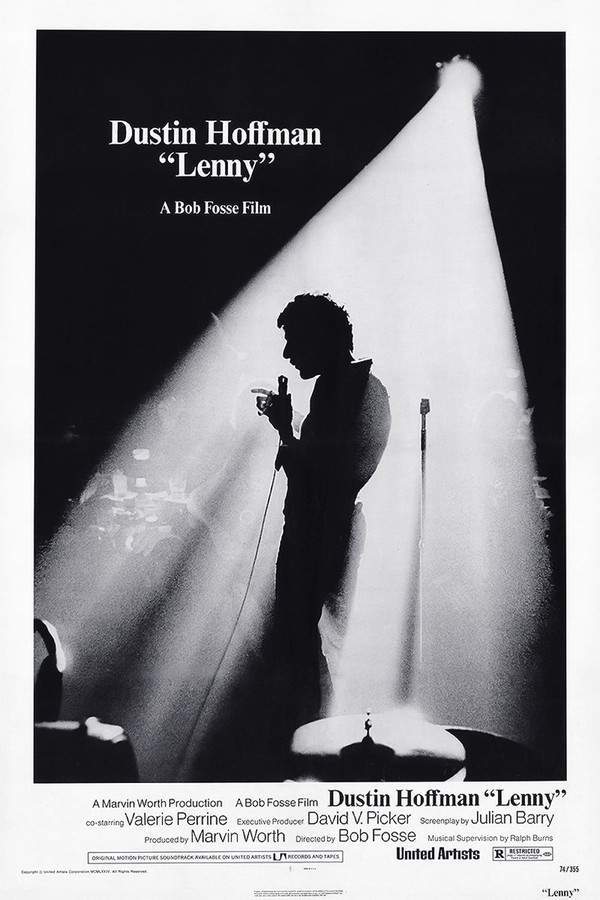
Lenny (1974) movie poster

Plot Summary

Lenny (1974) Plot Summary Explained

Release, runtime and language
1974 · 111 min · English
Loading streaming availability…
Directed by
Bob Fosse
Starring
Dustin Hoffman, Valerie Perrine, Frankie Man, Gary Morton, Guy Rennie, Jan Miner

In 1950s New York City, comedian Lenny Bruce develops a provocative and boundary-pushing sense of humor that challenges societal norms. His controversial routines earn him a devoted following and establish him as a cultural icon, but also draw scrutiny and legal trouble. Battling addiction and excess, his life is further complicated by a turbulent relationship with his wife, Honey, a captivating performer. The film explores the rise and fall of a man who dared to speak his mind, even at great personal cost.

On this page (6)
  1. 1 Where to watch
  2. 2 What happens: full plot
  3. 3 Plot questions answered
  4. 4 Movie threads
  5. 5 Movies like Lenny
  6. 6 Every angle
Loading streaming availability…

Full plot summary · contains spoilers

What Happens in Lenny: Full Plot Summary

The whole story of Lenny (1974) explained, from the opening scene to the final frame: every key event, every twist and what it all adds up to. Read it as a quick recap before the sequel, to check a scene you missed, or to finally understand what really happened.

In a revealing interview, Honey Harlow Bruce, the former spouse of stand-up comedian Lenny Bruce, reflects on her tumultuous life shared with him. In a memorable performance in 1964, Lenny astounds his audience with a shocking quip regarding Eleanor Roosevelt and Lou Gehrig, but he emphasizes that his true message revolves around the suppression of words. He provocatively suggests that venereal diseases thrive not just for their physical aspect, but due to society’s unwillingness to discuss them openly.

Honey fondly recalls their initial encounter in Baltimore during the 1950s; she was an aspiring stripper known as Hot Honey Harlow. After noticing Lenny across a bustling cafeteria, their lives intertwine when they sneak off for a passionate rendezvous. Post-fling, a smitten Lenny affectionately dubs Honey his “shiksa goddess,” following her to Miami.

In an insightful interview, Artie Silver, Lenny's manager, shares the complexities of intertwining with both Lenny's personal and professional worlds. Shortly after Lenny and Honey’s union, Artie expresses concerns about Honey's past, warning Lenny that her mysterious history could lead to trouble. However, Lenny’s infatuation leads him to marry Honey, eventually introducing her to his mother, Sally Marr, and her sister, Aunt Mema.

As Lenny brings Honey into his act, they take the stage in the Catskills. During one such performance, Lenny's impulsive, vulgar humor surfaces, drawing the ire of the audience. “What is dirty?” he later challenges his audience, suggesting he would prefer his children to watch adult films rather than conventional religious movies where, he claims, no one truly gets hurt.

Tragedy strikes in a flashback to the 1950s when Honey suffers a severe injury and, while recovering in a hospital, suspects Lenny may be cheating with her nurse. This fuels Lenny's future comedic commentary, where he cheekily advises men to deny their indiscretions under any circumstances. Portraying a candid understanding of male-female relationships, he quips that while women share physical connections, men might pursue anything, even isolated fantasies.

With their relocation to Los Angeles, Honey resumes her stripping career and Lenny gravitates back to smaller gigs amidst the drug-infused chaos of show business. Lenny experiments with open relationships but soon grows jealous, accusing Honey of enjoying their ventures with other women. Eventually, after their daughter Kitty is born, the couple finds themselves drifting apart.

Lenny's candid stand-up reveals his biting observations on divorce, noting its initial allure fades when confronted with the reality of dating other divorcees. Their relationship strains further amid Honey's struggles with drug dependency, culminating in an arrest for marijuana possession in Hawaii, where she reaches out desperately to Lenny.

In his acts, Lenny decries society's “happy ending” expectation, arguing it stifles natural human responses and fosters undue guilt. Back in California, Lenny's performances grow increasingly unfiltered, where he embraces the freedoms of strip clubs, delighting in the lack of censorship. However, as he takes on political engagements, his controversial speech garners both laughter and legal repercussions, culminating in several arrests.

Artie recounts the toll of Lenny’s legal troubles on his psyche, observing how he became fixated on his trials, even reading transcripts to his audience, which ultimately leads to further complications. During a pivotal trial in San Francisco, Lenny's provocative humor is disputed, igniting a heated debate of artistic expression versus societal standards. The courtroom drama peaks with Lenny's insistence on being treated as a fellow human, leading to contempt charges when his frustration boils over.

Despite a string of convictions, Lenny’s absurdity remains popular, ultimately giving him a platform even as his performances spiral amid substance abuse and mental decline. In the present, as Honey reflects on their chaotic history of love and loss, she notes his many arrests and the toll his career has taken on his mental health.

After a fateful Chicago performance marked by incoherence, a comedic downfall leaps into tragedy. Lenny’s life culminates in a heartrending finale in 1966, where he is discovered lifeless in his apartment amid echoes of his once-illuminating, boundary-pushing humor, leaving behind an indelible mark on the comedic landscape.
Last updated: November 03, 2024 at 14:29

Was this helpful?

Plot questions answered

Lenny Plot Explained: Your Questions Answered

The questions people ask most about Lenny (1974): what happens in the confusing scenes, why the characters do what they do, the twists, hidden details and what the ending means. Each answer contains spoilers.

Q1

Why did Lenny marry Honey despite Artie's concerns about her past?

Lenny married Honey because he was deeply infatuated with her after their first encounter in Baltimore. Despite his manager Artie Silver warning him that Honey's mysterious past could lead to trouble, Lenny's romantic nature and obsession with Honey blinded him to the potential consequences. He even affectionately called her his 'shiksa goddess' and pursued her to Miami, demonstrating how his passion overrode practical judgment.

  • lenny bruce
  • honey bruce
  • marriage
  • artie silver
  • romance
Q2

What did Lenny mean by the suppression of words in his comedy?

Lenny's core message centered on society's tendency to silence words and topics that make people uncomfortable. In his famous 1964 performance, he explained that venereal diseases thrive not just physically but because society refuses to discuss them openly. He challenged audiences to question what makes something 'dirty' and argued that controlled vocabulary ultimately limits human expression and understanding.

  • suppression of words
  • comedy
  • free speech
  • social commentary
  • taboo
Q3

Why was Lenny Bruce arrested so many times for his comedy?

Lenny was repeatedly arrested because his material directly challenged societal norms and moral standards of the 1950s and 1960s. His jokes about topics like sexuality, politics, divorce, and religious hypocrisy were considered obscene and profane by authorities. He faced charges for profanity, indecency, and contempt of court when his frustration boiled over during trials. The legal system saw his comedy as a threat to public morality rather than artistic expression.

  • arrests
  • legal trouble
  • obscenity charges
  • free speech
  • comedy
Q4

How did Honey's severe injury affect her relationship with Lenny?

Honey's severe injury in the 1950s hospitalized her and created lasting trust issues in their marriage. While recovering, she suspected Lenny might be cheating with her nurse, which planted seeds of doubt that echoed throughout their relationship. This incident fueled Lenny's later comedy about male infidelity, including his jokes advising men to deny indiscretions under any circumstances.

  • honey injury
  • hospital
  • trust
  • infidelity
  • marriage problems
Q5

Why did Lenny start reading trial transcripts to his audiences?

After numerous legal battles took a psychological toll on Lenny, he became fixated on his trials and legal persecution. He began reading transcripts directly to his audiences, treating his performances as extensions of his courtroom defense. This obsession with his legal troubles contributed to his downfall, as audiences grew tired of his material becoming increasingly about his legal battles rather than fresh comedy.

  • trials
  • transcripts
  • legal trouble
  • mental decline
  • performance style
Q6

What caused Lenny Bruce's career and personal downfall?

Lenny's downfall resulted from a combination of factors: relentless legal battles that drained his finances and mental energy, escalating substance abuse, and the psychological toll of constant persecution. As his performances became increasingly unfiltered and centered on his legal troubles, audiences drifted away. His mental state deteriorated alongside his career, culminating in his tragic death in 1966.

  • downfall
  • drugs
  • mental health
  • legal troubles
  • career end
Q7

Why did Lenny and Honey grow distant after their daughter Kitty was born?

After their daughter Kitty was born, Lenny and Honey's marriage faced significant challenges as they drifted apart. The joys of parenthood were overshadowed by increasing tension, Lenny's jealousy over their open relationship lifestyle, and Honey's growing struggles with drug addiction. Their careers and personal demons created a rift that became impossible to repair, leading to their eventual separation.

  • kitty
  • daughter
  • marriage
  • drugs
  • divorce
Q8

Why did Lenny become jealous despite pursuing an open relationship with Honey?

Lenny initially encouraged open relationships, experimenting with sharing Honey with other women. However, he soon grew jealous when he realized Honey was enjoying these ventures. This contradiction revealed his underlying insecurity and inability to handle the emotional consequences of the lifestyle he himself had proposed, further straining their marriage.

  • jealousy
  • open relationship
  • honey
  • marriage problems
Q9

How did Lenny Bruce die and what was found in his apartment?

Lenny Bruce died in 1966 in his apartment, where he was discovered lifeless. His death marked a tragic end to a life marked by groundbreaking comedy and personal turmoil. The film shows his final Chicago performance was marked by incoherence, signaling his mental and physical decline had reached its peak. He left behind a complex legacy as a comedian who dared to speak his mind.

Foreshadowing: The film's framing shows his final incoherent performance as the culmination of his downward spiral.

  • death
  • 1966
  • apartment
  • tragic ending
  • final performance
Q10

Why did Lenny ask 'what is dirty?' and argue children should watch adult films?

Lenny's provocative question 'what is dirty?' was designed to challenge audience assumptions about morality. He argued that conventional religious films, which were considered acceptable, actually depicted violence and harm without consequence, while his adult comedy was dismissed as obscene. This typical Lenny Bruce technique used shock value to force audiences to question their own standards of what constitutes真正 harmful content.

  • dirty
  • audience
  • provocation
  • morality
  • shock comedy
Q11

What happened during Lenny's pivotal San Francisco trial?

During the San Francisco trial, Lenny's provocative humor was used as evidence against him in debates about artistic expression versus societal standards. The courtroom drama peaked when Lenny insisted on being treated as a fellow human rather than a defendant, and his frustration boiled over into contempt of court charges. This trial represented the climax of his legal battle and highlighted the conflict between free speech and societal norms.

  • san francisco
  • trial
  • contempt
  • free speech
  • artistic expression
Q12

Why was Honey arrested in Hawaii and how did she contact Lenny?

Honey was arrested in Hawaii for marijuana possession, reflecting her escalating struggles with drug addiction. Desperate for help, she reached out to Lenny during this difficult time. However, their relationship had become heavily strained by this point, and the incident highlighted how both their personal and professional lives were unraveling due to substance abuse and legal troubles.

  • hawaii
  • arrest
  • marijuana
  • drugs
  • honey
Q13

What did Lenny mean by society's 'happy ending' expectation?

Lenny decried society's expectation of 'happy endings' as something that stifles natural human responses and creates undue guilt. He argued that requiring positive outcomes forces people to suppress authentic emotions and pretend everything is fine when it is not. This philosophical stance against manufactured optimism was central to his comedy, which sought to expose the hypocrisy of societal expectations.

  • happy ending
  • society
  • hypocrisy
  • emotion
  • psychology

Movie threads

More Movies Like Lenny, by Mood & Story

Curated lists built around what makes Lenny tick: the same mood, the same kind of story or the same emotional payoff. Each list explains why these movies belong together.

Movies about the tragic cost of artistic rebellion like Lenny

Biographies of artists who challenged society and paid a heavy personal price. Explore more movies like Lenny that delve into the turbulent lives of real artists and provocateurs. If you were fascinated by Lenny Bruce's battle against censorship and his self-destructive downfall, you'll find similar biographical dramas about figures who challenged society at great personal cost.

  • tragic
  • raw
  • confrontational
  • self-destructive
  • gritty
  • obsessive
  • Tone: dark, tragic, unflinching
  • Pacing: variable, shifting between energetic highs and grinding lows
Why these movies?

The story pattern: These narratives typically follow a 'rise and fall' structure, beginning with the discovery of a unique talent and its explosive impact. The central conflict arises from the collision between the artist's provocative vision and societal norms, leading to fame, notoriety, and then escalating legal and personal crises. The journey concludes with a tragic downfall, often linked to addiction or exhaustion from the relentless fight.

Why they belong together: Movies in this thread are grouped by their shared focus on a specific type of biographical tragedy: the artist as a martyr. They blend a dark, unflinching tone with high emotional intensity, creating a raw and often heartbreaking viewing experience centered on the price of nonconformity.

Raw character studies of self-destructive genius like in Lenny

Intense character studies of brilliant but deeply flawed individuals on a collision course with disaster. Find more movies similar to Lenny that feature intense, raw portraits of brilliant but self-destructive individuals. If you appreciated the unflinching look at Lenny Bruce's addictive personality and turbulent relationships amidst his comedic genius, this collection focuses on deeply flawed, talented characters on a path to tragedy.

  • self-destructive
  • gritty
  • obsessive
  • turbulent
  • raw
  • unflinching
  • Tone: dark, gritty, raw
  • Pacing: variable, chaotic
Why these movies?

The story pattern: The narrative is driven almost entirely by the protagonist's character flaws. The plot is less about external events and more about charting the internal decay of a gifted mind. Key elements include a volatile partnership or romance that both fuels and suffers from the genius's behavior, a battle with addiction that accelerates their decline, and a narrative structure that builds tension through the anticipation of their inevitable collapse.

Why they belong together: These films are connected by their unflinching focus on a specific character archetype: the self-destructive genius. They share a high-intensity, gritty mood and a variable pacing that reflects the chaos of the protagonist's life. The emotional weight is consistently heavy, leading to a dark and sad conclusion.

If you liked this

Movies Like Lenny

Similar movies to Lenny: the same genre, themes or kind of story. Each one comes with its own plot summary, timeline and ending explained.

Browse all movie summaries

Every angle

Lenny (1974) Explained: Plot, Timeline & Characters

Everything about Lenny in one place: what happens in the plot summary, the timeline in chronological order, the characters and meaning and a spoiler-free summary. What's After the Movie adds the cast, box office and post-credit scenes.

Coming soon on iOS and Android

The Plot Explained Movie Summary App

Plot summaries, endings explained and timelines on your phone. Catch up on any movie in minutes, save your favorites and never miss a twist again.

Be the first to know when we launch. Your email stays private, always.

Learn more about the app