Plot Explained Spoilers guaranteed!
Plot Explained

Browse by genre

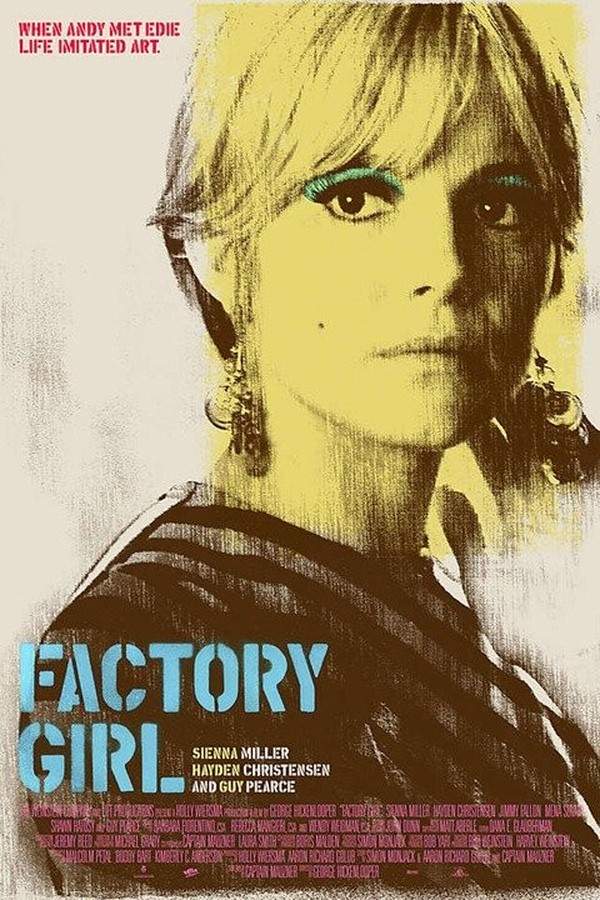
Factory Girl (2006) movie poster

Plot Summary

Factory Girl (2006) Plot Summary Explained

Release, runtime and language
2006 · 90 min · English
JustWatch #17,352 9
Directed by
George Hickenlooper
Starring
Guy Pearce, Hayden Christensen, Sienna Miller

Amidst the exciting New York art scene of the 1960s, young Edie Sedgwick is drawn into the world of Andy Warhol and his Factory. Becoming Warhol's muse, she experiences a whirlwind of creativity, fame, and social circles. However, behind the glamorous lifestyle, Edie struggles with a deep desire for genuine connection and love, navigating complex relationships and ultimately embarking on a journey of self-discovery.

On this page (6)
  1. 1 Where to watch
  2. 2 What happens: full plot
  3. 3 Plot questions answered
  4. 4 Movie threads
  5. 5 Movies like Factory Girl
  6. 6 Every angle

Where to watch

Where to Watch Factory Girl (2006)

Where can you watch Factory Girl? Stream, rent or buy it in the US, including on Fawesome, Kanopy and Fandango at Home Free: current JustWatch availability with up-to-date prices.

Streaming availability powered by JustWatch

Full plot summary · contains spoilers

What Happens in Factory Girl: Full Plot Summary

The whole story of Factory Girl (2006) explained, from the opening scene to the final frame: every key event, every twist and what it all adds up to. Read it as a quick recap before the sequel, to check a scene you missed, or to finally understand what really happened.

Edie Sedgwick, portrayed by Sienna Miller, is an ethereal and wealthy young woman who captures the attention of the celebrity media in the vibrant 1960s, primarily through her connection with the enigmatic pop artist and filmmaker, Andy Warhol. Their partnership forms the centerpiece of a circle of hedonistic, carefree socialites who flock around Warhol as he reigns over his iconic studio, known as the Factory, where they indulge in lives filled with excess and self-deception.

The portrayal of Edie's family is rather grim, reflecting the dysfunction in her background, while Andy is depicted as an immature and self-absorbed figure, forever on the hunt for affluent individuals to manipulate for his artistic pursuits. The narrative is framed by an interview with Edie in a hospital, taking place several years post her rise as a Warhol superstar.

In the mid-1960s, Edie is a young heiress studying art in Cambridge, Massachusetts. Her journey soon leads her to New York City, accompanied by her friend Chuck Wein. Inspired by Andy’s art, Edie aspires to create her own masterpieces, which piques Andy's interest due to her affluent roots. With a family lineage tied to the oil industry, Edie becomes a key figure in Andy's world, despite his reputation for creating provocative films that blur the lines of morality and art.

Haunted by a troubled past, including time spent in an asylum, Edie's mental health is as fragile as her growing fame. As Andy invites her to participate in his underground projects, she becomes his muse, despite her being entangled in psychological issues stemming from childhood trauma and familial betrayal. With her father's troubling behavior and the recent loss of her beloved brother, Minty, Edie's past continues to gnaw at her.

As she transitions into the role of a Warhol superstar and an emerging youth-quake fashion model, Edie's fame begins to flourish, alongside her burgeoning issues with spending and substance abuse. During this glamorous yet destructive phase, her family threatens to sever their financial support, urging Edie to come to terms with her spiraling expenditures. Andy's jealousy towards Edie's rumored romance with famed singer Billy Quinn complicates their relationship, leading to a series of manipulative and toxic interactions that push Edie deeper into despair.

Despite her intoxicating rise to prominence, Edie finds herself overshadowed as Andy replaces her with yet another affluent socialite. Her spiral into drug addiction worsens, ultimately alienating her from friends and the art world that once adored her. In a particularly harrowing moment, she accidentally endangers her life in a drug-fueled stupor, highlighting the severity of her addiction.

When friends attempt to reach out, they find her in a precarious state, struggling to reclaim her identity amid the chaos that has become her life. As Edie embraces the reality of her situation, she learns that her ongoing battle with substance dependency is far from over. Years later, in a poignant hospital interview, she expresses her determination to stay sober and create art once more, revealing a flicker of hope amid her disheartening journey.

The film concludes with a gripping reflection on Edie's struggles, ultimately highlighting the tragic circumstance of her early death at just 28 due to a barbiturate overdose. Meanwhile, in a stark contrast, Andy is confronted with the legacy of their relationship during an interview, where he feigns indifference, suggesting he hardly knew her, sealing the complexity of their intertwined fates.
Last updated: November 02, 2024 at 11:59

Was this helpful?

Plot questions answered

Factory Girl Plot Explained: Your Questions Answered

The questions people ask most about Factory Girl (2006): what happens in the confusing scenes, why the characters do what they do, the twists, hidden details and what the ending means. Each answer contains spoilers.

Q1

Why did Edie Sedgwick become Andy Warhol's muse?

Edie Sedgwick became Andy Warhol's muse because her wealthy background, family lineage tied to the oil industry, and ethereal beauty made her an ideal subject for his art and films. Andy was perpetually seeking affluent individuals to feature in his projects, and Edie's social status combined with her unique look made her perfect for his artistic vision. Her aspirations to create her own masterpieces also intrigued Warhol, deepening their connection.

Foreshadowing: The film establishes early that Andy actively sought out wealthy individuals to manipulate for his artistic pursuits.

  • Edie Sedgwick
  • Andy Warhol muse
  • Factory
  • Warhol Superstar
  • wealthy heiress
Q2

What caused Edie Sedgwick's mental health struggles?

Edie's mental health struggles stemmed from multiple sources: a troubled family background including her father's disturbing behavior, the recent loss of her beloved brother Minty, and time spent in an asylum. These childhood traumas and familial betrayals created psychological issues that plagued her throughout her rise to fame, making her vulnerable to the pressures of the Factory lifestyle.

Foreshadowing: The film opens by noting Edie's grim family background and the dysfunction in her lineage.

  • Edie Sedgwick mental health
  • asylum
  • family trauma
  • brother Minty
Q3

Why did Andy Warhol replace Edie Sedgwick with other muses?

Andy Warhol replaced Edie Sedgwick with another affluent socialite because his interest was primarily transactional, he was constantly seeking new wealthy individuals to feature in his work and elevate his status. Once Edie's usefulness diminished or another more lucrative option appeared, he moved on without sentiment, demonstrating his self-absorbed and manipulative nature.

Foreshadowing: The film establishes early that Andy was always 'on the hunt for affluent individuals to manipulate.'

  • Andy Warhol
  • Edie Sedgwick replacement
  • Factory muses
  • Warhol Superstars
Q4

What happened between Edie Sedgwick and Billy Quinn?

Edie Sedgwick had a rumored romance with singer Billy Quinn, which sparked intense jealousy in Andy Warhol. This jealousy led to manipulative and toxic interactions between Andy and Edie, pushing her deeper into emotional despair. The conflict over Billy Quinn further deteriorated their already problematic relationship.

Foreshadowing: The timeline establishes that Edie's rumored romance with Billy Quinn ignited Andy's jealousy, complicating their partnership.

  • Billy Quinn
  • Edie Sedgwick romance
  • Andy Warhol jealousy
  • Hayden Christensen
Q5

Why did Edie Sedgwick's family cut off her financial support?

Edie's family threatened to sever their financial support because her spending had spiraled out of control. As her fame grew alongside her substance abuse issues, her expenditures became unsustainable, forcing her family to issue an ultimatum. This financial pressure added to Edie's mounting struggles during her descent into addiction.

Foreshadowing: The timeline notes that as Edie's fame grew, so did her issues with spending, creating tension with her family's wealth.

  • Edie Sedgwick family
  • financial support
  • spending
  • inheritance
Q6

How did Edie Sedgwick's drug addiction develop?

Edie's drug addiction developed progressively during her time at the Factory, where the environment encouraged excess and self-deception. As her fame increased, so did her substance abuse, exacerbated by her fragile mental health, the toxic relationship with Andy, and her desperate search for genuine connection. The glamorous yet destructive lifestyle eventually consumed her, leading to a dangerous incident that highlighted the severity of her dependency.

Foreshadowing: The film establishes early that the Factory circle was defined by hedonism and excess.

  • Edie Sedgwick drug addiction
  • Factory lifestyle
  • substance abuse
  • barbiturates
Q7

Why was Andy Warhol indifferent about Edie Sedgwick's death?

Andy Warhol feigned indifference about Edie Sedgwick during a later interview, claiming he hardly knew her, as a defense mechanism to avoid confronting the exploitative nature of their relationship. His self-absorbed personality and need to maintain his public image prevented him from acknowledging the impact he had on her life and tragic fate. This indifference underscores the toxic and manipulative dynamic that defined their partnership.

Foreshadowing: The film establishes Andy's character as immature and self-absorbed from the beginning.

  • Andy Warhol interview
  • Edie Sedgwick death
  • indifference
  • legacy
Q8

What was the nature of Edie and Andy's relationship?

Edie and Andy's relationship was fundamentally exploitative and manipulative. While Andy presented himself as an artist celebrating Edie's beauty and persona, his interest was primarily in her wealth and social connections. Edie, desperate for genuine connection and love, sought validation through the glamorous Factory lifestyle. The relationship was one-sided, with Andy manipulating Edie's vulnerabilities while she gave her time, energy, and social standing to his world.

Foreshadowing: The film establishes that Andy was 'forever on the hunt for affluent individuals to manipulate.'

  • Edie Andy relationship
  • Factory
  • exploitation
  • manipulation
Q9

Why did Edie Sedgwick struggle to leave the Factory scene?

Edie struggled to leave the Factory scene because she was genuinely seeking artistic fulfillment and desperate for the genuine connection and love she lacked in her troubled past. The glamorous lifestyle, while destructive, initially offered her a sense of belonging and purpose. Additionally, her psychological issues and substance dependency created a cycle that made leaving increasingly difficult as her addiction worsened.

Foreshadowing: Edie's fragile mental health and desire for connection were established as key motivations for her involvement.

  • Edie Sedgwick
  • Factory scene
  • addiction
  • self-destruction
Q10

What led to Edie Sedgwick's tragic death?

Edie Sedgwick's tragic death at age 28 resulted from a barbiturate overdose, years of escalating drug addiction, and the cumulative toll of her psychological struggles. The film shows her spiral into substance abuse, her alienation from friends and the art world, and her inability to escape the destructive path. Her early death stands as a heartbreaking testament to the consequences of fame, addiction, and exploitation.

Foreshadowing: The film maintains a relentless downward spiral throughout, building toward the tragic outcome.

  • Edie Sedgwick death
  • barbiturate overdose
  • age 28
  • addiction

Movie threads

More Movies Like Factory Girl, by Mood & Story

Curated lists built around what makes Factory Girl tick: the same mood, the same kind of story or the same emotional payoff. Each list explains why these movies belong together.

Movies about the dark side of fame like Factory Girl

Stories charting the dark, corrosive side of sudden fame and notoriety. If you liked Factory Girl's portrayal of Edie Sedgwick's tragic rise and fall, explore other movies like it that examine the destructive nature of celebrity. These similar biographical dramas and cautionary tales feature characters destroyed by the very fame they sought, with heavy emotional weight and bleak endings.

  • tragic
  • self-destructive
  • melancholic
  • frenetic
  • gritty
  • alienating
  • Tone: dark, tragic, melancholic
  • Pacing: fast, frenetic
Why these movies?

The story pattern: The narrative pattern follows a meteoric rise to fame within a specific, often glamorous, subculture, which is quickly revealed to be hollow and exploitative. The protagonist, usually a muse or outsider, becomes a commodity, leading to a downward spiral of self-destruction, addiction, and psychological collapse, culminating in a tragic endpoint.

Why they belong together: Movies are grouped here for their shared focus on the dark underbelly of celebrity culture. They possess a melancholic, gritty tone, fast-paced narratives that mimic a whirlwind lifestyle, and a heavy emotional weight centered on themes of identity loss, exploitation, and the high cost of fame.

Movies about artistic exploitation like Factory Girl

Tales of creative inspiration found and carelessly discarded in toxic environments. For viewers who appreciated Factory Girl's depiction of Andy Warhol and Edie Sedgwick, this section features similar movies about artistic exploitation and toxic mentor-muse dynamics. These films share a dark tone, high intensity, and explore the psychological damage inflicted within creative circles.

  • alienating
  • anxious
  • tragic
  • psychological
  • frenetic
  • self-destructive
  • Tone: dark, alienating, anxious
  • Pacing: fast, relentless
Why these movies?

The story pattern: The narrative revolves around a powerful, often narcissistic, figure in the arts who identifies and glorifies a new muse. The story details how this creative partnership becomes psychologically abusive, with the muse's vitality being drained for art. The focus is on the muse's perspective, their struggle for authentic connection, and their ultimate destruction by the very world that celebrated them.

Why they belong together: These films are connected by their specific focus on dysfunctional creative relationships and the theme of exploitation within art scenes. They share a dark, anxious mood, a fast-paced descent into tragedy, and a consistent tone that critiques the glamour of the artistic world by revealing its human cost.

If you liked this

Movies Like Factory Girl

Similar movies to Factory Girl: the same genre, themes or kind of story. Each one comes with its own plot summary, timeline and ending explained.

Browse all movie summaries

Every angle

Factory Girl (2006) Explained: Plot, Timeline & Characters

Everything about Factory Girl in one place: what happens in the plot summary, the timeline in chronological order, the characters and meaning and a spoiler-free summary. What's After the Movie adds the cast, box office and post-credit scenes.

Coming soon on iOS and Android

The Plot Explained Movie Summary App

Plot summaries, endings explained and timelines on your phone. Catch up on any movie in minutes, save your favorites and never miss a twist again.

Be the first to know when we launch. Your email stays private, always.

Learn more about the app