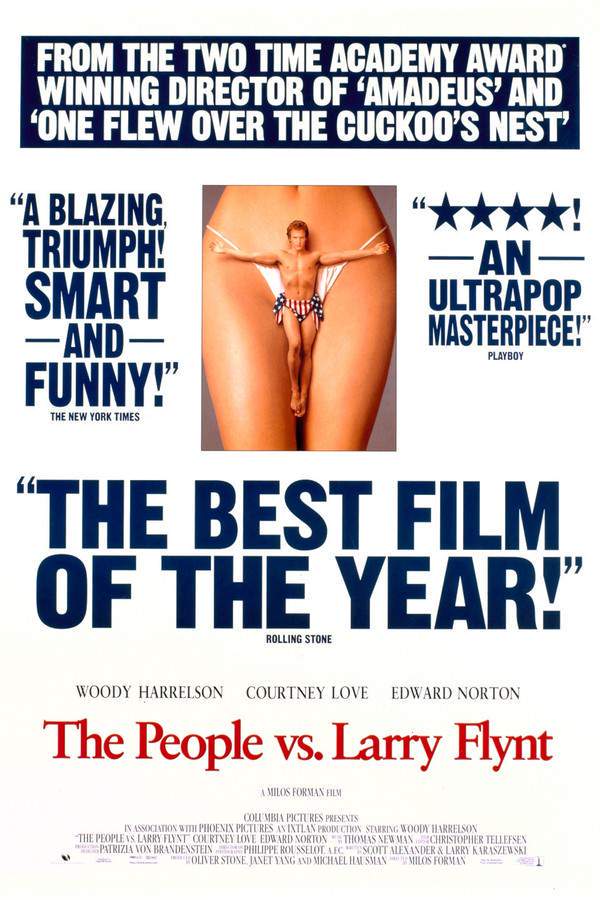
The People vs. Larry Flynt

The People vs. Larry Flynt

Year: 1996

Runtime: 129 min

Language: English

Director: Milos Forman

BiographyDrama

Facing constant legal battles and personal attacks, pornographer Larry Flynt finds an unexpected supporter in his lawyer, Alan Isaacman. After a near-fatal assassination attempt leaves him paralyzed, Flynt perseveres, fueled by his commitment to free speech. His case ultimately leads to a pivotal Supreme Court challenge, where his reputation and the principles he defends are put to the ultimate test.

Warning: spoilers below!

Haven’t seen The People vs. Larry Flynt yet? This summary contains major spoilers. Bookmark the page, watch the movie, and come back for the full breakdown. If you're ready, scroll on and relive the story!

The People vs. Larry Flynt (1996) – Full Plot Summary & Ending Explained

Read the complete plot breakdown of The People vs. Larry Flynt (1996), including all key story events, major twists, and the ending explained in detail. Discover what really happened—and what it all means.

In 1953, a young Larry Flynt is found peddling moonshine in Kentucky. Fast forward twenty years, and he, portrayed by Woody Harrelson, along with his younger brother Jimmy (played by Brett Harrelson), operates the Hustler Go-Go club in Cincinnati. As profits dwindle, Flynt makes the bold decision to launch a newsletter featuring nude images of the club’s entertainers, marking the inception of Hustler magazine. Initially, the magazine struggles for traction, but everything changes in 1975 when it publishes scandalous photos of former First Lady Jackie Kennedy Onassis, leading to skyrocketing sales.

Amid this whirlwind of success, Flynt becomes enamored with Althea Leasure, a stripper played by Courtney Love, who works at one of his establishments. With the support of Althea and Jimmy, Flynt’s financial gains soar, yet his notoriety grows as he becomes a target for anti-pornography activists. In fiery debates, he provocatively remarks: > “Murder is illegal, but if you take a picture of it you may get your name in a magazine or maybe win a Pulitzer Prize… However, sex is legal, but if you take a picture of that act, you can go to jail.”

As Flynt gets embroiled in significant legal battles, he finds an unlikely ally in young attorney Alan Isaacman (played by Edward Norton). The tumultuous year 1975 brings a severe setback for Flynt when he faces a court ruling against him in Cincinnati for smut-peddling but is released shortly after due to a technicality. Around this time, Ruth Carter Stapleton, a devout Christian and sister of President Jimmy Carter, approaches Flynt, encouraging him to turn toward faith. Struck by her words, Flynt begins to let religion seep into his life and his magazine’s content.

By 1978, a tragic shooting incident occurs during a court session in Georgia, leaving Flynt paralyzed from the waist down, while Isaacman survives. Crippled by despair and longing for death, Flynt shifts to Beverly Hills, where he spirals into a dark abyss of depression and substance abuse. Althea, too, becomes entrapped in addiction to pain medications.

In 1983, a turning point emerges as Flynt undergoes back surgery, leading to a new sense of vitality. He reestablishes control over Hustler, which had been managed by Althea and Jimmy in his absence. However, the courtroom drama doesn’t end there; Flynt finds himself in legal hot water again after leaking videos related to the John DeLorean case. His outrageous behavior, such as hurling an orange at a judge and wearing a flag as a diaper, earns him a stint in a psychiatric ward, where he faces the realities of his bipolar disorder diagnosis.

During these turbulent times, Flynt publishes an audacious parody featuring Jerry Falwell, a fundamentalist preacher, which triggers a lawsuit for libel. In a surprising turn, Flynt countersues for copyright infringement. As the trial unfolds in December 1984, the resulting verdict finds Flynt guilty of emotional distress, though initially, it seems bleak.

Tragedy strikes again when Althea tragically succumbs to AIDS. After discovering her lifeless body in the bathtub in 1987, Flynt turns his focus back to the legal battle with Falwell, pressing Isaacman to appeal the decision to the Supreme Court. After much persistence, Isaacman agrees, and they take the case, Hustler Magazine v. Falwell, to the highest court. In 1988, Flynt witnesses a monumental moment as the court unanimously overturns the previous verdict.

In the aftermath of this victory, however, Flynt is left alone with his memories, watching old tapes of a vibrant Althea, both haunted by the past and unsettled by the price of his battles.

Last Updated: November 07, 2024 at 23:56

Mobile App Preview

Coming soon on iOS and Android

The Plot Explained Mobile App

From blockbusters to hidden gems — dive into movie stories anytime, anywhere. Save your favorites, discover plots faster, and never miss a twist again.

Sign up to be the first to know when we launch. Your email stays private — always.

Explore Movie Threads

Discover curated groups of movies connected by mood, themes, and story style. Browse collections built around emotion, atmosphere, and narrative focus to easily find films that match what you feel like watching right now.

Movies about controversial free speech battles like The People vs. Larry Flynt

Controversial figures fighting landmark legal battles for their principles.If you enjoyed the legal and moral complexities of The People vs. Larry Flynt, explore more movies about flawed underdogs fighting for unpopular freedoms. These films often feature intense courtroom drama, dark personal struggles, and a bittersweet tone, chronicling the real-life figures who challenged the system.

legal dramadefiantcourtroombiopicfree speechcontroversialperseverancemoral complexity

Narrative Summary

The narrative typically follows a biographical arc, charting the rise of a controversial figure, the legal and personal attacks they endure, and their perseverance through a pivotal court case. The journey is marked by significant personal sacrifice, including damaged relationships, health crises, and public scorn, culminating in a legal victory that feels morally complex rather than purely triumphant.

Why These Movies?

Movies are grouped here based on their shared focus on a real-life, contentious legal battle centered on First Amendment rights or civil liberties. They share a dark, heavy tone, a mix of steady and variable pacing that builds to courtroom intensity, and a protagonist who is both visionary and deeply flawed.

Movies with bittersweet victories and heavy costs like The People vs. Larry Flynt

Stories where professional success comes shadowed by profound personal loss.For viewers who appreciated the complex emotional resolution of The People vs. Larry Flynt, this list features movies where a hard-won public triumph is tempered by private sorrow. These stories explore the theme of success bought at a great personal price, often leaving characters isolated despite their achievements.

bittersweettragic victorypersonal sacrificemelancholicdefiantperseveranceemotional costisolated triumph

Narrative Summary

The narrative pattern involves a parallel track: the protagonist's determined pursuit of a goal (a court case, a business, an artistic vision) and the simultaneous erosion of their personal life through tragedy, addiction, or loss. The climax sees the goal achieved, but the resolution focuses on the character alone, grappling with the hollow space where their personal happiness used to be.

Why These Movies?

These films are grouped by their shared emotional structure: a bittersweet ending where professional accomplishment is inextricably linked with personal sacrifice. They carry a heavy emotional weight, often feature a dark or melancholic tone, and leave the audience with a feeling of complex, unresolved sadness alongside the victory.

Unlock the Full Story of The People vs. Larry Flynt

Don't stop at just watching — explore The People vs. Larry Flynt in full detail. From the complete plot summary and scene-by-scene timeline to character breakdowns, thematic analysis, and a deep dive into the ending — every page helps you truly understand what The People vs. Larry Flynt is all about. Plus, discover what's next after the movie.

The People vs. Larry Flynt Timeline

Track the full timeline of The People vs. Larry Flynt with every major event arranged chronologically. Perfect for decoding non-linear storytelling, flashbacks, or parallel narratives with a clear scene-by-scene breakdown.

The People vs. Larry Flynt Timeline

Characters, Settings & Themes in The People vs. Larry Flynt

Discover the characters, locations, and core themes that shape The People vs. Larry Flynt. Get insights into symbolic elements, setting significance, and deeper narrative meaning — ideal for thematic analysis and movie breakdowns.

Characters, Settings & Themes in The People vs. Larry Flynt

The People vs. Larry Flynt Spoiler-Free Summary

Get a quick, spoiler-free overview of The People vs. Larry Flynt that covers the main plot points and key details without revealing any major twists or spoilers. Perfect for those who want to know what to expect before diving in.

The People vs. Larry Flynt Spoiler-Free Summary

More About The People vs. Larry Flynt

Visit What's After the Movie to explore more about The People vs. Larry Flynt: box office results, cast and crew info, production details, post-credit scenes, and external links — all in one place for movie fans and researchers.

More About The People vs. Larry Flynt

Similar Movies to The People vs. Larry Flynt

Discover movies like The People vs. Larry Flynt that share similar genres, themes, and storytelling elements. Whether you’re drawn to the atmosphere, character arcs, or plot structure, these curated recommendations will help you explore more films you’ll love.