Plot Explained Spoilers guaranteed!
Plot Explained

Browse by genre

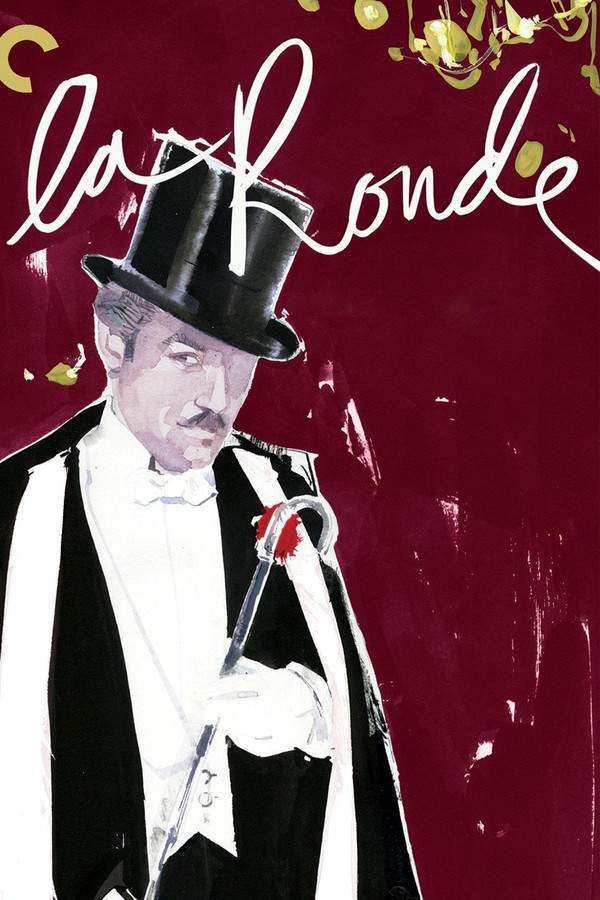
La Ronde (1951) movie poster

Plot Summary

La Ronde (1951) Plot Summary Explained

Release, runtime and language
1951 · 93 min · French
JustWatch #31,356 1
Directed by
Max Ophüls
Starring
Jean-Louis Barrault, Anton Walbrook, Simone Signoret, Simone Simon, Daniel Gélin, Danielle Darrieux

A sly narrator explores a complex series of interconnected relationships in this acclaimed French drama. The story follows a prostitute, a soldier, and a maid as their passionate encounters reveal a cycle of desire, betrayal, and deception. Each character’s actions impact the others, creating a mesmerizing web of secrets and consequences that unfold with each passing encounter.

On this page (7)
  1. 1 Where to watch
  2. 2 What happens: full plot
  3. 3 Plot questions answered
  4. 4 The book behind the movie
  5. 5 Movie threads
  6. 6 Movies like La Ronde
  7. 7 Every angle

Where to watch

Where to Watch La Ronde (1951)

Where can you watch La Ronde? Stream, rent or buy it in the US, including on Fawesome and Mometu: current JustWatch availability with up-to-date prices.

Streaming availability powered by JustWatch

Full plot summary · contains spoilers

What Happens in La Ronde: Full Plot Summary

The whole story of La Ronde (1951) explained, from the opening scene to the final frame: every key event, every twist and what it all adds up to. Read it as a quick recap before the sequel, to check a scene you missed, or to finally understand what really happened.

The master of ceremonies guides the audience through a night composed of episodic encounters, each a turn in the endless waltz of love. What follows is a delicate chain of intimate vignettes that move from shadow to light, room to street, and back again in a circular dance that refuses to settle on any single moral.

The journey opens under a bridge, where a prostitute and a soldier cross paths in the half-light, the city’s noise muffled by water and distance. From that quiet, the narrative slips into a dance hall, where a soldier’s visit ripples into a second rendezvous with a chambermaid who later shares a quiet moment on an empty bench in the park, a small scene of discretion amid the bustle of the city. The mood shifts as the chambermaid’s life brushes against another, when she becomes entangled in a relationship with the son of her employers, a bold choice made in a moment of vulnerability while the parents are away.

Across the next turn of the circle, a young man is drawn into a discreet liaison with the young wife of an older, prosperous businessman. Their liaison unfolds against a backdrop of quiet bedrooms and social proprieties, where a whispered conversation between wife and husband at the edge of sleep reveals tensions that are both practical and personal. The husband, in a moment that contrasts with his wife’s unease, escorts a young woman to a private dining room in a fashionable restaurant, where wine and intoxication blur boundaries and judgment.

The pattern continues as the young woman spends time alone with a poet in his apartment, a space charged with the allure and danger of words that can coax or betray. The poet’s world collides with the actress who appears on his stage, and their heated discussion in her dressing room after a performance spins around where they might spend the night, a debate between art and appetite that remains unresolved. The actress is then visited in her bedroom by a count who has seen her perform, a visit that teeters between admiration and pursuit, between propriety and longing.

Yet the circle is complete not with a tidy ending but with a reversal of fortune: the count, having once imagined a private, elegant connection, finds himself alone, inebriated, and drifting toward the bed of the very prostitute who opened the night. The sequence closes as it began—in proximity to the bridge and the streets—signaling that desire travels in loops, drawing people across a spectrum of social spaces and leaving them to face the consequences of their choices.

Throughout these intertwined episodes, the film surveys how longing crosses class lines and social codes, often in quiet, unspoken moments that accumulate into a larger silhouette of human longing. The atmosphere blends moments of tenderness with sharper, observational humor, always maintaining a neutral lens that records rather than condemns. The energy shifts from the intimate to the public, from private rooms to open spaces, and back again, all while keeping the same essential rhythm: a waltz that never fully ends but simply renews itself with each new pairing.

The ensemble performances lend the stories their texture and mood, adding nuance to each fleeting connection. The actors move through their scenes with a restrained intensity, letting the dialogue and glances carry the weight of the film’s meditation on love’s recurring patterns. The film’s elegance lies in its ability to render desire as a shared human experience—bright, aching, awkward, and sometimes comic—without oversimplifying any character’s interior life.

- Featuring performances by Jean-Louis Barrault, Anton Walbrook, Simone Signoret, Simone Simon, Daniel Gélin, Danielle Darrieux, Isa Miranda, Fernand Gravey, Odette Joyeux, and Serge Reggiani.
Last updated: February 24, 2026 at 10:01

Was this helpful?

Plot questions answered

La Ronde Plot Explained: Your Questions Answered

The questions people ask most about La Ronde (1951): what happens in the confusing scenes, why the characters do what they do, the twists, hidden details and what the ending means. Each answer contains spoilers.

Q1

Why does the count end up with the prostitute at the end?

The count, originally intending to visit the actress in her bedroom, gets drunk and instead stumbles into the bed of the very prostitute who opened the night's encounters. This reversal completes the circular structure, showing how desire moves unpredictably through social classes and how the night's cycle returns to its starting point. The ironic twist emphasizes the film's theme that people inevitably gravitate toward similar destinations despite their varied pursuits.

Foreshadowing: The prostitute's opening encounter with the soldier establishes the lowest rung of society from which the count descends by night's end.

  • count
  • prostitute
  • ending
  • cycle
  • desire
  • irony
Q2

How are all the characters connected in La Ronde?

The characters form a chain of interconnected affairs that circles back on itself. Each person becomes involved with someone new, passing desire along like a baton. The prostitute→soldier→chambermaid→employer's son→young man's lover→businessman→young woman→poet→actress→count→prostitute sequence completes a full loop, with each link affecting the next. No relationship is truly isolated; each encounter creates consequences that ripple through the entire chain.

Foreshadowing: The master of ceremonies explicitly frames the evening as a continuous waltz, hinting at the cyclical nature of what will unfold.

  • characters
  • connections
  • chain
  • interconnected
  • affairs
Q3

What does the circular structure mean thematically?

The circular structure represents the endless, repetitive nature of desire and human pursuit of pleasure. The film suggests that love and lust follow predictable patterns regardless of social class or moral intentions. Characters may believe they are pursuing something unique, but the structure reveals they are merely moving through the same universal cycle. This creates a bittersweet commentary on human hypocrisy and the impossibility of escaping fundamental desires.

Foreshadowing: The opening MC establishes the 'waltz of love' as an endless, repeating phenomenon.

  • circular structure
  • theme
  • repetition
  • cycle
  • meaning
  • symbolism
Q4

Why does the chambermaid pursue the employer's son?

The chambermaid succumbs to the employer's son while his parents are away, driven by a combination of vulnerability, opportunity, and social aspiration. Her position as domestic worker makes her acutely aware of class boundaries, and the encounter represents both a transgression of those boundaries and a moment of personal empowerment. The affair reflects the film's observation that desire often emerges in forbidden spaces, where social codes temporarily relax.

Foreshadowing: Earlier, she seeks privacy with the soldier on a park bench, hinting at her willingness to engage in discreet encounters.

  • chambermaid
  • employer son
  • affair
  • class
  • desire
Q5

Why do the characters keep repeating the same patterns?

The characters repeat patterns because the film presents desire as a fundamental human drive that transcends individual will or moral resolution. Each character, regardless of social standing or intentions, finds themselves drawn into similar cycles of pursuit, satisfaction, and consequence. The film doesn't condemn or praise these repetitions, it observes them with philosophical detachment, suggesting that human nature itself is inherently cyclical when it comes to love and longing.

Foreshadowing: The narrative tone remains neutral and observational throughout, never judging any character's choices.

  • repetition
  • patterns
  • desire
  • human nature
  • cycles
Q6

What draws the young woman to the poet?

The young woman is drawn to the poet's apartment by a combination of artistic allure and emotional vulnerability. After being taken to dinner by the businessman and intoxicated, she finds in the poet a figure who offers intellectual and emotional connection rather than mere physical pursuit. Their encounter suggests that even within the night's cycle of superficial encounters, genuine human connection remains possible, at least temporarily.

Foreshadowing: The businessman gets her drunk at dinner, lowering her inhibitions and creating openness to a different kind of encounter.

  • young woman
  • poet
  • art
  • attraction
  • connection
Q7

Why does the businessman take the young woman to dinner?

The businessman takes the young woman to a private dining room in an upscale restaurant and gets her drunk, using alcohol to loosen her moral restraints. This scene demonstrates how wealth and social position create opportunities for exploitation. The husband engages in the same kind of secret pursuit his own wife conducts with her young lover, exposing the hypocrisy embedded in the upper classes. The dinner becomes a microcosm of power dynamics and moral corruption.

Foreshadowing: Earlier, his wife lies beside him discussing their failing marriage while harboring her own secret affair.

  • businessman
  • young woman
  • dinner
  • seduction
  • power
Q8

Why do the characters pursue forbidden affairs?

Characters pursue forbidden affairs for varied but interconnected reasons: escape from monotonous marriages, pursuit of social advancement, genuine emotional need, or simply the thrill of transgression. The film presents these pursuits without heavy moral judgment, instead examining how social codes create the very conditions that make affairs tempting. The nighttime setting itself represents a temporary suspension of normal social rules, where desire can move freely across class boundaries.

Foreshadowing: The master of ceremonies frames the entire night as a special time outside normal moral constraints.

  • forbidden
  • affairs
  • desire
  • transgression
  • marriage
Q9

What is the purpose of the master of ceremonies narrator?

The master of ceremonies serves as both framing device and philosophical observer, announcing each new encounter while maintaining ironic distance. He frames the evening as an 'endless waltz' and guides the audience through the chain of vignettes. His presence reminds viewers they are watching a deliberate theatrical construction, preventing purely emotional engagement and encouraging intellectual reflection on the patterns being depicted.

Foreshadowing: The MC opens by explicitly stating the audience will witness episodes in the 'endless waltz of love.'

  • narrator
  • master of ceremonies
  • framing
  • structure
  • observer
Q10

How does the film critique society through these relationships?

The film critiques societal hypocrisy by showing characters across different classes engaging in nearly identical moral transgressions while maintaining public appearances. The businessman condemns what his wife does while pursuing his own affairs. The count seeks 'refined' connections but ultimately descends to the same level as the prostitute. By linking all these characters in one continuous cycle, the film argues that social class provides no real protection against universal human desires, and that moral superiority is largely an illusion.

Foreshadowing: The steady, observational tone never judges, letting the parallels speak for themselves.

  • society
  • hypocrisy
  • class
  • morality
  • critique
Q11

Why does the film end without resolution?

The film ends with the circle complete but unresolved because the narrative treats desire as an eternal recurrence rather than a problem to be solved. There is no moral lesson or character transformation, only the observation that the cycle continues. This bitter ending reflects the film's philosophical detachment: human desire follows patterns that persist regardless of individual choices, social codes, or passing time.

Foreshadowing: The MC explicitly frames the waltz as 'endless,' promising no final conclusion.

  • ending
  • resolution
  • circle
  • cycle
  • bittersweet

Movie threads

More Movies Like La Ronde, by Mood & Story

Curated lists built around what makes La Ronde tick: the same mood, the same kind of story or the same emotional payoff. Each list explains why these movies belong together.

Circular storytelling movies like La Ronde

Stories where characters' fates interweave in a cleverly constructed design. Find more films that masterfully weave together interconnected stories in a circular or episodic structure. If you liked the clever narrative design of La Ronde, you'll discover movies where characters' lives and choices create a fascinating web of consequences.

  • interconnected
  • episodic
  • reflective
  • ironic
  • structured
  • fateful
  • Tone: reflective, ironic, bittersweet
  • Pacing: steady, deliberate
Why these movies?

The story pattern: Narratives in this thread are defined by their structure, often unfolding as a series of vignettes or episodes where characters from one segment appear in the next. The plot progresses not in a straight line but in a circle or spiral, emphasizing themes of fate, chance, and the unseen threads that bind people together. The story's power comes from seeing how small actions reverberate through the web of connections.

Why they belong together: These movies are grouped together because they share a unique narrative architecture that prioritizes structure as a key storytelling device. They offer a puzzle-like viewing experience, rewarding the audience with a satisfying 'aha' moment when the full pattern of interconnection is revealed.

Cynical elegant movies like La Ronde

Witty, sophisticated dramas that expose social hypocrisy with a knowing smile. Explore more sophisticated dramas that share La Ronde's wry and elegant tone. Discover films that cleverly dissect social hypocrisy and human folly with a blend of wit, style, and ironic observation.

  • cynical
  • elegant
  • sophisticated
  • ironic
  • languid
  • worldly
  • Tone: bittersweet, ironic, cynical
  • Pacing: languid, steady
Why these movies?

The story pattern: The journey in these films is less about emotional catharsis and more about intellectual observation. Characters engage in games of seduction, power, and social climbing, often trapped by their own pretensions. The narrative unfolds with a sense of inevitability, guided by a tone that is more amused than judgmental, highlighting the cyclical and often hypocritical nature of human interactions.

Why they belong together: These movies are united by their distinct mood—a blend of sophistication, irony, and a detached, sometimes melancholic, view of human relationships. They offer a viewing experience that is intellectually stimulating and stylistically refined, appealing to those who enjoy character-driven stories that critique society with wit rather than outrage.

If you liked this

Movies Like La Ronde

Similar movies to La Ronde: the same genre, themes or kind of story. Each one comes with its own plot summary, timeline and ending explained.

Browse all movie summaries

Every angle

La Ronde (1951) Explained: Plot, Timeline & Characters

Everything about La Ronde in one place: what happens in the plot summary, the timeline in chronological order, the characters and meaning and a spoiler-free summary. What's After the Movie adds the cast, box office and post-credit scenes.

Coming soon on iOS and Android

The Plot Explained Movie Summary App

Plot summaries, endings explained and timelines on your phone. Catch up on any movie in minutes, save your favorites and never miss a twist again.

Be the first to know when we launch. Your email stays private, always.

Learn more about the app