





Plot Explained Spoilers guaranteed!
Plot Explained

Browse by genre

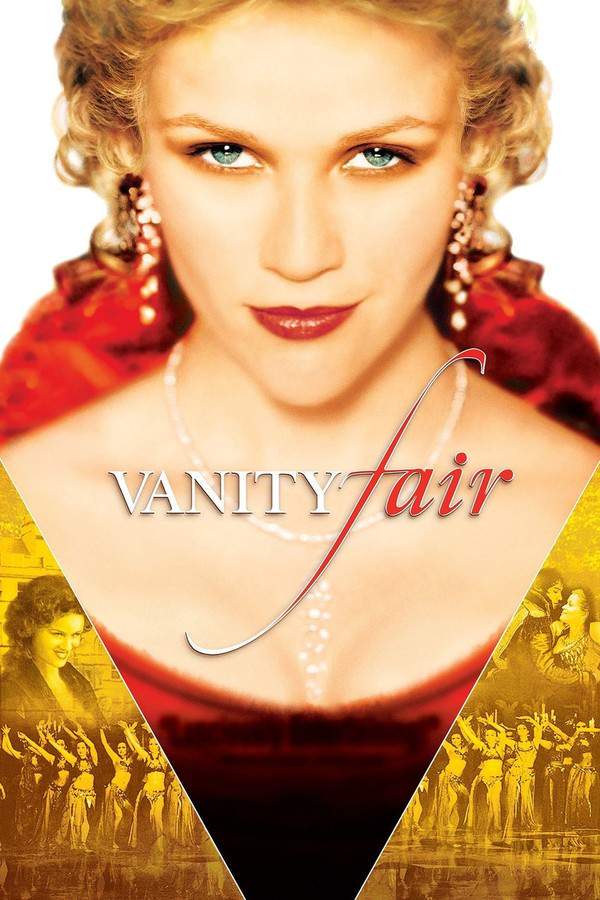
Vanity Fair (2004) movie poster

Plot Summary

Vanity Fair (2004) Plot Summary Explained

Release, runtime and language
2004 · 141 min · English
Directed by
Mira Nair
Starring
Reese Witherspoon, Gabriel Byrne, Romola Garai, Jonathan Rhys Meyers
Budget
$23M

In 19th-century England, Becky Sharp is a determined young woman who sets out to rise above her modest background and enter the world of the aristocracy. Her ambition and wit lead her through a complex landscape of wealth, power, and romance. She forms alliances and rivals as she pursues status and love, ultimately marrying the charming but flawed Rawdon Crawley. Becky’s journey reveals the deceptive nature of high society and the price one pays for social climbing.

On this page (7)
  1. 1 Where to watch
  2. 2 What happens: full plot
  3. 3 Plot questions answered
  4. 4 The book behind the movie
  5. 5 Movie threads
  6. 6 Movies like Vanity Fair
  7. 7 Every angle

Where to watch

Where to Watch Vanity Fair (2004)

Where can you watch Vanity Fair? Stream, rent or buy it in the US, including on Amazon Video, Apple TV Store and Fandango At Home: current JustWatch availability with up-to-date prices.

Streaming availability powered by JustWatch

Full plot summary · contains spoilers

What Happens in Vanity Fair: Full Plot Summary

The whole story of Vanity Fair (2004) explained, from the opening scene to the final frame: every key event, every twist and what it all adds up to. Read it as a quick recap before the sequel, to check a scene you missed, or to finally understand what really happened.

The film Vanity Fair (2004) brings to life one of the most cherished 19th-century novels, penned by William Makepeace Thackeray, who was a contemporary and friend of Charles Dickens. The story begins by introducing us to our two protagonists, Rebecca Sharp and Amelia Sedley, who share a close friendship as they are on the verge of graduating from an Academy for Young Ladies. Amelia, hailing from a wealthy family, is characterized by her kindness and innocence, which endears her to her classmates and earns her the admiration of her teachers.

Meanwhile, the resourceful Rebecca, often referred to as "Becky," is a poor orphan, precariously positioned as an unpaid French teacher at the academy. The name "Sharp" is quite fitting for her character, as she frankly navigates her surroundings with little regard for those who don't matter. Her only ally is Amelia, and she neither seeks nor cares for friendship beyond her. After graduation, Becky is invited to the Sedley residence for a brief stay before she sets out to find work as a governess.

During her time at the Sedley home, she encounters two young men: Josiah, Amelia's brother, who is somewhat of a figure of ridicule after returning home from his job as an administrator in India, and George, Amelia's fiancé. George has numerous flaws—he's a snobbish character who shows little appreciation for Amelia's love despite their lifelong engagement. Furthermore, he squanders his father's riches on gambling, being encouraged by his parent to pursue a lifestyle that elevates him above his family's humble beginnings in commerce.

This gathering of four heads to a local pleasure garden, where Becky sets her sights on Josiah, contemplating a potential match. Despite her cunning efforts, George undermines Becky’s chances by making a derisive comment to Josiah about the prospect of having a lowly governess in their family. Both men are acutely aware of their social standings and the opinions of their peers, which leaves Becky’s first bid for acceptance in society unsuccessful.

As the narrative unfolds, George's father facilitates his social climb by purchasing him a commission in a military regiment. This sets the stage for the introduction of Captain William Dobbin, a man whose affection for Amelia is a testament to true love, standing in stark contrast to the superficial relations around them.

Last updated: November 03, 2024 at 14:27

Was this helpful?

Plot questions answered

Vanity Fair Plot Explained: Your Questions Answered

The questions people ask most about Vanity Fair (2004): what happens in the confusing scenes, why the characters do what they do, the twists, hidden details and what the ending means. Each answer contains spoilers.

Q1

Why does Becky try to win over Josiah at the Sedley home?

Becky targets Josiah because she sees him as her best opportunity for social advancement. Josiah is Amelia's brother and comes from a wealthy family, having returned from a comfortable position in India. Despite his ridicule among peers, his wealth and social standing make him an attractive match for a poor orphan like Becky, who has little other recourse to improve her status in society.

  • becky sharp
  • josiah sedley
  • social climbing
  • marriage
  • ambition
Q2

Why does George ruin Becky's chances with Josiah?

George undermines Becky because of his snobbish attitudes about social class. When Becky tries to attract Josiah, George makes a disparaging remark about the prospect of a lowly governess joining their family. Both George and Josiah are acutely aware of their social standings and care deeply about maintaining their status, so George's comment makes Josiah withdraw any interest in Becky entirely.

  • george sedley
  • becky sharp
  • social class
  • josiah sedley
  • prejudice
Q3

Why does George's father purchase a military commission for him?

George's father uses his wealth to buy George a commission in a military regiment as a way to facilitate his social climbing. The father encourages George to pursue a lifestyle that elevates him above their family's humble beginnings in commerce. This purchase represents how wealth can buy social status in their society, regardless of merit or actual achievement.

  • george sedley
  • military commission
  • social climbing
  • father
  • wealth
Q4

Why does Amelia remain loyal to George despite his flaws?

Amelia remains loyal because she embodies kindness, innocence, and romantic idealism. Her lifelong engagement to George and her genuine affection for him blind her to his selfishness and gambling habits. Unlike the calculating Becky, Amelia loves sincerely and cannot easily abandon that commitment, even as George's irresponsible behavior threatens their future.

  • amelia sedley
  • george sedley
  • loyalty
  • love
  • idealism
Q5

Why is Becky working as an unpaid teacher at the academy?

Becky works as an unpaid French teacher at the academy because she has no family wealth or connections to support her. As a poor orphan, she must work to survive, and her position at the academy provides her with shelter and meals while she seeks more advantageous employment as a governess. Her situation reflects the limited options available to women of her social class.

  • becky sharp
  • teacher
  • orphan
  • governess
  • social class
Q6

What role does Captain Dobbin play in the story?

Captain William Dobbin is introduced as a moral foil to George. While George is selfish and irresponsible, Dobbin genuinely loves Amelia and represents true, selfless affection. His introduction signals the contrast between shallow relationships based on status and deeper connections based on genuine emotion, highlighting the film's exploration of authentic versus transactional love.

  • captain dobbin
  • amelia sedley
  • george sedley
  • love
  • contrast
Q7

Why is the surname Sharp appropriate for Becky?

The surname Sharp perfectly describes Rebecca's personality because she is cunning, shrewd, and quick-witted. She navigates her surroundings with sharp intelligence and uses her wit to manipulate situations to her advantage. The name signals her as a character who will use any means necessary to achieve her ambitions, setting her apart from more naïve characters.

  • becky sharp
  • character name
  • wit
  • cunning
  • personality
Q8

Why does Becky not seek friendships beyond Amelia?

Becky does not pursue other friendships because she is pragmatically focused on survival and advancement rather than social connections. She sees little value in relationships that cannot benefit her circumstances. Amelia is her only ally because their friendship began at the academy, but Becky neither seeks nor cares for friendship beyond what serves her practical goals.

  • becky sharp
  • amelia sedley
  • friendship
  • ambition
  • survival
Q9

Why is the visit to the pleasure garden significant?

The pleasure garden visit marks Becky's first direct attempt to secure a husband and climb socially. It demonstrates her boldness and strategic thinking, as she actively pursues Josiah despite their vast social gap. The scene also exposes the harsh reality of class barriers, as her attempt is swiftly shut down by George's intervention, establishing the obstacles she will face throughout the story.

  • pleasure garden
  • becky sharp
  • social attempt
  • class barriers
  • marriage
Q10

Why does George waste his father's money on gambling?

George gambles because he is irresponsible and lacks appreciation for the wealth his father provides. His father actually encourages this lifestyle, viewing it as a means to elevate their family above their commercial roots. George prioritizes immediate pleasure and status over financial responsibility, demonstrating the moral weaknesses that will ultimately lead to his downfall.

  • george sedley
  • gambling
  • father
  • wealth
  • irresponsibility

Movie threads

More Movies Like Vanity Fair, by Mood & Story

Curated lists built around what makes Vanity Fair tick: the same mood, the same kind of story or the same emotional payoff. Each list explains why these movies belong together.

Movies about ambitious social climbers like Vanity Fair

Sharp, character-driven stories about navigating the intricate rules of high society. If you enjoyed the sharp social maneuvering in Vanity Fair, you'll appreciate these films that explore similar themes of ambition, class, and the price of entry into elite circles. Discover other stories featuring cunning protagonists navigating the complex world of high society.

  • satirical
  • calculating
  • observational
  • tense
  • nostalgic
  • ambitious
  • Tone: satirical, observational, bittersweet
  • Pacing: steady, novelistic
Why these movies?

The story pattern: The narrative pattern typically involves a clever outsider identifying the weaknesses and hypocrisies of an established social system. The protagonist's journey is a series of calculated moves—romantic, financial, and social—that bring them closer to their goal, often at the cost of genuine relationships. The central conflict is between personal ambition and integrity, set against a backdrop of lavish but deceptive opulence.

Why they belong together: Movies are grouped here based on their shared focus on a specific character archetype—the social climber—and the thematic exploration of class mobility. They share a tone that is both satirical and observational, creating a compelling and often critical look at the mechanics of power and status.


Bittersweet period dramas with complex endings like Vanity Fair

Elegant historical stories where ambition and love lead to complex, compromised endings. Fans of the nuanced ending in Vanity Fair will find similar emotional depth in these films. Explore historical dramas that don't offer simple happily-ever-afters but instead deliver bittersweet conclusions about love, ambition, and the sacrifices made for social standing.

  • bittersweet
  • melancholic
  • nostalgic
  • observational
  • romantic
  • thoughtful
  • Tone: bittersweet, melancholic, observational
  • Pacing: steady, character-driven
Why these movies?

The story pattern: These stories often unfold over a significant span of time, tracking a protagonist's pursuit of a goal—be it love, status, or security. The arc is not one of pure triumph or tragedy but of nuanced achievement. The climax typically reveals that success comes with significant personal costs, resulting in an ending that feels earned, realistic, and emotionally complex rather than neatly resolved.

Why they belong together: These films are connected by a specific tonal and emotional blend: the bittersweet feeling that arises from stories where characters achieve their goals but lose something essential in the process. The shared period setting and steady pacing create a cohesive viewing experience focused on character and consequence.

If you liked this

Movies Like Vanity Fair

Similar movies to Vanity Fair: the same genre, themes or kind of story. Each one comes with its own plot summary, timeline and ending explained.

Browse all movie summaries

Every angle

Vanity Fair (2004) Explained: Plot, Timeline & Characters

Everything about Vanity Fair in one place: what happens in the plot summary, the timeline in chronological order, the characters and meaning and a spoiler-free summary. What's After the Movie adds the cast, box office and post-credit scenes.

Coming soon on iOS and Android

The Plot Explained Movie Summary App

Plot summaries, endings explained and timelines on your phone. Catch up on any movie in minutes, save your favorites and never miss a twist again.

Be the first to know when we launch. Your email stays private, always.

Learn more about the app