Plot Explained Spoilers guaranteed!
Plot Explained

Browse by genre

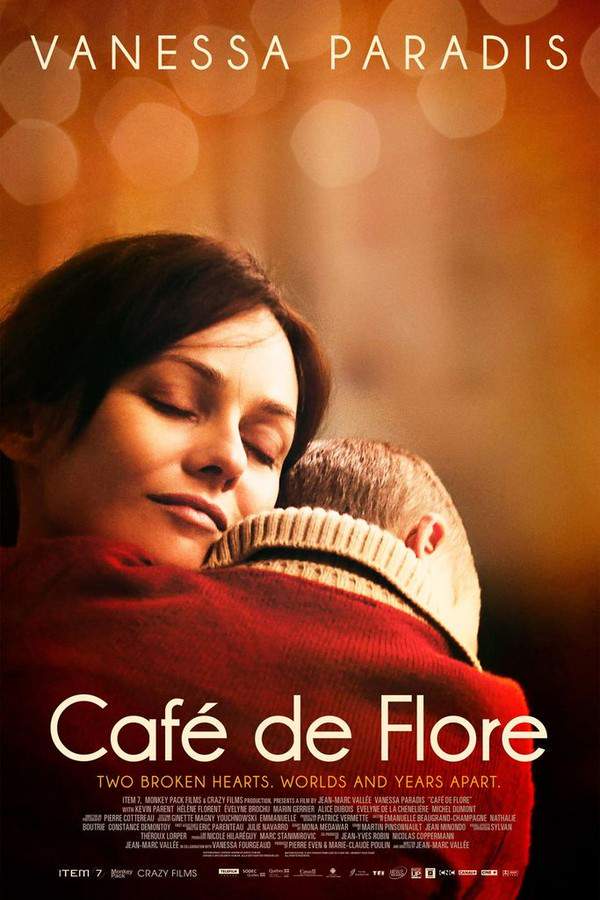
Café de Flore (2012) movie poster

Plot Summary

Café de Flore (2012) Plot Summary Explained

Release, runtime and language
2012 · 120 min · French
Directed by
Jean-Marc Vallée

This poignant drama explores the interconnectedness of lives across generations. In 1960s Paris, Jacqueline navigates the challenges of motherhood while caring for her disabled child. Decades later, in modern-day Montreal, Antoine searches for answers about his past and the lingering impact of lost loves, finding his path unexpectedly linked to Jacqueline's story and the enduring legacy of a Parisian café.

On this page (6)
  1. 1 Where to watch
  2. 2 What happens: full plot
  3. 3 Plot questions answered
  4. 4 Movie threads
  5. 5 Movies like Café de Flore
  6. 6 Every angle

Where to watch

Where to Watch Café de Flore (2012)

Where can you watch Café de Flore? Stream, rent or buy it in the US, including on Kino Film Collection, Kanopy and Amazon Video: current JustWatch availability with up-to-date prices.

Streaming availability powered by JustWatch

Full plot summary · contains spoilers

What Happens in Café de Flore: Full Plot Summary

The whole story of Café de Flore (2012) explained, from the opening scene to the final frame: every key event, every twist and what it all adds up to. Read it as a quick recap before the sequel, to check a scene you missed, or to finally understand what really happened.

Healing a broken heart is a profound journey, often spanning lifetimes, as depicted in Cafe de Flore, a captivating tale that intricately weaves together the lives of its characters across different eras. The story traverses time and space, revealing the deep, mysterious connections that can exist between people.

At its core, Cafe de Flore is a love story set against the backdrop of 1960s Paris and present-day Montreal. It delves into the lives of Jacqueline, a devoted mother faced with the challenges of raising her son, Laurent, who has Down Syndrome. In this vibrant yet poignant narrative, we see Jacqueline's unwavering commitment to provide Laurent with a "normal" life filled with joy and love. Having been abandoned by her husband, she sacrifices everything to ensure her son receives the best she can offer, intertwining her existence deeply with his.

On the other hand, we explore the life of Antoine, a successful DJ in his early 40s, who appears to lead a fulfilling life, complete with a thriving career and the love of his partner, Rose. However, beneath this surface of apparent perfection lies the ache of heartbreak, as he navigates the aftermath of his recent divorce from his ex-wife, Carole. Carole, grappling with her emotional turmoil, finds herself haunted by the images of Jacqueline and Laurent, their presence slipping into her dreams and blurring the lines between reality and imagination.

> "The agony of heartbreak is too much to bear..."

As Carole embarks on a quest to decode the mysterious significance of her dreams, she becomes increasingly consumed by her hallucinations. In her search for clarity, she turns to medication and illicit substances but ultimately seeks guidance from a spiritual mentor. This guide leads her to a startling conclusion: Jacqueline and Laurent may be the past incarnations of her and Antoine, warning her of impending tragedy.

Amidst Carole's internal battle, the tale hints at the essential choices we face when confronted with pain. The resolution comes as she contemplates whether to linger in sorrow or bravely step forward into a new chapter of her life.

The title Cafe de Flore is symbolic, representing more than just a renowned café in Boulevard St-Germain; it embodies a musical theme that resonates throughout the film. The soundtrack seamlessly meshes smooth electronic beats with the nostalgic sounds of classic big band arrangements, establishing a melodic connection between the lives unfolding in 1960s Paris and Montreal's contemporary scene.

As the stories of Jacqueline and Antoine converge, Cafe de Flore envelops the audience in a rich tapestry of love in all its forms—euphoric, obsessive, tragic, and ultimately, timeless. The film invites viewers to reflect on the enduring power of love, even amid heartbreak and loss.

Last updated: May 12, 2025 at 07:04

Was this helpful?

Plot questions answered

Café de Flore Plot Explained: Your Questions Answered

The questions people ask most about Café de Flore (2012): what happens in the confusing scenes, why the characters do what they do, the twists, hidden details and what the ending means. Each answer contains spoilers.

Q1

Why does Carole see visions of Jacqueline and Laurent?

Carole begins seeing Jacqueline and Laurent because she's experiencing a profound emotional crisis after her divorce from Antoine. Her mind, desperate to make sense of her heartbreak, creates vivid hallucinations of the mother-son duo from 1960s Paris. A spiritual guide later explains to Carole that these figures may be past incarnations trying to warn her about the nature of love and loss, suggesting a mystical connection across time.

Foreshadowing: Carole's visions intensify gradually, first appearing as fleeting images before consuming her consciousness.

  • carole
  • jacqueline
  • laurent
  • hallucinations
  • visions
  • divorce
Q2

What is the spiritual connection between Carole and Jacqueline?

The spiritual guide tells Carole that Jacqueline and Laurent are past incarnations of herself and Antoine. This revelation suggests their souls have been linked across decades, with Jacqueline's story in 1960s Paris serving as a mirror to Carole's present-day emotional struggle. The connection implies that the themes of love, sacrifice, and heartbreak transcend a single lifetime.

Foreshadowing: The recurring dream imagery planted early in the film hints at this deeper spiritual link.

  • reincarnation
  • spiritual connection
  • jacqueline
  • carole
  • past lives
Q3

Why does Jacqueline abandon everything for her son Laurent?

Jacqueline sacrifices her former life and aspirations because Laurent has Down Syndrome and requires constant care. After being abandoned by her husband, she devotes herself entirely to ensuring Laurent has a happy, normal life. This self-sacrifice represents unconditional maternal love and defines her entire identity throughout the 1960s Paris storyline.

Foreshadowing: The film establishes early that Jacqueline has no support system, making her dedication to Laurent both necessary and inevitable.

  • jacqueline
  • laurent
  • sacrifice
  • down syndrome
  • motherhood
Q4

How does Laurent's friendship with Véronique change his relationship with Jacqueline?

When Laurent befriends Véronique, another child with Down Syndrome, it transforms his world by introducing peer connection and joy. This friendship challenges Jacqueline because it forces her to accept that Laurent can thrive independently. It also brings new complexities, she must navigate her son's growing independence while managing her own fears about his future.

Foreshadowing: The friendship represents Laurent's first step toward a life beyond his mother's constant protection.

  • laurent
  • véronique
  • friendship
  • down syndrome
  • paris
Q5

What causes Carole's mental breakdown in Montreal?

Carole's mental breakdown stems from the devastating emotional toll of her divorce from Antoine. The heartbreak shatters her sense of self, leading to depression, hallucinations, and substance abuse as she desperately seeks answers. Her obsession with decoding the mysterious significance of Jacqueline and Laurent's images becomes a way to avoid confronting her own pain.

Foreshadowing: Carole's decline parallels Jacqueline's struggles, suggesting their souls share similar emotional vulnerabilities.

  • carole
  • breakdown
  • heartbreak
  • divorce
  • mental health
  • hallucinations
Q6

How are the 1960s Paris and present-day Montreal storylines connected?

The two timelines connect through the reincarnation theme and emotional parallels. Carole's spiritual journey reveals that Jacqueline's story is directly linked to her own, Jacqueline's sacrifices and heartbreak in the 1960s echo Carole's present-day pain. The film suggests their souls are connected across time, facing similar challenges of love, loss, and healing.

Foreshadowing: The musical theme of Café de Flore bridges both time periods, creating an auditory connection that hints at deeper links.

  • paris
  • montreal
  • timeline
  • connection
  • reincarnation
  • cross-time
Q7

What does the title Café de Flore represent in the film?

Café de Flore refers to the famous Parisian café on Boulevard St-Germain, but symbolically it represents a timeless musical theme that weaves through the film. The soundtrack blends smooth electronic beats with classic big band arrangements, creating a melodic thread that connects the 1960s Paris narrative to modern Montreal. The title embodies the enduring nature of love and connection across generations.

Foreshadowing: The musical motif appears early, establishing the cross-temporal bridge before the connection becomes explicit.

  • cafe de flore
  • title
  • music
  • soundtrack
  • paris
  • symbolism
Q8

What does Carole's final decision represent in the ending?

Carole's final decision represents choosing healing over dwelling in sorrow. Facing the overwhelming grief from her divorce, she must choose whether to continue bearing the agony of heartbreak or let go and step into a new chapter. Her choice mirrors Jacqueline's journey, suggesting she has processed the spiritual message and found the strength to move forward, embracing the possibility of new love rather than remaining trapped in loss.

Foreshadowing: Carole's entire arc builds toward this moment of choosing between despair and renewal.

  • carole
  • ending
  • healing
  • decision
  • resolution
  • closure
Q9

Why does Antoine's divorce from Carole drive so much of the present-day story?

Antoine's divorce from Carole is the catalyst for the entire present-day narrative. His separation triggers Carole's emotional collapse into hallucinations and substance abuse. The divorce also establishes the parallel to Jacqueline's abandonment, reinforcing the reincarnation theme, both women were left by partners and both must find ways to heal. Antoine's new life with Rose represents the possibility of moving forward that Carole struggles to embrace.

Foreshadowing: The film establishes Antoine's seemingly perfect life early, making the contrast with Carole's descent more stark.

  • antoine
  • carole
  • divorce
  • rose
  • montreal
Q10

Why does the film use nonlinear storytelling between the two time periods?

The nonlinear structure intercutting between 1960s Paris and present-day Montreal serves to reveal thematic parallels gradually. Rather than presenting two separate stories, the intercutting allows the audience to piece together the spiritual connection between the characters. This complexity reflects the film's themes of love transcending time while also mirroring how Carole's fragmented mental state perceives reality.

Foreshadowing: Early scenes jump between timelines without explanation, requiring viewers to trust the eventual connection.

  • nonlinear
  • narrative
  • structure
  • paris
  • montreal
  • storytelling

Movie threads

More Movies Like Café de Flore, by Mood & Story

Curated lists built around what makes Café de Flore tick: the same mood, the same kind of story or the same emotional payoff. Each list explains why these movies belong together.

Movies with interconnected timelines like Café de Flore

Narratives where separate stories across eras converge through shared emotions. Discover other emotionally rich movies like Café de Flore that tell nonlinear stories connecting different eras through shared themes of love, loss, and legacy. This collection is for viewers who appreciate complex narratives where past and present meaningfully intersect.

  • nonlinear
  • atmospheric
  • poignant
  • dreamlike
  • reflective
  • nostalgic
  • Tone: melancholic, reflective
  • Pacing: slow, deliberate
Why these movies?

The story pattern: Stories in this thread typically feature a dual or multi-timeline structure, often separated by decades. The narratives unfold in parallel, with emotional or symbolic echoes between them, inviting the audience to piece together the underlying thematic connections that bind the fates of the characters.

Why they belong together: These films are grouped by their shared non-linear structure and thematic exploration of interconnectedness. They create a specific viewing experience that is intellectually engaging and emotionally resonant, relying on mood, atmosphere, and deep thematic parallels rather than a straightforward plot.

Bittersweet dramas about love and loss similar to Café de Flore

Emotionally heavy dramas exploring heartbreak's lingering presence and lessons. If you liked the emotional depth of Café de Flore, explore these other dramas that examine the bittersweet nature of love and heartbreak. These movies deliver a powerful, poignant experience focused on complex relationships and emotional healing.

  • melancholic
  • somber
  • poignant
  • heavy
  • introspective
  • romantic
  • Tone: melancholic, bittersweet
  • Pacing: slow, character-driven
Why these movies?

The story pattern: The narrative pattern follows characters grappling with a profound loss, often a relationship's end or a loved one's absence. The focus is on internal emotional turmoil, reflection on the past, and a difficult journey toward acceptance, culminating in a conclusion that is neither purely sad nor happy but realistically nuanced.

Why they belong together: These films share a specific tonal blend of heavy sadness with a glimmer of hope or acceptance. They are united by a melancholic mood, slow pacing that allows for deep character immersion, and a central thematic focus on the complex, lingering aftermath of love and loss.

If you liked this

Movies Like Café de Flore

Similar movies to Café de Flore: the same genre, themes or kind of story. Each one comes with its own plot summary, timeline and ending explained.

Browse all movie summaries

Every angle

Café de Flore (2012) Explained: Plot, Timeline & Characters

Everything about Café de Flore in one place: what happens in the plot summary, the timeline in chronological order, the characters and meaning and a spoiler-free summary. What's After the Movie adds the cast, box office and post-credit scenes.

Coming soon on iOS and Android

The Plot Explained Movie Summary App

Plot summaries, endings explained and timelines on your phone. Catch up on any movie in minutes, save your favorites and never miss a twist again.

Be the first to know when we launch. Your email stays private, always.

Learn more about the app