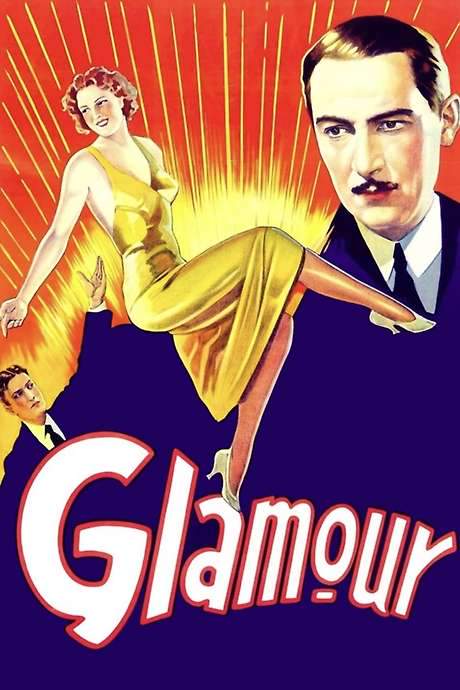
These Glamour Girls

These Glamour Girls

Year: 1939

Runtime: 79 mins

Language: English

Director: S. Sylvan Simon

ComedyDrama

A boozy college student mistakenly invites a glamorous dance‑hall hostess to the campus’s premier dance. When she turns up, he tries to send her away, but she refuses to leave, turning the event into a showdown as she boldly confronts him and his classmates’ pretentious dates, upending their high‑society expectations.

Where to Watch These Glamour Girls?

Find where to stream, rent, or buy These Glamour Girls (1939) in the US with current JustWatch availability, up-to-date pricing, and platform listings for subscription, rental, and digital purchase options.

Streaming availability powered by JustWatch

Warning: spoilers below!

Haven’t seen These Glamour Girls yet? This summary contains major spoilers. Bookmark the page, watch the movie, and come back for the full breakdown. If you're ready, scroll on and relive the story!

These Glamour Girls (1939) – Full Plot Summary & Ending Explained

Read the complete plot breakdown of These Glamour Girls (1939), including all key story events, major twists, and the ending explained in detail. Discover what really happened, and what it all means.

Elite New York society gathers around a forthcoming Kingsford College house party, where the spotlight shines on the wealthy debutantes and their families. The spotlighted debutante Ann van Reichton receives an exclusive invitation, yet her mother Mrs. Van Reichton is horrified to learn that her daughter’s date, Greg Smith, does not belong to the social register. The tension between appearance and pedigree threads through every whispered conversation, as the parents parry with pride and anxiety about keeping up appearances.

In the week leading up to the weekend, Philip S. Griswold III, the son of a prestigious Wall Street family, slips away to Manhattan with his friends, Homer Ten Eyck and Greg Smith. The trio bar-hops through the city, trading barbed jokes and loud laughter, and Philip, in a drunken moment, invites the taxi dancer Jane Thomas to accompany them to the party. Jane accepts, even though the invitation hangs over her as a challenge to the rigid social order, and Philip, in a rare moment of honesty, forgets the promise he made.

Days later, the action shifts to the Kingsford train station, where Philip S. Griswold III awaits his girlfriend Carol Christy with a gleam of expectation. Instead, another arrival disrupts the scene: Jane Thomas steps off the same train, and Philip’s face waves between embarrassment and discomfort. A fellow Kingsford student, Blimpy, mistakes her for someone from the elite Philadelphia circle and asks her to be his date, a request that underscores the fragile wall between social classes. When Blimpy discovers Jane’s farm-born background, he quickly withdraws, while Philip, torn between surfaces and feelings, asks Jane to stay. The two share a dance as Carol Christy dances with Joe, a bright but poorer student from a working-class family, setting up a quiet clash of ambitions and loyalties.

In a sharp turn of social politics, the manipulative Daphne Graves Daphne Graves steers Phil and Carol toward an engagement announcement. The plan unsettles both Jane and Joe, who leave the gathering with a mix of hurt and clarity about what they want from life. The party atmosphere strains under the weight of rumor and expectation, and underneath the glitter, a deeper fear persists: the fear that love might threaten the carefully curated future these families have earned through status and wealth.

Meanwhile, Betty Ainsbridge Betty Ainsbridge, a twenty-year-old debutante, overhears her younger peers mock her as if she’s past her prime for marriage. She attempts to seize a match by pressing a drunken Homer Ten Eyck Homer Ten Eyck into marrying her. Homer recoils when he sobers, and the social snare tightens around her. In the aftermath, a despondent Betty drives toward escape, parking her car on railroad tracks where a train ends her pain. The tragedy shocks the party and crystallizes the harsh truth that social games can mask real heartbreak.

As the dust settles, Philip Griswold’s world begins to crack. His father, Philip S. Griswold II, is indicted for fraud, a scandal that shatters the family’s carefully crafted image and pressure Phil to reassess the emptiness of surface values. The scandal also intensifies Phil’s introspection about love and loyalty, and it pushes him to confront what truly matters. In the end, the story threads together a difficult, hopeful realization: genuine connection—especially the bond between Phil and Jane Thomas—offers a sturdier path than the pretenses of high society.


Last updated: February 24, 2026 at 09:28

Was this helpful?

These Glamour Girls (1939) Plot Questions Answered – Summary FAQ

Explore frequently asked questions about These Glamour Girls (1939) with spoiler-rich answers covering the full plot summary, major story beats, character motivations, hidden details, and ending meaning. This movie summary FAQ helps explain confusing scenes, plot twists, and narrative decisions in clear, searchable detail.

Q1

Why did Philip invite a taxi dancer to the elite party while drunk?

A.

Philip Griswold invited Jane Thomas, a taxi dancer, to the Kingsford College party during a night of bar-hopping in Manhattan. The invitation was impulsive and made while he was drunk. He later forgot about the promise entirely, but Jane remembered and arrived anyway. This reflects the carelessness of privileged young men who treat social boundaries as playthings without considering the real consequences for those they brush against.

The invitation foreshadows the clash between social classes that dominates the party and sets Jane's disruptive presence in motion.

philip griswoldjane thomastaxi dancerparty invitationclass differences
Q2

Why did Blimpy ask Jane to be his date and then reject her?

A.

Blimpy initially mistook Jane Thomas for a member of the elite Philadelphia social circle and eagerly invited her to be his date to the party. When he discovered she was actually a Kansas-born taxi dancer with no social pedigree, he immediately withdrew his invitation. This moment exposes how quickly social standing matters in their world, Jane became desirable the moment she appeared elite, and equally disposable once her true background was revealed.

blimpyjane thomassocial classrejectionpretension
Q3

Why did Carol admit to Joe that she was dating Phil for money?

A.

Carol confesses to Joe, a working-class student, that she is dating Phil partly to secure financial stability since her family has lost their fortune. She makes this admission while dancing with him at the party, revealing the transactional nature of many relationships in high society. The confession shows that even romantic connections in this world are driven by economic calculations rather than genuine affection.

carol christyjoemoneysocial climbinghonesty
Q4

Why did Daphne Graves engineer Phil and Carol's engagement announcement?

A.

Daphne Graves manipulates Phil and Carol into announcing their engagement the morning after the party, using social scheming to control the narrative. Her motivation stems from a cruel desire to play with people's lives and maintain her own position in the social hierarchy. The forced announcement directly hurts both Jane and Joe, who watch the manipulation unfold with growing dismay before departing together in protest.

daphne gravesphilip griswoldcarol christyengagementmanipulation
Q5

Why did Betty Ainsbridge try to force Homer Ten Eyck to marry her?

A.

Betty Ainsbridge, a twenty-year-old debutante, overhears younger girls mocking her as being past her prime for marriage. Panicked by the fear that her value in this society is disappearing, she desperately presses a drunken Homer Ten Eyck into proposing. This reflects the extreme pressure women in this social circle face to secure marriage young or risk becoming social outcasts.

Her anxiety about aging foreshadows her tragic decision to end her life when Homer rejects her.

betty ainsbridgehomer ten eyckdesperationmarriage pressuresocial anxiety
Q6

Why did Betty commit suicide after Homer backed out?

A.

After Homer Ten Eyck agreed to marry Betty while drunk but withdrew his offer once sober, Betty became despondent. Driven to despair by the cruelty of the social scene and her fear that she had no future, she drives her car onto railroad tracks and allows a train to strike her. Her suicide is the tragic consequence of a society that measures a woman's worth entirely by her youth and marriageability.

The party atmosphere that mocked her age and the rejection she suffered directly trigger her fatal decision.

betty ainsbridgesuiciderailroad trackssocial pressuredesperation
Q7

What caused Philip's father to be indicted for fraud?

A.

Philip S. Griswold II, Philip's father and a prestigious Wall Street figure, is indicted for financial fraud after the party. The indictment shatters the family's carefully constructed public image and forces Philip to confront how hollow his family's status truly is. The scandal serves as another example of how appearances in this social world mask corruption and dishonesty beneath the surface.

philip griswold iifraudindictmentscandalwall street
Q8

Why did Philip choose Jane Thomas over his elite life?

A.

After his father's fraud indictment exposes the corruption behind his family's status, Philip reassesses what truly matters. Rather than returning to the empty pretensions of high society, he chooses genuine connection with Jane Thomas, the taxi dancer he impulsively invited. His choice represents the story's thematic resolution: authentic relationships built on honesty prove more valuable than superficial social standing.

The earlier scenes of Philip's embarrassment about Jane gradually give way to his recognition of her genuine worth.

philip griswoldjane thomasloveauthenticityvalues
Q9

Why did Jane and Joe leave the party together?

A.

After witnessing Daphne manipulate Phil and Carol into an engagement announcement, both Jane Thomas and Joe, the working-class student dancing with Carol, depart the party together. They leave because the event has revealed how empty and cruel the social games have become. Their joint departure represents a shared protest against the pretentious world that has dismissed them both for lacking pedigree.

jane thomasjoeprotestdepartureauthenticity
Q10

Why was Philip embarrassed when Jane arrived at the station?

A.

Philip waits at Kingsford train station expecting his girlfriend Carol, but Jane Thomas arrives on the same train instead. His face waves between embarrassment and discomfort because he had forgotten his drunk invitation to her. More importantly, he fears how the elite crowd will judge him for bringing a taxi dancer, a woman clearly outside their social register, into their refined world.

This public embarrassment sets the stage for Philip's gradual shift from caring about appearances to valuing genuine connection.

philip griswoldjane thomastrain stationembarrassmentsocial fear
Mobile App Preview

Coming soon on iOS and Android

The Plot Explained Mobile App

From blockbusters to hidden gems - dive into movie stories anytime, anywhere. Save your favorites, discover plots faster, and never miss a twist again.

Sign up to be the first to know when we launch. Your email stays private, always.

Explore Movie Threads

Discover curated groups of movies connected by mood, themes, and story style. Browse collections built around emotion, atmosphere, and narrative focus to easily find films that match what you feel like watching right now.

Bittersweet social satire movies like These Glamour Girls

Sharp comedy-dramas that critique society with humor and heartache.Discover movies like These Glamour Girls that blend sharp social commentary with a mix of comedy and tragedy. These films use satire to explore class and society, offering witty observations alongside romantic tension and a bittersweet emotional core.

social satireclass conflictromantic tensionbittersweetmelodramawittydramatic

Narrative Summary

The narratives often revolve around a character from one social sphere entering another, causing disruption and exposing hypocrisy. The journey is marked by romantic tensions, social faux pas, and the eventual bittersweet realization that love or integrity may triumph, but often not without personal cost.

Why These Movies?

These movies are grouped by their unique tonal balance: the sharp bite of satire is softened by genuine character drama and romantic entanglements. They share a moderate complexity, steady pacing, and an ending that feels earned but not entirely happy, leaving a mix of satisfaction and wistfulness.

Movies with society ball upheavals like These Glamour Girls

Formal gatherings where social masks slip and true identities are revealed.If you liked the party scene in These Glamour Girls, explore more movies where a glamorous society event is upended by an unexpected guest. These films feature tense confrontations, social climbing, and the dramatic unmasking of elite hypocrisy.

elite societynightlifesocial climberconfrontationdramatictenseglamorous

Narrative Summary

The plot is built around a pivotal social event that serves as a microcosm of the wider societal conflicts. A character who doesn't belong crashes the party, forcing a confrontation that exposes the shallow values of the elite and challenges the established social order, leading to dramatic and often transformative outcomes.

Why These Movies?

This thread connects movies through a shared narrative catalyst: the high-stakes environment of a formal social gathering. They share a focus on performance versus authenticity, the tension of class mobility, and the dramatic potential of a single night that changes everything.

Unlock the Full Story of These Glamour Girls

Don't stop at just watching - explore These Glamour Girls in full detail. From the complete plot summary and scene-by-scene timeline to character breakdowns, thematic analysis, and a deep dive into the ending - every page helps you truly understand what These Glamour Girls is all about. Plus, discover what's next after the movie.

These Glamour Girls Timeline

Track the full timeline of These Glamour Girls with every major event arranged chronologically. Perfect for decoding non-linear storytelling, flashbacks, or parallel narratives with a clear scene-by-scene breakdown.

These Glamour Girls Timeline

Characters, Settings & Themes in These Glamour Girls

Discover the characters, locations, and core themes that shape These Glamour Girls. Get insights into symbolic elements, setting significance, and deeper narrative meaning - ideal for thematic analysis and movie breakdowns.

Characters, Settings & Themes in These Glamour Girls

These Glamour Girls Spoiler-Free Summary

Get a quick, spoiler-free overview of These Glamour Girls that covers the main plot points and key details without revealing any major twists or spoilers. Perfect for those who want to know what to expect before diving in.

These Glamour Girls Spoiler-Free Summary

More About These Glamour Girls

Visit What's After the Movie to explore more about These Glamour Girls: box office results, cast and crew info, production details, post-credit scenes, and external links - all in one place for movie fans and researchers.

More About These Glamour Girls

Similar Movies to These Glamour Girls

Discover movies like These Glamour Girls that share similar genres, themes, and storytelling elements. Whether you’re drawn to the atmosphere, character arcs, or plot structure, these curated recommendations will help you explore more films you’ll love.