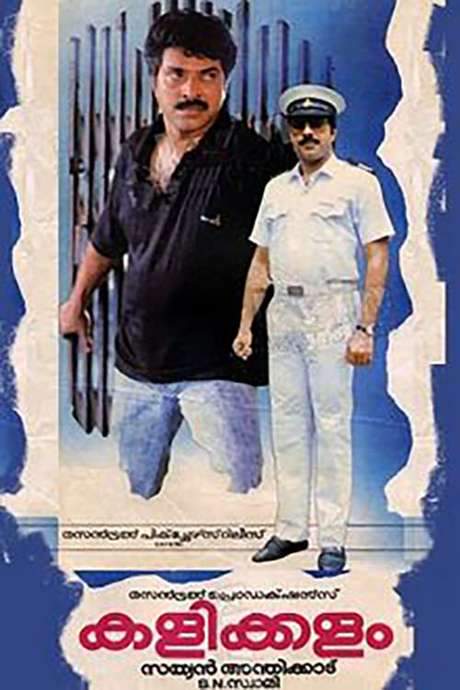
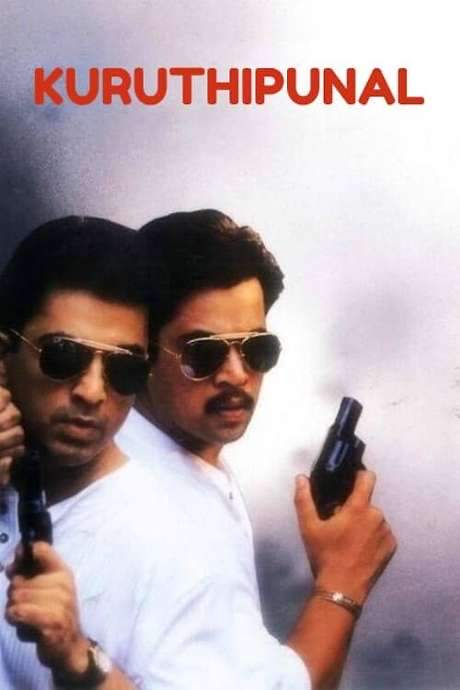
Krishnadas, a retired SP of Kerala Police, is about to attend a farewell event when a subordinate officer arrives with troubling news: an IB report warns that a dangerous criminal is about to reappear. As he scans his old diaries, the case diary titled “Kurup” pulls the story into sharp focus, and the film unfolds like a long, careful confession. Krishnadas is known for having investigated the famous Charlie murder case years earlier, a case that led to a long, elusive fugitive named Sudhakara Kurup. The diary begins to reveal the man behind that alias, a figure whose life twists through force, crime, and a hunger for something more than ordinary life.
Born as Gopikrishna Kurup, Kurup is dragged into the Indian Air Force by an overbearing uncle after he fails to secure a degree. In the IAF, he forms a tentative friendship with Peter, a fellow conscript who longs for music and a different fate. Soon they are shifted to Bombay, where Peter finds some freedom in the new city while Kurup’s gaze remains fixed on opportunity. There, Kurup meets Sharadamma, the daughter of the family’s former housemaid, and a quiet love begins to grow. Peter’s optimism clashes with Kurup’s restless ambition, and when Kurup is briefly hospitalized, news of his supposed suicide reaches Sharada. Yet she is soon convinced that he is alive, and she meets him in a subway, where Kurup reveals a startling new identity, Sudhakara Kurup. The escape plan is simple yet chilling: he fakes his own death to abandon the life he detests and to pursue a path built on cunning and risk.
Back in Kerala, Kurup returns with Sharada by his side and an uneasy peace in his heart. He and Sharada travel together to Persia, living a life of luxury that masks a growing restlessness. But the past calls him back, and he drags his office clerk Sabu along to one more life-altering con. In Alleppey, two kin—Pillechan Bhasippilla and Ponnachan—receive Kurup and Sabu with wary familiarity. A plan begins to crystallize: Kurup applies for life insurance under his own name, intending to stage a death that would unlock a hefty payout of ₹8 Lakhs. The groundwork is laid with a chilling calm.
The next day, an Ambassador car is discovered, scorched and wrecked near a paddy field. Inside, a burnt body is found in the driver’s seat. The team led by Krishnadas arrives to investigate, quickly identifying the scene as murder rather than accident. He interrogates Pillechan, who becomes a focal point of suspicion. At first, Pillechan confesses to murder, but Das, as Krishnadas is now known, senses a deeper deceit. A wider sweep of missing-person cases guides him to Charlie, a staffer at a film distribution company, and the web of lies begins to unravel. Pillechan’s tale is shredded under pressure, and it becomes clear that the four men—Kurup and his circle—planned to kill Charlie and burn his body to fake Kurup’s death. Sabu and Ponnachan are arrested, but the original Kurup has vanished once again.
The chase resumes as the police trace Kurup’s path through Alleppey, Ernakulam, Mannar, Bombay, and beyond. A key lead comes from Kurup’s old friend Isaac, who helps the authorities close in, but Kurup remains one step ahead, slipping across towns and borders. In Bombay, Kurup’s scheme evolves: he becomes entangled in arms smuggling and a lucrative criminal network that includes Leo, a gangster, and a man of high status named Walid. The motive intensifies as Kurup’s greed grows; the insurance money is only a means to an even larger, riskier payoff. With the help of his Kerala team, he orchestrates a second, more audacious murder to perfect the illusion of death, again using Charlie as a crucial piece in the puzzle. And yet, the razor edge of truth is sharpened by Das, who relentlessly closes the net.
By now, Kurup has learned to move with the shadows. He hides in a sequence of locations—an area above a lodge, then in Bhopal and Bombay—never staying in one place long enough to be caught. He even slips into a disguise as a car driver in the police convoy, almost slipping away for good. But Walid’s players are watching, and Kurup’s ruse begins to unravel when Walid realizes the double game. When the cruise ship sails away, Kurup—now calling himself Alexander with a new passport and a new look—faces a final, chilling confrontation with fate. Walid and his guards prepare to strike, hoping to end the intruder who has turned his world inside out.
The epilogue tightens the focus on Das, who, years later, has earned the rank of Superintendent of Police. In a quiet retirement ceremony, the diary is handed to him as a sign of a career finished and a case resolved. Yet the film’s final frames pivot on the eerie suggestion that Kurup is not done. A fax arrives announcing a lookout for an international criminal—none other than Kurup. In the Helsinki streets of 2005, a photo is taken of a man who bears Kurup’s face, and the predator smiles at the camera. A chilling note closes the cycle: when Alexander is confronted, he leaves a cold, calculating wake behind him.
In Kurup, ambition, crime, and a chilling talent for reinvention collide across continents and decades. The narrative follows a man who redefines himself with each transformation, pulling in people close enough to trust him and then slipping away with the prize he seeks. The suspense hinges not on a single act but on a long, methodical rhythm—an unshakable belief that he can outthink every pursuer, from the Kerala police led by Krishnadas to the international dragnet that finally tightens around him. The film balances past and present, showing how a lifetime spent evading capture can become a myth that outlives the man who began with a simple dream of a better life.
- Relationships and character notes -
- Sharadamma becomes Sharada, Kurup’s accomplice and life partner, whose loyalty is tested by fear, love, and the promise of a luxurious escape to Persia.
- Peter appears early as a beacon of a freer life, a contrast to Kurup’s calculated moves and the life he imagines beyond the IAF’s constraints.
- Gopalakrishna Pillai is a key local ally turned observer, whose role in the scheme becomes a haunting reminder of how far Kurup is willing to go to secure the payout.
- Shabu plays the room boy who unknowingly becomes a link in a vast chain of deception, a reminder of how ordinary lives can be drawn into extraordinary schemes.
- Gomathi makes a quiet impression as a character connected to the wider world Kurup navigates, hinting at the ordinary lives that intersect with extraordinary crimes.
- Anupama Parameswaran appears as Charlie’s wife, a figure tied to the crime’s human cost and the collateral damage of Kurup’s ambitions.
Please note: I’ve linked the first mentions of the characters to the actors listed in your cast information where applicable (including Kurup, Krishnadas, Sharadamma/Sharada, Peter, Shabu, Gopalakrishna Pillai, Gomathi, and Charlie’s wife). If you’d prefer a different naming convention for the first mention of each character, or want additional actor links limited to two per actor, tell me and I’ll adjust.