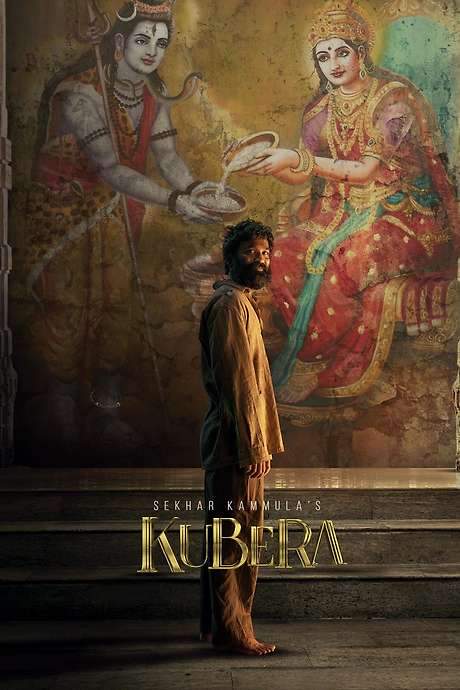
Neeraj Mitra, [Jim Sarbh], a Mumbai businessman, uncovers an oil reserve hidden in the Bay of Bengal and sees a path to wealth that could change everything. Hoping to safeguard the venture, he enlists the support of his powerfully connected father and secures backing from Minister Sidappa [Sayaji Shinde], setting the plan in motion. To execute the scheme with stealth, he turns to Deepak Tej, [Nagarjuna Akkineni], an ex-CBI officer now imprisoned for refusing to bow to corruption. Deepak, though not driven by greed, has no real choice but to work with them, pulled into a scheme that tests his ethics.
Deepak assembles a small army of beggars posing as legitimate business figures, converting them into benamis and founding fake companies that shuttle funds between their names. The beggars—Khelu [Ajithlal Sivalal], Dibya [Sathyam Kurung], Kushboo [Shravani], and Deva Kalam [Dhanush]—originate from different corners of the country, gathered under one roof in Mumbai to quietly carry out the operation. Deva Kalam, a gentle and naive man from Tirupati, finds himself trapped in a web of deceit, while Robo, a cruel enforcer, keeps the quartet under tight control and drains their trust. Robo’s brutal treatment, including the harsh act of taking one of Khelu’s teeth after a theft, underscores the danger surrounding their mission. Amidst this, Deva Kalama’s growing trust in Deepak deepens, and Deepak’s former bond with Neeraj’s late brother Uppuli becomes a quiet emotional thread that complicates the matter.
As the plot unfolds, Neeraj’s plan hardens: the goal is to exploit the beggars’ disguises to transfer vast sums of money, while the mastermind tries to safeguard his own risk by eliminating the beggars once they have served their purpose. The tension escalates when Kushboo becomes pregnant, and Robo’s exploitation of her situation shocks Deva Kalam into action. Deva defies Robo to defend Kushboo, and the group’s fragile alliance begins to fracture as the truth starts to surface. Deva Kalam also grows wary of Deepak’s role, sensing that Deepak’s generosity toward the beggars mirrors the memory of someone he once cared for, Uppuli, and it’s this memory that sometimes complicates his judgment.
A crucial turn comes when Neeraj discloses to Deepak that the plan includes killing the beggars after their tasks are completed. In a devastating development, Robo drugs Kushboo and preys on her vulnerability, but Deva Kalam intervenes, protecting her at a critical moment. The situation intensifies when Deva Kalam learns of a possible iris-scan procedure that would seal the fate of the beggars once and for all. Realizing the true danger, he escapes, triggering a manhunt as Neeraj and Deepak race to trap him before the truth can emerge. On the run, Deva Kalam crosses paths with Sameera [Rashmika Mandanna], a woman stranded in Mumbai after a fallout with her lover. Their bond begins with mutual shelter and survival, and Deva Kalam’s protection of Sameera offers him a humane anchor amid the chaos.
Deva Kalam’s escape places him on another collision course with Robo, who launches a brutal pursuit. Deva Kalam’s narrow escape is aided by his loyal canine companions, who attack Robo and leave him grievously wounded. Meanwhile, Deepak heads toward Tirupati in search of answers, following Neeraj’s indirect orders to locate him and secure a way to dismantle the operation from within. In Tirupati, Deepak’s pilgrimage brings him closer to the beggars’ world and to the plight that fueled his own transformation.
Back in Mumbai, Deva Kalam reconnects with Sameera, who has found a precarious home in a women’s hostel after her own heartbreak. They rely on Kushboo’s box of saved money to navigate their precarious lives, with Kushboo herself offering a final, living link to the beggars’ past and a quiet beacon of hope. Deva Kalam tracks down Narayan Gaikwad [Jayaprakash], a man who appears to be part of the network Neeraj built, and who was killed by Neeraj in the course of the scheme. Deva Kalam briefly informs a sub-inspector about the financial transactions tied to Narayan Gaikwad, but the lack of concrete details leads to a setback, and Deva Kalam ends up jailed on a petty charge as the investigation stalls.
Soon, a breakthrough comes when a newspaper photo of Neeraj catches the sub-inspector’s eye, prompting him to collaborate with Deva Kalam to peel back the layers of the operation. They discover a room in a flat that houses a substantial stash of money and becomes a pivot point for unraveling the conspiracy. Deepak follows the clues to locate them, and a tense confrontation ensues in which Deepak is forced to kill the sub-inspector in a bid to protect the truth. In a fierce turn of events, Deva Kalam attacks Deepak from behind, but Deepak, who has reformed through witnessing Neeraj’s cruelty, surrenders and agrees to help if they expose the full extent of the operation.
With a plan to expose Neeraj, Deva Kalam and Sameera search for Kushboo, who remains a fragile link to the beggars’ world. Deepak reveals that Kushboo is alive, and Deva Kalam insists on meeting her to validate the plan and secure the necessary evidence. Robo and his team close in, tracking their location and launching a fatal strike: Kushboo dies just after giving birth to her son, a devastating blow that underscores the human cost of the scheme. In a climactic moment, Deva Kalam joins a lorry driver to unload crores of money stored at Narayan’s house and places it squarely in front of Neeraj’s doorstep, turning the figure into a public, undeniable indictment of the crime.
With money laid bare, Neeraj confronts Deva Kalam, demanding conditions for his surrender. Deva Kalam’s demand is simple yet radical: Neeraj should spend a day living as a beggar, to glimpse the life he has exploited for so long. Neeraj agrees to the challenge, but his stubborn greed prevents any real reform. A brutal fight erupts in a garbage landfill, a stark symbol of the moral rot at the heart of the operation, and in the end Neeraj meets his demise. Sidappa’s ambitions survive, as he renegotiates another deal for his oil rig, while Deva Kalam ensures Kushboo’s memory remains alive by bringing Kushboo’s son to Tirupati, where a beggar names him Kuberaa, a final nod to the beggar network’s resilience and the hope that even the smallest good can seed real change.
In the end, the story threads converge into a broader, if somber, reflection on wealth, power, and the dignity of the powerless. The beggars—Khelu, Dibya, Kushboo, and Deva Kalam—emerge as a symbol of resilience amid exploitation, and Deepak Tej’s transformation stands as a cautious beacon: reform may be possible, but truth and accountability must accompany wealth.