





Plot Explained Spoilers guaranteed!
Plot Explained

Browse by genre

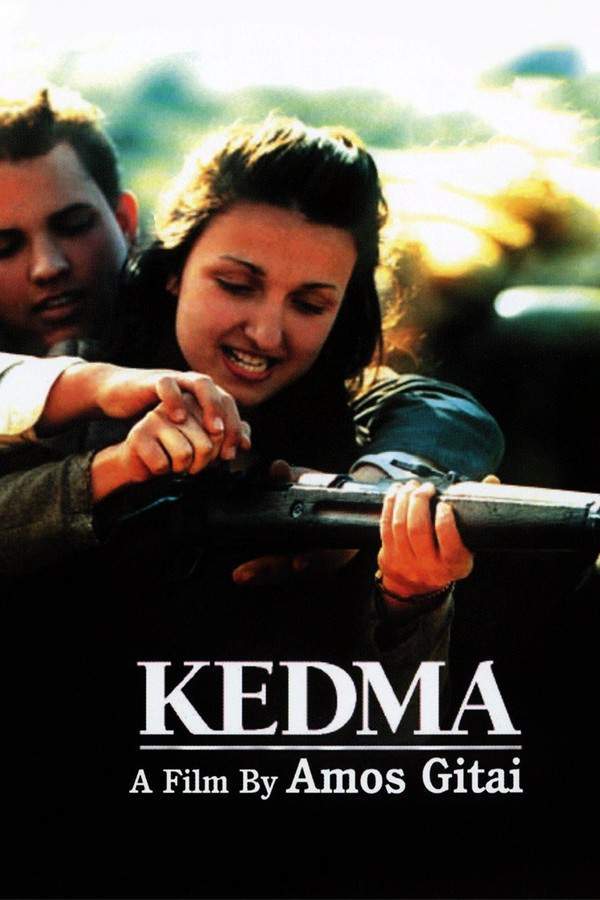
Kedma (2003) movie poster

Timeline

Kedma (2003) Timeline Explained – Every Event in Order

Release, runtime and language
2003 · 100 min · Hebrew
Directed by
Amos Gitai

Following World War II, Jewish survivors arrive in Palestine, a land grappling with its own future and the prospect of independence. Amidst the ongoing conflict and uncertainty, these refugees face not only the challenges of establishing a new life but also the weight of their past traumas and the complexities of claiming a homeland deeply affected by years of struggle.

On this page (6)
  1. 1 Where to watch
  2. 2 Events in order (12)
  3. 3 Timeline questions answered
  4. 4 Movie threads
  5. 5 Movies like Kedma
  6. 6 Every angle

Where to watch

Where to Watch Kedma (2003)

Where can you watch Kedma? Stream, rent or buy it in the US, including on Chai Flicks, Kino Film Collection and Hoopla: current JustWatch availability with up-to-date prices.

Streaming availability powered by JustWatch

12 events in order · contains spoilers

Kedma Timeline: Events in Chronological Order

Every key event of Kedma (2003) in order, scene by scene, with when and where it takes place. Use it to untangle flashbacks, time jumps and parallel storylines, to refresh your memory before the sequel or to find the exact scene you are thinking of.

  1. Refugees smuggled into Palestine by Palmach

    A group of Holocaust survivors from Poland, Russia, and Yiddish-speaking backgrounds are secretly brought into Mandatory Palestine by the Palmach. Their arrival marks the moment when personal survival becomes entangled with the looming conflict. The refugees carry hope for safety as the situation in the region grows increasingly tense.

    When
    early 1948
  2. Chased by British soldiers on arrival

    Upon landing, British forces pursue the refugees, aiming to control illegal immigration and maintain order. The group must evade patrols and checkpoints, highlighting the peril surrounding their entry. This encounter sets a grim tone for their immediate future in the conflict.

    When
    immediate after arrival
  3. Escape into safety and shift toward frontline

    The refugees slip away from pursuit and find precarious safety as the war's realities press in. Their escape marks a transition from mere survival to active involvement in a larger struggle. The experience hardens them and binds the group together in the face of danger.

    When
    shortly after escape
  4. Immediate drafting into the War of Independence

    Having escaped the pursuit, they are drafted into the fighting at once, thrusting them into a brutal conflict with little to no preparation. They enter a war theater where resources are scarce and the risks are high. This sudden enlistment places their fates on a fragile and dangerous edge.

    When
    early 1948
  5. First frontline battle against Arab irregulars

    They participate in a grueling frontline engagement against Arab irregular forces. The combat tests their endurance, resilience, and cohesion as a group of newcomers in a dangerous theater. The harsh conditions and relentless fire leave a lasting imprint on their collective memory.

    When
    early 1948
  6. Frontline hardship and camaraderie

    The refugees face hunger, fear, and shelling as they fight side by side. The shared trauma forges bonds and a stubborn resolve to endure despite mounting casualties. The experiences in combat redefine their sense of belonging and purpose.

    When
    during the conflict
  7. Arab peasant's monologue pledging perpetual opposition

    Toward the ending, an Arab peasant speaks in a long monologue and pledges to oppose the Jews forever, reframing the conflict as a personal vow. The speech echoes the poem by Tawfiq Ziad and intensifies the film's historical perspective. It contrasts with the refugees' own struggle for safety.

    When
    toward ending
  8. Refugee's monologue lamenting suffering

    In parallel, a refugee delivers a deeply emotional monologue lamenting the seemingly endless suffering of his people. The speech crystallizes the human cost of the conflict and the refugee experience. It marks a turning point toward reflection as the war nears its end.

    When
    toward ending
  9. Closing act and transition toward a new era

    As the civil war edge comes to a close, the group looks toward a future that is both hopeful and uncertain. The narrative emphasizes the transition from exile to nationhood as Israel prepares for independence. The atmosphere is thick with the weight of what has been endured.

    When
    late 1940s, just before independence
  10. Final shot echoes Exodus

    The film's closing sequence mirrors the final shot of Otto Preminger's Exodus, with a trail of military vehicles vanishing on the horizon. This deliberate parallel serves as a stark, modern counterpoint to the earlier romanticized portrayal. It reinforces Gitai's aim to ground the story in harsh historical reality.

    When
    end of film
  11. Independence looming on the horizon

    The narrative places the refugees on the threshold of a new state, highlighting how the events of the civil war culminate as the country moves toward independence. Their fate becomes inseparable from the birth of Israel itself. The final images tie personal histories to national destiny.

    When
    right before independence
  12. Group's fate and moral legacy

    The refugees’ journey moves from survival to active participation in state formation, leaving a lasting impression about the cost of war and displacement. The film closes with a reminder of those who shaped the early days of a nation. Their story remains a testament to resilience and memory.

    When
    end of story

Last updated: February 17, 2026 at 19:57

Was this helpful?

Timeline questions answered

Kedma Timeline Explained: Your Questions Answered

When does it happen, and why in that order? The questions people ask about the chronology of Kedma (2003): time jumps, flashbacks, cause and effect between scenes and the correct order of events, each answered with spoilers.

Q1

Why were the Holocaust survivors immediately drafted into fighting?

After escaping British pursuit, the refugees are drafted into the War of Independence almost immediately upon arrival. This reflects the desperate manpower situation during the 1948 conflict, where Jewish forces needed every able-bodied person. The film shows how quickly refuge transformed into responsibility, the survivors had fled Nazi genocide only to be thrust into another war with no time to recover from their trauma.

Foreshadowing: Their urgent drafting was setup by the Palmach's immediate need for soldiers during the escalating civil conflict.

  • drafted
  • war of independence
  • Palmach
  • survivors
  • combat
Q2

Why are British soldiers chasing the refugees when they arrive?

British forces pursue the refugees upon landing because they are enforcing controls on illegal immigration into Mandatory Palestine. The British are attempting to maintain order during the final days of their mandate, cracking down on Jewish immigration even as the region descends into civil conflict. This pursuit forces the survivors into immediate danger the moment they step onto shore.

Foreshadowing: The British pursuit establishes the perilous nature of their entry from the very first moment.

  • British
  • pursuit
  • arrival
  • illegal immigration
  • mandate
Q3

Why does the Arab peasant vow to oppose the Jews forever?

Toward the film's ending, an Arab peasant delivers a long monologue pledging eternal opposition to Jews, presenting the conflict as a personal vow rather than a political dispute. This speech is a modern reworking of a Tawfiq Ziad poem, adding lyrical gravity that contrasts sharply with the film's brutal realities. It frames the Arab-Israeli conflict as deeply personal and historically rooted, beyond simple territorial disagreement.

Foreshadowing: The vow reflects themes of deep-seated animosity that have defined the conflict throughout history.

  • arab peasant
  • vow
  • opposition
  • poem
  • tawfiq ziad
Q4

What does the refugee's emotional monologue at the end mean?

A refugee delivers a deeply emotional monologue lamenting the seemingly endless suffering of his people, giving voice to the human cost of the region's turmoil. This speech crystallizes the accumulated trauma of Holocaust survivors who have fled one genocide only to be thrust into another war. It represents a turning point toward reflection, marking the emotional and psychological toll that defines the refugee experience.

Foreshadowing: The monologue represents the breaking point of all the trauma the refugees have endured.

  • refugee
  • monologue
  • suffering
  • trauma
  • lamentation
Q5

Why does the final shot echo the movie Exodus?

The closing sequence shows military vehicles vanishing on the horizon, directly mirroring the final shot of Otto Preminger's Exodus. Director Amos Gitai intentionally created this parallel as a stark counterpoint, he wanted to offer a realist, unromanticized portrayal of the 1948 war instead of Preminger's dramatic Hollywood version. The visual echo invites comparison while showing how different filmmaking approaches can reshape historical perception.

Foreshadowing: The parallel was established throughout as Gitai's deliberate artistic choice to subvert expectations.

  • exodus
  • ending
  • parallel
  • otto preminger
  • vehicles
Q6

How do the survivors transform from refugees to soldiers?

The transformation happens almost overnight, after being smuggled in by the Palmach and fleeing British pursuit, the refugees are immediately drafted into fighting against Arab irregulars. There is no transition period or basic training; they go from hunted newcomers to frontline combatants virtually instantly. This sudden shift illustrates how the 1948 war consumed everyone within reach, forcing traumatized Holocaust survivors to pick up weapons for a new cause.

Foreshadowing: The urgency of their situation left no room for any period of adjustment.

  • refugees
  • soldiers
  • transformation
  • drafting
  • survival
Q7

What role does the Palmach play in bringing the survivors to Palestine?

The Palmach, the elite strike force of the Haganah, secretly smuggles the Holocaust survivors into Mandatory Palestine. They coordinate the illegal immigration operation, getting the refugees across the borders despite British patrols. This operation represents the Zionist effort to rescue Jewish survivors from Europe while simultaneously strengthening Jewish forces in the territory ahead of independence.

Foreshadowing: The Palmach's involvement tied the refugees' fate directly to the larger Zionist cause.

  • palmach
  • smuggling
  • immigration
  • hadari
  • refugees
Q8

What happens during the first frontline battle against Arab irregulars?

The refugees participate in a grueling frontline engagement against Arab irregular forces, marking their violent initiation into the war. The battle tests their endurance, resilience, and cohesion as newcomers in a dangerous theater. The harsh conditions and relentless fire leave a lasting imprint on their collective memory, forging bonds through shared combat trauma.

Foreshadowing: The intensity of this first battle set the tone for all subsequent fighting.

  • battle
  • arab irregulars
  • frontline
  • combat
  • fighting
Q9

What is the significance of the two monologues at the film's ending?

The two long monologues, one from an Arab peasant pledging perpetual opposition, one from a refugee lamenting endless suffering, anchor the film's intimate scale while speaking to broader historical conflicts. They represent the two sides of the dispute, each with their own justified grievances and traumatic histories. These speeches transform the film from a war narrative into a meditation on the human cost of national birth and the cyclical nature of conflict.

Foreshadowing: Both monologues build on tensions established throughout the entire narrative.

  • monologues
  • ending
  • arab peasant
  • refugee
  • themes
Q10

How does Kedma differ from romanticized portrayals of the 1948 war?

Kedma was specifically created as a realist counterpoint to the romanticized portrayal of the 1948 war found in Otto Preminger's Exodus. While Exodus presented a dramatic, uplifting narrative of Jewish heroism, Gitai renders history with restraint and concrete human stakes. The film shows exhausted, traumatized survivors rather than heroic fighters, emphasizing the brutal reality that accompanied the birth of Israel without idealizing the experience.

Foreshadowing: The entire film was designed to subvert typical war film expectations.

  • realist
  • counterpoint
  • exodus
  • romanticized
  • gitai
Q11

What themes of exile and memory does the film explore?

The film explores how Holocaust survivors carry the weight of past trauma into their new reality, finding that exile has not brought peace but rather new forms of danger and displacement. The tension between survival and identity threads through their experiences, the refugees' multilingual backgrounds (Polish, Russian, Yiddish) illustrate the cultural complexity of displaced peoples. They must forge a new sense of belonging in a land that represents both promise and peril.

Foreshadowing: These themes are established through the characters' dialogue and reactions throughout the journey.

  • exile
  • memory
  • belonging
  • identity
  • displacement

Movie threads

More Movies Like Kedma, by Mood & Story

Curated lists built around what makes Kedma tick: the same mood, the same kind of story or the same emotional payoff. Each list explains why these movies belong together.

Bleak Historical Survival Dramas like Kedma

Searing stories of survival set against the backdrop of brutal historical conflict. Explore movies similar to Kedma that depict the grim struggle for survival during major historical conflicts. If you liked the unflinching portrayal of trauma and displacement in Kedma, these films offer a similarly intense and somber experience.

  • grim
  • somber
  • desperate
  • oppressive
  • traumatic
  • historical
  • Tone: bleak, grim, somber
  • Pacing: steady, deliberate
Why these movies?

The story pattern: Narratives typically follow characters thrust into devastating historical events, focusing on their desperate efforts to survive physically and emotionally. The journey is less about triumph than enduring immense suffering, often highlighting the cyclical nature of violence and the psychological scars left by trauma.

Why they belong together: These movies are grouped by their shared commitment to a bleak, realistic tone, high emotional intensity, and a focus on the individual's painful struggle within a larger historical tragedy. They lack sentimentality and offer a sobering look at survival.

Movies about War Trauma and Displacement like Kedma

Intimate explorations of psychological wounds inflicted by war and forced migration. Discover films that share Kedma's focus on the psychological trauma of war and the struggle of displacement. These similar movies explore themes of national identity, survivor's guilt, and the bleak reality of starting over after profound loss.

  • traumatic
  • melancholic
  • anxious
  • tragic
  • displacement
  • existential
  • Tone: melancholic, tragic, oppressive
  • Pacing: steady, character-driven
Why these movies?

The story pattern: Stories center on characters grappling with the aftermath of violence, weaving together their past trauma with present struggles. The plot is often driven by the characters' attempts to reconcile their shattered identities with a new, hostile environment, culminating in a bleak or bittersweet reflection on the cost of survival.

Why they belong together: They are united by a core focus on trauma, displacement, and the heavy emotional burden carried by their characters. The pacing is steady, allowing for deep character study, and the tone is consistently melancholic and oppressive, prioritizing psychological realism over action.

If you liked this

Movies Like Kedma

Similar movies to Kedma: the same genre, themes or kind of story. Each one comes with its own plot summary, timeline and ending explained.

Browse all movie summaries

Every angle

Kedma (2003) Explained: Plot, Timeline & Characters

Everything about Kedma in one place: what happens in the plot summary, the timeline in chronological order, the characters and meaning and a spoiler-free summary. What's After the Movie adds the cast, box office and post-credit scenes.

Coming soon on iOS and Android

The Plot Explained Movie Summary App

Plot summaries, endings explained and timelines on your phone. Catch up on any movie in minutes, save your favorites and never miss a twist again.

Be the first to know when we launch. Your email stays private, always.

Learn more about the app