Plot Explained Spoilers guaranteed!
Plot Explained

Browse by genre

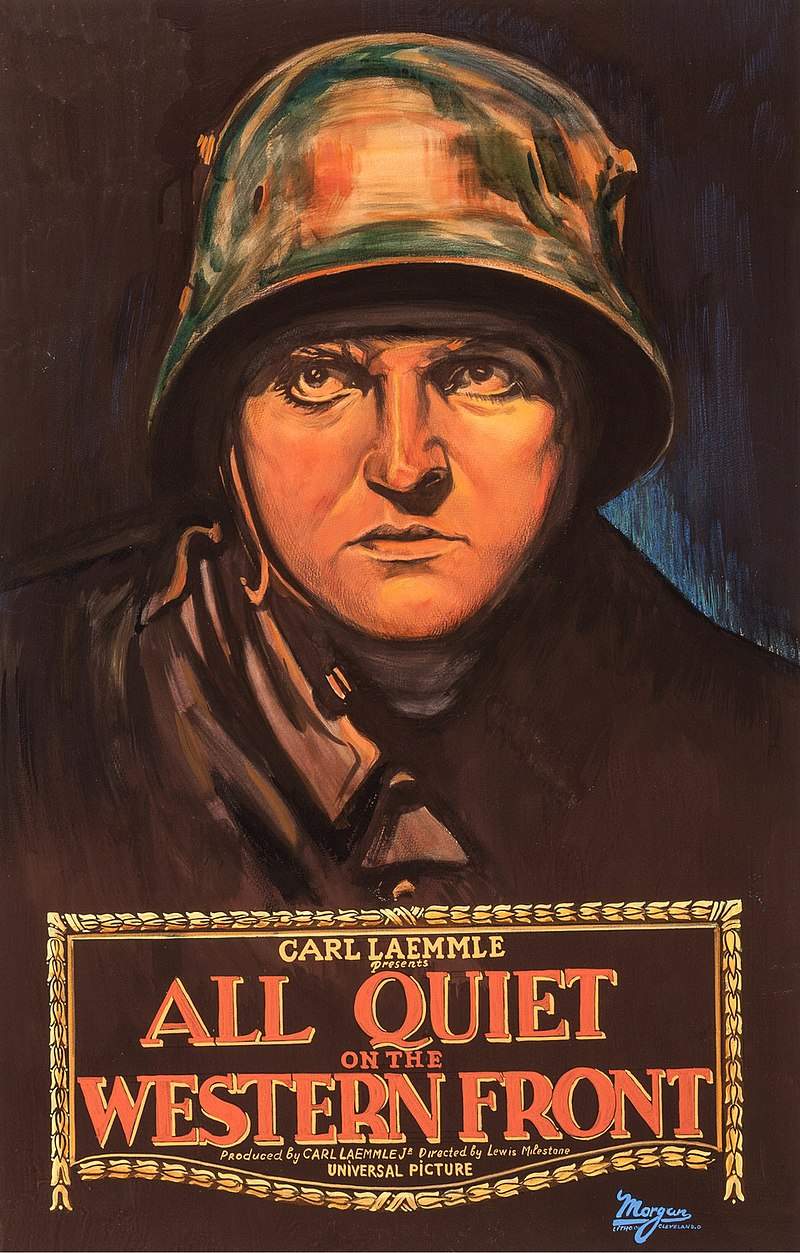
All Quiet on the Western Front (1930) movie poster

Plot Summary

All Quiet on the Western Front (1930) Plot Summary Explained

Release, runtime and language
1930 · 2 h 32 m · German
Loading streaming availability…
Directed by
Lewis Milestone
Starring
Slim Summerville, John Wray, Harold Goodwin, Edmund Breese, Lew Ayres, Ernie Adams
Budget
$1.2M

Amidst the grim and unrelenting conditions of World War I’s western front, a young soldier's initial romanticized view of war is shattered by the horrific experiences he endures. He and his classmates, eager to serve, quickly discover the brutal reality of trench warfare, facing constant danger and immense suffering. The film explores the devastating physical and psychological toll of the conflict, challenging notions of heroism and exposing the tragic loss of innocence.

On this page (6)
  1. 1 Where to watch
  2. 2 What happens: full plot
  3. 3 Plot questions answered
  4. 4 Movie threads
  5. 5 Movies like All Quiet on the Western Front
  6. 6 Every angle
Loading streaming availability…

Full plot summary · contains spoilers

What Happens in All Quiet on the Western Front: Full Plot Summary

The whole story of All Quiet on the Western Front (1930) explained, from the opening scene to the final frame: every key event, every twist and what it all adds up to. Read it as a quick recap before the sequel, to check a scene you missed, or to finally understand what really happened.

Professor Kantorek, portrayed by Arnold Lucy, delivers a fervent address, extolling the virtues of military service and the honor in "saving the Fatherland". Inspired by his words, the boys of his class, led by Lew Ayres as Paul Bäumer, feel compelled to enlist in the army, succumbing to the intense peer pressure that surrounds them. As they transition from boys to soldiers in the newly formed 2nd Company, their romantic notions of war are swiftly shattered during the harsh training sessions administered by the harsh Corporal Himmelstoss, played by John Wray, who bluntly declares, "You're going to be soldiers—and that's all."

Under Himmelstoss’s extreme regimen, the young recruits are transformed, beginning with basic military disciplines like standing in formation. In a moment of rebellious camaraderie, the entire class bands together to ambush Himmelstoss, wrapping him in a blanket and administering a beating that underscores their budding resilience. Paul’s father, Herr Bäumer, is proud of his son’s commitment to the army, although his mother, played by Beryl Mercer, harbors concerns.

Upon arrival at the chaotic combat zone, the new recruits encounter a scene of utter disarray, with soldiers rushing about, shells exploding, and heavy rain adding to the turmoil. Tragically, one of their group is killed before they even reach their post, shocking the others, particularly a soldier named Behn. They soon learn that food is extremely scarce; having not eaten since breakfast, they discover their new comrades haven’t had meals for days. Fortunately, a resourceful soldier named Kat, played by Louis Wolheim, manages to procure a hog he has stolen from a nearby field kitchen, allowing the young soldiers to barter with soap and cigarettes for a proper meal.

Their first experience in the trenches proves terrifying as they attempt to re-string barbed wire, leading to horrific consequences when Behn is blinded by shrapnel and runs headlong into machine gun fire in a panic. After enduring days of bombardment, tension mounts among the young men, particularly when Franz, played by Ben Alexander, becomes severely injured and ultimately succumbs to his wounds in the hospital, leaving a void among his friends. Paul and his comrades reflect upon their lack of practical training for survival in war, lamenting over things such as lighting a cigarette in the wind and the brutal reality of combat.

When Corporal Himmelstoss arrives at the front, he is subjected to disdain from the very soldiers he has tried to dominate. In an ironic twist of fate, he is sent over the top with the 2nd Company, where he meets a swift demise. During an attack at a cemetery, Paul finds himself trapped with a dying French soldier named Duval Gerard, whose identity he uncovers amidst the chaos. Struggling to provide comfort, Paul is devastated by the realization of shared humanity, grieving for the life lost before him.

Seeking solace, Paul and his friends indulge in a rare moment of reprieve by bathing in a canal near the border, where they unwittingly entice some French women with promises of food and wine, prompting a rebellious excursion across enemy lines. However, as the reality of war closes in once more, Paul is gravely injured and taken to a Catholic hospital. There he learns of the grim fate that awaits his friend Albert Kropp, whose leg is amputated—a cruel reminder of the brutal costs of battle.

After a tumultuous recovery, Paul receives furlough and returns home, only to be met with the stark contrast of his family's naivety regarding the war. His encounter with Kantorek, who continues to disseminate nationalistic fervor to younger students, fuels Paul's discontent and anger, especially when the professor dismisses his hardships, leading to accusations of cowardice from the impressionable youth.

Back at the front, Paul encounters fresh recruits brimming with the same misguided enthusiasm he once possessed, greeting his friend Tjaden, portrayed by Slim Summerville, with a heavy heart. In a moment of crisis, Paul carries Kat after he suffers a leg injury, yet fate intervenes cruelly when a bomb results in Kat’s death, further shattering Paul’s spirit.

In the poignant and tragic finale, as Paul again takes to the front lines, he glimpses a delicate butterfly—a symbol of beauty amidst the devastation. As he reaches out, lost in a moment of innocence, he falls victim to an enemy sniper’s bullet, embodying the senselessness of war as the scene fades out to reveal the grim reality of a cemetery, resonating with the heavy toll that war exacts from all who dare to answer its call.
Last updated: May 21, 2025 at 07:30

Was this helpful?

Plot questions answered

All Quiet on the Western Front Plot Explained: Your Questions Answered

The questions people ask most about All Quiet on the Western Front (1930): what happens in the confusing scenes, why the characters do what they do, the twists, hidden details and what the ending means. Each answer contains spoilers.

Q1

Why did the students enlist after Professor Kantorek's speech?

Professor Kantorek delivered an impassioned address praising military service and the honor of saving the Fatherland. His words, combined with intense peer pressure from classmates already enlisting, convinced Paul Bäumer and his friends to join the army. The romanticized view of war presented by the professor preyed on the students' youthful idealism and desire for glory.

  • kantorek
  • enlistment
  • peer pressure
  • patriotism
  • teacher
Q2

Why was Corporal Himmelstoss so harsh during training?

Corporal Himmelstoss subjected the young recruits to extreme discipline as part of their transformation from civilians to soldiers. His brutal methods, including forcing them to stand in formation for hours and subjecting them to verbal abuse, were designed to strip away their boyhood innocence and prepare them for the realities of war. He explicitly told them, "You're going to be soldiers, and that's all."

  • himmelstoss
  • training
  • corporal
  • discipline
  • military
Q3

What happened to Behn during the first trench assignment?

During their first experience stringing barbed wire in the trenches, Behn was blinded by shrapnel from an exploding shell. Disoriented and in panic, he ran directly into machine gun fire and was killed. This tragic event underscored the brutal reality of combat and served as the first major loss among Pauls's classmates.

  • behn
  • shrapnel
  • trench
  • death
  • machine gun
Q4

Why was Paul traumatized after killing the French soldier?

During a battle at a cemetery, Paul killed a French soldier named Duval Gerard in close-quarters combat but became trapped with the dying man. As he tried to comfort Duval, Paul discovered his identity and realized they shared common humanity, the French soldier had a family, just like Paul. This moment shattered Paul's previous abstractions about the enemy and left him with deep emotional guilt over taking a life.

  • duval
  • guilt
  • french soldier
  • killing
  • emotion
  • humanity
Q5

What happened when Paul returned home on furlough?

Paul received a brief leave from the front and returned home to find his family completely ignorant of the war's true horrors. His mother was concerned but unable to understand, while his father proudly boasted about his son's military service. When Paul tried to explain the realities of trench warfare, his words fell on deaf ears, his sister even asked him to wear his uniform to impress neighbors. The experience left Paul feeling isolated and angry.

  • furlough
  • home
  • family
  • reality gap
  • isolation
Q6

Why did Paul confront Kantorek after returning home?

During his visit, Paul encountered Professor Kantorek, who was still delivering the same patriotic speeches to new students, encouraging them to enlist. When Kantorek dismissed Paul's hardships as exaggeration and the students called Paul a coward, his anger erupted. Paul realized the professor had not changed and continued feeding the same false narrative to another generation of naive young men.

  • kantorek
  • confrontation
  • cowardice
  • propaganda
  • teachers
Q7

Why was Katczinsky's death particularly devastating for Paul?

When Kat suffered a leg injury, Paul carried him through the battlefield in an attempt to save him. However, the situation reversed when a bomb exploded nearby, Kat was killed while Paul, despite being closer to the blast, survived unscathed. This random, senseless death of Paul's most resourceful and protective friend shattered his spirit further, demonstrating the arbitrary nature of survival in war.

  • kat
  • death
  • bomb
  • friend
  • survival
  • random
Q8

What did the butterfly symbolize in the final scene?

In the film's tragic climax, Paul spots a delicate butterfly while on the front lines, a fleeting moment of natural beauty and childhood innocence amidst the devastation. As he reaches out to touch it, symbolizing his yearning for the life and innocence he lost, he is shot by an enemy sniper. The butterfly represents the lost dreams, purity, and meaningless sacrifice of an entire generation of young soldiers.

  • butterfly
  • symbolism
  • innocence
  • death
  • sniper
  • ending
Q9

Why did Paul die so suddenly while reaching for the butterfly?

Paul's death was sudden and meaningless, the very moment he allowed himself a brief escape into beauty and childhood memories, an enemy sniper shot him. This tragic end embodies the film's central message: war doesn't offer heroic sacrifices or meaningful deaths, only the senseless destruction of young lives. Just as Paul momentarily felt hope, the war brutally took everything away.

Foreshadowing: Earlier training scenes showed the boys chasing butterflies, establishing their lost innocence

  • death
  • sniper
  • butterfly
  • tragic ending
  • sudden
Q10

Why did Paul and his friends cross into French territory?

After discovering French women near a canal, the soldiers made a reckless decision to cross enemy lines in search of food, wine, and female company. This rebellious excursion represented a desperate grasp at normalcy and human connection, the soldiers risked execution as spies simply to experience a moment of joy and the company of women, demonstrating how war distorts basic human needs.

  • french women
  • border
  • crossing
  • rebellion
  • reprieve
Q11

What happened to Albert Kropp after being wounded?

Albert Kropp was severely wounded during the war and taken to a Catholic hospital where Paul visited him. Paul's worst fears were confirmed when he learned that Albert's leg had to be amputated. The brutal reality of amputation and permanent disability represented one of the many physical costs of combat that the film unflinchingly portrayed.

  • kropp
  • amputation
  • hospital
  • injury
  • disability
Q12

Why did Corporal Himmelstoss die at the front?

Himmelstoss, who had abused and dominated the recruits during training, was eventually sent to the front lines where he faced the same brutality he had inflicted on others. The soldiers he had mistreated showed him disdain, and during his first attack with the 2nd Company, he was killed, ironically becoming another victim of the war machine he had served. His death highlighted how training brutality does not protect anyone from the realities of combat.

  • himmelstoss
  • death
  • irony
  • front line
  • revenge
Q13

Why did the film end with the camera panning over a cemetery?

After Paul's death, the film cuts to a grim aerial shot revealing rows upon rows of identical white crosses in a cemetery. This powerful visual conclusion drives home the massive, impersonal toll of the war, thousands of young men like Paul, each with their own dreams and futures, reduced to numbered graves. The final image reinforces the film's anti-war message by showing the sheer scale of senseless sacrifice.

  • cemetery
  • ending
  • death toll
  • crosses
  • visual conclusion
Q14

Why was Paul's death presented without heroism or glory?

Unlike traditional war films that romanticize dying for one's country, Paul's death came while reaching for a butterfly, a moment of innocent distraction, not brave combat. The film deliberately subverts heroic expectations by showing his death as random, meaningless, and without purpose. This aligns with the film's anti-war theme: Paul's entire generation was sacrificed not for glory, but for the futile machinations of older generations.

  • heroism
  • glory
  • meaningless
  • sacrifice
  • anti-war

Movie threads

More Movies Like All Quiet on the Western Front, by Mood & Story

Curated lists built around what makes All Quiet on the Western Front tick: the same mood, the same kind of story or the same emotional payoff. Each list explains why these movies belong together.

Movies about shattered idealism like All Quiet on the Western Front

Stories where youthful hope and romantic ideals are crushed by a brutal reality. If you were moved by how All Quiet on the Western Front dismantles patriotic fervor, explore these movies where characters' hopeful beginnings are crushed by grim reality. These films similarly chart a devastating loss of innocence, often set against the backdrop of war, harsh institutions, or societal collapse.

  • somber
  • traumatic
  • grim
  • fatalistic
  • melancholic
  • desperate
  • Tone: bleak, tragic
  • Pacing: steady, methodical
Why these movies?

The story pattern: These narratives typically follow a linear, downward trajectory. A protagonist, often young, enters a challenging environment—be it war, a rigid system, or a competitive field—with high hopes and ideals. The plot then methodically exposes them to the cruelty and indifference of their world, leading to a collapse of their initial beliefs and a permanent psychological scar.

Why they belong together: Movies are grouped here for their shared focus on the emotional journey from optimism to despair. They possess a consistently bleak tone and heavy emotional weight, as they are united by the core theme of innocence lost to an unfeeling, often violent, system or world.

Grim survival stories with the intensity of All Quiet on the Western Front

Raw and harrowing stories about the physical and psychological cost of enduring extreme conditions. For viewers who appreciated the raw, unflinching realism of survival in All Quiet on the Western Front, this list features movies with similarly high-stakes endurance. These films share a high intensity, bleak tone, and a focus on the grueling physical and psychological toll of desperate situations.

  • oppressive
  • harrowing
  • desperate
  • grim
  • traumatic
  • unrelenting
  • Tone: bleak, harrowing, oppressive
  • Pacing: steady, relentless
Why these movies?

The story pattern: The narrative pattern is less about a complex plot and more about an immersive experience of endurance. The story unfolds as a series of escalating challenges and privations, where the primary conflict is humanity versus an indifferent, often brutal, environment. Character arcs are defined by erosion—of spirit, body, and sanity—rather than traditional growth.

Why they belong together: These films are grouped by their shared immersive and oppressive vibe. They are connected by a high intensity viewing experience, a steady or variable pacing that mirrors relentless pressure, and a commitment to showing the grim, unvarnished truth of survival without romanticism.

If you liked this

Movies Like All Quiet on the Western Front

Similar movies to All Quiet on the Western Front: the same genre, themes or kind of story. Each one comes with its own plot summary, timeline and ending explained.

Browse all movie summaries

Every angle

All Quiet on the Western Front (1930) Explained: Plot, Timeline & Characters

Everything about All Quiet on the Western Front in one place: what happens in the plot summary, the timeline in chronological order, the characters and meaning and a spoiler-free summary. What's After the Movie adds the cast, box office and post-credit scenes.

Coming soon on iOS and Android

The Plot Explained Movie Summary App

Plot summaries, endings explained and timelines on your phone. Catch up on any movie in minutes, save your favorites and never miss a twist again.

Be the first to know when we launch. Your email stays private, always.

Learn more about the app