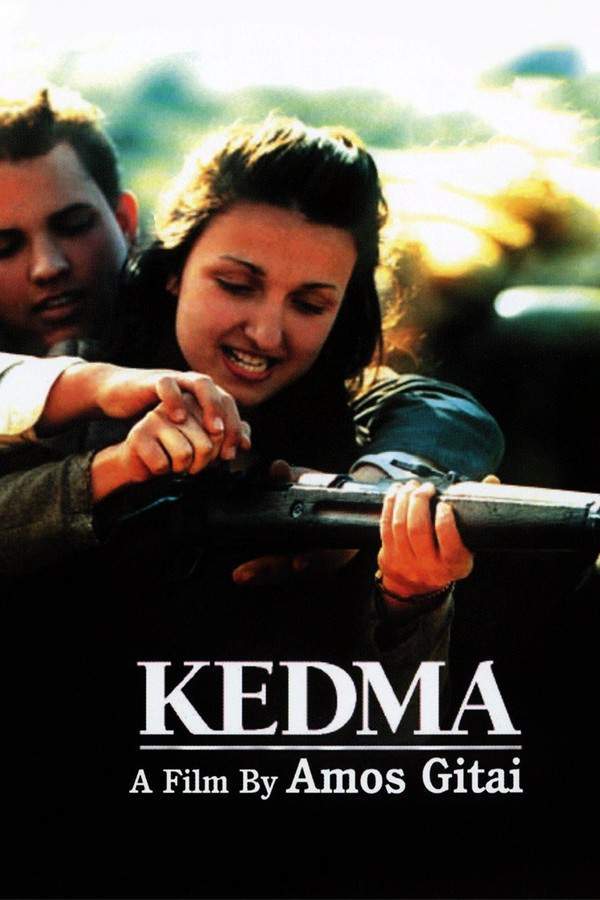
Kedma is a historical tragedy set in the opening days of Israel's 1948 War of Independence, unfolding in the final stages of the civil conflict in Mandatory Palestine just before Israeli independence. The story follows a small, diverse group of Holocaust survivors—refugees who speak Polish, Russian, and Yiddish—who are secretly brought into the land by the Palmach, only to be hunted by British soldiers on arrival. Their escape plunges them directly into the raw, brutal reality of war, and they are soon drafted to participate in a grueling battle against Arab irregulars. The journey from perilous arrival to frontline struggle is depicted without gloss, highlighting how quickly refuge can become responsibility and danger.
As the narrative progresses, the film deepens its focus beyond immediate danger to explore themes of exile, memory, and belonging. The refugees’ multilayered backgrounds—linguistic and cultural diversity folded into a shared peril—illustrate how a people displaced by catastrophe find themselves pressed into a new historical moment. The tension between survival and identity threads through their experiences, as moments of solidarity are tempered by fear, loss, and the uncertain hope for a future in a land that is both promise and peril.
Toward its ending, Kedma centers on two long, clarifying monologues that crystallize its central tensions. The first comes from an Arab peasant, whose vow to oppose the Jews forever is presented as a modern reworking of a Tawfiq Ziad poem, imbuing the scene with a lyrical gravity that contrasts with the film’s harsh realities. The second is spoken by a refugee who is emotionally broken, lamenting the seemingly endless suffering of his people and giving voice to the human cost of the region’s turmoil. These speeches anchor the film’s intimate scale, even as they speak to broader, enduring conflicts that shape history.
Gitai positions Kedma as a more realist counterpoint to the romanticized portrayal of the war found in Exodus by Otto Preminger. The director’s aim is to render history with restraint and concrete human stakes, showing how a moment of national birth intersects with personal histories of persecution and loss. The final image—a procession of military vehicles receding into the horizon—mirrors the visual cadence of Preminger’s film, underscoring a shared cinematic impulse while leaving the viewer with a quiet, unresolved sense of how history moves forward, even as the dust settles on this chapter of the conflict.
In a broader sense, Kedma is a meditation on creation through crisis: a group of displaced people arriving at the threshold of a new nation, only to be shaped by the violence and uncertainty that attend the birth of a state. It invites reflection on the price of independence and the ways in which memory, identity, and survival are braided together in moments of upheaval. The film remains faithful to its historical setting while offering a stark, human-centered perspective on a pivotal moment in Middle Eastern history, presenting a narrative that is at once sobering and deeply human.