





Plot Explained Spoilers guaranteed!
Plot Explained

Browse by genre

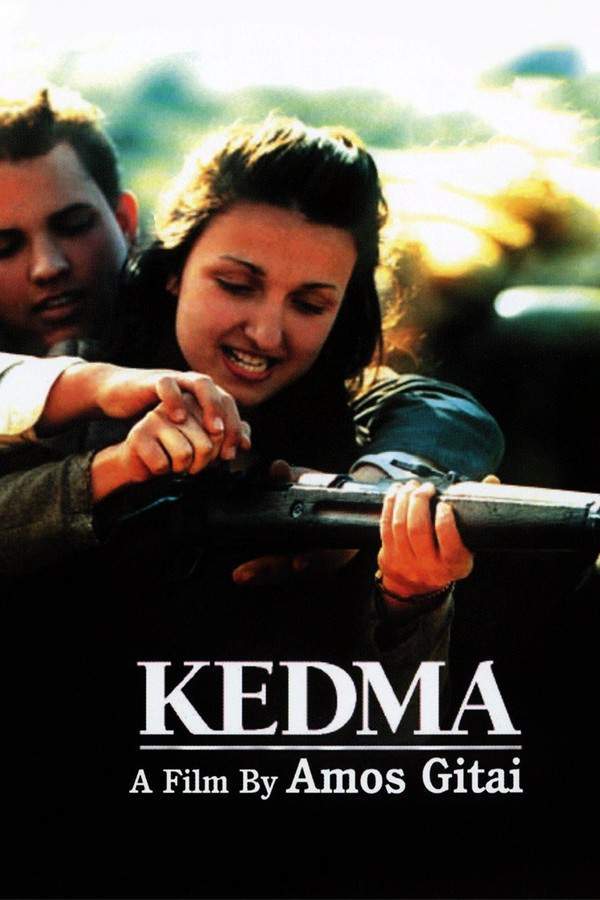
Kedma (2003) movie poster

Characters & Themes

Kedma (2003) Characters, Setting & Themes Explained

Release, runtime and language
2003 · 100 min · Hebrew
Directed by
Amos Gitai

Following World War II, Jewish survivors arrive in Palestine, a land grappling with its own future and the prospect of independence. Amidst the ongoing conflict and uncertainty, these refugees face not only the challenges of establishing a new life but also the weight of their past traumas and the complexities of claiming a homeland deeply affected by years of struggle.

On this page (8)
  1. 1 Where to watch
  2. 2 Characters explained (2)
  3. 3 Where & when it takes place
  4. 4 Themes & meaning (3)
  5. 5 Character & meaning questions
  6. 6 Movie threads
  7. 7 Movies like Kedma
  8. 8 Every angle

Where to watch

Where to Watch Kedma (2003)

Where can you watch Kedma? Stream, rent or buy it in the US, including on Chai Flicks, Kino Film Collection and Hoopla: current JustWatch availability with up-to-date prices.

Streaming availability powered by JustWatch

2 main characters · contains spoilers

Kedma Characters Explained: Who Is Who

The main characters of Kedma (2003), heroes and villains: what drives them, how they change over the course of the story and what each of them reveals about the film's bigger ideas.

  • Arab peasant (Yussuf Abu-Warda)

    A fervent Arab farmer whose monologue crystallizes a stance of unwavering opposition to the Jews. His rhetoric embodies a personal and communal memory of dispossession, fueling a deep-seated resistance. He embodies the somber realism of those who feel their land is being irrevocably transformed by conflict. His presence anchors the film's perspective on Arab sentiment and the tragedy of ongoing hostility.

    • ⚔️ Conflict
    • 🕯️ Memory
    • 🗨️ Propaganda
  • Refugee

    An emotionally shattered Holocaust survivor who laments the endless suffering of his people. His perspective reveals the refugee experience: displacement, fragility, and a relentless search for meaning amid chaos. Through his inner voice, the film probes the human cost of war and the persistence of hope despite despair.

    • 💔 Trauma
    • 🕰️ History
    • 😟 Suffering

Last updated: February 17, 2026 at 17:59

Was this helpful?

Setting

Where and When Does Kedma Take Place?

The setting of Kedma (2003): the year and time period, the places and locations, and how they shape the characters, the mood and the tension of the story.

Time period

1948

Set during the opening stages of Israel's War of Independence, the film traces a pivotal moment when the British mandate winds down and the region moves toward the creation of a new state. The narrative covers the tense lead-up to formal independence and the immediate militarization of refugees into combat.

Location

Mandatory Palestine, Israel

The story unfolds in the final stages of the civil war in Mandatory Palestine, on the cusp of Israel's independence. Refugees from the Holocaust are brought illegally to the land by the Palmach and then pursued by British soldiers. After escaping, they are thrust directly into the 1948 fighting against Arab irregulars.

  • 🗺️ Historical setting
  • 🕰️ 1948 period
  • 🇮🇱 Israeli independence era

Last updated: February 17, 2026 at 17:59

Was this helpful?

3 major themes

Kedma Meaning: Themes & Message Explained

What is Kedma (2003) really about? The emotional, social and philosophical themes the film keeps returning to, its symbolism and the message beneath the surface.

  • War Realism

    Kedma presents a blunt, unromantic view of wartime action, contrasting heroic myths with the brutal realities faced by refugees. The narrative exposes how quickly civilians are pulled into battle and how struggle can erase personal identities. The monologues underscore the weight of survival, fear, and loss amid chaotic conflict. The film uses realism to challenge more idealized depictions of war.

  • Identity

    The refugees carry multiple histories—Polish, Russian, Yiddish—yet their new national belonging is forged under pressure and displacement. The Palmach’s forced mobilization pushes them to redefine themselves in a landscape where loyalty and origin are constantly tested. The clash between different backgrounds highlights how identity can be both a source of strength and a burden. The film explores whether new beginnings can be separated from past traumas.

  • Memory

    Two long monologues anchor Kedma in the memory of violence and loss—the Arab peasant's vow and the refugee's lament—emphasizing how memory shapes present choices. The film meditates on collective suffering and the persistence of trauma across generations. By reframing the conflict as a lived memory rather than a purely political struggle, Kedma invites reflection on what endures after war. The ending, echoing Exodus, ties personal memory to historical reenactment.

Last updated: February 17, 2026 at 17:59

Was this helpful?

Character & theme questions

Kedma Characters & Meaning: Your Questions Answered

The questions people ask about Kedma (2003): who the characters really are, their relationships, what the symbols mean, where it takes place and what the movie is really about. Each answer contains spoilers.

Q1

What was the Palmach and what role did it play in bringing refugees to Palestine?

The Palmach was the elite commando unit of the Haganah, the pre-state Jewish military organization in Mandatory Palestine. They were responsible for illegally smuggling Holocaust survivors into Palestine during the final years of British rule, often at night and under dangerous conditions. In Kedma, the Palmach brings the refugees ashore and initially protects them from British capture before forcing them into combat against Arab forces.

  • palmach
  • refugees
  • mandatory palestine
  • british mandate
  • immigration
Q2

When does Kedma take place and what historical events are depicted?

The film is set in 1948 during the final days of the British Mandate in Palestine, specifically during the opening stages of Israel's War of Independence. The narrative depicts the transition period when British forces are withdrawing and the region is on the cusp of declaring independence, while Arab-Jewish tensions escalate into open warfare.

  • 1948
  • war of independence
  • mandate
  • israeli state
  • historical
Q3

Who is the Arab peasant in Kedma and what does his monologue represent?

The Arab peasant, named Yussuf Abu-Warda in the credits, delivers one of the film's two anchor monologues. His speech represents the perspective of Palestinians who felt dispossessed by Jewish immigration and the establishment of Israel. He embodies collective memory of loss and unwavering resistance to the changes happening in his homeland, providing the film with its Arab viewpoint on the conflict.

  • arab peasant
  • yussuf abu-warda
  • palestinian perspective
  • dispossession
Q4

What is the background of the refugee characters in Kedma?

The refugees are Holocaust survivors who have endured the concentration camps and lost their families and homeland. They arrive in Palestine carrying multiple cultural histories, Polish, Russian, and Yiddish traditions, as they seek to build a new national identity in Israel. Their journey represents the broader displacement experienced by Jews escaping Nazi Europe during and after World War II.

  • holocaust survivor
  • refugee
  • displacement
  • concentration camps
  • european jews
Q5

What does the War Realism theme in Kedma depict?

Kedma presents an unromantic, brutal depiction of war that challenges heroic myths about Israel's founding. Rather than glorifying combat, the film shows how civilians, particularly vulnerable refugees, are quickly pulled into fighting with little preparation. The narrative exposes how war erases personal identities and forces survival at any cost, creating a stark counterpoint to more idealized depictions of the 1948 conflict.

  • war realism
  • brutality
  • heroism
  • myth
  • refugees in combat
Q6

How does Kedma explore the theme of identity among the refugees?

The film examines how Holocaust survivors must reconstruct their identities after losing everything. The refugees carry diverse backgrounds, Polish, Russian, Yiddish, yet are forced to forge a unified Israeli identity under the pressure of war. The Palmach's mobilization tests whether they can separate their traumatic pasts from this new national belonging, questioning whether true new beginnings are possible after such profound loss.

  • identity
  • immigration
  • trauma
  • new beginning
  • national belonging
Q7

What is the significance of the two monologues in Kedma?

The two long monologues, one delivered by the Arab peasant and one by the refugee, serve as the film's thematic anchors. They represent opposing collective memories of violence and dispossession. The Arab peasant's vow reflects Palestinian grievances, while the refugee's lament expresses Jewish suffering in the Holocaust. Together, they frame the conflict as a cycle of trauma passed through generations, with the ending echoing the Book of Exodus to tie personal memory to historical reenactment.

  • memory
  • monologue
  • collective suffering
  • generational trauma
  • exodus
Q8

What was the British role in Mandatory Palestine during the film's timeline?

The British Mandate over Palestine was ending in 1948, and the film depicts British soldiers actively hunting the illegal Jewish immigrants upon their arrival. The British authorities had restricted Jewish immigration through strict quotas, even as survivors fled Nazi Europe. In Kedma, the refugees must escape British custody before being thrust into the Jewish-Arab conflict that would soon become the full-scale War of Independence.

  • british mandate
  • british soldiers
  • illegal immigration
  • quota
  • mandate ending
Q9

Where exactly do the refugees arrive in Kedma?

The refugees arrive by boat on the coast of Mandatory Palestine under cover of night, a common method used to smuggle Jewish survivors into the country illegally. After landing, they must quickly evade British patrols who are searching for undocumented arrivals. From there, they are led inland by Palmach fighters and eventually find themselves directly in the path of Arab forces advancing during the early days of the 1948 war.

  • coast
  • boat
  • arrival
  • smuggling
  • night landing
Q10

Who were the Arab irregulars mentioned in the film?

Arab irregulars were non-regular military fighters, often local militia and volunteer forces, who opposed the Jewish community in Palestine during the 1948 conflict. In Kedma, after the refugees escape British custody, they are quickly mobilized into combat against these advancing Arab forces. The film depicts the desperate, improvised nature of this early fighting where untrained refugees were thrust into battle with minimal preparation.

  • arab irregulars
  • militia
  • 1948 war
  • combat
  • volunteer forces

Movie threads

More Movies Like Kedma, by Mood & Story

Curated lists built around what makes Kedma tick: the same mood, the same kind of story or the same emotional payoff. Each list explains why these movies belong together.

Bleak Historical Survival Dramas like Kedma

Searing stories of survival set against the backdrop of brutal historical conflict. Explore movies similar to Kedma that depict the grim struggle for survival during major historical conflicts. If you liked the unflinching portrayal of trauma and displacement in Kedma, these films offer a similarly intense and somber experience.

  • grim
  • somber
  • desperate
  • oppressive
  • traumatic
  • historical
  • Tone: bleak, grim, somber
  • Pacing: steady, deliberate
Why these movies?

The story pattern: Narratives typically follow characters thrust into devastating historical events, focusing on their desperate efforts to survive physically and emotionally. The journey is less about triumph than enduring immense suffering, often highlighting the cyclical nature of violence and the psychological scars left by trauma.

Why they belong together: These movies are grouped by their shared commitment to a bleak, realistic tone, high emotional intensity, and a focus on the individual's painful struggle within a larger historical tragedy. They lack sentimentality and offer a sobering look at survival.

Movies about War Trauma and Displacement like Kedma

Intimate explorations of psychological wounds inflicted by war and forced migration. Discover films that share Kedma's focus on the psychological trauma of war and the struggle of displacement. These similar movies explore themes of national identity, survivor's guilt, and the bleak reality of starting over after profound loss.

  • traumatic
  • melancholic
  • anxious
  • tragic
  • displacement
  • existential
  • Tone: melancholic, tragic, oppressive
  • Pacing: steady, character-driven
Why these movies?

The story pattern: Stories center on characters grappling with the aftermath of violence, weaving together their past trauma with present struggles. The plot is often driven by the characters' attempts to reconcile their shattered identities with a new, hostile environment, culminating in a bleak or bittersweet reflection on the cost of survival.

Why they belong together: They are united by a core focus on trauma, displacement, and the heavy emotional burden carried by their characters. The pacing is steady, allowing for deep character study, and the tone is consistently melancholic and oppressive, prioritizing psychological realism over action.

If you liked this

Movies Like Kedma

Similar movies to Kedma: the same genre, themes or kind of story. Each one comes with its own plot summary, timeline and ending explained.

Browse all movie summaries

Every angle

Kedma (2003) Explained: Plot, Timeline & Characters

Everything about Kedma in one place: what happens in the plot summary, the timeline in chronological order, the characters and meaning and a spoiler-free summary. What's After the Movie adds the cast, box office and post-credit scenes.

Coming soon on iOS and Android

The Plot Explained Movie Summary App

Plot summaries, endings explained and timelines on your phone. Catch up on any movie in minutes, save your favorites and never miss a twist again.

Be the first to know when we launch. Your email stays private, always.

Learn more about the app