Plot Explained Spoilers guaranteed!
Plot Explained

Browse by genre

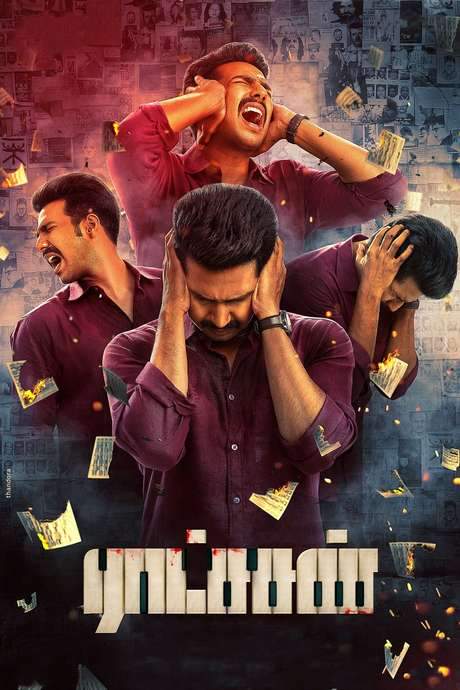
Kattradhu Thamizh (2007) movie poster

Plot Summary

Kattradhu Thamizh (2007) Plot Summary Explained

Release, runtime and language
2007 · 147 mins · Tamil
Loading streaming availability…
Directed by
Ram
Starring
Jiiva, N. Azhagamperumal, Anjali, Karunas, Senthikumari, E. V. Ganesh Babu

Tamil M.A. A young Tamil-postgraduate, frustrated with the circumstances and futility of his job, slowly loses his mental balance and becomes a sociopath.

On this page (6)
  1. 1 Where to watch
  2. 2 What happens: full plot
  3. 3 Plot questions answered
  4. 4 Movie threads
  5. 5 Movies like Kattradhu Thamizh
  6. 6 Every angle
Loading streaming availability…

Full plot summary · contains spoilers

What Happens in Kattradhu Thamizh: Full Plot Summary

The whole story of Kattradhu Thamizh (2007) explained, from the opening scene to the final frame: every key event, every twist and what it all adds up to. Read it as a quick recap before the sequel, to check a scene you missed, or to finally understand what really happened.

Prabhakar [Jiiva] is a Tamil teacher in a private school in the west Mambalam area of Chennai, living a solitary life in a worn lodge. He moves through a world that undervalues mother tongue education and rewards material success, a clash that gnaws at him and even pushes him toward a desperate impulse. His life is told largely through a tapestry of flashbacks, revealing how the present turmoil is rooted in choices, losses, and a longing for belonging.

The story pivots on the memory of Prabhakar’s past as he kidnaps a television anchor, Yuvaan-Suang [Karunas], at gunpoint to record his life story. The man on the run becomes a captive narrator who confesses to a chilling tally of 22 killed souls, a bombshell that frames the present crisis and his attempt to exorcise the demons that torment him. This act sets the stage for a chronicle that alternates between present danger and the intimate, long-buried memories of his youth.

In the earliest chapters, we meet Poobaal Raayar [N. Azhagamperumal], the Tamil teacher who shapes young Prabhakar, and Anandhi [Anjali], his childhood sweetheart whose memory continually surfaces as a powerful longing. Their bond flickers through brief, poignant flashes as Prabhakar recounts his life, revealing how love and language intertwined to steer his sense of self.

As a child in a village, Prabhakar forms a deep friendship with Poobald, and over time he grows to see Poobald as a father figure. The boy’s passion for Tamil—a passion that Poobald nurtures—takes root as a defining thread of his identity. The loss of his mother and grandparents in a terrible accident shatters his early world, and his soldier father sends him to a boarding school, a move that further distances him from the life he once imagined. In this boarding environment, the bond with Poobald deepens, and Prabhakar begins to sharpen his love for Tamil, the subject that will anchor his future.

When he finally returns to pay respects after Poobald’s death, Prabhakar encounters Anandhi again, now bearing the weight of hardship as well as the sorrow of losing her own father in the same accident. A tense fistfight with another family overhears the moment, but it also strengthens the growing connection between them. Prabhakar enters college, where his decision to study Tamil is met with ridicule by a roommate and others who doubt his path. Still, Anandhi’s mother sees a potential source of support in him, even if that belief comes with practical strains—she at times sells Prabhakar’s motorcycle to keep the family afloat, a detail that underscores the precariousness of their world. Anandhi and her mother eventually relocate to North India, and Prabhakar loses contact—only to later find a way back to her.

Back in the city, Prabhakar becomes a Tamil teacher, living on a meager income that barely sustains him. His passion sometimes spills into volatile moments—one night, he confronts a call-center employee who cannot recite the Tamil verses he demands. A chance arrest for smoking in public follows, and after his release he makes a failed suicide attempt. The police then attempt to pin new charges on him, forcing him to improvise his escape. In this storm of pressure, he inadvertently kills a railway clerk, a tragedy that marks a turning point in his sense of guilt and fate.

A haunting thread runs through the narrative as Prabhakar reconnects with Anandhi, who has become entangled in a life as a prostitute. He rushes to her defense, rescuing her from pimps at gunpoint, and he dreams of leaving the city behind with her and returning to his homeland. He brings her to a women’s hostel, hoping for safety and a fresh start, before the fateful encounter with Yuvaan-Suang reintroduces him to the wider world and its authorities.

The pursuit closes in on him in his hometown, where the police seek to close the case and suppress the truth. In a final, devastating act of mutual devotion, Prabhakar and Anandhi clasp hands and run toward an oncoming train, choosing death together at the same spot where his dog died in his childhood—a place that has long symbolized the boundary between memory and the bleakness of the present.

Throughout this journey, the film threads together a meditation on language, memory, and fate, using Prabhakar’s life as a canvas to explore how belonging, love, and the costs of striving intersect in a world that often fails to nurture the very things that give a life meaning. The performances underscore a quiet intensity, from the stoic restraint of Jiiva to the poignant presence of Anjali and the sharp reliability of Karunas, with the supporting work of N. Azhagamperumal, Sree Raam, Venba, Senthikumari, and Birla Bose adding texture to a story that asks what it costs to speak one’s truth, when the price is almost always paid in fear, loss, and ultimately, in a farewell that cannot be avoided.

Last updated: October 09, 2025 at 16:36

Was this helpful?

Plot questions answered

Kattradhu Thamizh Plot Explained: Your Questions Answered

The questions people ask most about Kattradhu Thamizh (2007): what happens in the confusing scenes, why the characters do what they do, the twists, hidden details and what the ending means. Each answer contains spoilers.

Q1

Why does Prabhakar turn violent and become a sociopath?

Prabhakar's descent into violence stems from years of accumulated frustration with a society that undervalues Tamil language and teachers. As a passionate Tamil postgraduate forced to live on a meager teacher's salary, he faces constant humiliation, ridicule from peers who mock his choice to study Tamil, and the burden of financial precarity. His mother's death in childhood, displacement to boarding school, and eventual loss of connection with Anandhi add to his psychological burden. These pressures gradually erode his mental stability, culminating in violent outbursts and eventual homicide.

Foreshadowing: Early scenes show his volatile reaction when a call-center employee cannot recite Tamil verses, foreshadowing his later breakdown.

  • prabhakar violence
  • sociopath
  • mental breakdown
  • frustration
  • tamil language discrimination
Q2

Why does Prabhakar kidnap the television anchor Yuvaan-Suang?

Prabhakar kidnaps Yuvaan-Suang at gunpoint to record his life story as a form of catharsis and confession. Haunted by his actions and seeking to exorcise his inner demons, he wants to document his journey from a passionate Tamil student to a man who has killed 22 people. The abduction serves as a narrative frame where he confesses to his crimes while recounting the events that shaped his transformation.

Foreshadowing: The kidnapping opens the film and establishes the present-day hostage situation that frames the entire narrative.

  • kidnap
  • yuvaan-suang
  • confession
  • life story
  • hostage
Q3

What happened to Anandhi and why did she become a prostitute?

After her family moved to North India due to financial difficulties, Anandhi eventually fell into prostitution, likely due to extreme poverty and lack of support. When Prabhakar later reconnects with her, he discovers her situation and rescues her from pimps at gunpoint, planning to escape the city with her. However, he leaves her at a women's hostel for safety before the police pursuit intensifies.

Foreshadowing: Earlier scenes show Anandhi's family struggling financially, with her mother even selling Prabhakar's motorcycle to survive.

  • anandhi
  • prostitute
  • rescued
  • reunion
  • pimp
Q4

Why does Prabhakar kill the railway booking clerk?

Prabhakar kills the railway clerk accidentally during a confrontation with police. After being wrongfully framed on false charges following his suicide attempt, he escapes from police custody. In the chaos of his escape, he inadvertently kills the railway clerk in a fit of rage, this tragedy marks a turning point that deepens his sense of guilt and accelerates his descent into becoming a fugitive.

Foreshadowing: His previous arrest for smoking in public and wrongful framing by police set the stage for this violent confrontation.

  • railway clerk
  • killed
  • escape
  • police framing
  • accidental death
Q5

Why do Prabhakar and Anandhi commit suicide on the train tracks?

Facing relentless police pursuit in his hometown where authorities want to suppress the truth and close the case, Prabhakar and Anandhi see no way out. In a final act of mutual devotion, they choose death together by running toward an oncoming train. This happens at the exact spot where Prabhakar's childhood dog died, a symbolic location representing the boundary between his cherished memories and the bleakness of his present reality.

Foreshadowing: The film opens with the present-day pursuit and frames the entire narrative around this inevitable tragic conclusion.

  • suicide
  • train
  • death
  • together
  • anandhi
  • final scene
Q6

Why is the location where the dog died significant?

The train track location where Prabhakar's dog died in childhood holds deep symbolic meaning throughout the film. It represents the boundary between his innocent, cherished memories of childhood and belonging, and the bleak, painful reality of his adult life. Returning to this spot to die with Anandhi suggests a return to that childhood world where love and language were pure, choosing death over continued existence in a world that failed him.

Foreshadowing: The significance of this location is established early in the film through the opening and closing frames of the narrative.

  • dog death
  • childhood
  • memory
  • train tracks
  • symbolism
Q7

Why does Prabhakar travel with sadhus after becoming a fugitive?

After killing the railway clerk and becoming a hunted man, Prabhakar roams across India and joins a group of sadhus (ascetics) who are high on pot. This period represents his attempt at self-imposed exile and escape from his troubles. Growing a shaggy beard during this journey, he tries to find temporary refuge from his guilt and the police pursuit, though the journey ultimately deepens his internal turmoil rather than providing peace.

Foreshadowing: His earlier thoughts of suicide and desire to escape already hint at his tendency to withdraw from society.

  • sadhus
  • exile
  • fugitive
  • travel
  • escape
Q8

How did the death of Prabhakar's mother and grandparents affect him?

The tragic accident that killed Prabhakar's mother and grandparents shatters his early world and represents his first major loss. This trauma, combined with his father sending him to boarding school, distances him from the life and love he knew, particularly his bond with Anandhi and his mentor Poobal. This childhood tragedy plants the seeds of abandonment and loss that later contribute to his psychological instability.

Foreshadowing: The film repeatedly returns to these childhood memories, showing how they shape his adult identity and decisions.

  • mother death
  • grandparents
  • accident
  • childhood trauma
  • boarding school
Q9

What role does the Tamil language play in Prabhakar's identity crisis?

Tamil is central to Prabhakar's identity and self-worth, making its societal undervaluation deeply wounding. His passion for the language, nurtured by his teacher Poobal, defines who he is. Yet society rewards material success over linguistic scholarship, leaving him underpaid and ridiculed for pursuing Tamil studies. This conflict between his identity and societal expectations creates ongoing psychological tension that contributes to his breakdown.

Foreshadowing: His volatile reaction to the call-center employee who cannot recite Tamil verses demonstrates how deeply language ties to his sense of self.

  • tamil language
  • identity
  • teacher
  • passion
  • societal values
Q10

Why does Anandhi's mother sell Prabhakar's motorcycle?

Anandhi's mother, viewing Prabhakar as a potential financial provider for her daughter, sells his motorcycle to cover family expenses during their period of extreme financial difficulty. Despite this, Prabhakar does not begrudge her, demonstrating his deep love for Anandhi and understanding of their precarious situation. This incident illustrates the financial desperation that eventually drives Anandhi and her mother to move to North India.

Foreshadowing: This financial strain foreshadows Anandhi's eventual descent into prostitution due to poverty.

  • motorcycle
  • sold
  • anandhi mother
  • financial difficulty
  • poverty
Q11

Why does Prabhakar attempt suicide after his arrest?

After being arrested for smoking in public and then released, Prabhakar makes a failed suicide attempt. This act stems from his overwhelming despair, feelings of hopelessness, and the cumulative weight of his frustrations, societal ridicule for pursuing Tamil, meager teaching salary, loneliness, and the sense that his life has no meaning or future in a world that devalues everything he values.

Foreshadowing: Earlier scenes already show his volatile mental state and thoughts of desperate impulses.

  • suicide attempt
  • arrest
  • despair
  • hopelessness
  • release
Q12

What was the relationship between Prabhakar and his Tamil teacher Poobal Raayar?

Poobal Raayar (also called Poobal) was Prabhakar's Tamil teacher in childhood who became a father figure in his life. He nurtured Prabhakar's passion for Tamil and the language became a defining thread of his identity. After Prabhakar's mother and grandparents died and his father sent him to boarding school, Poobal's bond with him deepened. When Poobal dies, Prabhakar returns for his funeral, this visit brings him back to Anandhi and strengthens their reconnection.

Foreshadowing: Poobal's influence is evident throughout Prabhakar's life decisions, particularly his choice to study Tamil academically.

  • poobal
  • tamil teacher
  • mentor
  • father figure
  • childhood
Q13

What is the significance of Prabhakar confessing to killing 22 people?

During the hostage recording, Prabhakar confesses to killing 22 people, a shocking confession that frames the entire narrative. This tallies include the railway clerk he killed during his escape, and presumably others killed during his period as a fugitive traveling across India. The confession serves as the explosive revelation that defines the present crisis and explains why authorities are pursuing him so aggressively.

Foreshadowing: The film establishes early that this is a story of a man on the run, with the full extent of his violence revealed through his confession.

  • 22 killings
  • confession
  • crimes
  • hostage
  • confession tape
Q14

Why does the police pursue Prabhakar back to his hometown?

The police pursue Prabhakar to his hometown because they want to close the case and suppress the truth about his crimes. With his confession recorded on video through the kidnapped anchor, authorities are under pressure to capture him before the full story becomes public. The pursuit intensifies as they prepare to arrest him, ultimately driving him and Anandhi toward their tragic final act.

Foreshadowing: The opening scene establishes the present-day pursuit that frames the entire flashback narrative.

  • police
  • pursuit
  • hometown
  • arrest
  • capture

Movie threads

More Movies Like Kattradhu Thamizh, by Mood & Story

Curated lists built around what makes Kattradhu Thamizh tick: the same mood, the same kind of story or the same emotional payoff. Each list explains why these movies belong together.

Movies about psychological breakdown like Kattradhu Thamizh

Character-driven stories charting a tragic, irreversible psychological collapse. If you were captivated by the tragic unraveling of the protagonist in Kattradhu Thamizh, explore more movies like it. This collection features intense character studies and psychological dramas that chronicle a steep descent into mental illness, sociopathy, or despair, often set against a bleak and unforgiving world.

  • psychological
  • descent
  • tragic
  • oppressive
  • claustrophobic
  • angst-ridden
  • Tone: dark, tragic, oppressive
  • Pacing: variable, character-driven
Why these movies?

The story pattern: The narrative pattern follows a character, often starting from a place of frustration or idealism, as they encounter a series of crushing disappointments or traumas. The story structure, which may use flashbacks or a fractured timeline, meticulously builds the psychological pressure until the character's sanity fractures, leading to destructive actions and a bleak, fatalistic conclusion.

Why they belong together: Movies are grouped here based on their shared focus on a deeply internal, character-centric journey into mental darkness. They share a high emotional weight, a dark and oppressive tone, and a commitment to portraying psychological collapse with unflinching realism, making the viewing experience intensely heavy and psychologically immersive.

Gritty urban alienation stories like Kattradhu Thamizh

Gritty stories of individuals crushed by the indifference of the city. For viewers who appreciated the social critique and oppressive urban atmosphere of Kattradhu Thamizh, this list finds similar movies. Discover other gritty dramas and thrillers where characters struggle with loneliness, systemic failure, and the crushing weight of city life, leading to tragic outcomes.

  • gritty
  • urban
  • alienation
  • melancholic
  • desperate
  • social critique
  • Tone: gritty, dark, melancholic
  • Pacing: steady, atmospheric
Why these movies?

The story pattern: Stories in this thread follow characters who are intelligent or passionate but are rendered powerless and invisible by the urban landscape and its social hierarchies. The plot often involves a futile search for meaning, belonging, or justice within a system designed to ignore them, culminating in acts of despair or violence that highlight their ultimate alienation.

Why they belong together: These movies are connected by their shared atmosphere of urban despair and their thematic focus on social critique. They possess a gritty, melancholic mood, a tone that is consistently dark or bleak, and a narrative that explores the devastating impact of environment and social neglect on the human psyche.

If you liked this

Movies Like Kattradhu Thamizh

Similar movies to Kattradhu Thamizh: the same genre, themes or kind of story. Each one comes with its own plot summary, timeline and ending explained.

Browse all movie summaries

Every angle

Kattradhu Thamizh (2007) Explained: Plot, Timeline & Characters

Everything about Kattradhu Thamizh in one place: what happens in the plot summary, the timeline in chronological order, the characters and meaning and a spoiler-free summary. What's After the Movie adds the cast, box office and post-credit scenes.

Coming soon on iOS and Android

The Plot Explained Movie Summary App

Plot summaries, endings explained and timelines on your phone. Catch up on any movie in minutes, save your favorites and never miss a twist again.

Be the first to know when we launch. Your email stays private, always.

Learn more about the app