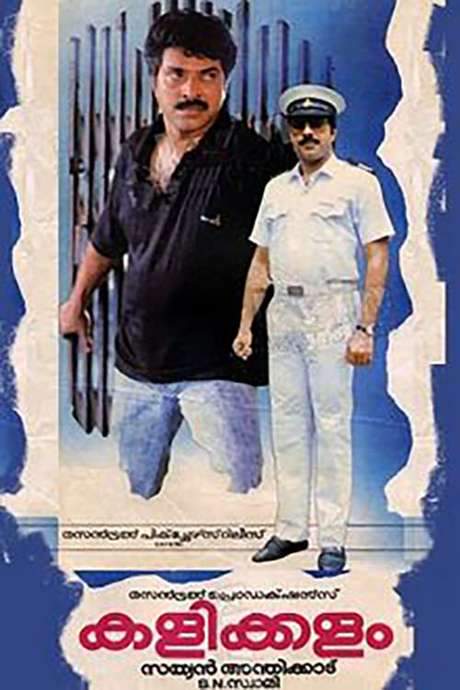
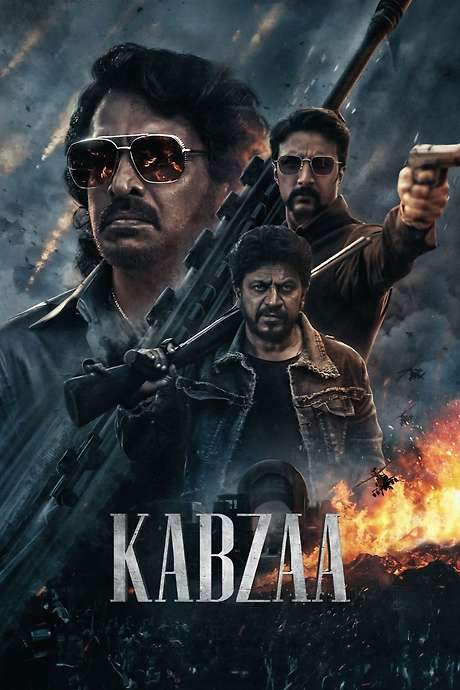
The film opens against the sweeping backdrop of World War II, a time when the subcontinent’s future hangs in the balance and the clash of empires echoes through every village and city. The atmosphere blends the grit of wartime scarcity with the quiet optimism of a people yearning for self‑determination, creating a world where personal ambition and collective hope are inseparably intertwined. Sun‑baked landscapes, cramped hospital wards, and the rumble of distant artillery set a tone that feels both intimate and monumentally historic.
At the heart of the story is Kammaran, a charismatic yet conflicted medical practitioner whose life is divided into three distinct eras. Raised in a modest household with his young son, he navigates a series of choices that gradually draw him from self‑interest toward a larger, more ambiguous sense of purpose. Friendships and fleeting romances—most notably with Bhanumathi, the niece of a powerful local figure—add layers to his character, hinting at the personal stakes that underlie his public actions. As whispers of a broader struggle for independence spread, Kammaran finds himself pulled into circles that include both colonial authorities and early nationalist leaders.
The narrative is framed through the eyes of Pulikeshi, a filmmaker commissioned by a politically motivated group to craft a biopic about the enigmatic protagonist. This meta‑layer invites the audience to consider how history is recorded, remembered, and sometimes reshaped for contemporary agendas. Through Pulikeshi’s lens, the film explores the tension between myth and reality, showing how stories can become weapons in the hands of those seeking power. The presence of figures such as Kelu Nambiar and the impetuous youth Othenan adds texture to the social fabric, while the iconic Netaji Subhas Chandra Bose looms as a symbolic beacon of the larger anti‑colonial movement.
Styled as a period drama with a measured, almost journalistic cadence, the movie balances sweeping historical scope with close‑up character studies. Its tone oscillates between reverent nostalgia and uneasy questioning, urging viewers to contemplate the thin line between heroism and self‑service. By the end of the opening act, the stage is set for an exploration of loyalty, sacrifice, and the ever‑shifting narratives that shape a nation’s memory.