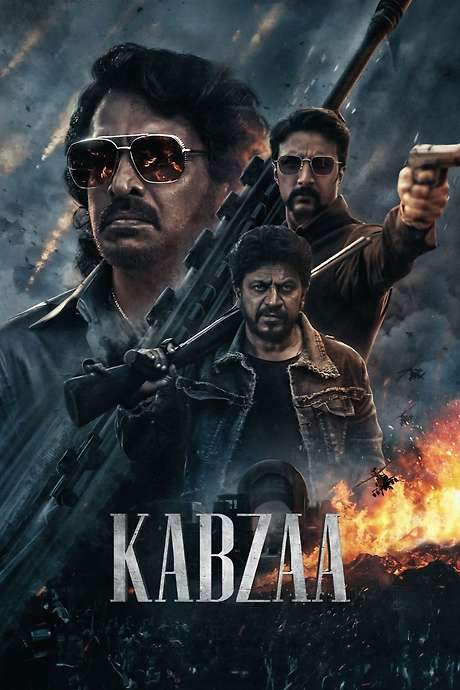
The story opens under the shadow of British rule in 1945, when Amareshwara, a North Indian Maharaja and freedom fighter, is brutally slain by colonial forces. His wife, Tulasi Devi, and their two sons—Arkeshwara and Sankeshwar—flee to Amarapura and take up humble lives selling flags to make ends meet. This early tragedy plants a quiet, persistent thread of loyalty and loss that will echo through decades.
Fast forward to 1971, and Arkeshwara has grown into a skilled air force pilot, while his brother Sankeshwar sacrifices his own dreams to support him. A brief, bittersweet homecoming brings Arkeshwara back to Amarapura for a holiday, where he reunites with his mother and spends time with his partner, Madhumitha, the beloved daughter of the city’s power center, Veer Bahaddur. The city itself is riven by rivalries among three gangsters—Khaleed, Bagheera, and Malik—each maneuvering for control and influence as Amarapura teeters on the edge of chaos.
The political arena tightens the grip of violence. CM Ghanshyam Pandey (played by Lakki Lakshman) wants Veer Bahaddur to win support and nominate himself as chief minister, so he enlists Khaleed to destabilize Amarapura. Khaleed’s chaos is amplified by his son, Sartaaj (Sartaaj), whose path of disorder is halted only when Sankeshwar intervenes, killing him after he recklessly shoots an old woman. The escalation deepens when Khaleed retaliates by killing Sankeshwar, shaving another layer of family peace from Arkeshwara’s world. Enraged and grieving, Arkeshwara lashes out, even killing a police officer who insults his family, and is subsequently imprisoned and expelled from the Air Force.
In a strategic move to eliminate a dangerous thorn, Khaleed hires the notorious Bali (Bali) to assassinate Arkeshwara in prison. Arkeshwara, however, proves his own ruthlessness by killing Bali. Veer Bahaddur, seizing the moment, finances Arkeshwara’s liberation and protection, turning his former fighter’s instincts toward a single, burning objective: to dismantle Khaleed’s gang and reclaim control of the underworld. Arkeshwara tears through Khaleed’s men and then Khaleed himself, stepping into a brutal new role as the most feared crime boss in the Bangalore crime syndicate.
Veer Bahaddur emerges victorious in the political arena, becoming the CM, while Arkeshwara’s relationship with Madhumati intensifies. Madhumati proposes marriage, but Veer Bahaddur dismisses their plans, prompting Madhumati to elope with Arkeshwara. The couple’s ascendance continues as Arkeshwara eliminates rivals Bagheera and Malik, absorbing their empire and cementing his reputation as a force to be reckoned with.
By 1973, Arkeshwara enjoys a sprawling, opulent family life in a vast palace, sharing it with Madhumati, their two children, and Tulasi Devi. The couple’s happiness is shadowed by Veer Bahaddur’s chilling revelation: he used Arkeshwara as a weapon to destroy enemies, including the attempted arrest of Arkeshwara by DSP Vikram (the officer Dev Gill who dies at Arkeshwara’s hands). Veer Bahaddur’s cruelty reaches a fatal apex when he separates Madhumati from her sons and burns them alive, devastating Arkeshwara and shattering the illusion of a peaceful family future.
With Madhumati and the children in peril, Arkeshwara cannot fully abandon them to Veer Bahaddur’s schemes. He reaches out to the CM for protection, only to be cornered by the relentless Bhargava Bakshi, a formidable police commander backed by his battalion. The standoff seems inevitable until a new, enigmatic force arrives: Siddhantha leads his own gang and points a weapon at both Bakshi and Arkeshwara, ordering violence but also hinting at a possible sequel. The film closes on this high-tension note, leaving the fate of Arkeshwara and his fractured world poised for further revelations.
This epic blends political intrigue, backroom crime, and sprawling family drama to trace a life defined by loyalty, ambition, and the cost of power. It moves across generations, painting Amarapura as a city where vendettas flow as freely as blood, and where the line between protector and tyrant often blurs. The story’s momentum rests on a central thread: the rise of Arkeshwara from a loyal son to a feared crime lord, and the personal losses that threaten to consume him even as he claims control over a sprawling criminal empire. The final turn, with Siddhantha entering the frame and directing the action, signals a sequel that would pick up the threads of vengeance, loyalty, and power that began so long ago. Unnamed man