Plot Explained Spoilers guaranteed!
Plot Explained

Browse by genre

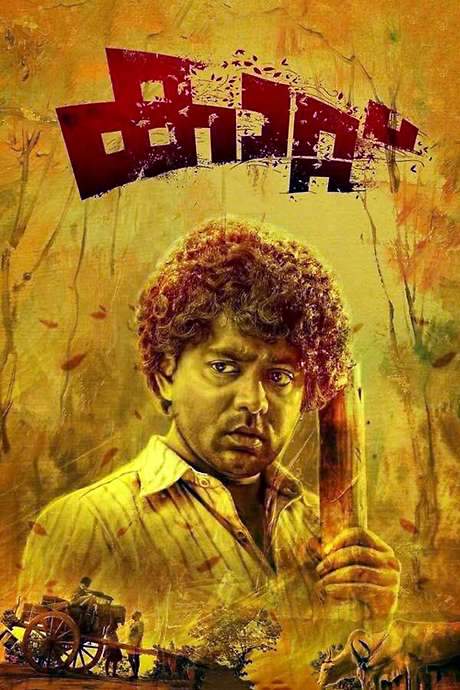
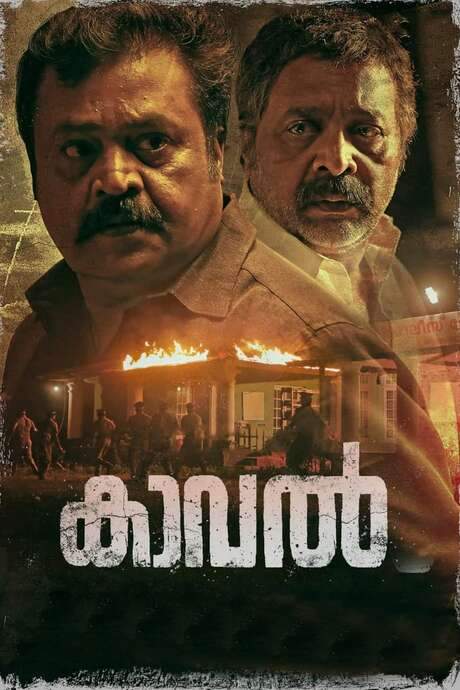
Kaaval (2021) movie poster

Plot Summary

Kaaval (2021) Plot Summary Explained

Release, runtime and language
2021 · 148 mins · Malayalam
Echo score 38
Directed by
Nithin Renji Panicker
Starring
Rajesh Sharma, Sadiq, Rajan P Dev, Chali Pala, Ambika Mohan, Suresh Krishna

Thampan and Antony, lifelong best friends and former business partners who owned a sawmill in Kattappana, are torn apart by a family tragedy. Years later, Antony and his family face a difficult situation, forcing him to seek help from his estranged friend. The story follows their complicated relationship and spans multiple generations, exploring themes of friendship, loss, and reconciliation.

On this page (6)
  1. 1 Where to watch
  2. 2 What happens: full plot
  3. 3 Plot questions answered
  4. 4 Movie threads
  5. 5 Movies like Kaaval
  6. 6 Every angle

Where to watch

Where to Watch Kaaval (2021)

Where can you watch Kaaval? Stream, rent or buy it in the US, including on Netflix and Netflix Standard: current JustWatch availability with up-to-date prices.

Streaming availability powered by JustWatch

Full plot summary · contains spoilers

What Happens in Kaaval: Full Plot Summary

The whole story of Kaaval (2021) explained, from the opening scene to the final frame: every key event, every twist and what it all adds up to. Read it as a quick recap before the sequel, to check a scene you missed, or to finally understand what really happened.

In the hilly town of Kattappana, Thampan and Anthony Joseph are more than friends—they are a bonded duo who fight crime while running a modest sawmill on the side. The pair live a rough, law-bending lifestyle at times, but their intent remains clear: protect their community from those who prey on the vulnerable. Anthony has a wife, Mary, and two kids, Rachel and Alex, who anchor his world even as danger closes in around them. The local police, led at times by Muralidharan and Aravandakshan, have tried to arrest the pair before, yet Thampan and Anthony always manage to slip away, leaving the town mystified and wary.

Trouble intensifies when the violent gang lord Vaalara Maani brutalizes a young woman named Padmini, who later becomes pregnant. This act sparks a direct confrontation: Thampan and Anthony descend on Maani’s house, beating him and sending a message that such crimes against women will not go unpunished. The impact of this confrontation ripples through the village, reaching the doorstep of Anthony’s own home when Vaa​l–Maani’s allies arrive and [Mary] is threatened and his men intimidate Anthony’s family. The town’s mood shifts as the pair’s actions provoke both fear and admiration among locals who crave justice, even as Mary pleads with Thampan to leave crime-fighting behind.

The aftermath sees a tense escalation in violence. After the incident, Thampan and Anthony corner Maani at the police station, where they deliver a brutal reckoning that ends with Maani hanging from a wall, a stark reminder that predatory violence against women has a price. The act forces a rift with the old order: Maani’s faction and corrupt officers strike back. In the ensuing night attack, Thampan’s ally Muralidharan finds himself tested as Thampan and Anthony fend off a coordinated assault. Anthony is wheelchair-bound for a time, and Thampan sustains serious injuries, including the loss of an eye. Maria’s fear grows and she urges Thampan to walk away from the quarry of vendetta, but Thampan’s sense of duty keeps him tethered to the fight—until a final, devastating moment when Maani’s power is broken but at a heavy personal cost.

Years pass. Anthony lives with disability and mounting debt, while Mary has died. Rachel, now a young woman, is engaged to James, and Alex is pursuing an education in a distant future. Anthony’s debt intensifies as Kuzhiyil George—George—demands payment, even threatening to marry Rachel off to settle the score. When Rachel’s wedding looms, George’s goons beat James at the ceremony, and Anthony, unable to secure help from the police under a new regime led by SI Madhu K. (a character played by Madhu K.), seeks another way to protect his family. The situation pushes Anthony toward Thampan once more, who arrives to intervene, only to discover that a web of deceit binds the town’s violence to a hidden schemer’s revenge.

The plot thickens as Thampan learns that a supposed accident may hide a darker truth. He discovers that the man behind many of the recent misfortunes is connected to a priestly family—Fr. David Varghese—and that a man named David holds a critical, terrible secret. In a climactic sequence, it’s revealed that David is actually the son of a powerful figure, and his actions aim to inflict pain on Thampan and Anthony by breaking their families. David, who previously appears as an agent of violence, murders Anthony and Thomas in a staged accident, hoping to cripple Thampan’s cause once and for all. The revelation shocks the community and changes the trajectory of the battle between these men.

Thampan confronts David in a final showdown. He defeats David with a decisive act of justice, underscoring that vengeance, when drawn from genuine righteousness, carries its own moral weight. The law, though flawed and slow, is reminded of its duty as Arivandakshan contends with a complex truth: David’s death is attributed to suicide to shield those who remain from further harm, a decision that leaves a wary peace in its wake. With the truth laid bare, Thampan decides to withdraw from the village for a time, choosing to live a new life away from the cycle of vengeance.

Yet the story circles back to those left behind. Rachel and Alex, who once looked to Thampan as a father figure, begin to understand the costs of the violence that shaped their world. The film closes with Thampan returning to the village, not as a victor riding a wave of triumph, but as a man who has faced the darkest corners of loyalty, debt, and duty. His departure and re-entry into the community leave a lasting ache—one that questions whether justice can ever be fully earned in a town where crime and kinship are so deeply entwined.

Throughout, the fabric of relationships—between friends turned vigilantes and between families torn by trauma—drives a narrative that is both grounded and expansive. The characters arc through loyalty, betrayal, and sacrifice, with each reveal reshaping the town’s reality and confirming that the line between protector and aggressor can blur under pressure. The film’s emotional core remains the resilience of those who refuse to abandon one another, even when the world seems determined to pull them apart.

Last updated: February 03, 2026 at 07:42

Was this helpful?

Plot questions answered

Kaaval Plot Explained: Your Questions Answered

The questions people ask most about Kaaval (2021): what happens in the confusing scenes, why the characters do what they do, the twists, hidden details and what the ending means. Each answer contains spoilers.

Q1

Why did Thampan and Anthony become vigilantes in Kattappana?

Thampan and Anthony were lifelong best friends who ran a sawmill in Kattappana while also fighting crime to protect their community. They lived a rough, law-bending lifestyle and targeted those who preyed on the vulnerable, particularly women and small business owners. Their motivation was to serve justice where the law failed, though this put them at odds with both criminals and corrupt police.

Foreshadowing: The summary establishes early that the police had tried to arrest them before, showing their defiance of authority from the start.

  • thampan
  • anthony
  • vigilante
  • kattappana
  • sawmill
  • crime-fighting
Q2

What crime did Vaalara Maani commit that triggered the confrontation?

Vaalara Maani brutalized a young woman named Padmini, who later became pregnant from the assault. This act of sexual violence against a vulnerable woman in their community directly provoked Thampan and Anthony to confront Maani at his house, beating him severely to send a message that such crimes against women would not be tolerated.

Foreshadowing: The attack on Padmini sets the moral justification for the heroes' violent response, establishing the film's themes of protective justice.

  • vaalara maani
  • padmini
  • assault
  • pregnancy
  • sexual violence
Q3

Why did Thampan kill Vaalara Maani at the police station?

After Maani's retaliation left Anthony wheelchair-bound and Thampan with a lost eye, Thampan sneaked into the police station and killed Maani as a final act of vengeance. The killing was meant to deliver a decisive statement against Maani's brutality and eliminate the crime lord permanently, though it came at a heavy personal cost and forced Thampan to flee the village.

Foreshadowing: Earlier scenes show Maani's continued threat despite the initial confrontation, building to this irreversible act.

  • thampan
  • maani
  • police station
  • kill
  • revenge
  • eye injury
Q4

What happened to Thampan's eye and Anthony's leg?

During Maani's nighttime retaliation attack, both Thampan and Anthony were ambushed. Anthony sustained a broken leg that left him wheelchair-bound for a time, while Thampan received a serious cut to his eye that resulted in the loss of that eye. These injuries marked the physical toll their vigilante war had taken on them.

Foreshadowing: The confrontation at Maani's house provoked his allies to strike back, making this retaliation inevitable.

  • anthony
  • thampan
  • eye
  • leg
  • injury
  • hospital
  • maani attack
Q5

Why did Thampan leave the village after killing Maani?

After Thampan killed Maani at the police station, Head Constable Arivandakshan recognized Thampan's perceived righteousness and allowed him to leave the village. Thampan relocated to a new town to start a life away from the cycle of vengeance and the consequences of his actions, though years later he would be drawn back by new threats to Anthony's family.

Foreshadowing: Arivandakshan's decision to let Thampan go hints at the complex morality between law and justice that runs through the film.

  • thampan
  • leave
  • village
  • arivandakshan
  • escape
Q6

Who is Kuzhiyil George and why does he want to marry Rachel?

Kuzhiyil George is a money lender to whom Anthony owed a significant debt. When Anthony became disabled and unable to work, George demanded repayment and threatened to marry Rachel, Anthony's daughter, as settlement for the debt. This debt trap becomes a central conflict years later when George's goons harass the family.

Foreshadowing: Anthony's financial decline is hinted at early, showing how vulnerability attracts predators.

  • kuzhiyil george
  • debt
  • rachel
  • money lender
  • marriage
Q7

How did Anthony die - was it really an accident?

Anthony dies in what appears to be a car accident the day after the wedding day chaos. However, it is later revealed that this was not an accident at all. David Varghese, the true antagonist, staged the accident to kill Anthony as part of his larger scheme to inflict pain on Thampan by destroying his loved ones.

Foreshadowing: The timing of Anthony's death right after the wedding chaos seems too convenient, setting up the later revelation.

  • anthony
  • death
  • car accident
  • david
  • staged accident
Q8

Who is David Varghese and why is he seeking revenge?

David Varghese is revealed to be the son of Vargheese, the corrupt police officer whom Thampan and Anthony hung at the police station years earlier. David masquerades as a priest (Fr. David Varghese) while orchestrating crimes against Thampan and Anthony's families. His motive is revenge for his father's humiliation and death, seeking to destroy them by targeting their loved ones.

Foreshadowing: David's appearance as a priest early on contrasts with his violent actions, hinting at hidden identity.

  • david varghese
  • revenge
  • father
  • vargheese
  • priest
  • son
Q9

What is the connection between David and Vargheese?

David is the biological son of Vargheese, the corrupt police officer who was killed by Thampan and Anthony when they hung him at the police station. David grew up with this knowledge and adopted a false identity as a priest to get close to the community while planning his revenge. He manipulated events from behind the scenes, including orchestrating George's debt collection and ultimately murdering Anthony.

Foreshadowing: The film hints at a hidden schemer when Thampan discovers the violence may hide darker truths.

  • david
  • vargheese
  • father
  • son
  • police
  • corrupt
Q10

Why was David's death ruled a suicide?

After Thampan confronts and kills David in their final showdown, Arivandakshan rules David's death as a suicide to shield those who remain from further harm. This decision allows the case to be closed without creating more conflict and provides a veneer of closure, though it represents another instance where the law bends to manage difficult truths.

Foreshadowing: Arivandakshan previously showed willingness to make pragmatic decisions when he allowed Thampan to leave.

  • david
  • death
  • suicide
  • arivandakshan
  • cover-up
Q11

What happened to Mary, Thampan's wife?

Mary, Thampan's wife, disapproved of his vigilante lifestyle and constantly feared for their children's safety. She pleaded with Thampan to leave the crime-fighting behind. Years later, when the timeline jumps forward, it is mentioned that Mary has died, though the exact circumstances of her death are not detailed in the summary.

Foreshadowing: Mary's disapproval and fear for her family establishes the personal cost of Thampan's choices.

  • mary
  • thampan
  • wife
  • death
  • disapproval
Q12

Why did SI Madhu refuse to help Anthony on Rachel's wedding day?

When Anthony went to the police station seeking help against George's goons who were attacking James at the wedding, the new SI Madhu K. refused to assist. This refusal was the result of influence from Muralidharan, who had presumably been bribed or manipulated by George's faction. The police failure forces Anthony to turn to Thampan for help.

Foreshadowing: The corruption within the police force has been a running theme, with previous officers like Vargheese taking bribes.

  • si madhu
  • police
  • refuse help
  • anthony
  • wedding
  • corruption

Movie threads

More Movies Like Kaaval, by Mood & Story

Curated lists built around what makes Kaaval tick: the same mood, the same kind of story or the same emotional payoff. Each list explains why these movies belong together.

Gritty vigilante action movies like Kaaval

Stories where individuals take the law into their own hands against corrupt systems. If you liked the high-stakes justice and gritty underworld of Kaaval, explore these movies. This collection features similar action thrillers about individuals taking brutal, personal stands against corruption and crime, often at a heavy emotional cost.

  • action-packed
  • revenge-driven
  • gritty
  • tense
  • oppressive
  • brutal
  • Tone: dark, tense
  • Pacing: fast, relentless
Why these movies?

The story pattern: The narrative typically begins with a personal loss or injustice that pushes a capable but reluctant protagonist into a conflict with a powerful antagonist. The story escalates through a series of violent confrontations, testing the protagonist's morals and resolve, culminating in a final, costly reckoning.

Why they belong together: Movies in this thread share a high-intensity, dark tone driven by themes of revenge, moral ambiguity, and the heavy price of justice. They feature fast-paced, action-packed plots set in oppressive, gritty environments where violence is the primary language of conflict.

Movies about estranged friends like in Kaaval

Complex stories of fractured relationships mended through shared trauma and duty. Fans of Kaaval's complex central relationship will find similar stories here. These films explore the bittersweet reconciliation of former friends, brought together by a new threat after being separated by a past tragedy, often spanning generations.

  • melancholic
  • tense
  • emotional
  • generational
  • dramatic
  • bittersweet
  • Tone: melancholic, bittersweet
  • Pacing: steady, emotional
Why these movies?

The story pattern: The narrative is structured across two time periods, establishing a strong bond in the past that is shattered by a pivotal betrayal or tragedy. The present-day story forces the characters to reunite, forcing them to navigate old wounds and new dangers, leading to a resolution that is often bittersweet, having salvaged something precious but at a significant cost.

Why they belong together: These films are grouped by their heavy emotional weight and focus on the complex dynamics of reconciliation. They share a melancholic, tense mood, a moderate narrative complexity from dual timelines, and a bittersweet conclusion where peace is achieved but past losses are never fully erased.

If you liked this

Movies Like Kaaval

Similar movies to Kaaval: the same genre, themes or kind of story. Each one comes with its own plot summary, timeline and ending explained.

Browse all movie summaries

Every angle

Kaaval (2021) Explained: Plot, Timeline & Characters

Everything about Kaaval in one place: what happens in the plot summary, the timeline in chronological order, the characters and meaning and a spoiler-free summary. What's After the Movie adds the cast, box office and post-credit scenes.

Coming soon on iOS and Android

The Plot Explained Movie Summary App

Plot summaries, endings explained and timelines on your phone. Catch up on any movie in minutes, save your favorites and never miss a twist again.

Be the first to know when we launch. Your email stays private, always.

Learn more about the app