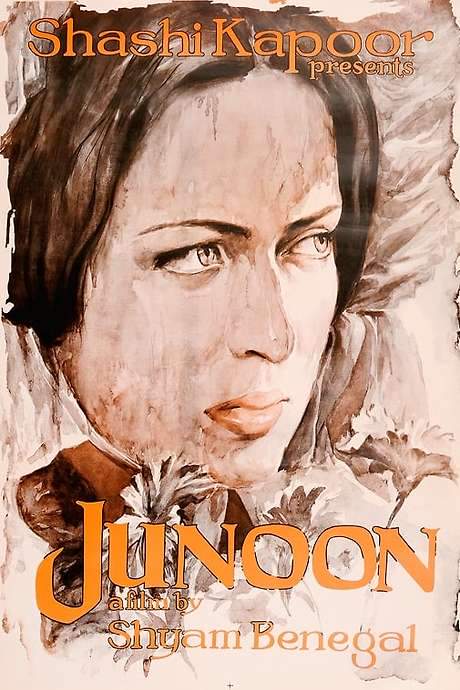
Year: 1978
Runtime: 141 mins
Language: Hindi
Director: Shyam Benegal
Set during the 1857 War of Independence, an obsessed Indian Nawab desires to wed a young Anglo-Indian woman, but the girl’s obstinate mother stands between them.
Warning: spoilers below!
Haven’t seen Junoon yet? This summary contains major spoilers. Bookmark the page, watch the movie, and come back for the full breakdown. If you're ready, scroll on and relive the story!
Trace every key event in Junoon (1978) with our detailed, chronological timeline. Perfect for unpacking nonlinear stories, spotting hidden connections, and understanding how each scene builds toward the film’s climax. Whether you're revisiting or decoding for the first time, this timeline gives you the full picture.
Last updated: October 05, 2025 at 11:48
Find frequently asked questions about the Junoon (1978) timeline, including chronological order, nonlinear jumps, cause-and-effect links, and scene sequence clarifications. This timeline FAQ helps explain when key events happen, how moments connect, and why the story unfolds in that specific order.
Miriam uses the bargain as a strategic maneuver to secure her family's protection during the rebellion. By conditioning Ruth's marriage on a British defeat, she ensures Javed has a powerful incentive to fight for the rebel cause, and to protect them in the meantime. This also gives Ruth a chance at a respectable life in India rather than being stranded as a British subject in a hostile landscape.
Earlier, Miriam recognizes the danger of their situation and seeks protection from Lala Ramjimal, showing her willingness to make difficult trades for survival.
Javed's decision stems from his deeply held sense of honor and oath-keeping. He made a solemn vow to Miriam, that he would claim Ruth only if the British were defeated, and he chooses to uphold that promise even when Ruth declares her love for him. This act defines his character as someone who values his word above personal desire, making his eventual martyrdom consistent with his code of conduct.
The bargain is struck earlier when Miriam challenges Javed to choose between fighting for independence or remaining subjugated, showing he already values the oath.
Sarfaraz destroys the pigeons as a symbolic act of rebellion against his brother-in-law's detachment from the political struggle. The pigeons represent Javed's obsession with a private, apolitical world while the rebellion demands total commitment. By freeing the birds, Sarfaraz forces Javed to confront the cost of his distraction and channels his frustration over the military setback into a personal protest against half-hearted loyalty.
Throughout the narrative, Sarfaraz is depicted as the politically awakened figure growing frustrated with Javed's focus on pigeons rather than the rebellion.
Firdaus帮助是因为她看到英国即将获胜,想通过保护这个家庭来确保自己和家庭的安全。她意识到英国镇压后,她帮助过的人可能会在未来为她辩护。这是一个精明的生存策略,, 通过帮助一个家庭来保证自己在新秩序中的地位。
Earlier, Firdaus watches jealously as Javed grows attached to Ruth, but the changing political landscape forces her to prioritize survival over personal rivalries.
Ruth never marries because her heart remains devoted to Javed, who was martyred fighting for the rebellion. The love she confessed at the church, the moment she defied her mother, was genuine and lasting. Additionally, as an Anglo-Indian woman displaced by the failed rebellion, her options in Victorian England were severely limited, and she chose solitude over a compromise match.
Ruth's confession at the church, where she steps forward to declare her feelings for Javed despite her mother's opposition, establishes the depth of her commitment.
Lala Ramjimal represents the moral dilemma of Indians who benefited from British rule but felt cultural ties to their homeland. His wealth and status came from operating within the colonial system, yet he recognizes the injustice of subjugation. His quiet affection for Miriam further complicates his position, as helping her family risks everything he has built under British patronage.
When Miriam and Ruth seek refuge, Lala's initial acceptance shows his conflicted nature, he wants to help but knows the danger of allying with rebels.
After honoring his promise and leaving Ruth at the church, Javed continues fighting in the rebellion. He is ultimately martyred in battle against British forces. The film depicts his death as a fulfillment of his oath, he chose honor and the cause over personal happiness, dying for the independence he once embraced with passion but struggled to fully commit to.
The church scene marks the turning point where Javed chooses his oath over his love, foreshadowing his eventual sacrifice.
The pigeons symbolize Javed's attachment to the old order, a world of tradition, pride, and personal passions that exists separately from political struggle. His breeding of carrier pigeons represents a feudal lifestyle under threat from colonial change. The pigeons also serve as a contrast to the rebellion: while others fight for freedom, Javed invests his energy in something personal and non-political, which Sarfaraz sees as irresponsible.
The opening scene establishes Javed's world revolving entirely around his pigeons, setting up the conflict between his private world and the public rebellion.
Miriam opposes the match primarily because Javed is a Muslim feudal chieftain while they are Anglo-Indian Christians. Cross-cultural and cross-religious marriages in 1857 India faced enormous social obstacles, and Miriam fears Ruth would be trapped in a world she cannot understand or escape. Additionally, Miriam worries about Javed's reputation as a reckless chieftain and whether he can truly protect Ruth.
Miriam's initial refusal sets up the bargain she later makes, where she trades Ruth's hand for protection and a political outcome.
Sarfaraz dies fighting because he is the most politically committed character in the film, the true believer in independence who cannot accept the rebellion's failure. His death represents the tragic cost of awakening: once he recognizes the injustice of British rule, he can no longer live without fighting it, even when the cause is doomed. His sacrifice underscores the film's theme that the rebellion's failure exacted a devastating human toll.
Sarfaraz's destruction of the pigeons shows his frustration with half-measures, foreshadowing his eventual willingness to die for the cause.
The rebellion fails because the Indian forces are poorly organized and lack the military strength to withstand the better-equipped British army. The film depicts the defeat at Delhi as the turning point where British forces push back the rebels. Additionally, internal divisions, between those truly committed like Sarfaraz and those distracted like Javed, weaken the uprising. The British ultimately triumph, leading to harsh reprisals and the execution of many rebel leaders.
The massacre at Sunday worship initially appears as a rebel victory but actually triggers stronger British retaliation, showing the imbalance of power.
Javed forcibly relocates Ruth because his attraction to her has already developed, and he wants her close despite her mother's opposition. The action reflects his reckless, impulsive nature as a feudal chieftain, he takes what he wants rather than waiting for consent. This event also intensifies the household tension, particularly between Firdaus who becomes jealous and the unwelcome English guests.
The forced relocation marks the escalation of romantic tension and sets up the domestic conflict that follows.
After the rebellion fails, the Labadoors seek protection from the British and are ultimately evacuated to England. Ruth and Miriam return to England as the rebellion fades, marking their exile from India. Ruth lives the rest of her life in England, dying fifty-five years later, unwed and carrying the memory of her love for Javed.
The church scene marks their departure point from India, after which they never return to the country of their birth.
Discover curated groups of movies connected by mood, themes, and story style. Browse collections built around emotion, atmosphere, and narrative focus to easily find films that match what you feel like watching right now.
Love stories torn apart by the violent tides of rebellion and colonial conflict.If you liked the tragic romance set against the 1857 rebellion in Junoon, you'll find similar movies here. Explore historical epics where obsessive love is tested by colonial violence and societal upheaval, leading to bittersweet or devastating conclusions. Discover other films that weave personal and political conflict into a heavy, emotionally charged narrative.
Stories in this thread typically follow a central, high-stakes romance—often cross-cultural or forbidden—that unfolds during a major historical conflict. The narrative structure pits intimate personal desires against the inexorable momentum of war, leading to choices that involve profound sacrifice, loss, and a conclusion that acknowledges the high cost of both love and rebellion.
Movies are grouped here because they share a core focus on the tragic intersection of passionate romance and large-scale historical upheaval. They deliver a similar experience through a heavy emotional weight, high intensity from life-or-death stakes, and a melancholic tone that reflects on the personal devastation left in the wake of war.

Stories where personal fixations mirror the disintegration of a society.Find movies similar to Junoon that explore the theme of destructive obsession within a collapsing society. These films often feature intense, morally complex characters whose personal tragedies reflect the violence and cultural conflict of their time. If you appreciated the grim, oppressive mood and complex themes of Junoon, this collection is for you.
The narrative pattern involves a protagonist whose all-consuming obsession (for a person, an ideal, or power) becomes intertwined with a major societal conflict. Their personal downfall escalates in parallel with the collapse of the world around them, resulting in a complex exploration of ambition, loyalty, and the devastating cost of clinging to a doomed desire.
These movies are grouped by their shared grim mood, complex character-driven narratives, and the thematic parallel between a character's internal obsession and external societal collapse. They deliver a coherent experience through a steady, deliberate pacing that builds tension and a heavy, melancholic tone that leaves a lasting impact.
Don't stop at just watching - explore Junoon in full detail. From the complete plot summary and scene-by-scene timeline to character breakdowns, thematic analysis, and a deep dive into the ending - every page helps you truly understand what Junoon is all about. Plus, discover what's next after the movie.
Read a complete plot summary of Junoon, including all key story points, character arcs, and turning points. This in-depth recap is ideal for understanding the narrative structure or reviewing what happened in the movie.
Discover the characters, locations, and core themes that shape Junoon. Get insights into symbolic elements, setting significance, and deeper narrative meaning - ideal for thematic analysis and movie breakdowns.
Discover movies like Junoon that share similar genres, themes, and storytelling elements. Whether you’re drawn to the atmosphere, character arcs, or plot structure, these curated recommendations will help you explore more films you’ll love.
Junoon (1978) Plot Summary & Movie Recap
Junoon (1978) Scene-by-Scene Movie Timeline
Junoon (1978) Spoiler-Free Summary & Key Flow
Movies Like Junoon – Similar Titles You’ll Enjoy
Monsoon Wedding (2002) Movie Recap & Themes
Bajirao Mastani (2015) Movie Recap & Themes
Haider (2014) Plot Summary & Ending Explained
Zubeidaa (2001) Full Movie Breakdown
Pinjar (2003) Ending Explained & Film Insights
Bewafaa (2005) Spoiler-Packed Plot Recap
Saugandh (1991) Complete Plot Breakdown
Ghulami (1985) Full Summary & Key Details
Qayamat Se Qayamat Tak (1988) Detailed Story Recap
Daulat Ki Jung (1992) Spoiler-Packed Plot Recap
Baiju Bawra (1952) Spoiler-Packed Plot Recap
Junoon (1992) Spoiler-Packed Plot Recap
Aarzoo (1999) Detailed Story Recap
Janwar (1965) Full Summary & Key Details
Kanoon (1994) Movie Recap & Themes