Plot Explained Spoilers guaranteed!
Plot Explained

Browse by genre

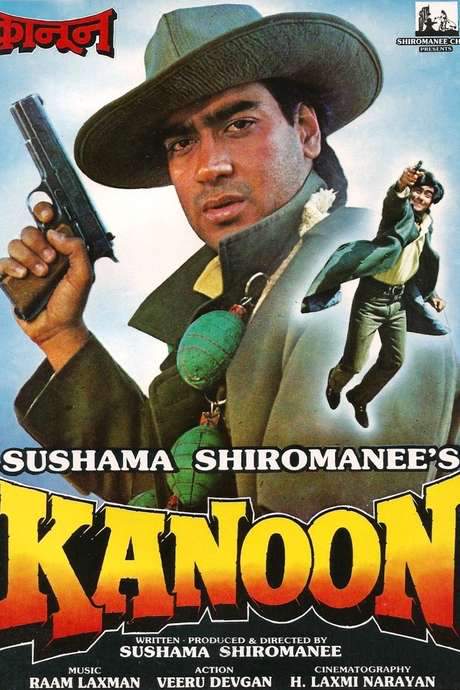
Kanoon (1994) movie poster

Plot Summary

Kanoon (1994) Plot Summary Explained

Release, runtime and language
1994 · 152 mins · Hindi
Directed by
Sushama Shiromanee
Starring
Ajay Devgn, Johnny Lever, Alok Nath, Gulshan Grover, Prem Chopra, Reema Lagoo

A young man plots revenge on a killer who slaughtered his family.

On this page (6)
  1. 1 Where to watch
  2. 2 What happens: full plot
  3. 3 Plot questions answered
  4. 4 Movie threads
  5. 5 Movies like Kanoon
  6. 6 Every angle

Where to watch

Where to Watch Kanoon (1994)

Where can you watch Kanoon? Stream, rent or buy it in the US, including on Fawesome and Amazon Video: current JustWatch availability with up-to-date prices.

Streaming availability powered by JustWatch

Full plot summary · contains spoilers

What Happens in Kanoon: Full Plot Summary

The whole story of Kanoon (1994) explained, from the opening scene to the final frame: every key event, every twist and what it all adds up to. Read it as a quick recap before the sequel, to check a scene you missed, or to finally understand what really happened.

Vishal [Ajay Devgn] returns from police training to a grim reality: most of his family—his father Dharmadhikari Singh, and his elder brother Pankaj, who was also a police officer—have been murdered by Raja Thakur. Only his sister-in-law Reema Lagoo and his young nephew survive, leaving him with a heavy knot of questions and a burning need for answers. The trauma is not just personal; it exposes a long-standing feud that has eaten away at a once-stable household and pulls Vishal into a web of crime, corruption, and retribution.

This vendetta traces back to a brutal seed: Dharmadhikari Singh, in his role as a judge, sentenced Thakur’s father to death, setting off a chain of retaliation that twists the fates of both families. As the Thakur brothers push their way back into the narrative, their paths repeatedly cross with those of Dharmadhikari and Pankaj, forcing Vishal to confront a landscape where the line between law and lawlessness blurs. The stakes rise as the Thakurs maneuver through legal channels, exploiting every opening to strike back at a system that once failed to protect them.

Thakur’s cause gains a dangerous ally in Dhananjay Dhananjay, a crooked advocate whose cleverness and ruthlessness help the Thakur siblings dodge consequences and keep their reign of fear intact. Dhananjay’s influence grows; at one point, his schemes even extend to manipulating the court by aligning his own interests with those of the Thakurs. The alliance between Thakur’s faction and Dhananjay grows more dangerous as they push the boundaries of legality, using deception and manipulation to shield their criminal activities—a web that becomes harder to pierce as the truth begins to fray around the edges.

Vishal’s life takes another brutal turn when he is blamed for the murder of the son of Police Commissioner Kiran Shroff, a man who had aligned himself with the Thakur camp. The case appears open-and-shut at first, painted by a public prosecutor who uses a controversial motive—an argument that Vishal killed the man following a dispute tied to the pimping of his own sister, Shalu, who is Vishal’s love. The courtroom becomes a stage where truth is obscured by appearances, and Vishal finds himself fighting not only for his freedom but for his name and his integrity in a system that seems bent on condemning him.

Behind bars, Vishal refuses to bow. He uses the same underhanded tactics the Thakurs relied on to gain his freedom—a risky gambit that culminates in a decisive act: Vishal kills one of Thakur’s brothers, sending a message that the hunt for justice will continue, even under the weight of the law. The act is shocking, but it signals a turning point: the veil of impunity that has sheltered the Thakur faction begins to crack, and Vishal moves from a victim of circumstance to an active force in his own defense and in the pursuit of accountability.

The climax tightens its grip as Thakur captures the commissioner and his allies, with the grim intent of finishing off Vishal’s sister-in-law and nephew. Yet Vishal arrives at the crucial moment, turning the tables on Thakur and his henchmen in a hard-fought, merciless showdown. The confrontation ends with Thakur dead and justice reasserted in the most dramatic fashion: Dhananjay is forced to confess in court how he helped Thakur carry out a reign of terror, bringing legal and criminal repercussions down on him as well. The courtroom scene that follows binds the threads of deceit, revenge, and reform into a stark reminder of the consequences that accompany corruption and violence.

In the aftermath, the narrative leaves viewers with a hard-earned sense of closure, tempered by the cost of vengeance and the fragile nature of justice. Vishal, battered but unbroken, stands as a testament to perseverance in the face of a corrupted system, while the fall of Dhananjay and the dismantling of Thakur’s network signal that truth, when pursued with unwavering resolve, can pierce through even the most entrenched cycles of intimidation. The film threads together themes of family, loyalty, and the price of power, weaving a tapestry that stays true to its intense, high-stakes premise while offering a cathartic resolution for a story built on years of grievance and retribution.

Last updated: February 17, 2026 at 19:58

Was this helpful?

Plot questions answered

Kanoon Plot Explained: Your Questions Answered

The questions people ask most about Kanoon (1994): what happens in the confusing scenes, why the characters do what they do, the twists, hidden details and what the ending means. Each answer contains spoilers.

Q1

Why did Raja Thakur kill Vishal's family?

Raja Thakur murdered Vishal's father (Dharmadhikari Singh) and elder brother Pankaj as part of a generations-long vendetta. The original grievance stemmed from Dharmadhikari, when he was a judge, sentencing Thakur's father to death. This act set off a cycle of retaliation that Thakur continued by eliminating the entire immediate family except Vishal's sister-in-law and nephew.

Foreshadowing: The film establishes the family feud early through news reports and character dialogues explaining the judge's past decision.

  • raja thakur
  • family murder
  • vendetta
  • dharmadhikari
Q2

What caused the original feud between the families?

The feud began when Judge Dharmadhikari Singh sentenced Thakur's father to death. This judicial execution created an intense personal grudge that passed down to Thakur and his brothers, who viewed the entire Dharmadhikari family as responsible for their father's fate.

Foreshadowing: Timeline events show the sentencing occurred years before the main story, establishing the foundation for all subsequent violence.

  • judge
  • death sentence
  • thakur family
  • feud
Q3

How did Dhananjay help Raja Thakur?

Dhananjay, a corrupt advocate, served as Thakur's primary legal manipulator. He helped the Thakur brothers evade criminal consequences by arranging the killing of his own identical twin to create a fake alibi. He also manipulated court proceedings and aligned his interests with Thakur's faction to protect their criminal activities.

Foreshadowing: Dhananjay's alliance with Thakur is introduced early as he begins helping the siblings dodge legal consequences.

  • dhananjay
  • advocate
  • corruption
  • legal manipulation
Q4

Why was Vishal framed for the Police Commissioner's son's murder?

Vishal was framed as part of Thakur's conspiracy to destroy him. The Thakur faction orchestrated the murder of Police Commissioner Kiran Shroff's son and then blamed Vishal, using a fabricated motive that he killed the man over a dispute regarding his sister Shalu being pimped. This allowed Thakur to eliminate Vishal through the legal system rather than directly.

Foreshadowing: The frame-job follows the pattern of Thakur using corrupt legal channels to strike at enemies.

  • frame job
  • police commissioner
  • false accusation
Q5

How did Vishal escape from prison?

Vishal used the same deceptive tactic that Thakur had employed to evade justice. He arranged to be temporarily released from jail by killing one of Thakur's brothers, mirroring the method Dhananjay used when he killed his own twin to create a false death scenario. This risky gambit allowed Vishal to operate outside prison walls while technically still incarcerated.

Foreshadowing: The film establishes early that killing an identical twin was used as a legal loophole, which Vishal later replicates.

  • jail escape
  • temporary release
  • thakur brother
Q6

Why did Vishal kill Thakur's brother while in jail?

Vishal killed one of Thakur's brothers as a calculated message that he would continue hunting down the family responsible for murdering his father and brother. The act demonstrated his willingness to use the same brutal methods as his enemies, refusing to wait passively for justice while Thakur's network remained intact. It was both an act of personal vengeance and a strategic strike against Thakur's extended family.

Foreshadowing: The killing occurs after Vishal learns the full extent of the conspiracy against his family.

  • revenge
  • thakur brother
  • jail murder
Q7

What happened during the final confrontation at the commissioner's location?

Thakur captured the Police Commissioner and his allies, planning to kill Vishal's sister-in-law and nephew. Vishal arrived just in time, engaging Thakur and his henchmen in a fierce shootout. He successfully killed Thakur and rescued his surviving family members, turning the tables on the villain's final assault.

Foreshadowing: The timeline builds tension as Thakur's plot to eliminate the remaining family members becomes the catalyst for the climax.

  • final fight
  • commissioner
  • rescue
  • shootout
Q8

Why did Dhananjay confess to helping Thakur?

After Thakur's defeat, Dhananjay confessed in court to exposing how he helped Thakur carry out years of terror. His confession was likely motivated by realizing Thakur's power had been completely broken and that continuing to protect the conspiracy would no longer benefit him. The confession exposed the full extent of the corruption and led to Dhananjay's own legal repercussions.

Foreshadowing: Dhananjay's character is established as self-serving, making his confession consistent with protecting his own interests when Thakur falls.

  • confession
  • court
  • dhananjay arrest
Q9

How did Vishal's sister-in-law and nephew survive the attack?

Only Vishal's sister-in-law (Reema Lagoo) and his young nephew survived the massacre. The summary does not specify why they were spared, but it's possible Thakur intentionally left them alive, either as bait for Vishal, or because they were not considered direct targets in the vendetta against the judge and police officer.

  • survivors
  • reema lagoo
  • nephew
Q10

What motivated Vishal to become a police officer?

Vishal returned from police training to discover his family had been murdered. While the summary does not explicitly state his motivation for joining the police, it appears he sought to become an officer of the law specifically to fight the corruption and crime that destroyed his family, though the system itself proved corrupted and ultimately failed him.

  • police training
  • justice
  • motivation
Q11

What happened to Shalu, Vishal's sister?

Shalu is mentioned as Vishal's love interest, and she was allegedly involved in the fabricated dispute used to frame Vishal. The prosecution claimed Vishal killed the Police Commissioner's son after an argument related to Shalu being pimped out. However, the summary does not provide details about her fate or whether she was harmed during the events.

  • shalu
  • sister
  • love interest

Movie threads

More Movies Like Kanoon, by Mood & Story

Curated lists built around what makes Kanoon tick: the same mood, the same kind of story or the same emotional payoff. Each list explains why these movies belong together.

Gritty revenge thrillers like Kanoon

A protagonist's dark quest for justice propels a tense, action-packed narrative. A collection of movies like Kanoon, featuring protagonists on a dark quest for vengeance against corrupt systems. These films share a tense, fast-paced narrative and a focus on violent justice and emotional catharsis.

  • vengeful
  • tense
  • gritty
  • cathartic
  • desperate
  • action-packed
  • Tone: dark, tense, angry
  • Pacing: fast, relentless
Why these movies?

The story pattern: These narratives follow a clear arc: a traumatic inciting event, often the brutal loss of family or loved ones, sets the protagonist on a single-minded path of revenge. The journey is fraught with danger and moral compromises, escalating towards a final, violent confrontation that delivers a sense of hard-won justice.

Why they belong together: These films are grouped by their shared core of a revenge-driven plot, a gritty and tense atmosphere, and a protagonist operating outside the law to achieve a cathartic, often violent, resolution. The emotional weight is consistently heavy, stemming from personal tragedy.

Movies about fighting corruption like Kanoon

Stories where individuals take on powerful, corrupt institutions for justice. If you liked Kanoon's story of taking on a corrupt judge, explore these movies about battling unjust systems. They share a dark tone, high stakes, and a ultimately hopeful, cathartic ending.

  • corruption
  • tense
  • justice
  • cathartic
  • thriller
  • betrayal
  • Tone: dark, tense, cathartic
  • Pacing: fast, steady
Why these movies?

The story pattern: The story typically begins with the protagonist witnessing or becoming a victim of systemic injustice. The plot revolves around their efforts to gather evidence, survive attempts to silence them, and finally bring the corruption to light. Despite the dark path, the narrative structure leads to a clear victory and restoration of order.

Why they belong together: This thread unites films where the central conflict is against a corrupt institution—be it legal, corporate, or governmental. While the tone is dark and the journey perilous, they share a fundamentally hopeful arc where truth prevails, providing a strong sense of catharsis for the audience.

If you liked this

Movies Like Kanoon

Similar movies to Kanoon: the same genre, themes or kind of story. Each one comes with its own plot summary, timeline and ending explained.

Browse all movie summaries

Every angle

Kanoon (1994) Explained: Plot, Timeline & Characters

Everything about Kanoon in one place: what happens in the plot summary, the timeline in chronological order, the characters and meaning and a spoiler-free summary. What's After the Movie adds the cast, box office and post-credit scenes.

Coming soon on iOS and Android

The Plot Explained Movie Summary App

Plot summaries, endings explained and timelines on your phone. Catch up on any movie in minutes, save your favorites and never miss a twist again.

Be the first to know when we launch. Your email stays private, always.

Learn more about the app