Plot Explained Spoilers guaranteed!
Plot Explained

Browse by genre

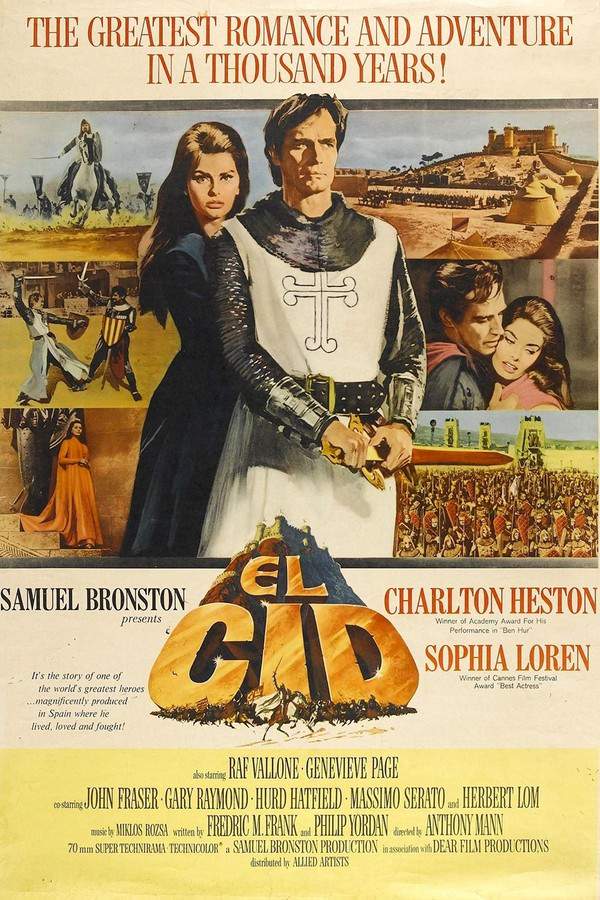
El Cid (1961) movie poster

Plot Summary

El Cid (1961) Plot Summary Explained

Release, runtime and language
1961 · 182 min · English
JustWatch #1,630 4
Directed by
Anthony Mann
Starring
Michael Hordern, Charlton Heston, Sophia Loren, Frank Thring, Gary Raymond, Geneviève Page

During medieval times in Spain, the valiant warrior El Cid, portrayed by Charlton Heston, struggles to unite a divided nation against Moorish forces. Facing exile from his own kingdom, he confronts complex political challenges and enduring personal struggles. His journey involves reconciling with his estranged wife, Jimena, played by Sophia Loren, while striving to reclaim his homeland and ultimately restore his honor and legacy.

On this page (6)
  1. 1 Where to watch
  2. 2 What happens: full plot
  3. 3 Plot questions answered
  4. 4 Movie threads
  5. 5 Movies like El Cid
  6. 6 Every angle

Where to watch

Where to Watch El Cid (1961)

Where can you watch El Cid? Stream, rent or buy it in the US, including on Amazon Prime Video, Tubi TV and YouTube Free: current JustWatch availability with up-to-date prices.

Streaming availability powered by JustWatch

Full plot summary · contains spoilers

What Happens in El Cid: Full Plot Summary

The whole story of El Cid (1961) explained, from the opening scene to the final frame: every key event, every twist and what it all adds up to. Read it as a quick recap before the sequel, to check a scene you missed, or to finally understand what really happened.

Don Rodrigo Díaz de Vivar, a fearless Castilian noble on his way to wedding vows with Doña Chimene, becomes the central figure around which a sweeping medieval drama unfolds. In this early act of the story, the 11th-century Moorish ruler Ben Yusuf of the Almoravid dynasty summons all the emirs of Al-Andalus to North Africa to rebuke their peaceable coexistence with Christian neighbors. His aim is clear: unite the Muslim world under one creed and one conquest, and he readies a formidable invasion to press his bid for domination. The emirs, meanwhile, return to Spain with orders to resume hostilities against the Christian kingdoms, setting a volatile stage for what is to come.

In the midst of impending conflict, the young Rodrigo chases a forbidden moment of personal joy. On the way to his wedding, he helps a threatened town resist an invading Moorish force. The act of mercy is a turning point: he frees two captured emirs, though this mercy could easily be read as reckless in a world where loyalty to king and faith weighs against personal honor. The captives, al-Mu'tamin of Zaragoza and al-Kadir of Valencia, pledge loyalty to Rodrigo after he insists they vow never to seize lands belonging to King Ferdinand of Castile again. The title El Cid—a Castilian honor meaning milord—begins to cling to him as the emirs acclaim his prowess and mercy.

In the halls of power, the mercy earns Rodrigo severe political trouble. He is accused of treason by Count Ordóñez, a charge backed by Chimene’s father, Count Gormaz, the king’s champion. Rodrigo’s aging father, Don Diego, challenges the accusation, and a brutal duel erupts when Gormaz strikes Don Diego. Rodrigo fights to defend his father’s honor and defeats Gormaz, ending the duel in a climactic moment that shakes Chimene’s loyalties. Witnessing Gormaz’s death, Chimene vows vengeance and withdraws her affection for Rodrigo, sealing a personal rift that will echo through the ensuing decades.

Seeking to prove himself, Rodrigo offers the king his service as champion and accepts the task of capturing a Moorish city. He wins Calahorra in single combat to the death and, in a fragile balance of mercy and power, asks that Chimene join him in marriage so they can secure a future for his growing family. Chimene promises Ordóñez she will marry him if he kills Rodrigo, a promise that triggers a dangerous game of trust and betrayal. When Ordóñez is captured by al-Mu'tamin, Rodrigo chooses mercy once more, forgiving the traitor and enabling his return. Rodrigo and Chimene marry, though the union remains unconsummated, as Rodrigo refuses to take Chimene while she does not give herself out of love. She withdraws from him and seeks sanctuary in a convent.

The crown then shifts with the death of King Ferdinand. His two sons, Alfonso and Sancho,-and their sister Urraca- face a fraught division of the realm, with Sancho demanding an undivided Castile and the other territories apportioned among the siblings. The brothers’ feud escalates into violence when Alfonso instigates a knife fight, and Sancho overpowers him. Rodrigo, loyal to the king’s line, but bound by oath to protect all of Ferdinand’s children, intervenes to bring Alfonso under his guard and to Calahorra, shaping a tense interlude in which Rodrigo cannot openly choose a side in the dynastic strife.

Ben Yusuf’s forces descend upon Valencia, the vital beachhead guarding Spain’s southern flank, and the invader hires a seasoned warrior, Dolfos, to strike at Sancho and inflame suspicions of Alfonso. Alfonso’s coronation becomes a watershed moment: El Cid secures his oath from Alfonso to clear his name of involvement in the alleged crime, but the king’s trust remains fractured. Chimene, realizing her enduring love for Rodrigo, joins him in exile, and the couple’s fortunes waver as they raise twin daughters in a life lived on the move and in the shadow of political intrigue.

Years pass, and the aging hero is recalled to defend Castile from Ben Yusuf’s looming armada. In a bid to blunt the Moorish siege, Rodrigo forms a pragmatic, if uneasy, alliance with the emirs and lays siege to Valencia. Al-Kadir, who betrayed his oath to Rodrigo, sides with the Moors, while Alfonso remains wary of a direct alliance with El Cid’s Muslim allies. The clash at Valencia culminates in a brutal morning when Omar’s forces press the city’s defenses and the defenders must decide how far they will go to endure.

A brutal sequence follows: Ordóñez is tortured and killed after a reconnaissance mission, and Rodrigo’s supporters rally to his cause as the siege continues. The people of Valencia suffer, yet Rodrigo finds a way to win their trust by hurling bread into the city via catapults, a symbolic gesture that wins the starving citizens over to his camp. In a turning point, the Moors’ morale falters as al-Mu'tamin and his army face a stubborn, unified defense. Despite the odds, El Cid refuses to claim the crown for himself, choosing instead to offer the crown to Alfonso.

Ben Yusuf arrives with an overwhelming invasion force, and Valencia becomes the last stand between the Moorish ambitions and a fractured Christian realm. Ordóñez’s fate underscores the peril, and the defenders rally behind Rodrigo, whose strategic genius and steadfast leadership sustain the resistance. In the climactic moment, Rodrigo is struck by an arrow and is carried back to the safety of the city, where doctors warn that removing the arrow could save his life but would leave him incapacitated for a long time. Refusing to abandon his army, he asks Chimene for a sacrifice: she must let him ride back into battle, even if it means death.

In his final hours, an anguished Alfonso visits Rodrigo’s bedside and seeks forgiveness, a moment that caps their long, painful entanglements. Rodrigo grants forgiveness, and Alfonso vows to protect Rodrigo’s children. Rodrigo dies, and a rumor of his death sweeps the land. The allies honor his final wish: with the help of an iron frame, his body is propped and strapped to the back of his horse, Babieca. Guided by both King Alfonso and Emir al-Mu'tamin, the mounted charge becomes a terrifying illusion for Ben Yusuf’s army, who fear the dead knight has risen. In the panic that ensues, Ben Yusuf is overthrown and crushed beneath Babieca’s hooves, and his army collapses. The battle ends with a collective prayer for the soul of the knight who brought unity and hope to a troubled realm. The film closes with El Cid’s horse riding along the coast, a lasting image of a warrior whose legend outlived his life.

> God to receive the soul of the purest knight of all.
Last updated: October 09, 2025 at 15:45

Was this helpful?

Plot questions answered

El Cid Plot Explained: Your Questions Answered

The questions people ask most about El Cid (1961): what happens in the confusing scenes, why the characters do what they do, the twists, hidden details and what the ending means. Each answer contains spoilers.

Q1

Why was Rodrigo accused of treason after rescuing the town and freeing the emirs?

Rodrigo was accused of treason because he freed the captured Moorish emirs without the king's permission, which was seen as acting beyond his authority. Count Ordóñez brought the accusation, and Count Gormaz (Chimene's father) supported it, viewing Rodrigo's independent action as a betrayal of royal authority despite his successful defense of the town.

  • treason accusation
  • count ordonez
  • rodrigo el cid
  • king ferdinand
  • moorish emirs
Q2

Why did Chimene vow vengeance after watching her father die in the duel?

Chimene witnessed Rodrigo kill her father Gormaz during the duel that erupted after Gormaz struck Rodrigo's aging father Don Diego. Though the duel was technically legal and Gormaz initiated the violence, Chimene's loyalty to her father override her personal feelings for Rodrigo, prompting her to swear revenge and withdraw her love.

  • chimene
  • duel
  • gormaz death
  • vengeance
  • rodrigo
Q3

Why did Rodrigo refuse to consummate his marriage to Chimene?

Rodrigo refused to take Chimene as his wife in the physical sense because she did not give herself out of love. Despite their marriage, Chimene remained emotionally distant due to her vow of vengeance for her father's death, and Rodrigo chose to respect her lack of genuine affection rather than force the marriage to be consumated.

  • marriage
  • chimene
  • rodrigo
  • consummation
  • exile
Q4

Why did Rodrigo ally with the Moorish emirs instead of staying loyal to King Alfonso?

After being unjustly banished by Alfonso due to Dolfos's frame job, Rodrigo built his reputation as a mercenary and earned the loyalty of emirs al-Mu'tamin of Zaragoza and al-Kadir of Valencia. When recalled to defend Castile against Ben Yusuf's massive invasion, Rodrigo formed a pragmatic military alliance with these emirs because he needed their forces to hold Valencia against overwhelming odds.

Foreshadowing: Earlier, Rodrigo had spared al-Mu'tamin and al-Kadir after capturing them, earning their lifelong loyalty.

  • moorish emirs
  • alliance
  • exile
  • ben yusuf
  • valencia siege
Q5

Why did Rodrigo refuse the crown when the people of Valencia offered it to him?

When the citizens of Valencia opened their gates to Rodrigo after killing the traitor al-Kadir, they offered him their crown in gratitude for his leadership. Rodrigo refused, choosing instead to send the crown to King Alfonso. This decision reflected his unwavering loyalty to the Castilian monarchy and his belief that his role was to defend the kingdom, not to claim power for himself.

  • crown
  • valencia
  • rodrigo
  • alfonso
  • honor
Q6

How did Rodrigo die and what was the final mounted charge?

Rodrigo was struck by an arrow during the siege of Valencia. Doctors could remove it but warned he would be incapacitated for a long time. Rather than abandon his army during the critical battle, Rodrigo asked Chimene to let him ride into battle one last time. After he died, his body was propped upright on his horse Babieca using an iron frame. King Alfonso and Emir al-Mu'tamin rode beside him, creating a terrifying illusion of a resurrected warrior that caused Ben Yusuf's army to panic and flee.

  • rodrigo death
  • arrow wound
  • babieca
  • final charge
  • ben yusuf
Q7

Why did King Alfonso banish Rodrigo from Castile?

Alfonso banished Rodrigo because Ben Yusuf hired the assassin Dolfos to kill Prince Sancho and frame Alfonso for the murder. Although El Cid secured Alfonso's oath to clear his name, the political damage was done. At the coronation, Alfonso yielded to the suspicions and banished Rodrigo as a scapegoat to appease the court, despite Rodrigo's innocence and service.

Foreshadowing: Earlier, Rodrigo had rescued Alfonso during the succession crisis between Sancho and Alfonso, saving his life.

  • alfonso banishment
  • dolfos
  • assassination
  • rodrigo el cid
  • coronation
Q8

Why did Count Ordóñez consistently betray Rodrigo despite Rodrigo's mercy?

Count Ordóñez harbored deep resentment toward Rodrigo ever since Rodrigo defeated him in the initial duel over the treason accusation. When Ordóñez was captured by al-Mu'tamin, Rodrigo showed mercy and released him, but Ordóñez continued plotting against Rodrigo throughout the film. He was eventually captured again during the siege and was tortured and killed by the Moors, having never abandoned his personal vendetta.

  • count ordonez
  • betrayal
  • torture
  • death
  • rodrigo el cid
Q9

Why did Chimene eventually join Rodrigo in exile despite her vow of vengeance?

After years of separation and reflecting on their relationship, Chimene realized her love for Rodrigo had never truly faded. When Rodrigo was in exile, she chose to abandon her old vow of vengeance and join him. Together they raised twin daughters during Rodrigo's years as a wandering warrior, reconciling their personal conflict with their enduring love.

Foreshadowing: Chimene's refusal to consummate the marriage and retreat to a convent already indicated her internal conflict between duty and love.

  • chimene
  • exile
  • love
  • reconciliation
  • twin daughters
Q10

What caused the succession crisis after King Ferdinand's death?

When King Ferdinand died, his kingdom was divided among his children: Sancho received Castile, Alfonso got León, and Urraca was given Zamora. Sancho demanded an undivided Castile and attacked his siblings, leading to a violent feud. Rodrigo, bound by oath to protect all of Ferdinand's children, intervened to rescue Alfonso after a knife fight, bringing him to Calahorra for safety while trying to remain neutral.

  • ferdinand death
  • succession
  • sancho
  • alfonso
  • castile
Q11

What was the significance of Rodrigo catapulting bread into Valencia during the siege?

During the siege, the people of Valencia were starving. Rodrigo ordered his men to catapult bread into the city, a symbolic gesture that demonstrated he was not their enemy but their provider. This act won over the starving citizens, transforming them from reluctant defenders into loyal supporters who rallied behind El Cid's cause.

  • bread
  • siege
  • valencia
  • starvation
  • citizens
Q12

Why did Rodrigo forgive al-Kadir after he broke his oath to never attack Castile?

Rodrigo had a personal code of mercy and honor that extended even to those who betrayed him. When al-Kadir broke his oath and sided with Ben Yusuf during the invasion, Rodrigo initially maintained his alliances with other emirs like al-Mu'tamin who remained loyal. Al-Kadir was eventually killed by the Valencians themselves for his betrayal, but Rodrigo's initial willingness to forgive reflected his character as a noble warrior.

  • al-kadir
  • oath
  • forgiveness
  • rodrigo el cid
  • mercy

Movie threads

More Movies Like El Cid, by Mood & Story

Curated lists built around what makes El Cid tick: the same mood, the same kind of story or the same emotional payoff. Each list explains why these movies belong together.

Solemn Historical Epics of Tragic Heroes like El Cid

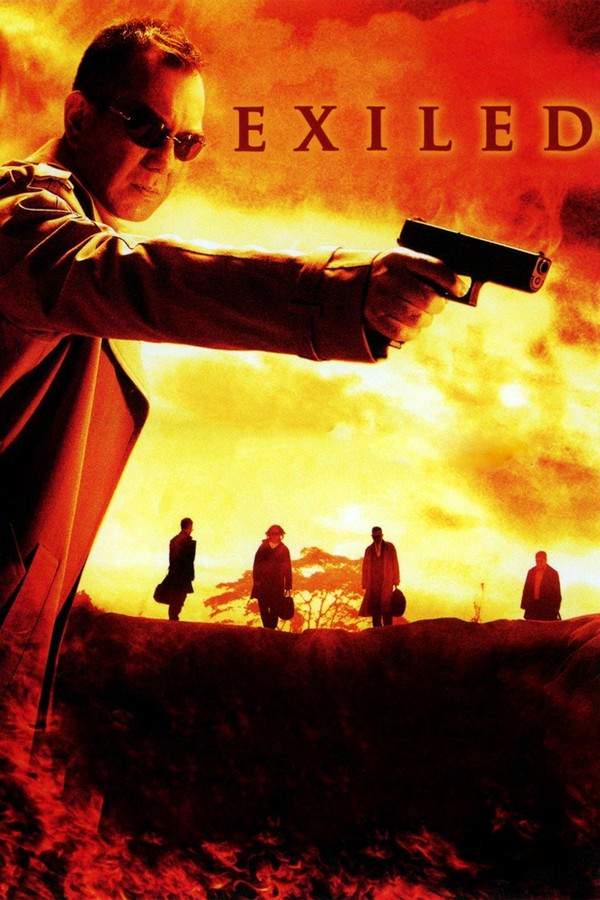
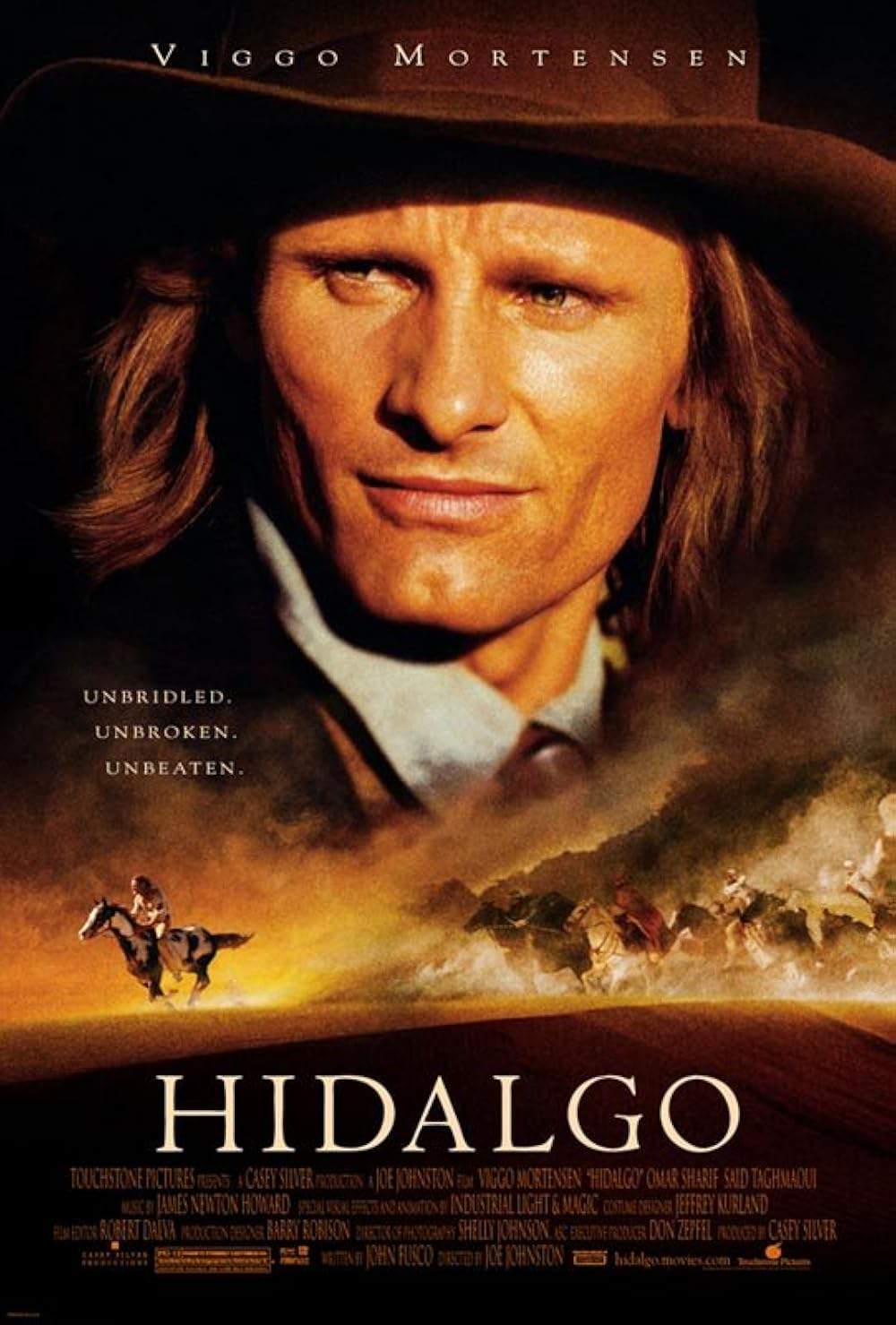
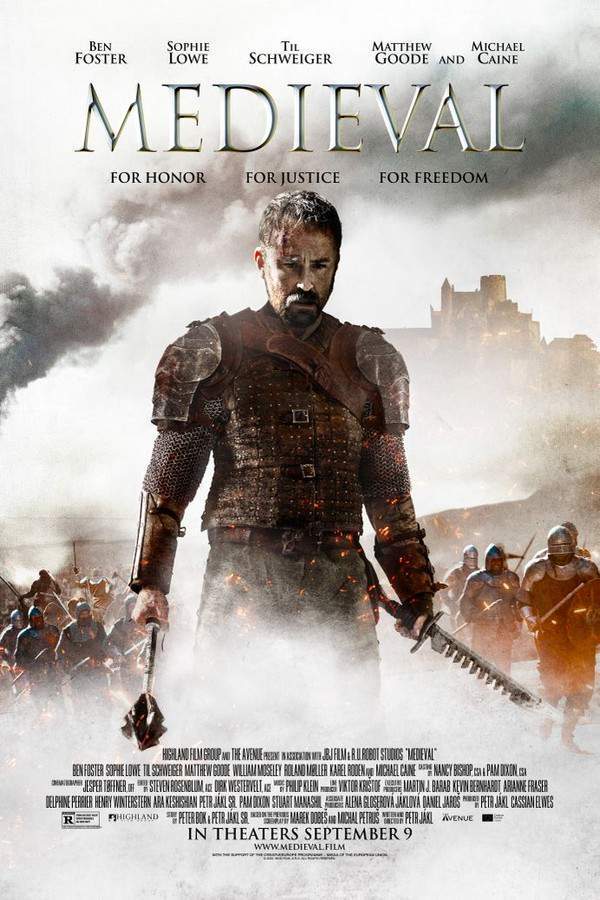
Grand-scale stories where legendary figures achieve victory at a profound personal cost. If you admired the grand, melancholic journey of El Cid, explore other movies that follow legendary heroes whose greatness is forged through sacrifice. These films are heavy historical dramas where personal honor and national destiny collide, often ending in bittersweet triumph.

  • epic
  • solemn
  • tragic
  • heroic
  • grand
  • melancholic
  • Tone: melancholic, heroic, solemn
  • Pacing: steady, epic progression
Why these movies?

The story pattern: These narratives follow a linear, epic arc where a hero of great virtue faces overwhelming political and military challenges. Their journey is one of exile, betrayal, and unwavering dedication to a cause, culminating in a final, defining act of heroism that secures their legacy but costs them their life or happiness.

Why they belong together: Movies in this thread share a specific combination: the grandeur of a historical epic, a tone of solemnity and melancholy, a steady narrative pace building to a climactic conclusion, and a central theme of a heroic yet tragic sacrifice for a greater good.

Redemptive Journeys of Exiled Warriors like El Cid

Stories of disgraced warriors seeking to reclaim their honor and homeland through battle. For viewers who appreciated El Cid's story of exile and the quest to reclaim honor, this collection features similar tales. Discover movies about disgraced heroes who must fight their way back from the margins to secure a legacy against impossible odds.

  • tense
  • heroic
  • redemptive
  • exile
  • military conflict
  • personal honor
  • Tone: tense, melancholic, determined
  • Pacing: steady, character-driven
Why these movies?

The story pattern: The narrative pattern begins with a fall from grace, often due to political machinations or a personal failing. The protagonist endures exile, grappling with estrangement and loss, before finding purpose in a larger conflict. Their path to redemption is paved with military prowess and culminates in a final act that restores their honor.

Why they belong together: These films are grouped by the powerful character arc of redemption through martial prowess. They blend high-stakes military conflict with deep personal drama, creating a tense and emotionally heavy experience centered on themes of honor, betrayal, and legacy.

If you liked this

Movies Like El Cid

Similar movies to El Cid: the same genre, themes or kind of story. Each one comes with its own plot summary, timeline and ending explained.

Browse all movie summaries

Every angle

El Cid (1961) Explained: Plot, Timeline & Characters

Everything about El Cid in one place: what happens in the plot summary, the timeline in chronological order, the characters and meaning and a spoiler-free summary. What's After the Movie adds the cast, box office and post-credit scenes.

Coming soon on iOS and Android

The Plot Explained Movie Summary App

Plot summaries, endings explained and timelines on your phone. Catch up on any movie in minutes, save your favorites and never miss a twist again.

Be the first to know when we launch. Your email stays private, always.

Learn more about the app