Plot Explained Spoilers guaranteed!
Plot Explained

Browse by genre

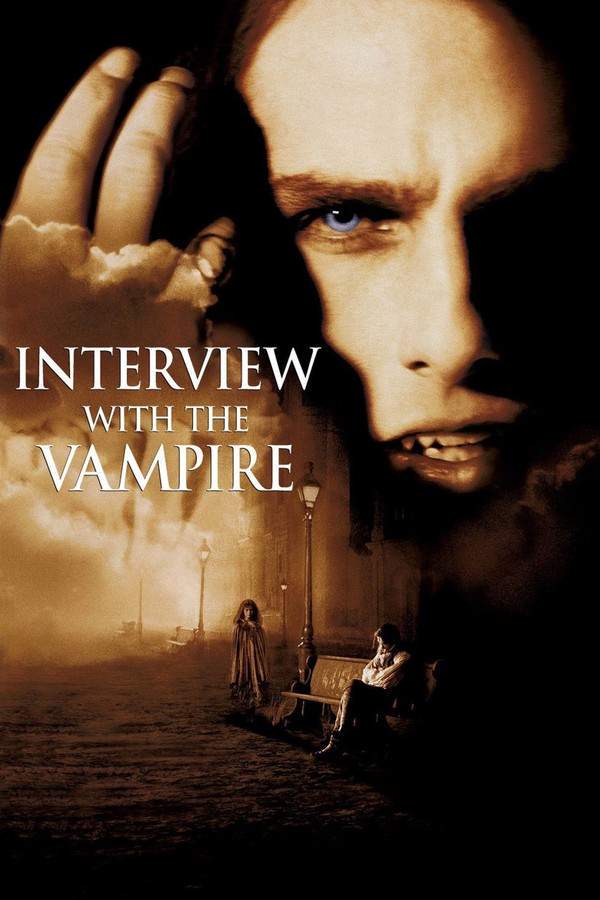
Interview with the Vampire: The Vampire Chronicles (1994) movie poster

Plot Summary

Interview with the Vampire: The Vampire Chronicles (1994) Plot Summary Explained

Release, runtime and language
1994 · 123 min · English
Loading streaming availability…
Directed by
Neil Jordan
Starring
Brad Pitt, Tom Cruise
Budget
$60M

In this haunting story of immortality, Louis, an 18th-century nobleman, tells his centuries-long existence as a vampire to a biographer. Plagued by suicidal thoughts, he is transformed and must confront the dark reality of his new life. His journey intertwines with the charismatic and manipulative Lestat, his maker, and a young vampire who brings both conflict and a chance for reflection on their shared existence.

On this page (6)
  1. 1 Where to watch
  2. 2 What happens: full plot
  3. 3 Plot questions answered
  4. 4 Movie threads
  5. 5 Movies like Interview with the Vampire: The Vampire Chronicles
  6. 6 Every angle
Loading streaming availability…

Full plot summary · contains spoilers

What Happens in Interview with the Vampire: The Vampire Chronicles: Full Plot Summary

The whole story of Interview with the Vampire: The Vampire Chronicles (1994) explained, from the opening scene to the final frame: every key event, every twist and what it all adds up to. Read it as a quick recap before the sequel, to check a scene you missed, or to finally understand what really happened.

In the vibrant backdrop of modern-day San Francisco, the seasoned reporter Daniel Molloy (Christian Slater) finds himself in a gripping conversation with Louis De Pointe Du Lac (Brad Pitt), a man who claims to possess the dark secret of being a vampire. As Louis recants his haunting story, we are transported to the picturesque, yet tumultuous, landscape of 1791 Spanish Louisiana, where he once lived as a prosperous plantation owner. The narrative deepens as Louis reveals his profound despair following the shocking loss of his beloved wife and their unborn child. Stricken by grief, he embarks on a reckless journey through the streets of New Orleans, seeking self-destruction by provoking fights, all the while feeling a desperate yearning to escape the relentless pain of his existence.

One fateful night, while wandering the dimly lit waterfront, Louis's life takes a spectacular turn when he encounters Lestat De Lioncourt (Tom Cruise), an enigmatic and charismatic vampire who senses Louis's inner turmoil. Lestat offers him a dark gift—the chance to transcend mortality and become a vampire himself. Initially, Louis welcomes this transformation, induced through Lestat's intoxicating blood, but it isn't long before he is engulfed with remorse. While Lestat indulges in the thrill of the hunt and the ecstasy of killing, Louis grapples with his moral compass, choosing the path of abstinence by sustaining himself on the blood of animals, a decision that causes him immeasurable suffering.

The juxtaposition of their lifestyles becomes painfully evident as Louis survives on the meager lifeblood of rats and birds, while Lestat feasts on the lifeblood of slaves and the aging aristocrats of the city. Tensions rise when the oppressed slaves of New Orleans unite and attack Louis and Lestat's home under the veil of darkness. Confronted with the gruesome necessity of killing his kind-hearted house slave Yvette (Thandie Newton), Louis reaches a breaking point, ultimately aiding in setting their home ablaze, driven by guilt and a desire for redemption.

Amidst a plague-ridden New Orleans, Louis's hunger crescendos into a desperate act, leading him to feed on an innocent girl who has lost her mother to the disease. In a twisted effort to keep Louis by his side, Lestat turns the dying girl, Claudia (Kirsten Dunst), into a vampire, creating a new family unit steeped in complexities. Louis nurtures Claudia with a fatherly love, while Lestat, with a more sinister intonation, trains her in the wicked arts of vampirism, fostering a hunger that leads Claudia to commit heinous acts, including the elimination of her dressmaker and her pianist, exploiting her youthful appearance as a bait.

Years wander by, and though Claudia retains her childlike visage, she matures emotionally, ultimately confronting the permanent nature of her condition, which leads to a fierce conflict with Lestat. Her anger culminates in treachery, as she seeks revenge by manipulating Lestat into consuming the "dead blood" of twin boys, ultimately slitting his throat. Louis, caught in a web of shock and sorrow, aids her in disposing of Lestat's body in the unforgiving swamps.

While they plot a journey to Europe in pursuit of others like them, Lestat, somehow revived by swamp creatures, reemerges to threaten their newfound freedom. A dramatic confrontation ensues, culminating in Louis setting Lestat ablaze, which cascades into a city-wide inferno, allowing Louis and Claudia to flee to a ship bound for Europe.

After their travels yield no results in their quest for fellow vampires, they find a semblance of peace in Paris during the year 1870. Here, Louis fortuitously meets the vampires Santiago (Stephen Rea) and Armand (Antonio Banderas), who extend an invitation to their coven, known as the Théâtre Des Vampires—a chilling venue where live humans become the unwitting stars of the stage, only to be fed upon by their vampiric spectators. Santiago, however, spies on their past and senses the darkness of their souls, claiming that Claudia and Louis bear the weight of Lestat's murder.

With tension escalating, Armand cautions Louis to protect Claudia from potential danger, presenting himself as a guide for Louis to explore the essence of vampirism and its meaning. Claudia, feeling betrayed and sensing a rift, demands Louis turn a human woman, Madeleine (Domiziana Giordano), into a vampire to fulfill her need for companionship, a demand Louis reluctantly concedes to. This decision sets off a dark chain of events, leading to their abduction by Parisian vampires who mete out punishment for Lestat’s demise. Trapped by their captors, Louis is confined to a coffin, while Claudia and Madeleine face a horrifying fate under the sun’s deadly rays.

Emerging from this torment, Louis plots revenge and returns to the theater, unleashing a fiery retribution that claims the lives of many vampires. In the aftermath, Armand saves Louis from the grasp of daylight, but the tension remains, leading Louis to reject Armand's advances, aware of his complicity in Claudia’s demise.

As decades slip away, Louis remains haunted by Claudia's loss, drifting through time while grappling with existential grief. His journey eventually circles back to New Orleans in 1988, where he encounters a weakened and decayed Lestat, who now lives in isolation, attempting to survive on rat blood—a cruel twist of fate. Lestat, filled with regret over Claudia’s transformation, attempts to rekindle their past bond, but Louis, still shackled by anguish, declines.

The interview with Molloy reaches its climax as Louis reflects on his tragic narrative, only to lash out when Molloy naively asks to join him as a vampire. In a moment of fury, he vanishes into the shadows, leaving Molloy in a frenzy, who then hastily escapes, playing back the chilling tapes of their conversation in his car. The scene takes an electrifying turn as Lestat, revived through Molloy's blood, emerges once more, offering him a choice—the chance that was ripped away from him so long ago, whether to embrace darkness and join them in their eternal night. And as the bridge fades into the distance, Lestat drives onward, cackling with a mixture of amusement and menace, leaving the future of Molloy forever altered.
Last updated: January 14, 2025 at 19:25

Was this helpful?

Plot questions answered

Interview with the Vampire: The Vampire Chronicles Plot Explained: Your Questions Answered

The questions people ask most about Interview with the Vampire: The Vampire Chronicles (1994): what happens in the confusing scenes, why the characters do what they do, the twists, hidden details and what the ending means. Each answer contains spoilers.

Q1

Why does Louis refuse to drink human blood?

Louis chooses to sustain himself on animal blood because he cannot stomach the act of killing humans. Even after becoming a vampire, he retains his moral conscience and finds the killing of humans repulsive. This decision creates constant suffering for him, as the vampire hunger fights against his ethical principles. Lestat, by contrast, freely feeds on humans and sees no moral issue with it, which creates ongoing tension between them.

Foreshadowing: Louis's compassion is foreshadowed early when he seeks self-destruction through fights rather than intentionally hurting others.

  • louis
  • animal blood
  • vampire diet
  • moral conflict
  • lestat
Q2

Why does Lestat turn Claudia into a vampire?

Lestat turns Claudia into a vampire primarily to keep Louis tied to him. After Louis feeds on the young girl during the plague, Lestat sees an opportunity to create a permanent family bond. He reasons that if Louis has a child to raise, he will never leave Lestat. This manipulation stems from Lestat's loneliness and desire to have Louis dependent on him, though Lestat frames it as a gift to save the dying girl.

Foreshadowing: Lestat's possessiveness over Louis appears early when he offers immortality specifically to someone he finds interesting.

  • lestat
  • claudia
  • turning vampire
  • manipulation
  • keeping louis
Q3

Why does Claudia plot against Lestat?

Claudia betrays Lestat because she resents being trapped in a child's body forever while mentally aging. After decades of being raised as a vampire, she realizes she will never grow up or escape her eternal childhood. She blames Lestat for this fate and manipulates him into drinking 'dead blood' from twin boys, which weakens him, allowing her to slit his throat. Her revenge is driven by rage at her permanent condition and anger at Lestat's control over her life.

Foreshadowing: Claudia's frustration with her appearance is shown when she kills her victims and expresses jealousy at growing older humans.

  • claudia
  • lestat
  • betrayal
  • revenge
  • eternal child
  • twins
Q4

Why does Louis help Claudia kill Lestat?

Louis assists in killing Lestat because he is torn between his love for Claudia and his complicated relationship with Lestat. Although Louis is shocked by Claudia's plan, he helps dispose of the body in the swamp because he cannot abandon Claudia after she has acted. Louis also harbors resentment toward Lestat for turning him into a vampire against his will and for corrupting Claudia. His decision reflects his loyalty to the only family he has left.

Foreshadowing: Louis's conflicted feelings about Lestat are evident throughout their time together in New Orleans.

  • louis
  • claudia
  • killing lestat
  • loyalty
  • swamp
Q5

How does Lestat survive after being killed?

Lestat survives his death by feeding on swamp creatures in the bayous after Claudia and Louis dispose of his body. The toxic 'dead blood' weakens him severely but does not kill him outright. He eventually recovers enough to return and confront Louis and Claudia before their departure to Europe. His survival demonstrates the resilience of vampires when they manage to consume even small amounts of blood, no matter how degraded.

Foreshadowing: The twins' 'dead blood' is established as weakening but not instantly lethal to vampires.

  • lestat survival
  • swamp creatures
  • dead blood
  • revival
Q6

Why does Louis turn Madeleine into a vampire?

Louis turns Madeleine into a vampire because Claudia demands a female companion to replace the motherly bond she lost. Claudia is frustrated by the absence of other vampires like herself and forces Louis to transform Madeleine, a dying woman who had lost her children, into a vampire. This decision is driven by Louis's desire to appease Claudia and ease her loneliness, though it ultimately leads to tragedy when the Parisian vampires punish them for their earlier actions.

Foreshadowing: Claudia expresses loneliness and the need for female companionship earlier in Paris.

  • madeleine
  • claudia
  • turning vampire
  • companionship
  • paris
Q7

Why does Armand help Louis after the theater fire?

Armand saves Louis from the burning theater because he is genuinely drawn to Louis and disagrees with the other vampires' punishment. After Louis burns down the Théâtre des Vampires in revenge, Armand pulls him from the daylight exposure. Although Armand was complicit in allowing Claudia's execution, he sees something unique in Louis and wants to explore a relationship with him. Armand's interest is both romantic and philosophical, as he sees Louis as a kindred spirit.

Foreshadowing: Armand's fascination with Louis is established when he offers to teach him about vampire existence.

  • armand
  • save louis
  • theater fire
  • paris
  • vampire coven
Q8

Why does Louis refuse Lestat's offer to reunite?

Louis rejects Lestat's attempt to reconcile in 1988 because he is still consumed by grief over Claudia's death and cannot forgive Lestat for turning her. Though Lestat expresses genuine remorse, Louis associates their relationship with tragedy and loss. He chooses to remain isolated rather than risk another devastating connection. Louis's rejection represents his ultimate rejection of companionship and his acceptance of eternal loneliness.

Foreshadowing: Louis's guilt over Claudia's fate is evident throughout the Paris storyline.

  • louis
  • lestat
  • reunion
  • rejection
  • 1988
  • grief
  • claudia
Q9

Why does Lestat approach Daniel Molloy at the end?

Lestat approaches Daniel Molloy because he has been resurrected through Daniel's blood, which was shed when Daniel fled Louis's apartment. After Louis storms off, Lestat awakens in the car, revived by the reporter's blood, and offers Daniel the same immortality he once offered Louis. This ending suggests Lestat is seeking a new companion and has chosen Daniel as his next subject, echoing his original recruitment of Louis decades earlier.

Foreshadowing: Louis's blood is established as having reviving properties earlier when Lestat offers it to him.

  • lestat
  • daniel molloy
  • interview
  • revival
  • offer vampire
Q10

Why does Lestat feed on slaves and aristocrats?

Lestat feeds indiscriminately on any humans, showing no moral hesitation. He hunts slaves in New Orleans because they are readily available and vulnerable, and he also targets aging aristocrats. Unlike Louis, Lestat views humans as nothing more than prey and feels no guilt about killing them. His feeding habits reflect his enjoyment of the predator-prey dynamic and his complete embrace of vampiric nature without human morality.

Foreshadowing: Lestat's predatory nature is established when he first approaches Louis seeking someone interesting to turn.

  • lestat
  • slaves
  • feeding
  • aristocrats
  • killing
  • new orleans
Q11

Why does Louis burn down the Théâtre des Vampires?

Louis sets fire to the vampire theater as an act of revenge after the Parisian vampires punish them for killing Lestat. The coven traps Louis in a coffin and executes Claudia and Madeleine in sunlight. Enraged and grieving, Louis returns to the theater and starts the fire, killing many vampires inside. This destruction represents Louis's breaking point after losing everyone he loves.

Foreshadowing: Louis's violent capabilities are shown when he kills during the slaves' revolt.

  • theater fire
  • paris
  • revenge
  • burning
  • Armand
  • coven
Q12

Why is Louis agreeing to the interview?

Louis agrees to tell his story to Daniel Molloy because he has lived with isolation and guilt for two centuries and needs to confess his existence. By 1988, he is the only remaining connection to the events that shaped him, and the interview serves as both catharsis and a way to pass on his story. Louis may also be seeking a human connection one final time before the story ends with his dramatic rejection of both Lestat and Daniel.

Foreshadowing: The interview frame opens the film, establishing Louis's desire to share his tale.

  • interview
  • daniel molloy
  • confession
  • telling story
  • modern day

Movie threads

More Movies Like Interview with the Vampire: The Vampire Chronicles, by Mood & Story

Curated lists built around what makes Interview with the Vampire: The Vampire Chronicles tick: the same mood, the same kind of story or the same emotional payoff. Each list explains why these movies belong together.

Gothic tales of immortal torment like Interview with the Vampire: The Vampire Chronicles

Atmospheric sagas where immortality is a curse, steeped in beauty and despair. If you liked the gothic melancholy and exploration of immortality's curse in Interview with the Vampire: The Vampire Chronicles, you'll find similar movies here. These stories often blend horror, drama, and romance, creating a moody, atmospheric experience centered on immortal beings wrestling with their monstrous nature and the weight of centuries.

  • gothic
  • melancholic
  • tragic
  • brooding
  • philosophical
  • romanticized horror
  • Tone: dark, melancholic
  • Pacing: steady, deliberate
Why these movies?

The story pattern: These narratives typically span long periods, following immortal or long-lived protagonists as they confront the loneliness, grief, and moral ambiguity of their condition. The central conflict is often internal—a battle against their own nature—set against opulent but decaying backdrops that mirror their inner turmoil.

Why they belong together: Movies in this thread share a specific aesthetic and mood: a romanticized but tragic view of the supernatural, a focus on existential dread, and a tone that is both beautiful and deeply sad. They prioritize atmosphere and philosophical questioning over fast-paced action.

Movies about toxic found families like Interview with the Vampire: The Vampire Chronicles

Stories of dysfunctional, monstrous families bound by trauma and darkness. For viewers who appreciated the complex, dark dynamic between Louis, Lestat, and Claudia in Interview with the Vampire: The Vampire Chronicles, this thread finds similar movies. These films explore monstrous fatherhood, fraught creation, and the tragic, inescapable bonds that form within a deeply dysfunctional surrogate family.

  • claustrophobic
  • oppressive
  • tragic
  • betrayal
  • moral conflict
  • dysfunctional family
  • Tone: dark, oppressive
  • Pacing: steady, character-driven
Why these movies?

The story pattern: The narrative pattern involves a dominant, charismatic but destructive figure who 'creates' or gathers a family, trapping them in a cycle of abuse and dependency. The story follows the members, often including a child-like figure, as they attempt to assert their autonomy, leading to betrayal, violence, and a bleak resolution that offers little escape.

Why they belong together: These films are grouped by their central, emotionally heavy exploration of forced kinship. They share a high intensity driven by psychological manipulation and moral horror, a steady pace that allows the toxic relationships to simmer, and a consistently dark, bleak tone with no easy resolutions.

If you liked this

Movies Like Interview with the Vampire: The Vampire Chronicles

Similar movies to Interview with the Vampire: The Vampire Chronicles: the same genre, themes or kind of story. Each one comes with its own plot summary, timeline and ending explained.

Browse all movie summaries

Every angle

Interview with the Vampire: The Vampire Chronicles (1994) Explained: Plot, Timeline & Characters

Everything about Interview with the Vampire: The Vampire Chronicles in one place: what happens in the plot summary, the timeline in chronological order, the characters and meaning and a spoiler-free summary. What's After the Movie adds the cast, box office and post-credit scenes.

Coming soon on iOS and Android

The Plot Explained Movie Summary App

Plot summaries, endings explained and timelines on your phone. Catch up on any movie in minutes, save your favorites and never miss a twist again.

Be the first to know when we launch. Your email stays private, always.

Learn more about the app