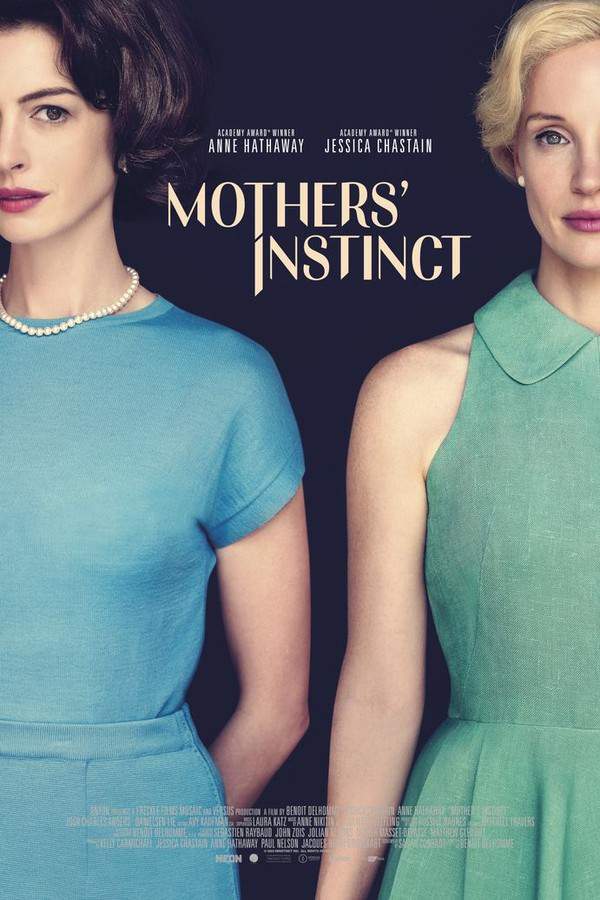
In 1960 suburban America, Alice Jessica Chastain Bradford and Céline Anne Hathaway Jennings are next‑door neighbors and mothers to boys who are close in age, sharing a quiet sense of community and the frequent small tensions of everyday life.
During Céline’s birthday, Alice stages a surprise party for her friend. The very next day, Céline’s son Max Baylen D. Bielitz stays home sick, and Alice, while pruning roses in her own yard, spots Max standing precariously on a balcony, attempting to hang a school-made birdhouse. Realizing the danger, she tries to crawl through a tiny break in the hedge that separates the two homes, but her large sunhat makes it slow going. She races around to the front door, hoping Céline—inside vacuuming—will pull him back from the edge, but they are unable to act quickly enough, and tragedy follows as Max falls to his death.
In the wake of the accident, Céline distances herself from Alice, while growing closer to Alice’s son, Theo Eamon Patrick O’Connell. At Max’s funeral, Theo notices one of his own toys tucked in Max’s coffin and lashes out in a raw, emotional moment. After the service, Céline retreats for a month to an unknown location, and when she returns, she and Alice begin to mend their strained relationship. One day, Alice leaves Theo in Céline’s care at her house and sees Theo playing with bubbles on the same balcony where Max fell. Panicking, she crawls through the hedge passage again and approaches Céline’s house, but Céline steps out and explains she has been watching Theo—though she acknowledges that Alice could get through the hedge for her own son, something Céline could not do for Max. Alice suspects this was a subtle test, and the dynamic between the two sets becomes increasingly fraught.
Theo’s bond with Céline deepens, to the point where he invites her to his birthday party, much to Alice’s dismay. The party unfolds with the expected rhythms of a family celebration, but soon afterward, tragedy creeps back into their lives in another form: Alice’s mother‑in‑law, the mother of Simon Anders Danielsen Lie, collapses and dies of a heart attack. An autopsy ordered by Alice reveals no trace of the heart medication that had previously been found in her bloodstream, leaving Alice with unsettling questions about what Céline may have been replacing and why. Her suspicions grow when Theo is hospitalized after a severe allergic reaction at Céline’s house, leading Alice to fear that Céline could have deliberately exposed him to dangerous foods.
Driven by a need for proof, Alice quietly enters Céline’s home while Céline is away, hoping to uncover something—only to be caught by Céline, who orders her to leave. In the uncertain aftermath, Alice and Simon consider moving away from Céline, but their differences flare into a confrontation that nearly ruptures their lives. Theo’s threat to take his own life in response to the mounting tension adds urgency to the unresolved quarrel, forcing them to reckon with what kind of pattern their two families have begun.
The story’s darkest turn arrives when Céline sedates her husband with chloroform and slices his wrist, staging it as a suicide. Alice and Simon, though shaken, allow Céline to stay in their home while she sorts through her things, hoping for some semblance of stability. But the danger does not end there: Céline seizes control of the situation by sedating both Simon and Theo as Alice climbs back into the house to intervene. A tense struggle erupts as Céline attempts to subdue Alice, and she eventually succeeds in gaslighting her rival by cutting the boiler—creating a dangerous, staged gas leak.
In the wake of these events, Céline spares Theo, and, in a chilling final turn, she adopts him. The tragedy that began with a balcony and a hedge closes with a carefully staged web of deception, jealousy, and calculated violence, leaving Theo with a twisted sense of family and a life shaped by the choices of two neighboring households. The film lingers on the unresolved moral ambiguities of trust, protection, and the lengths a person will go to control whom they call family.