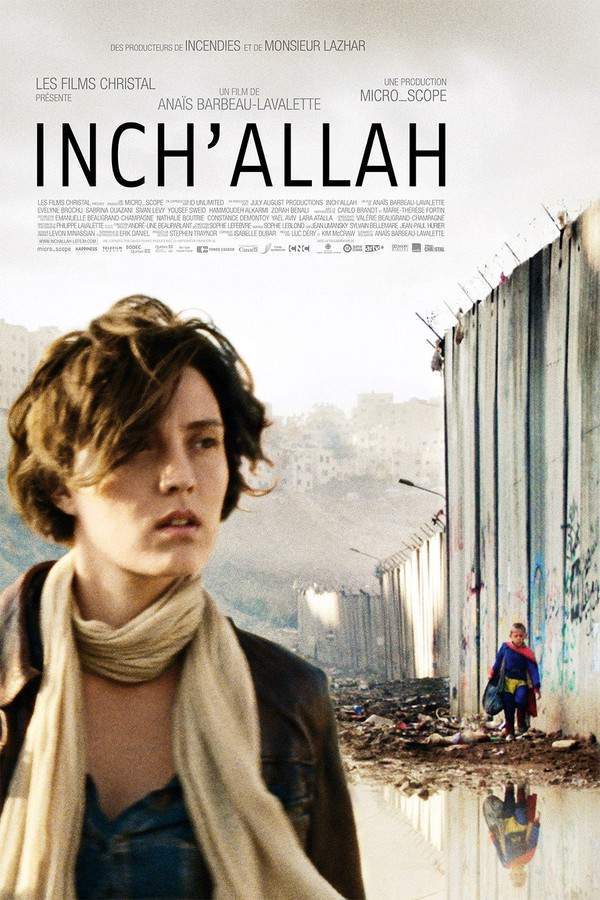
A street cafe bombing in Israel sets the stage for a quietly tense, human-centered drama that follows sharp personal revelations against a backdrop of ongoing conflict. Chloé, a young Canadian obstetrician who works at a Red Crescent clinic in Ramallah while living in Jerusalem, moves between two worlds with daily routines shaped by checkpoints, buses, and the fragile balance of safety and duty. Her life intersects with Ava, an Israeli Defense Forces soldier who shares the same building and carries the weight of her role with a wary, unspoken weariness. Their friendship and differing perspectives become a lens through which the movie examines moments of doubt, duty, and humanity in a region defined by division.
As Chloé travels from her Jerusalem home to Ramallah, she encounters the quiet pain and immediate needs of the people she treats. One patient, Rand, a pregnant Palestinian woman, embodies the precarious line between hope and danger. Rand’s husband, Ziad, is imprisoned, facing unknowns behind bars, while Rand herself carries a life that could be caught in the crossfire of a system that sometimes seems indifferent to personal agony. Rand’s brothers, Faysal and Safi, along with their mother, Soraïda, introduce Chloé to a world where family ties wrestle with loss, displacement, and the stubborn memory of what has been left behind. Faysal, who works at a print shop that produces Palestinian posters, helps reveal the cultural memory and political struggle that surround them.
The story deepens as the dynamics between the two protagonists broaden. After a violent incident at the nearby Beit Shomron settlement, warm conversations give way to troubling questions, and Ava confesses that the checkpoint routine feels dehumanizing even as she cannot abandon her post. Chloé’s empathy grows as she spends time with Rand and Safi, learning how occupation reshapes everyday life and the ways in which children and families are forced to navigate danger and fear. She becomes more involved, helping Faysal plaster posters and encouraging Rand and her family to obtain a travel permit that would let them visit Soraïda’s former village—now ruined and beyond easy access. This act of bridge-building makes Chloé realize how fragile human connection can be when political realities intervene.
The couple’s shared moments—Chloé’s ventures to a Tel Aviv nightclub with Ava, the return to Ramallah for Rand’s labor, and the race against time to reach a hospital—highlight the ever-present obstacles of movement and power. A critical turning point arrives when a chaotic delay at a checkpoint obstructs the convoy carrying Rand, forcing her to give birth in the back of the van. The newborn dies, a tragedy that devastates Rand and sours her view of the world around her. Rand blames Chloé for what happened, a guilt that shadows the physician as she retreats to Jerusalem to process the consequences of the day’s events.
The film’s climax threads the personal with the political in a stark, devastating manner. A suicide attack erupts in a crowded street cafe, an act that hardens the narrative into a stark meditation on choices, responsibility, and the human cost of conflict. In the aftermath, Chloé learns from Faysal that Rand has become a shahid, her sacrifice reframing the deaths and the anger that followed them. As Chloé reads Rand’s farewell letter, the story returns to a quieter, more symbolic note: Safi plays near the separation barrier, imagining a tree that grows despite the surrounding tension—a visual reminder of resilience and the possibility of life continuing even after profound loss.
Throughout, the film maintains a restrained, contemplative tone that invites viewers to weigh the weight of individual actions within an ongoing cycle of violence. It presents a mosaic of relationships—between caregiver and patient, friend and ally, neighbor and stranger—whose fragile bonds offer both solace and fraught potential. The ending ties together the threads of memory, guilt, and longing, leaving the viewer with a somber sense of how a single act can reverberate through families, communities, and the landscape itself.