Plot Explained Spoilers guaranteed!
Plot Explained

Browse by genre

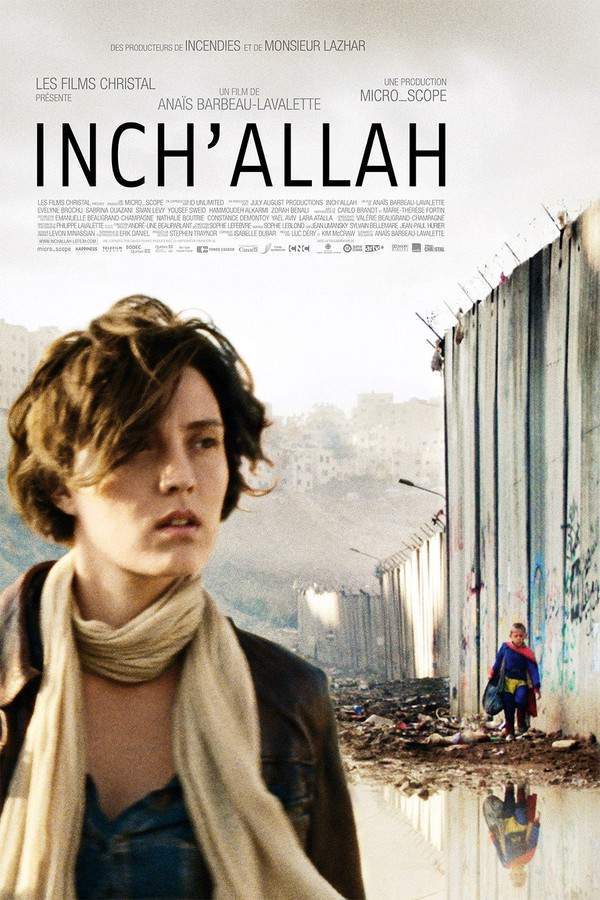
Inch'Allah (2013) movie poster

Timeline

Inch'Allah (2013) Timeline Explained – Every Event in Order

Release, runtime and language
2013 · 102 min · English
Loading streaming availability…
Directed by
Ana

In a war-torn land, Canadian doctor Chloe dedicates herself to providing medical care for pregnant Palestinian women residing in a refugee camp. Facing immense challenges and cultural differences, she strives to deliver hope and healing within a community deeply impacted by conflict. Her unwavering compassion and determination inspire those around her as she works to navigate a complex and difficult reality.

On this page (6)
  1. 1 Where to watch
  2. 2 Events in order (15)
  3. 3 Timeline questions answered
  4. 4 Movie threads
  5. 5 Movies like Inch'Allah
  6. 6 Every angle
Loading streaming availability…

15 events in order · contains spoilers

Inch'Allah Timeline: Events in Chronological Order

Every key event of Inch'Allah (2013) in order, scene by scene, with when and where it takes place. Use it to untangle flashbacks, time jumps and parallel storylines, to refresh your memory before the sequel or to find the exact scene you are thinking of.

  1. Opening street cafe bombing

    A street cafe in Israel is bombed, opening the narrative with sudden violence. The attack unsettles the community and foreshadows the fraught security environment the characters inhabit. It also foreshadows the later ties between personal tragedy and political conflict.

    When
    Opening scene
    Where
    Israel (street cafe)
  2. Chloé's dual life: Ramallah clinic and Jerusalem home

    Chloé is a Canadian obstetrician who works at a Red Crescent clinic in Ramallah while living in Jerusalem. She commutes daily through checkpoints, witnessing arrivals and delays that shape her perspective on the occupation. The arrangement highlights the distance between her patients and her own life.

    When
    Early in story
    Where
    Jerusalem and Ramallah area
  3. Rand's pregnancy and support network

    Rand is a pregnant Palestinian patient under Chloé's care. Her husband Ziad is jailed, adding strain to the family. Chloé befriends Rand and joins her family—Faysal, Safi, and Soraïda—as they navigate life under occupation.

    When
    Early phase
    Where
    Ramallah area
  4. Beit Shomron shooting and checkpoint crackdown

    Gunmen open fire on the nearby Beit Shomron settlement, wounding two civilians. In response, Israeli soldiers round up men in the refugee camp, increasing the sense of control and fear. The incident intensifies the political tension surrounding the characters.

    When
    Shortly after the shooting
    Where
    Near Beit Shomron; refugee camp vicinity
  5. Ava's confession: unease with checkpoint dehumanization

    Ava, Chloé's Israeli friend and a soldier, confesses her unease with the dehumanizing aspects of checkpoint duty. She feels trapped by duty and cannot quit, despite her discomfort. The conversation deepens the emotional stakes of cross-border friendships.

    When
    Around this period
    Where
    Jerusalem
  6. Rubbish dump encounter and a child's death

    Chloé spends time with Rand and Safi near the separation barrier, rummaging for supplies in a rubbish dump. A local boy is inadvertently run over by an armored Israeli truck and dies, later being celebrated as a martyr at his funeral. The event underscores the fragility of life under occupation.

    When
    During the day following the shooting
    Where
    Rubbish dump near the separation barrier
  7. Chloé questions the disproportionate reaction to the Beit Shomron incident

    Chloé confronts Ava about the disproportionate attention given by Israeli authorities to the settlement shooting. Ava defends the focus by noting that two settlers were seriously wounded, which she frames as a significant issue. The exchange highlights competing perspectives on violence and responsibility.

    When
    After the boy's death
    Where
    Jerusalem/Ramallah
  8. Chloé grows close to Rand's family and helps plaster posters

    Chloé grows closer to Rand's family and learns about the effects of occupation on daily life. She helps Faysal plaster propaganda posters at his print shop, bridging communities through shared labor. The friendship deepens and complicates her sense of responsibility.

    When
    Over time
    Where
    Ramallah; Faysal's print shop
  9. Travel pass arrangement to visit Soraïda's village

    Chloé persuades Ava to issue a travel pass allowing Rand's family to visit Soraïda's ruined former village. Soraïda expresses gratitude for the gesture, while Faysal remains bitter about reminders of loss. The act reveals small acts of mercy amid larger political barriers.

    When
    Later
    Where
    Ava's surroundings; travel routes
  10. Nightlife in Tel Aviv

    Chloé and Ava visit a nightclub in Tel Aviv, sharing a rare moment of cross-community interaction. The outing contrasts with the ongoing daily hardship and foreshadows how personal bonds can exist across divides. The scene also deepens the tension between their loyalties.

    When
    Night
    Where
    Tel Aviv
  11. Rand goes into labor and blocked transit

    The following morning Rand goes into labor and Chloé and the group rush back toward Ramallah. They encounter a checkpoint that blocks their path, preventing timely access to a hospital. Rand delivers her baby in the back of the van, and the infant dies.

    When
    Following morning
    Where
    Between Jerusalem and Ramallah; checkpoint
  12. Ziad's 25-year sentence and Rand's grief

    Rand learns that Ziad has been sentenced by an Israeli military court to 25 years. The news compounds her grief after losing her child and facing separation from her husband. The moment marks a turning point in her bitterness toward Chloé.

    When
    Later
    Where
    Ramallah
  13. Chloé's return to Jerusalem and a backpack delivery

    A guilt-ridden Chloé crosses the checkpoint toward Jerusalem, carrying a backpack that is later delivered to a man on a bus. The act haunts her as she grapples with responsibility and questions whether she can bear witness to what she has seen. The journey emphasizes the personal cost of involvement.

    When
    After the baby death
    Where
    Checkpoint; Jerusalem
  14. Suicide attack closes the story

    A suicide bombing erupts in a crowded street cafe, tying the climax to the earlier exposition. The attack underscores the extreme consequences of ongoing conflict for everyone involved. The scene shifts the emotional focus to collective tragedy.

    When
    Climax
    Where
    Street cafe in Israel
  15. Rand's fate revealed and final imagery

    After the attack, Chloé visits Faysal's photocopying shop in Ramallah and learns that Rand was the one who perpetrated the suicide bombing and became a shahid. She reads Rand's farewell letter as the denouement unfolds. The final footage intercuts Safi playing near the separation barrier with the image of a growing tree.

    When
    Denouement
    Where
    Ramallah; separation barrier

Last updated: October 09, 2025 at 16:20

Was this helpful?

Timeline questions answered

Inch'Allah Timeline Explained: Your Questions Answered

When does it happen, and why in that order? The questions people ask about the chronology of Inch'Allah (2013): time jumps, flashbacks, cause and effect between scenes and the correct order of events, each answered with spoilers.

Q1

Why does Rand blame Chloé for the baby's death?

Rand blames Chloé because Chloé was the one who arranged for the travel permit and convinced Rand's family to travel that day. When they were blocked at the checkpoint and Rand was forced to give birth in the van, the baby died. Rand holds Chloé responsible for putting them in that dangerous situation, believing that if Chloé had not arranged the trip, the baby would have been born safely in Ramallah with proper medical care available.

  • rand
  • baby death
  • checkpoint
  • blame
  • chloe
Q2

How did Rand become a suicide bomber in the film?

After losing her baby at the checkpoint and learning that her husband Ziad had been sentenced to 25 years in an Israeli prison, Rand became consumed by grief and desperation. The combination of losing her child, being separated from her husband, and living under occupation drove her to commit the suicide attack at the street cafe. Faysal reveals to Chloé that Rand became a shahid, meaning she sacrificed herself in a bombing attack.

Foreshadowing: The opening street cafe bombing and the subsequent checkpoint tragedy establish the cycle of violence that culminates in Rand's decision.

  • rand
  • suicide bomber
  • shahid
  • bombing
  • motivation
Q3

Why was Rand blocked at the checkpoint during labor?

Rand went into labor while traveling with Chloé and her family. When they reached the checkpoint, Israeli soldiers delayed their passage for unclear reasons, possibly due to increased security following the Beit Shomron shooting or routine checkpoint procedures. The delay prevented them from reaching a hospital in time, forcing Rand to give birth in the back of the van. The baby died shortly after birth.

  • checkpoint
  • rand
  • labor
  • baby
  • delay
Q4

What happened to Ziad, Rand's husband?

Ziad, Rand's husband, was imprisoned at the beginning of the film. Later in the story, Rand learns that an Israeli military court sentenced him to 25 years in prison. This devastating news, coming right after the death of her newborn, contributes to Rand's complete breakdown and eventual decision to become a suicide bomber.

  • ziad
  • husband
  • imprisonment
  • 25 years
  • sentence
Q5

Why does Chloé help Rand's family get a travel permit?

Chloé persuades her Israeli friend Ava, who is a soldier, to issue a travel permit so that Rand's family, including Soraïda, can visit Soraïda's former village, which was destroyed during the conflict. Chloé sees this as an act of compassion and bridge-building between the two communities. However, the permit leads to tragedy when the family is delayed at the checkpoint during Rand's labor.

Foreshadowing: The travel permit arrangement creates the circumstances for the checkpoint delay that leads to the baby's death.

  • travel permit
  • ava
  • family
  • village
  • compassion
Q6

What is the significance of the tree at the end of the film?

The final image shows Safi playing near the separation barrier while a tree grows despite the surrounding tension. The tree symbolizes resilience, hope, and continuity of life even amid conflict and loss. It represents the possibility of growth and peace persisting despite the tragedy that has unfolded, while also serving as a reminder of what is at stake for the next generation.

  • tree
  • ending
  • symbolism
  • hope
  • resilience
Q7

Why does Ava agree to issue the travel permit for Rand's family?

Ava agrees to help Chloé obtain the travel permit as a gesture of friendship and compassion toward Chloé's Palestinian patients. Despite being a soldier, Ava expresses discomfort with the dehumanizing aspects of her role at the checkpoint. She wants to help Chloé in a small way, though this decision ultimately contributes to the chain of events that leads to tragedy.

Foreshadowing: Ava's earlier confession about feeling dehumanized by checkpoint duty hints at her willingness to help Chloé despite the political consequences.

  • ava
  • travel permit
  • friendship
  • soldier
  • compassion
Q8

What does "shahid" mean in the film?

"Shahid" is an Arabic word meaning "witness" or "martyr." In the context of the film, it refers to someone who has died as a suicide bomber in service of a cause. When Faysal tells Chloé that Rand became a shahid, he is explaining that Rand carried out the suicide bombing attack that closes the film.

  • shahid
  • martyr
  • meaning
  • suicide bomber
Q9

Why does Chloé deliver the backpack to the man on the bus?

After the traumatic checkpoint incident where the baby died, Chloé crosses back into Jerusalem carrying a backpack. She delivers this backpack to a man on a bus, a act that remains ambiguous but haunts her. The scene suggests she has become entangled in something beyond her role as a doctor, possibly carrying materials for someone, though the film leaves this intentionally unclear.

  • backpack
  • chloe
  • bus
  • delivery
  • guilt
Q10

How does the opening bombing connect to the suicide attack at the end?

The film opens with a street cafe bombing in Israel, establishing the cycle of violence that permeates the story. The climax features another suicide bombing at a street cafe, this time carried out by Rand. This circular structure emphasizes how the conflict perpetuates itself, each act of violence begetting another, trapping characters like Chloé in the middle of two opposing sides.

  • opening
  • bombing
  • ending
  • cycle
  • violence
Q11

What is the relationship between Chloé and Ava?

Chloé and Ava are friends who live in the same building, Chloé in Jerusalem and Ava as an Israeli soldier stationed there. Their friendship is complex, bridging the divide between occupier and occupied. They share moments of intimacy, including a night out at a Tel Aviv nightclub. However, their friendship is strained by the political realities around them, especially after the checkpoint tragedy.

  • chloe
  • ava
  • friendship
  • soldier
  • relationship
Q12

What happened to the boy at the rubbish dump near the barrier?

While Chloé was with Rand and Safi near the separation barrier, a young boy was inadvertently run over by an armored Israeli truck and died. The boy was later celebrated as a martyr at his funeral. This tragic event further illustrates the daily dangers faced by Palestinians and deepens Chloé's understanding of the occupation's impact on ordinary lives.

  • boy
  • death
  • rubbish dump
  • truck
  • martyr

Movie threads

More Movies Like Inch'Allah, by Mood & Story

Curated lists built around what makes Inch'Allah tick: the same mood, the same kind of story or the same emotional payoff. Each list explains why these movies belong together.

Somber Humanitarian Dramas like Inch'Allah

Intimate, somber stories of aid workers in politically fractured worlds. If you were moved by the quiet compassion and political tension of Inch'Allah, these movies offer similar experiences. They are slow-burn, character-driven dramas set within humanitarian crises, exploring the personal toll of providing aid in war-torn regions.

  • somber
  • contemplative
  • tragic
  • oppressive
  • human-centered
  • quiet
  • Tone: tense, somber, tragic
  • Pacing: slow, contemplative
Why these movies?

The story pattern: The narrative follows a compassionate outsider or professional (doctor, journalist, aid worker) navigating a complex, hostile political landscape. The story is built from vignettes of daily struggle, cultural barriers, and moral dilemmas, culminating in a profound, often tragic, reflection on the limits of individual action against overwhelming conflict.

Why they belong together: Movies in this thread are grouped by their shared focus on quiet humanitarian efforts, a slow, contemplative pacing that builds emotional weight, and a tense, somber mood reflecting the stark reality of political crises. They prioritize personal emotional journeys over action-driven plots.

Movies about Tense Cross-Cultural Friendships like Inch'Allah

Stories of fragile connections strained by geopolitical divides. For viewers who appreciated the complex relationships across borders in Inch'Allah, this list features films about friendships and alliances strained by political conflict. These are heavy, tense dramas where cultural barriers and external pressures test human connection.

  • tense
  • tragic
  • melancholic
  • oppressive
  • human-centered
  • contemplative
  • Tone: tense, melancholic, tragic
  • Pacing: slow, character-driven
Why these movies?

The story pattern: The plot revolves around a relationship—often a friendship or professional alliance—between individuals from opposing sides of a conflict. The narrative tension arises from the constant friction between personal goodwill and the harsh, divisive realities of the world they inhabit, typically ending in sadness or loss that underscores the enduring nature of the conflict.

Why they belong together: These films share a core narrative pattern of cross-cultural connection under duress. They are united by a heavy emotional weight, a tense and somber tone, and a focus on how large-scale political issues intimately destruct personal relationships, resulting in a contemplative and tragic viewing experience.

If you liked this

Movies Like Inch'Allah

Similar movies to Inch'Allah: the same genre, themes or kind of story. Each one comes with its own plot summary, timeline and ending explained.

Browse all movie summaries

Every angle

Inch'Allah (2013) Explained: Plot, Timeline & Characters

Everything about Inch'Allah in one place: what happens in the plot summary, the timeline in chronological order, the characters and meaning and a spoiler-free summary. What's After the Movie adds the cast, box office and post-credit scenes.

Coming soon on iOS and Android

The Plot Explained Movie Summary App

Plot summaries, endings explained and timelines on your phone. Catch up on any movie in minutes, save your favorites and never miss a twist again.

Be the first to know when we launch. Your email stays private, always.

Learn more about the app