Plot Explained Spoilers guaranteed!
Plot Explained

Browse by genre

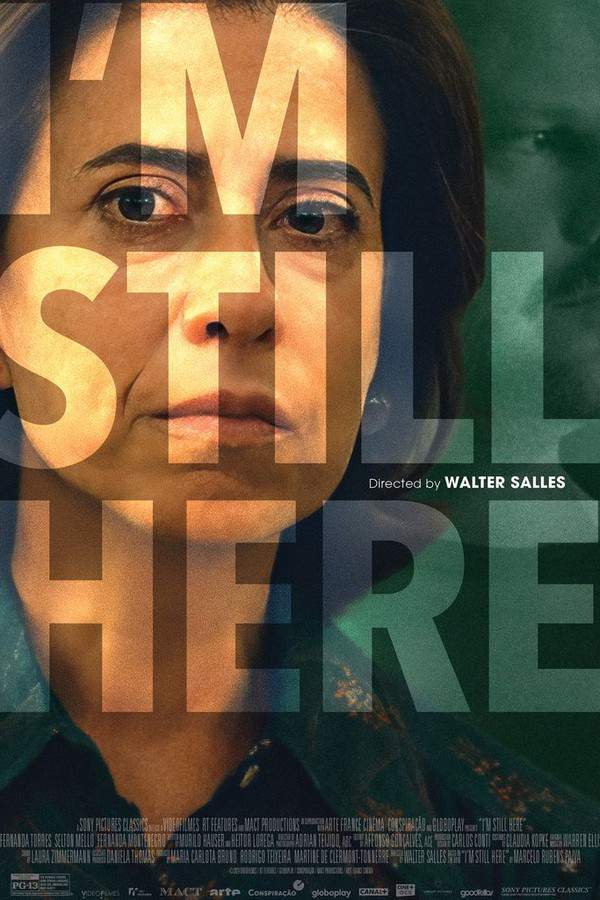
I'm Still Here (2025) movie poster

Characters & Themes

I'm Still Here (2025) Characters, Setting & Themes Explained

Release, runtime and language
2025 · 2 h 16 m · Portuguese
Echo score 88
Loading streaming availability…
Directed by
Walter Salles
Starring
Antonio Saboia, Fernanda Montenegro, Maria Manoella, Charles Fricks, Valentina Herszage, Dan Stulbach
Budget
$80K

In Brazil, 1971, a family's life is tragically disrupted by an act of violence under the country's increasingly repressive military dictatorship. The mother is compelled to rebuild her life and adapt to the changing circumstances. The story is based on Marcelo Rubens Paiva's acclaimed memoir.

On this page (8)
  1. 1 Where to watch
  2. 2 Characters explained (6)
  3. 3 Character relationship map
  4. 4 Where & when it takes place
  5. 5 Themes & meaning (4)
  6. 6 Character & meaning questions
  7. 7 Movie threads
  8. 8 Every angle
Loading streaming availability…

6 main characters · contains spoilers

I'm Still Here Characters Explained: Who Is Who

The main characters of I'm Still Here (2025), heroes and villains: what drives them, how they change over the course of the story and what each of them reveals about the film's bigger ideas.

  • Eunice Paiva (Fernanda Montenegro)

    A devoted mother who endures torture and relentlessly pursues the truth about her husband’s disappearance. She becomes a central figure in demanding accountability and, decades later, rebuilding life in a democratic Brazil. Her journey embodies resilience, courage, and a lifelong commitment to justice for victims and families.

    • 👩‍👧 Family matriarch
    • 🗣️ Truth seeker
    • 🕊️ Resilience
  • Rubens Paiva (Selton Mello)

    A civil servant with ties to political exiles who keeps his activities discreet from his family. His arrest and disappearance become a catalyst for the family’s fight for information and accountability. His legacy drives the narrative of memory, loss, and the pursuit of justice.

    • 👨‍👩‍👦 Family man
    • 🕯️ Martyr
    • 🗳️ Political activist
  • Eliana Paiva (Marjorie Estiano)

    The Paiva family’s teenage daughter who is imprisoned for a time, reflecting the vulnerability of youth during political repression. Her experience underscores the personal cost of dictatorship and the impact on siblings and parents.

    • 👧 Teenage daughter
    • 👀 Witness to violence
  • Fernando Gasparian (Charles Fricks)

    A friend of the Paiva family who seeks refuge in London with his wife and daughter, illustrating how political persecution forces networks of exile and international escape. His decisions highlight the reach of the regime beyond national borders.

    • 👨‍👨‍👦 Friend and ally
    • ✈️ Exile
  • Dalva Gasparian (Maeve Jinkings)

    A close ally of Eunice and Rubens whose family also flees to London, sharing the burden of protecting loved ones and maintaining hope in exile. Her presence emphasizes the collective dimension of resistance and resilience.

    • 👭 Family ally
    • 🕊️ Refugee
  • Baby Bocayuva (Dan Stulbh)

    played by Dan Stulbach

    A trusted family friend who aids Eunice by providing information and support as she navigates legal and moral challenges in pursuit of truth and accountability.

    • 🤝 Friend and adviser
    • 🗞️ Media ally

Last updated: October 21, 2026 at 10:51

Was this helpful?

6 characters · 9 connections · contains spoilers

I'm Still Here Character Relationship Map

Who is connected to whom in I'm Still Here: family, love, friendships, rivalries and hidden ties, colour-coded. Pick a character to see their side of the story, or a connection to see what brings two characters together.

How much of the story to show
EPEunice PaivaFernanda MontenegroRPRubens PaivaSelton MelloEPEliana PaivaMarjorie EstianoFGFernandoGasparianCharles FricksBBBaby BocayuvaDan StulbachVPVera Paiva

Last updated: October 21, 2026 at 10:51

Was this helpful?

Setting

Where and When Does I'm Still Here Take Place?

The setting of I'm Still Here (2025): the year and time period, the places and locations, and how they shape the characters, the mood and the tension of the story.

Time period

1970-1971, 1996, 2014

The principal events unfold in December 1970 through January 1971, during the Brazilian military dictatorship. The narrative then advances to 1996, when Eunice confronts the long arc of memory and reparations, and culminates in 2014, as public memory surfaces around the Truth Commission and broader justice efforts.

Location

Leblon, Rio de Janeiro; London; São Paulo; DOI-CODI HQ

The Paiva family begins in an idyllic home near Leblon beach in Rio de Janeiro, a picturesque urban coastal suburb. As political tensions rise, the couple's connections to exiles pull them toward international refuge in London and later threaten a move to São Paulo. A military raid marks Rubens Paiva's arrest at the family residence, and the story centers on the violence associated with the regime, with the DOI-CODI headquarters symbolizing state brutality. The setting oscillates between domestic life and clandestine political danger, reflecting Brazil's turbulent dictatorship era.

  • 🏖️ Beach city
  • 🏛️ Political center
  • ✈️ Exile
  • 🏙️ Urban Brazil

Last updated: October 21, 2026 at 10:51

Was this helpful?

4 major themes

I'm Still Here Meaning: Themes & Message Explained

What is I'm Still Here (2025) really about? The emotional, social and philosophical themes the film keeps returning to, its symbolism and the message beneath the surface.

  • Oppression

    The dictatorship's reach is shown through arrests, torture, and disappearances, illustrating how state power disrupts family life and civil rights. The film uses Rubens Paiva's arrest and the subsequent silence surrounding his fate to reveal the mechanisms of political repression. Personal stories become a conduit to expose the broader system of control and fear. By focusing on intimate consequences, the film makes oppression felt rather than abstract.

  • Memory & Truth

    Memory becomes a driving force for accountability, as Eunice relentlessly pursues information about her husband. The narrative intertwines private memory with public inquiry, culminating in official documents and revelations. The epilogue notes that five individuals were identified as responsible, yet none were prosecuted, underscoring the complicated path from memory to justice. The film suggests that truth-telling is essential but often incomplete without accountability.

  • Resilience

    Families endure separation, displacement, and trauma, yet choose to persevere and protect one another. Eunice's transformation—from a grieving widow to a determined advocate—embodies personal resilience. The younger generations endure imprisonment and witness violence, highlighting the enduring strength of youth and kinship. The narrative emphasizes rebuilding life within a democracy after years of repression.

  • Justice

    The film foregrounds post-dictatorship attempts to hold perpetrators accountable and grant reparations to victims' families. The discovery that Rubens was killed at a state facility and the subsequent lack of prosecutions illustrate the gap between recognition and punishment. The story uses public statements, petitions, and official documents to explore the evolving arc toward justice. It also notes the ongoing debate over how to address past crimes within a democratic society.

Last updated: October 21, 2026 at 10:51

Was this helpful?

Character & theme questions

I'm Still Here Characters & Meaning: Your Questions Answered

The questions people ask about I'm Still Here (2025): who the characters really are, their relationships, what the symbols mean, where it takes place and what the movie is really about. Each answer contains spoilers.

Q1

What historical period does I'm Still Here depict?

The film is set during Brazil's military dictatorship, primarily between 1970 and 1971. The story follows the Paiva family whose lives are shattered when Rubens Paiva, a civil servant with connections to political exiles, is arrested by the regime's security forces. The narrative also spans to 1996 and 2014, showing the family's decades-long pursuit of truth and accountability.

  • brazilian dictatorship
  • military regime
  • 1970s
  • brazilian history
  • state repression
Q2

Where does I'm Still Here take place?

The story begins in Leblon, an upscale beach suburb of Rio de Janeiro, where the Paiva family lives an idyllic life. As political tensions escalate, the family faces threats that force some members into exile in London, while others remain in Brazil. The narrative also touches on São Paulo and centers on the DOI-CODI headquarters, the notorious site of state-sponsored torture and disappearances.

  • rio de janeiro
  • leblon
  • brazil
  • london
  • exile
  • doi-codi
Q3

Who is Eunice Paiva in the film?

Eunice Paiva, played by legendary Brazilian actress Fernanda Montenegro, is the film's central figure, a devoted mother who endures torture and spends decades relentlessly pursuing the truth about her husband's disappearance. Her transformation from grieving widow to a determined advocate for justice and accountability embodies the film's themes of resilience and memory.

  • eunice paiva
  • fernanda montenegro
  • mother
  • advocate
  • resilience
Q4

What happens to Rubens Paiva?

Rubens Paiva, a civil servant with discreet ties to political exiles, is arrested during a military raid at his family home in Rio de Janeiro. He is taken to the DOI-CODI headquarters and never returns. The film reveals that he was killed at a state facility, but his body was never recovered, and despite later identification of five individuals responsible, none were ever prosecuted.

  • rubens paiva
  • arrest
  • disappearance
  • doi-codi
  • torture
Q5

Why do some characters flee to London in I'm Still Here?

As the Brazilian military dictatorship intensifies its persecution of suspected political dissidents, friends of the Paiva family, including Fernando Gasparian and his family, choose to flee Brazil for London to escape arrest and torture. Their exile illustrates how the regime's reach extended beyond national borders, forcing entire networks of people connected to political exiles to seek safety abroad.

  • london
  • exile
  • political persecution
  • flee brazil
  • dictatorship
Q6

Who is Eliana Paiva and what happens to her?

Eliana Paiva is the teenage daughter of Eunice and Rubens Paiva, portrayed by Marjorie Estiano. She experiences firsthand the brutality of the dictatorship when she is imprisoned for a time during the regime's crackdown. Her experience highlights how political repression affected not just adults but also children and youth who became victims of state violence.

  • eliana paiva
  • imprisonment
  • youth
  • political repression
  • teenage daughter
Q7

What does I'm Still Here say about memory and truth?

The film explores how memory serves as a driving force for accountability. Eunice's relentless pursuit of information about her husband intertwines private grief with public inquiry, culminating in official documents and revelations decades later. The film suggests that truth-telling is essential but often incomplete, while five individuals were eventually identified as responsible for Rubens Paiva's death, none were prosecuted, highlighting the complicated path from memory to justice.

  • memory
  • truth
  • accountability
  • justice
  • justice system
  • brazilian truth commission
Q8

Does the film achieve justice for Rubens Paiva?

The film shows that while the truth eventually emerged, confirming Rubens Paiva was killed at a state facility, full justice remains elusive. The epilogue reveals that five individuals were identified as responsible for his death, yet none were prosecuted. The story explores the ongoing debate over how democratic societies address past crimes, illustrating the gap between recognition and punishment that many victims' families face.

  • justice
  • accountability
  • prosecution
  • truth commission
  • reparations
Q9

How does I'm Still Here portray family resilience?

The film portrays resilience through the Paiva family's endurance of separation, displacement, and trauma. Eunice's transformation from a grieving widow to a determined advocate who rebuilds her life within Brazil's new democracy exemplifies this theme. The younger generation, including Eliana who witnesses violence and imprisonment, also demonstrate the enduring strength of kinship and survival under oppression.

  • resilience
  • family
  • survival
  • democracy
  • trauma
  • strength
Q10

How does the film depict political oppression in Brazil?

The film depicts the Brazilian military dictatorship's oppression through the intimate lens of the Paiva family, showing arrests, torture, and disappearances that disrupted ordinary family life. By focusing on personal consequences rather than abstract politics, the film makes the mechanisms of state control and fear palpable. The arrest of Rubens Paiva at his family home serves as the central example of how political repression invaded private spaces.

  • oppression
  • military dictatorship
  • torture
  • political repression
  • state violence
  • brazil 1971
Q11

What happens in 2014 in I'm Still Here?

The film advances to 2014, depicting the work of Brazil's Truth Commission, which reopening investigations into human rights abuses from the dictatorship era. This timeline shows how public memory surfaces decades later through official inquiries, representing the broader justice efforts that Eunice and other families fought for throughout their lives.

  • truth commission
  • 2014
  • public memory
  • human rights
  • investigations
  • brazilian democracy
Q12

Who is Baby Bocayuva in the film?

Baby Bocayuva is a trusted family friend who aids Eunice Paiva during her decades-long fight for truth and accountability. He provides information and support as she navigates the legal and moral challenges of pursuing justice for her disappeared husband, illustrating the network of solidarity that sustained families through the dictatorship's terror.

  • baby bocayuva
  • family friend
  • support
  • truth
  • advocacy
  • solidarity
Q13

How does I'm Still Here end?

The ending is bittersweet, Eunice Paiva lives with advanced Alzheimer's, never having seen full justice for her husband's murder. However, her personal achievements in advocating for victims and the eventual democratic transition in Brazil provide a glimmer of resilience against overwhelming tragedy. The film acknowledges that while the truth emerged, accountability remains incomplete, leaving viewers with the weight of historical trauma balanced against quiet strength.

  • ending
  • alzheimers
  • bittersweet
  • democracy
  • resilience
  • historical trauma

Movie threads

More Movies Like I'm Still Here, by Mood & Story

Curated lists built around what makes I'm Still Here tick: the same mood, the same kind of story or the same emotional payoff. Each list explains why these movies belong together.

Political Survival Dramas like I'm Still Here

Stories of ordinary lives fractured by the brutality of an authoritarian regime. If you were moved by the harrowing historical truth of I'm Still Here, these films also depict the struggle for survival under repressive regimes. Discover movies like I'm Still Here that explore the intersection of family, trauma, and the fight for dignity against overwhelming political force.

  • somber
  • oppressive
  • tense
  • grieving
  • resilient
  • unsettling
  • Tone: dark, somber, oppressive
  • Pacing: steady, deliberate
Why these movies?

The story pattern: These narratives typically follow individuals or families whose worlds are violently disrupted by a repressive government. The plot often revolves around loss, grief, and the long, arduous path of adapting to a new, more dangerous reality, where personal survival becomes a quiet act of defiance.

Why they belong together: Movies in this thread share a dark, oppressive tone and a heavy emotional weight, focusing on the traumatic impact of political systems on human lives. They are united by their serious pacing, high intensity stemming from real-world horrors, and a focus on themes of injustice and resilience.

Bittersweet Stories of Grief and Resilience like I'm Still Here

Journeys of profound loss that find a glimmer of resilience, but not full healing. For viewers who appreciated the complex emotional resolution of I'm Still Here, this collection features movies with similarly bittersweet endings. Find films like I'm Still Here where characters carry heavy grief but find a way to endure, blending profound sadness with a quiet acknowledgment of survival.

  • melancholic
  • grieving
  • resilient
  • somber
  • heavy
  • heartbreaking
  • Tone: melancholic, bittersweet, heavy
  • Pacing: steady, character-driven
Why these movies?

The story pattern: The narrative arc follows a character through a devastating, life-altering loss. The story meticulously charts the long-term psychological impact, avoiding neat closure. The ending is bittersweet, acknowledging that some wounds never fully heal while finding meaning in the simple, ongoing act of living.

Why they belong together: These films are grouped by their shared emotional journey: they begin with a heavy, tragic event and explore its lifelong consequences. They are defined by a steady pacing that allows grief to breathe, a high emotional weight, and an ending feel that is bittersweet rather than purely bleak or happy.

Every angle

I'm Still Here (2025) Explained: Plot, Ending, Timeline & Characters

Everything about I'm Still Here in one place: what happens in the plot summary, the timeline in chronological order, the characters and meaning, the ending explained and a spoiler-free summary. What's After the Movie adds the cast, box office and post-credit scenes.

Coming soon on iOS and Android

The Plot Explained Movie Summary App

Plot summaries, endings explained and timelines on your phone. Catch up on any movie in minutes, save your favorites and never miss a twist again.

Be the first to know when we launch. Your email stays private, always.

Learn more about the app