Plot Explained Spoilers guaranteed!
Plot Explained

Browse by genre

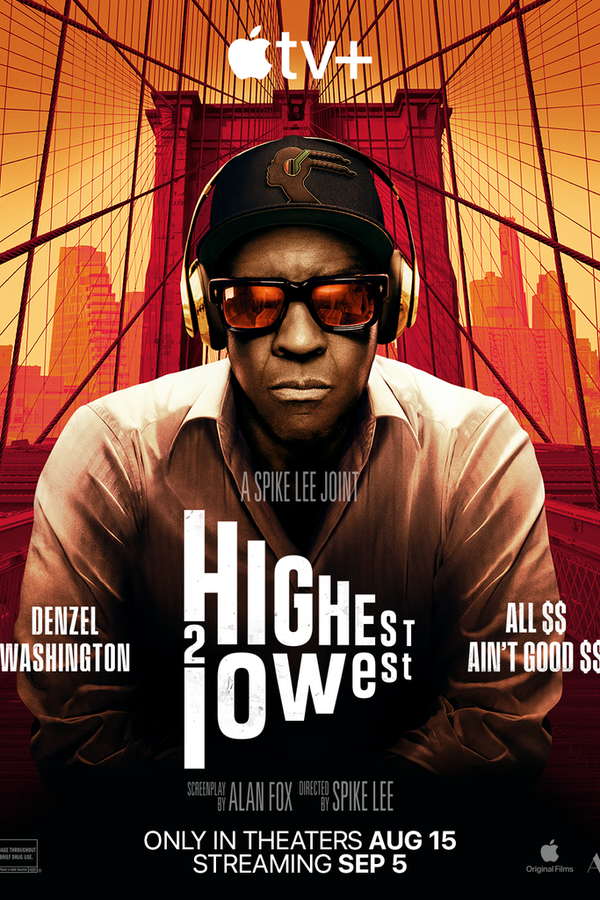
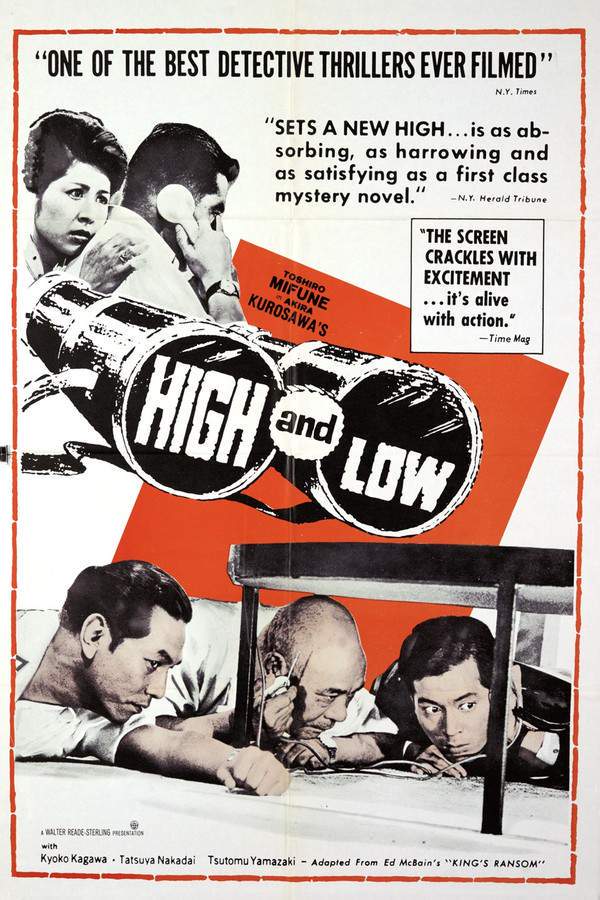
High and Low (1963) movie poster

Plot Summary

High and Low (1963) Plot Summary Explained

Release, runtime and language
1963 · 143 min · Japanese
JustWatch #3,048 21
Directed by
Akira Kurosawa
Starring
Tatsuya Nakadai, Toshirô Mifune, Kyôko Kagawa, Isao Kimura, Jun Tazaki, Kenjirô Ishiyama

A wealthy industrialist’s life is thrown into turmoil when his son is kidnapped and a ransom demanded. Faced with an impossible choice, he must decide whether to pay the exorbitant sum or sacrifice the boy to protect his company and his family's future. This gripping thriller, directed by Akira Kurosawa and starring Toshiro Mifune, explores themes of class, morality, and the devastating consequences of desperate choices in post-war Japan.

On this page (6)
  1. 1 Where to watch
  2. 2 What happens: full plot
  3. 3 Plot questions answered
  4. 4 Movie threads
  5. 5 Movies like High and Low
  6. 6 Every angle

Where to watch

Where to Watch High and Low (1963)

Where can you watch High and Low? Stream, rent or buy it in the US, including on HBO Max, Plex and Shout! Factory TV: current JustWatch availability with up-to-date prices.

Streaming availability powered by JustWatch

Full plot summary · contains spoilers

What Happens in High and Low: Full Plot Summary

The whole story of High and Low (1963) explained, from the opening scene to the final frame: every key event, every twist and what it all adds up to. Read it as a quick recap before the sequel, to check a scene you missed, or to finally understand what really happened.

A wealthy executive, Kingo Gondo, finds himself embroiled in a fierce battle for control over a prominent company known as National Shoes. Facing immense pressure, he contemplates a pivotal choice: should the company produce cheap, low-quality shoes aimed at the impulse market, or uphold its reputation for crafting sturdy, high-quality footwear? Gondo's vision for the business leans towards the latter, believing that maintaining high standards and modern styling is crucial for the company's long-term success. Yet, this plan comes at the cost of immediate profits, a gamble that does not sit well with the current board members.

Just as he is about to finalize a leveraged buyout to seize control—risking everything he possesses—his world is turned upside down with a chilling phone call announcing that his son, Jun, has been kidnapped. Initially dismissing the threat as a prank when Jun arrives home from playing, Gondo soon learns that the kidnapper has mistakenly taken the wrong child—Shinichi, the son of his chauffeur. As the urgency of the situation escalates, the kidnapper confirms the error but still demands the ransom. This leaves Gondo at a moral crossroads, caught between his commitment to save a child and his corporate ambitions.

After an agonizing night of reflection, Gondo resolves not to pay the ransom, aware that doing so could lead to his financial ruin and jeopardize the futures of his own family. However, his resolve is shaken when his unscrupulous assistant hints at using the kidnapping to garner support for the "cheap shoes" faction, and, under pressure from his wife and the desperate pleas from the chauffeur, Gondo ultimately decides to heed the demands of the kidnapper. Following the plan laid out by the perpetrator, Gondo reluctantly prepares the ransom in two small briefcases, tossing it from a moving train. To his relief, Shinichi is returned safely.

As events unfold, Gondo finds himself ousted from the very company he fought so hard to control, with creditors swiftly moving to claim his assets. Ironically, the public sees Gondo as a hero, while the National Shoe Company faces backlash and boycotts. Meanwhile, the police embark on an investigation to unravel the kidnapping, eventually locating the hideout where Shinichi was held captive. Tragedy strikes as they discover the bodies of the kidnapper's accomplices, victims of an overdose from heroin supplied to them.

Through diligent detective work, law enforcement identifies the perpetrator, a medical intern with a grudge against Gondo, yet lacks irrefutable proof linking him to the accomplices’ deaths. In a clever ruse, the police manipulate the media into suggesting the accomplices have survived, thereby luring the kidnapper into a trap during a botched attempt to deliver more drugs. In a harrowing climax, most of the ransom is recovered; however, it is too late to salvage Gondo's possessions from auction.

Facing the consequences of his crimes, the kidnapper, now imprisoned and awaiting a death sentence, requests a meeting with Gondo. With Gondo having taken up a position at a rival shoe company—one that pays significantly less but grants him greater autonomy—the two men confront one another. The kidnapper initially presents himself as unremorseful, but as he reflects on his motivations, the envy he harbored while witnessing Gondo's affluent lifestyle becomes apparent. This encounter culminates in a powerful emotional breakdown as he confronts the reality of his tarnished life, ultimately revealing the harrowing cost of envy and desperation.
Last updated: January 19, 2025 at 18:49

Was this helpful?

Plot questions answered

High and Low Plot Explained: Your Questions Answered

The questions people ask most about High and Low (1963): what happens in the confusing scenes, why the characters do what they do, the twists, hidden details and what the ending means. Each answer contains spoilers.

Q1

Why does Kingo Gondo initially refuse to pay the ransom?

After a night of deliberation, Gondo decides not to pay the ransom because doing so would financially ruin him and destroy his ability to complete the leveraged buyout for National Shoes. He has already mortgaged everything he owns to fund the buyout, and paying the ransom would leave him penniless, cost him his company, and jeopardize his family's future security.

Foreshadowing: Earlier, Gondo reveals he has mortgaged all his possessions to fund the buyout, making him financially vulnerable.

  • ransom
  • financial ruin
  • buyout
  • company
Q2

Why was the wrong child kidnapped?

The kidnapper, a medical intern, had been surveilling Gondo's household but mistakenly took Shinichi, the chauffeur's son, instead of Jun, Gondo's actual son. Both boys played together frequently in the same upscale neighborhood, and the kidnapper failed to distinguish between them when he made his move.

Foreshadowing: The film establishes that Gondo's chauffeur lives in the same wealthy neighborhood and the two boys are often seen playing together.

  • Shinichi
  • Jun
  • mistaken identity
  • chauffeur
Q3

Who was the kidnapper and what was his motive?

The kidnapper was a medical intern who harbored intense jealousy toward Gondo's wealth and success. He had observed Gondo's comfortable lifestyle from afar and grew resentful of the disparity between their lives. His motive was pure envy, he wanted to destroy someone who represented the success he could never achieve.

Foreshadowing: The intern had been watching Gondo's life carefully, suggesting long-standing obsession.

  • medical intern
  • envy
  • jealousy
  • motive
Q4

How did the police catch the kidnapper?

The police discovered the hideout and found the bodies of the kidnapper's accomplices, who died from a heroin overdose. To trap him, they fabricated a story that the accomplices were still alive and needed more drugs. Believing he needed to silence them, the kidnapper returned to deliver more heroin and was arrested.

Foreshadowing: Earlier, the kidnapper callously supplies heroin to his accomplices, showing his ruthlessness.

  • police
  • arrest
  • trap
  • heroin
  • accomplices
Q5

What happened to Gondo's company after he paid the ransom?

After paying the ransom, Gondo was ousted from National Shoes because his financial reserves were completely depleted. His creditors moved swiftly to claim his assets, and he lost control of the company he had fought so hard to acquire, despite the public viewing him as a hero.

Foreshadowing: Gondo had risked everything on the leveraged buyout, leaving no financial buffer for emergencies.

  • National Shoes
  • ousted
  • creditors
  • company control
Q6

What happens when Gondo meets the kidnapper in prison?

The kidnapper requests a meeting with Gondo and initially presents himself as unremorseful. However, as they talk, he breaks down emotionally and admits his motivation was pure envy, he was consumed by jealousy watching Gondo's prosperous life while he felt trapped in his own failed existence.

Foreshadowing: The kidnapper's obsessive surveillance of Gondo's life hints at deep psychological fixation.

  • prison
  • meeting
  • envy
  • breakdown
Q7

What was the conflict about cheap shoes versus quality shoes?

National Shoes faced pressure to produce cheap, low-quality shoes for the impulse market to boost immediate profits. Gondo opposed this, insisting the company maintain its reputation for sturdy, well-made footwear with modern styling. His vision prioritized long-term success over short-term gains, creating conflict with board members who favored the cheaper approach.

Foreshadowing: Gondo's commitment to quality is established early as his defining business philosophy.

  • shoes
  • quality
  • company
  • board
  • profits
Q8

Was the ransom money recovered?

Most of the ransom money was recovered after the kidnapper's arrest. However, it came too late to prevent Gondo's belongings from being auctioned off to settle his debts. He lost his home and assets despite eventually getting back much of the money.

Foreshadowing: The police action leads directly to the ransom's recovery after the kidnapper's capture.

  • ransom
  • money
  • recovered
  • auction
  • debts
Q9

What happens to Gondo after losing National Shoes?

Gondo takes a position at a rival shoe company where he earns significantly less money but gains something more valuable, complete autonomy over his work. He no longer faces the corporate politics and financial pressures that consumed his previous life.

Foreshadowing: Gondo's vision for quality shoes was always more important to him than wealth itself.

  • new job
  • rival company
  • salary
  • autonomy
Q10

What changed Gondo's mind about paying the ransom?

Two factors convinced Gondo to pay: his wife's desperate pleas and the chauffeur's anguish over his son's capture. Additionally, Gondo's unscrupulous assistant suggested using the kidnapping to gain political support for the cheap shoes faction within the company, which further motivated him to comply with the demand.

Foreshadowing: The tension between Gondo and his wife regarding company politics was established earlier.

  • wife
  • chauffeur
  • pressure
  • decision

Movie threads

More Movies Like High and Low, by Mood & Story

Curated lists built around what makes High and Low tick: the same mood, the same kind of story or the same emotional payoff. Each list explains why these movies belong together.

Moral dilemma thrillers like High and Low

Stories where a single devastating choice defines the character's fate. If you liked the impossible choice in High and Low, explore more movies like it where characters face devastating moral decisions. These similar tense dramas and thrillers explore the heavy cost of high-stakes choices, often pitting personal ethics against external pressures.

  • tense
  • morally complex
  • anxious
  • gripping
  • somber
  • desperate
  • Tone: tense, serious, morally complex
  • Pacing: steady, deliberate
Why these movies?

The story pattern: The story is constructed around a single, pivotal decision point that creates immediate, high-stakes conflict. The plot unfolds as a direct consequence of this choice, exploring its emotional, ethical, and practical ramifications on the characters and their world. The focus is on the deliberation and the fallout.

Why they belong together: Movies in this thread share a central narrative engine: an impossible moral choice. They are united by their intense focus on character ethics under extreme pressure, the heavy emotional weight of the consequences, and a tone of serious, often tense, deliberation.
Procedural crime thrillers like High and Low

Gripping stories where systematic process builds relentless suspense. Fans of the methodical police work in High and Low will enjoy these similar movies. Discover more tense investigative thrillers and crime dramas with a steady pace, where the focus on systematic procedure builds gripping, realistic suspense and a satisfying intellectual puzzle.

  • suspenseful
  • gripping
  • methodical
  • realistic
  • focused
  • investigative
  • Tone: tense, focused, realistic
  • Pacing: steady, methodical
Why these movies?

The story pattern: The narrative follows a logical, often linear progression as characters work through a problem systematically. The drama comes from the meticulous details, the small breakthroughs, and the mounting pressure as the procedure unfolds. It's a journey of deduction and persistence against obstacles.

Why they belong together: These movies are connected by their reliance on a procedural structure to generate tension. They share a steady, deliberate pacing, a tone of focused realism, and a satisfaction derived from watching a complex problem being methodically unraveled, often against a clock.

If you liked this

Movies Like High and Low

Similar movies to High and Low: the same genre, themes or kind of story. Each one comes with its own plot summary, timeline and ending explained.

Browse all movie summaries

Every angle

High and Low (1963) Explained: Plot, Timeline & Characters

Everything about High and Low in one place: what happens in the plot summary, the timeline in chronological order, the characters and meaning and a spoiler-free summary. What's After the Movie adds the cast, box office and post-credit scenes.

Coming soon on iOS and Android

The Plot Explained Movie Summary App

Plot summaries, endings explained and timelines on your phone. Catch up on any movie in minutes, save your favorites and never miss a twist again.

Be the first to know when we launch. Your email stays private, always.

Learn more about the app