Plot Explained Spoilers guaranteed!
Plot Explained

Browse by genre

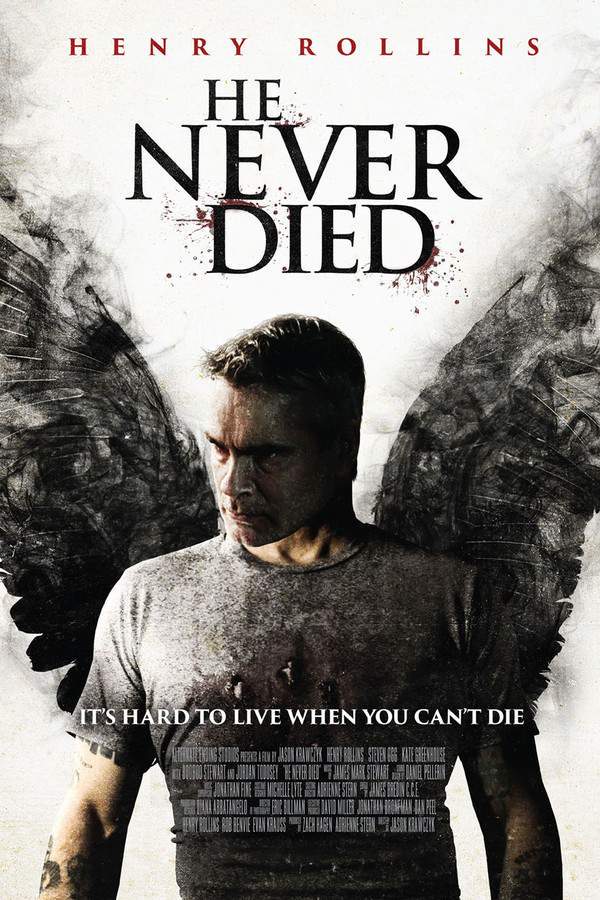
He Never Died (2015) movie poster

Plot Summary

He Never Died (2015) Plot Summary Explained

Release, runtime and language
2015 · 99 min · English
Directed by
Jason Krawczyk

Jack, a man seemingly devoid of purpose, lives a monotonous existence of sleep and television, viewing humanity with detachment. His bleak routine is disrupted when his troubled past returns, forcing him to confront inner demons. He must then struggle to maintain sobriety while facing a dangerous situation and grappling with questions of personal responsibility in a gritty and unflinching narrative about survival.

On this page (6)
  1. 1 Where to watch
  2. 2 What happens: full plot
  3. 3 Plot questions answered
  4. 4 Movie threads
  5. 5 Movies like He Never Died
  6. 6 Every angle

Where to watch

Where to Watch He Never Died (2015)

Where can you watch He Never Died? Stream, rent or buy it in the US, including on Hoopla, Tubi TV and Amazon Video: current JustWatch availability with up-to-date prices.

Streaming availability powered by JustWatch

Full plot summary · contains spoilers

What Happens in He Never Died: Full Plot Summary

The whole story of He Never Died (2015) explained, from the opening scene to the final frame: every key event, every twist and what it all adds up to. Read it as a quick recap before the sequel, to check a scene you missed, or to finally understand what really happened.

The main character, Jack, bears the heavy burden of a long and violent life that dates back to the very beginnings of humanity. As the narrative unfolds, we come to understand that Jack's true identity is Quayin, a name that translates to "Cain" in Hebrew. After relocating to the United States, he held numerous jobs while continuing a life marked by chaos, violence, and cannibalism. When asked about his various occupations, he quips a long list including boxer, bodyguard, antique dealer, business owner, construction worker, truck driver, history teacher, soldier, manager, landscaper, bootlegger, wreck diver, miner, movie stuntman, medic, nurse, cook, prisoner, gambler, horse breeder, potter, tinsmith, blacksmith, mechanic, and retail salesperson.

However, Jack has reached a point where he no longer sees killing and eating humans as his purpose in life. He has sunk into a deep depression, spending his days sleeping, watching TV, and playing bingo at a local diner, while limiting human interactions. Refusing to consume meat, he survives on blood provided by a paid medic from a nearby hospital. His monotonous existence is suddenly disrupted when some local thugs, looking to collect a debt, confront his blood supplier. In a deadpan manner, Jack dispatches them with ease, showcasing his immense strength and remarkable ability to heal from injuries, even resorting to painfully extracting bullets from his own immortal, self-repairing flesh.

Complicating his life further is his 19-year-old daughter, an alcoholic who seeks him out and is soon kidnapped by the criminal thugs. This revelation forces Jack to confront his feelings and consider if he should intervene in her peril. The violence that follows reignites his primal hunger for human flesh; he begins indulging in grotesque acts, devouring human fingers and lapping up blood from the floor while contemplatively muttering, “> This could be bad.” In a particularly brutal scene, Jack uses needle-nose pliers to extract a bullet from his own brain—a testament to his resilience and immortality.

After creating chaos reminiscent of Old Testament stories, Jack interrogates one of his injured attackers, leading to the discovery that a former criminal ally intends to punish him by targeting his daughter. Torn between the urge to save her and the reminder of his dark past, Jack ultimately decides to flee, allowing his daughter to fall into the hands of her captors, who had already caused her mother’s demise. He hastily packs a duffel bag with cash and meaningful keepsakes from his past and finds himself in an alley, gnawing on a severed finger, lost in thought.

Among his possessions is an ancient Roman knife, upon which he reads the inscription: “leginum conviction scientia veritate,” meaning "Legion: Certainty of belief and knowledge of truth." Reflecting on its significance, Jack prepares for an unexpected turn as he surprisingly asks his girlfriend to assist in rescuing their daughter. The culmination leads Jack to confront his evil former associate in a brutal showdown, where he violently incapacitates his old foe, handing his battered daughter off to his girlfriend for urgent care. It becomes clear that his motivations for the rescue are deeply personal, as he admits, “I'm doing this for me.”

The film concludes with a surreal standoff between Jack and an unseen man with a goatee, representing his internal struggles. As Jack's cannibalistic thoughts are abruptly interrupted by the urgent need to help his daughter, he realizes his primary obligation lies with her. He walks away from potential violence to ensure her safety, telling his nemesis that he will one day see the truths Jack was trying to convey. The closing scene leaves viewers with a lingering sense of mystery as the camera isolates the injured foe and the mysterious man, who ominously greets him with a booming “Hi,” as the screen fades to black.

Last updated: October 27, 2024 at 22:33

Was this helpful?

Plot questions answered

He Never Died Plot Explained: Your Questions Answered

The questions people ask most about He Never Died (2015): what happens in the confusing scenes, why the characters do what they do, the twists, hidden details and what the ending means. Each answer contains spoilers.

Q1

Why does Jack only drink blood and refuse to eat meat?

Jack refuses to consume meat because he is trying to distance himself from his violent, cannibalistic past. As the immortal Quayin (Cain), Jack has spent millennia killing and eating humans. After reaching a breaking point, he chose to abstain from human flesh entirely, surviving instead on blood obtained from a paid medic at a local hospital. This represents his attempt to break free from his cursed existence and find some form of peace.

Foreshadowing: Jack's monotone description of his violent history hints at his weariness with killing.

  • jack immortal
  • cannibalism
  • blood diet
  • quayin
  • abstinence
Q2

What is Jack's true identity and how is he immortal?

Jack's real name is Quayin, which directly translates to Cain in Hebrew, the biblical figure marked by God for killing his brother Abel. The narrative reveals that Jack has lived since the very beginnings of humanity, accumulating centuries of violent experience across countless occupations. His immortality manifests in his ability to heal instantly from any wound, including bullets lodged in his brain, and his seemingly ageless existence.

Foreshadowing: The opening establishes Jack's impossibly long and violent history.

  • quayin
  • cain
  • bible
  • immortal
  • origin
Q3

Why does Jack remove bullets from his own body with pliers?

Jack extracts bullets from his immortal, self-repairing flesh because the wounds heal around the projectiles, causing him pain and discomfort. In one particularly graphic scene, he uses needle-nose pliers to pull a bullet from his own brain. This extreme act demonstrates his supernatural resilience, he cannot die from such injuries, but the embedded bullets still cause him physical distress.

Foreshadowing: Earlier scenes show Jack's instantaneous healing from bullet wounds.

  • self-surgery
  • bullets
  • healing
  • immortality
  • pain
Q4

Why does Jack initially flee instead of saving his kidnapped daughter?

Jack chooses to flee because his daughter's situation triggers painful memories of his violent past and the realization that his intervention could reignite his uncontrollable hunger for human flesh. When he discovers the thugs specifically targeted her to punish him, he faces an internal conflict, saving her means returning to the violence he's tried so hard to escape. In a moment of weakness, he runs rather than confront this choice directly.

Foreshadowing: The revelation that his former criminal ally ordered the kidnapping to hurt Jack directly.

  • daughter
  • kidnap
  • abandonment
  • conflict
  • decision
Q5

What causes Jack to start eating human flesh again?

Jack's return to cannibalism is triggered by the violence surrounding his daughter's kidnapping. As he dispatches the thugs and witnesses the bloodshed, his primal hunger for human flesh, suppressed for years, reawakens. He begins devouring human fingers and lapping blood from the floor, muttering "This could be bad" as he recognizes he's slipping back into his old ways.

Foreshadowing: Jack's violent confrontation with the thugs reestablishes his dangerous capabilities.

  • cannibalism relapse
  • human flesh
  • hunger
  • violence trigger
Q6

What does the inscription on Jack's Roman knife mean?

The inscription reads "leginum conviction scientia veritate," which translates to "Legion: Certainty of belief and knowledge of truth." Jack finds this knife among his belongings and reflects on its significance. The phrase likely represents Jack's search for meaning and truth across his immortal existence, or possibly hints at the biblical "Legion" reference (demons in the Bible), connecting to his cursed nature.

Foreshadowing: Jack's collection of meaningful keepsakes suggests these items hold personal significance.

  • roman knife
  • inscription
  • legion
  • meaning
  • symbolism
Q7

Who is the man with the goatee that appears at the end of the film?

The mysterious man with a goatee appears in the final surreal standoff with Jack, representing his internal struggle and psychological demons rather than a literal external enemy. He manifests as Jack's cannibalistic thoughts and violent impulses take visual form. When the man ominously says "Hi" to the defeated foe, it reinforces the ambiguous ending, Jack's battle with his dark nature remains unresolved.

Foreshadowing: The entire film establishes Jack's internal conflict between his desire for peace and his violent impulses.

  • goatee man
  • ending
  • confrontation
  • psychological
  • ambiguity
Q8

Why does Jack say "I'm doing this for me" after rescuing his daughter?

When Jack admits "I'm doing this for me," he's acknowledging that his decision to rescue his daughter stems from a personal need for redemption rather than pure paternal duty. After centuries of violence and abandoning those close to him, Jack recognizes that saving her is also about proving to himself that he can still choose compassion over brutality. His selfish motivation reflects his journey toward confronting his past.

Foreshadowing: Jack's earlier decision to flee shows his struggle with self-interest versus responsibility.

  • redemption
  • motivation
  • personal
  • daughter
  • change
Q9

Why is Jack's daughter important to the plot?

Jack's 19-year-old daughter serves as the catalyst for his transformation throughout the film. Her kidnapping by the same thugs Jack previously defeated forces him to confront his desire for isolation versus his responsibility to family. She represents his potential for redemption and a reason to embrace his humanity again, making her central to the emotional core of the story.

Foreshadowing: The daughter's arrival disrupts Jack's carefully maintained isolation.

  • daughter
  • kidnap
  • catalyst
  • family
  • responsibility
Q10

Why does Jack list so many different occupations throughout his life?

Jack's extensive list of occupations, ranging from boxer and soldier to history teacher and potter, spans across millennia, demonstrating the breadth of his immortal existence. Rather than serving as a disguise, these jobs represent how Jack has attempted to find purpose and meaning across different eras. The absurd variety also adds dark comedy to the film while emphasizing just how long he has lived.

Foreshadowing: The opening establishes Jack's perspective on humanity as detached and observational.

  • occupations
  • jobs
  • immortal history
  • lifespan
  • variety

Movie threads

More Movies Like He Never Died, by Mood & Story

Curated lists built around what makes He Never Died tick: the same mood, the same kind of story or the same emotional payoff. Each list explains why these movies belong together.

Existential horror comedies like He Never Died

Stories that blend profound dread with dry, absurdist humor and brutal truth. If you liked the mix of brutal violence, deep existential dread, and dry humor in He Never Died, explore these movies. This section features films that use supernatural horror or dark fantasy to ask profound questions, all while maintaining a sharp, deadpan comedic edge similar to Jack's detached perspective.

  • existential
  • deadpan
  • brutal
  • melancholic
  • absurd
  • grim
  • Tone: dark, bleak, deadpan
  • Pacing: variable, with slow builds and violent bursts
Why these movies?

The story pattern: These stories often center on a protagonist grappling with a cursed existence or a monstrous nature, forcing them to confront the meaning (or meaninglessness) of their life. The narrative arc typically involves a disruption to their numb routine, leading to a violent confrontation that questions themes of responsibility, redemption, and the human condition, often without clear resolution.

Why they belong together: Movies are grouped here for their unique tonal alchemy: the ability to make you laugh uncomfortably while contemplating deep, somber themes. They share a specific blend of graphic intensity, emotional heaviness, and a wry, often resigned, sense of humor about the darkness of existence.

Movies about weary immortals like the protagonist in He Never Died

A violent being, weary of eternity, is pulled back into the world for one last fight. For viewers who enjoyed Jack's struggle with his eternal, monstrous nature in He Never Died, this list collects films about similarly world-weary immortals. These stories focus on ancient beings dragged out of isolation into brutal conflicts, grappling with their past and a flicker of humanity.

  • weary
  • isolated
  • brutal
  • protective
  • melancholic
  • gritty
  • Tone: grim, melancholic, brutal
  • Pacing: variable, starting slow and building to explosive action
Why these movies?

The story pattern: The narrative follows a powerful, ageless being who has withdrawn from humanity due to the pain of their long life. A catalyst, frequently a parental or protective instinct towards a younger character, disrupts their solitude. This forces them to unleash their repressed violence in a gritty, urban setting, leading to a climactic confrontation that leaves their ultimate fate—redemption or a return to despair—ambiguous.

Why they belong together: These films share a core character archetype and narrative structure: the immortal outcast, the disruption of their routine, a violent protector role, and an ambiguous ending. They are united by a gritty, low-fantasy aesthetic, heavy themes of isolation and responsibility, and a tone that is both brutal and melancholic.

If you liked this

Movies Like He Never Died

Similar movies to He Never Died: the same genre, themes or kind of story. Each one comes with its own plot summary, timeline and ending explained.

Browse all movie summaries

Every angle

He Never Died (2015) Explained: Plot, Timeline & Characters

Everything about He Never Died in one place: what happens in the plot summary, the timeline in chronological order, the characters and meaning and a spoiler-free summary. What's After the Movie adds the cast, box office and post-credit scenes.

Coming soon on iOS and Android

The Plot Explained Movie Summary App

Plot summaries, endings explained and timelines on your phone. Catch up on any movie in minutes, save your favorites and never miss a twist again.

Be the first to know when we launch. Your email stays private, always.

Learn more about the app