Plot Explained Spoilers guaranteed!
Plot Explained

Browse by genre

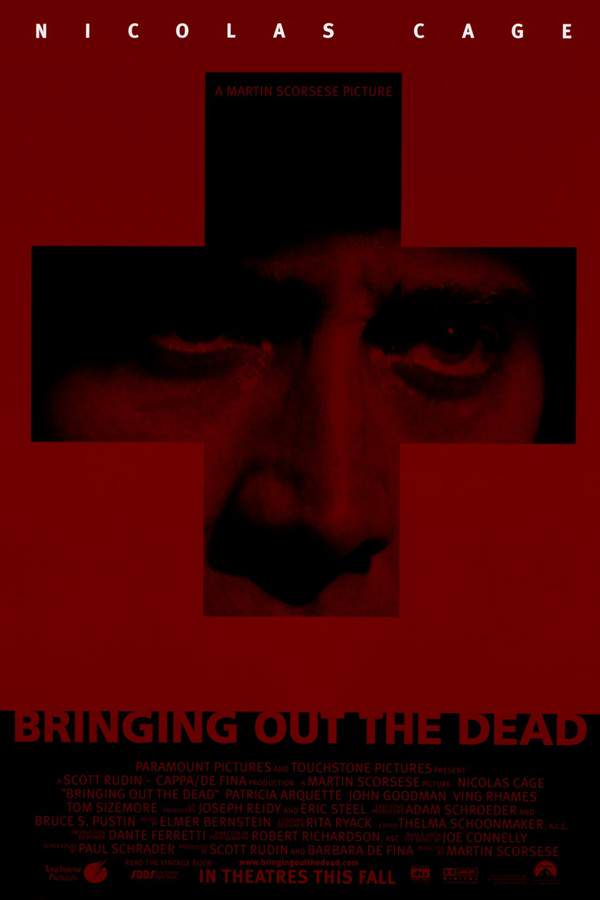
Bringing Out the Dead (1999) movie poster

Plot Summary

Bringing Out the Dead (1999) Plot Summary Explained

Release, runtime and language
1999 · 121 min · English
Directed by
Martin Scorsese
Starring
Patricia Arquette, Nicolas Cage
Budget
$55M

During a grueling 56-hour shift, paramedic Frank Pierce struggles to cope with the constant trauma of saving lives in a chaotic urban environment. Haunted by the patients he couldn’t save, he finds himself spiraling towards despair. Amidst the relentless suffering and death, he searches for moments of redemption, encountering a series of unforgettable and often disturbing cases that test his sanity and challenge his faith.

On this page (6)
  1. 1 Where to watch
  2. 2 What happens: full plot
  3. 3 Plot questions answered
  4. 4 Movie threads
  5. 5 Movies like Bringing Out the Dead
  6. 6 Every angle

Where to watch

Where to Watch Bringing Out the Dead (1999)

Where can you watch Bringing Out the Dead? Stream, rent or buy it in the US, including on Fawesome, Hoopla and Kanopy: current JustWatch availability with up-to-date prices.

Streaming availability powered by JustWatch

Full plot summary · contains spoilers

What Happens in Bringing Out the Dead: Full Plot Summary

The whole story of Bringing Out the Dead (1999) explained, from the opening scene to the final frame: every key event, every twist and what it all adds up to. Read it as a quick recap before the sequel, to check a scene you missed, or to finally understand what really happened.

In the heart of Manhattan, Frank Pierce, a paramedic haunted by depression, insomnia, and feelings of failure, grapples with the emotional toll of his job. After a traumatic incident in which he couldn't save a homeless teen named Rose, he begins to see her ghost haunting his thoughts. It is during one tumultuous night that Frank, along with his partner Larry, answers a distress call from the family of Mr. Burke, who is in cardiac arrest. There, he meets Burke’s troubled daughter, Mary, a recovering addict, and learns of her link to Noel, a frequent hospital visitor battling drug addiction.

As their night progresses, Frank and Larry find themselves addressing the grim aftermath of gun violence. It is here that Frank encounters a victim whose sleeve reveals vials of "Red Death" heroin. Before they can reach the hospital, the victim, attempting to make amends for his past as a drug dealer, succumbs to his injuries, further deepening Frank's emotional scars.

The next day, Frank partners with the enthusiastic and deeply religious Marcus. During a club emergency, they discover that a man is actually suffering from a Red Death overdose rather than a cardiac incident. As Frank administers Narcan, Marcus holds a prayer circle, and miraculously, the man regains consciousness amidst the chaos.

On their return trip to the hospital, Frank takes a moment to visit Mary and share good news about her father’s stable condition. However, the day takes a darker turn when they respond to a call involving a mother giving birth to twins. While they succeed in getting the mother and one twin to the hospital, tragedy strikes when the second twin cannot be revived. Overwhelmed, Frank turns to alcohol, leading to a reckless accident in the ambulance, though he and Marcus escape unharmed.

The following morning, Frank again crosses paths with Mary, who leads him to a drug den run by Cy Coates. After learning that Mary has relapsed, Frank is pushed to desperation and, succumbing to temptation, takes drugs himself. This act plunges him further into hallucinations of his deceased patients. After sobering up, he insists on taking Mary out of the den, but soon finds himself tormented by Burke’s voice, urging him to let go of life, yet Frank chooses to revive him.

On another shift, Frank is teamed up with Tom Wolls, a man whose fervor for saving lives is accompanied by a volatile nature. When they respond to a call at Cy’s den, they discover chaos ensuing from a shooting. In a harrowing moment, Frank clings to Cy as emergency services attempt to rescue them both from a perilous situation. Cy survives this, marking the first life saved by Frank in months, but this accomplishment is bittersweet.

Later, Frank's mental state continues to deteriorate as he agrees to assist Tom in confronting Noel, leading to a violent encounter. Just as Tom prepares to unleash his anger, Frank intervenes to protect Noel, illustrating his struggle between moral duty and personal turmoil. After visiting Burke again, ultimately giving in to the relentless whisperings of his conscience, Frank purposefully disconnects Burke's life support.

In the poignant conclusion, Frank informs Mary of her father's passing, culminating in a final vision of his long-lost patient Rose, from whom he seeks forgiveness. With the weight of their shared grief, Mary invites Frank in, where they find a moment of solace as he finally falls asleep beside her.

Last updated: November 15, 2024 at 18:10

Was this helpful?

Plot questions answered

Bringing Out the Dead Plot Explained: Your Questions Answered

The questions people ask most about Bringing Out the Dead (1999): what happens in the confusing scenes, why the characters do what they do, the twists, hidden details and what the ending means. Each answer contains spoilers.

Q1

Why does Frank see Rose's ghost throughout the night?

Frank is haunted by Rose's ghost because he failed to save her life when she was a homeless teen. This represents his cumulative guilt over patients he couldn't save, and Rose's apparition symbolizes his psychological unraveling and the weight of his perceived failures as a paramedic.

Foreshadowing: Frank's opening struggle with depression and insomnia establishes his fragile mental state, which makes him susceptible to hallucinations of his past failures.

  • rose ghost
  • frank hallucinations
  • patient guilt
  • paramedic trauma
Q2

Why does Frank disconnect Mr. Burke's life support?

After being haunted by Burke's voice urging him to 'let go,' Frank makes the moral choice to disconnect the life support, viewing it as a form of mercy for a man who had been suffering. This act represents Frank's own crisis of conscience and his struggle between professional duty and personal morality.

Foreshadowing: Earlier, Frank learns that Burke's daughter Mary is a recovering addict, connecting Frank's pattern of trying to save those trapped in cycles of addiction and failure.

  • burke death
  • euthanasia
  • mercy killing
  • frank moral choice
Q3

What is Red Death heroin and why does it appear multiple times?

Red Death is a deadly strain of heroin that appears throughout the night as a plot device highlighting the epidemic of drug addiction affecting the city. It connects multiple cases Frank responds to, from the shooting victim to the nightclub overdose, reinforcing the film's themes of addiction and death.

Foreshadowing: Frank encounters Red Death early when treating the shooting victim, establishing it as a recurring threat that defines the night's emergencies.

  • red death heroin
  • drug overdose
  • addiction epidemic
  • new york drugs
Q4

Why does Frank take drugs at Cy's den after Mary relapses?

Frank succumbs to drugs because he is emotionally overwhelmed by the cumulative trauma of the night, particularly the loss of the second twin and his feelings of helplessness. Seeing Mary relapse pushes him over the edge, and he uses drugs as a desperate attempt to escape his psychological pain, deepening his moral collapse.

Foreshadowing: The earlier tragedy of the twins, where Frank failed to save one, directly precedes this breakdown, showing how each failure compounds his deterioration.

  • frank drug use
  • mary relapse
  • cy Coates
  • emotional breakdown
Q5

How does Frank's relationship with Mary develop throughout the night?

Frank first meets Mary when responding to her father's cardiac arrest and continues visiting her between calls. Their connection deepens through shared grief over Burke's condition. By the end, after Frank informs Mary of her father's death, they find comfort in each other, with Mary inviting Frank inside where he finally sleeps, the first rest he's had in days.

Foreshadowing: Frank's visits to Mary are interspersed throughout the timeline, showing a gradual building of trust and mutual understanding between two people dealing with loss.

  • frank mary relationship
  • burke daughter
  • redemption
  • emotional connection
Q6

Why does Frank intervene to protect Noel from Tom?

Frank stops Tom from attacking Noel because he sees his own moral conflict reflected in the situation. Though Tom wants to punish Noel for causing Mary's relapse, Frank recognizes his own complicity and chooses compassion over violence, demonstrating his internal struggle between正义 and personal turmoil.

Foreshadowing: Frank's earlier decision to use drugs at Cy's den already showed his moral compromised state, making this moment of protecting Noel a counterpoint to his own failures.

  • noel confrontation
  • tom wolls
  • mary relapse
  • frank moral conflict
Q7

Why is saving Cy's life significant for Frank?

Saving Cy represents Frank's first successful rescue in months, breaking his prolonged streak of failures. This moment is pivotal because it offers him a glimmer of hope and proves he can still fulfill his purpose as a paramedic, even as other aspects of his life remain in turmoil.

Foreshadowing: The film establishes Frank's pattern of failure early, from Rose to the twins, making this success a crucial turning point in his psychological arc.

  • cy Coates
  • first rescue
  • paramedic redemption
  • life saved
Q8

Why does Frank finally fall asleep at the end of the movie?

Frank finally sleeps because he experiences a moment of genuine connection and forgiveness with Mary after her father's death. Their shared grief allows Frank to find temporary peace, breaking the cycle of insomnia that has plagued him throughout the film. The final vision of Rose suggests he may finally be ready to let go of his guilt.

Foreshadowing: The recurring motif of Frank's insomnia and his vision of Rose as a symbol of unfinished business culminates in this moment of release.

  • frank sleep
  • insomnia ending
  • mary connection
  • forgiveness
Q9

Why does Frank work with different partners throughout the night?

The film shows Frank rotating through different partners, Larry, Marcus, and Tom Wolls, to illustrate the varying dynamics and moral approaches of his colleagues. Each partner represents a different coping mechanism: Larry is steady, Marcus offers religious hope, and Tom embodies volatile intensity. This contrast highlights Frank's own psychological state and his struggle to find meaning in his work.

Foreshadowing: Frank's partnerships are introduced sequentially, with each relationship revealing different aspects of emergency medical work and different philosophical approaches to trauma.

  • larry marcus tom wolls
  • paramedic partners
  • work dynamics
Q10

What happens to the second twin that Frank couldn't save?

During the birth emergency, Frank and Larry successfully transport the mother and one twin to the hospital, but the second twin cannot be revived. This tragedy overwhelms Frank and directly contributes to his later descent into alcohol and drug use, adding another failure to the list of patients he couldn't save.

Foreshadowing: This incident occurs mid-film and directly triggers Frank's breakdown, connecting his professional failures to his personal moral collapse.

  • twin birth
  • emergency
  • patient death
  • hospital scene

Movie threads

More Movies Like Bringing Out the Dead, by Mood & Story

Curated lists built around what makes Bringing Out the Dead tick: the same mood, the same kind of story or the same emotional payoff. Each list explains why these movies belong together.
Movies of urban madness and psychological collapse like Bringing Out the Dead

Stories of characters mentally unraveling in a gritty, chaotic city. If you liked the gritty, hallucinatory vibe of Bringing Out the Dead, explore other movies like it. These films feature characters pushed to their limits in chaotic urban settings, where the line between reality and psychological despair becomes dangerously thin.

  • hallucinatory
  • gritty
  • oppressive
  • feverish
  • desperate
  • urban decay
  • Tone: dark, desperate, hallucinatory
  • Pacing: variable, chaotic
Why these movies?

The story pattern: The narrative typically follows a character, often in a high-stress profession, as they navigate a cityscape that seems designed to break them. The story is driven by their internal struggle, with external events serving as catalysts for a gradual or rapid psychological unraveling, often depicted through surreal or distorted visuals.

Why they belong together: These movies are grouped by their shared oppressive mood, where a dark, gritty tone is combined with high emotional intensity and a variable, often chaotic pacing. They explore themes of trauma, guilt, and the fragility of sanity within an unforgiving urban context.

Movies about traumatic professions and fragile redemption like Bringing Out the Dead

Professionals on the edge seek meaning amidst relentless trauma. For viewers who appreciated the themes of guilt and the search for redemption in Bringing Out the Dead. These similar movies focus on characters in intense, often thankless jobs, battling burnout and trauma while clinging to a sliver of hope.

  • exhausting
  • haunted
  • desperate
  • traumatic
  • bittersweet
  • moral dilemma
  • Tone: dark, bittersweet, heavy
  • Pacing: variable, intense
Why these movies?

The story pattern: The narrative arc is defined by a character's endurance through a grueling, condensed timeframe—a long shift, a critical mission, or a personal ordeal. They are confronted with a series of crises that test their ethics and mental fortitude, culminating in a bittersweet resolution where a small victory is overshadowed by profound loss.

Why they belong together: These films share a heavy emotional weight, a dark tone punctuated by moments of desperate hope, and a focus on the psychological toll of professions centered on life, death, and moral compromise. The pacing often alternates between frantic action and somber introspection.

If you liked this

Movies Like Bringing Out the Dead

Similar movies to Bringing Out the Dead: the same genre, themes or kind of story. Each one comes with its own plot summary, timeline and ending explained.

Browse all movie summaries

Every angle

Bringing Out the Dead (1999) Explained: Plot, Timeline & Characters

Everything about Bringing Out the Dead in one place: what happens in the plot summary, the timeline in chronological order, the characters and meaning and a spoiler-free summary. What's After the Movie adds the cast, box office and post-credit scenes.

Coming soon on iOS and Android

The Plot Explained Movie Summary App

Plot summaries, endings explained and timelines on your phone. Catch up on any movie in minutes, save your favorites and never miss a twist again.

Be the first to know when we launch. Your email stays private, always.

Learn more about the app