Plot Explained Spoilers guaranteed!
Plot Explained

Browse by genre

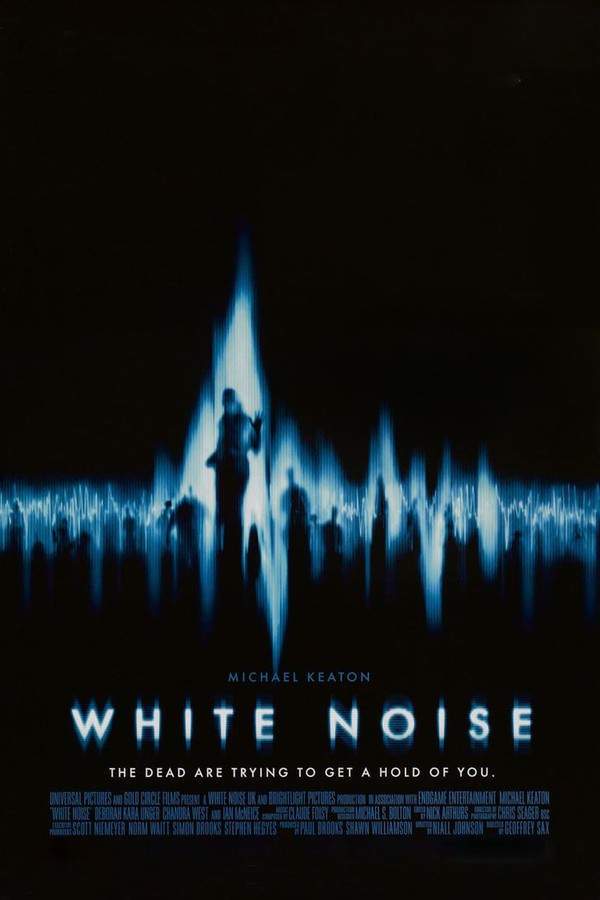
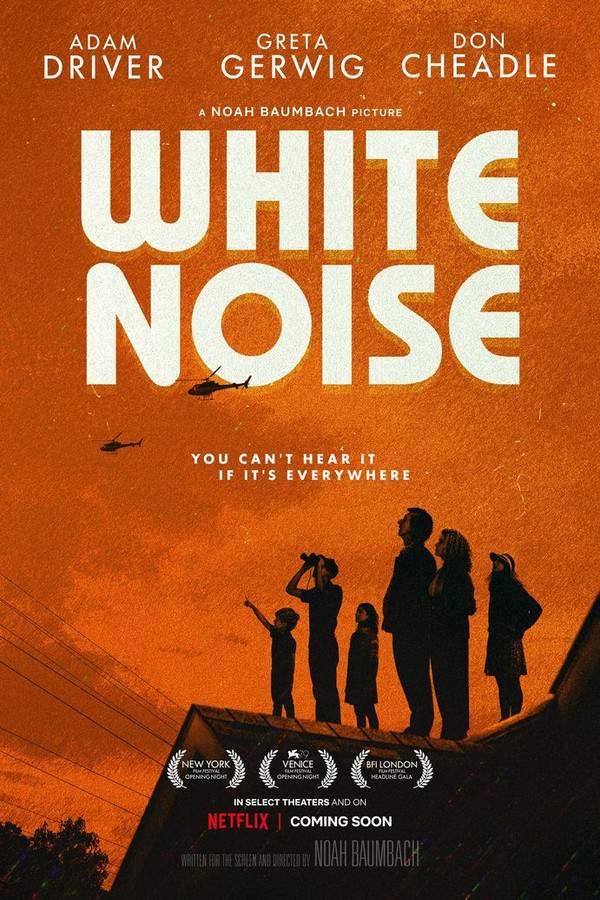
White Noise (2022) movie poster

Plot Summary

White Noise (2022) Plot Summary & Ending Explained

Release, runtime and language
2022 · 136 min · English
Echo score 48
Directed by
Noah Baumbach
Starring
Greta Gerwig, Don Cheadle, Jodie Turner-Smith, Alessandro Nivola, Adam Driver, André Benjamin
Budget
$145M

A quirky American family grapples with the everyday struggles of life while confronting existential crises and hidden secrets. They embark on a journey exploring the pursuit of happiness and meaning in a world filled with uncertainty and unexpected events. The film blends humor and drama as they navigate a chaotic and unpredictable reality.

On this page (7)
  1. 1 What happens: full plot
  2. 2 Plot questions answered
  3. 3 How it ends
  4. 4 The book behind the movie
  5. 5 Movie threads
  6. 6 Movies like White Noise
  7. 7 Every angle

Full plot summary · contains spoilers

What Happens in White Noise: Full Plot Summary

The whole story of White Noise (2022) explained, from the opening scene to the final frame: every key event, every twist and what it all adds up to. Read it as a quick recap before the sequel, to check a scene you missed, or to finally understand what really happened.

In 1984, Jack Gladney (Adam Driver), a professor specializing in a unique subject he created—"Hitler studies"—teaches at the College-on-the-Hill in Ohio. Despite his expertise, he finds himself struggling with the German language and discreetly takes basic lessons to prepare for an upcoming conference speech.

Jack shares his life with his fourth wife, Babette (Greta Gerwig), as they navigate the complexities of a blended family that includes Heinrich (Sam Nivola) and Steffie ([May Nivola]), his children from previous marriages, along with Denise (Raffey Cassidy), from Babette's earlier relationship, and baby Wilder (portrayed by Henry and Dean Moore), their joint child. Although they lead what seems to be an ordinary life, Babette harbors concerns about the future, especially regarding how their children will cope once they grow up and move out.

Intriguingly, Denise becomes suspicious when she discovers Babette's hidden stash of a mysterious drug called Dylar, which raises concerns since it doesn't appear in standard prescription records. Meanwhile, Jack starts having unsettling dreams about an enigmatic figure attempting to kill him, echoing a previous conversation with Babette about their shared anxiety surrounding mortality. His colleague, Murray Siskind (Don Cheadle), a professor passionate about American culture, wishes to carve out his niche with "Elvis studies" and persuades Jack to join him in promoting their respective courses, leading to spirited debates about the parallels between Elvis and Hitler's childhood experiences.

As Babette's memory begins to falter, Denise reveals her concerns to Jack, highlighting that the drugs might be a factor. However, everything spirals when a catastrophic train accident releases a cloud of toxic chemicals over their town. Initially dismissive of any danger, Jack attempts to reassure his family that they will be safe from this so-called Airborne Toxic Event, which turns into widespread evacuation as the toxic cloud approaches. Caught in gridlock while trying to leave, they find their vehicle low on fuel and become increasingly desperate.

During the chaos, while seeking gas, Jack inadvertently exposes himself to the toxic cloud. Soon, their family is confined in a summer camp, where Denise tells Jack of his exposure. This leads to a grim realization that while they are currently safe, potential health impacts from the chemical exposure may not surface for decades. With escalating panic at the camp as families attempt to escape, the Gladneys find themselves in a precarious situation when their vehicle becomes trapped in a river.

After migrating to Iron City and confronting a man adamant about the media ignoring their plight, the family finally returns home weeks later, only for Jack to find his fears of death heightened due to his exposure. While life appears to stabilize, Babette morphs into a shell of her former self, appearing frail and emotionally detached.

Jack begins experiencing unsettling hallucinations of a balding man who seems to be shadowing him. Concerned about Babette's condition, Denise shares her worries regarding the effects of Dylar. Upon confronting Babette, Jack learns that the drug is experimental and was part of a clandestine clinical trial aimed at treating the fear of death. After enduring a few months of a disgraceful arrangement to maintain access to the drug involving a shadowy figure known as Mr. Gray, Babette's struggles come to light.

Fueled by curiosity and rage, Jack embarks on a quest to confront Mr. Gray. Ultimately, he discovers that this elusive figure is the very man tormenting his mind and, in a dramatic twist, Jack shoots him, placing the weapon to create a facade of suicide. Yet, their confrontation escalates, resulting in both Jack and Babette suffering injuries. After a sequence of mind-bending events, including their reconciliation, they end up at a peculiar hospital run by German atheist nuns.

In a heartwarming finale, the Gladneys re-enter a semblance of normalcy, shopping at their local A&P supermarket, where they find joy in dancing alongside other patrons, indicating that amid chaos, the simplicity of life still prevails.
Last updated: November 16, 2024 at 15:38

Was this helpful?

Plot questions answered

White Noise Plot Explained: Your Questions Answered

The questions people ask most about White Noise (2022): what happens in the confusing scenes, why the characters do what they do, the twists, hidden details and what the ending means. Each answer contains spoilers.

Q1

Why does Babette take the drug Dylar?

Babette takes Dylar to treat her fear of death. The drug was part of a clandestine clinical trial aimed at eliminating the fear of death entirely. She kept it hidden from Jack because the arrangement to maintain access involved a disgraceful situation with a shadowy figure named Mr. Gray.

Foreshadowing: Earlier, Jack and Babette discuss their shared anxiety about mortality, which foreshadows Babette's reliance on the experimental drug.

  • dylar
  • babette
  • fear of death
  • experimental drug
  • clinical trial
Q2

What is the Airborne Toxic Event in the movie?

The Airborne Toxic Event is a catastrophic train accident that releases a massive cloud of toxic chemicals over the Gladneys' town. This forces the family to evacuate and becomes a central external crisis that disrupts their lives, ultimately leading to Jack's exposure to the chemicals.

Foreshadowing: The film establishes early on that the family worries about uncertain future dangers, setting up the environmental disaster as an embodiment of those fears.

  • airborne toxic event
  • train accident
  • evacuation
  • toxic chemicals
  • disaster
Q3

Why does Jack shoot Mr. Gray?

Jack confronts Mr. Gray, the shadowy figure who provided Babette with Dylar, after learning about the disgraceful arrangement. He shoots Mr. Gray and stages it as a suicide, but the confrontation escalates out of control, resulting in injuries to both Jack and Babette.

Foreshadowing: Jack's unsettling dreams about a man trying to kill him foreshadow his eventual face-to-face confrontation with Mr. Gray.

  • mr gray
  • jack
  • babette
  • shooting
  • confrontation
Q4

Why does Babette become emotionally detached after returning home?

Babette becomes emotionally detached primarily due to her Dylar addiction and the degrading circumstances surrounding her access to the drug. The experimental medication that was meant to cure her fear of death has instead left her psychologically hollow and disconnected from her family.

Foreshadowing: Denise's discovery of the hidden Dylar stash and concerns about memory loss hint at Babette's deteriorating mental state.

  • babette
  • emotional detachment
  • dylar
  • addiction
  • mental state
Q5

Why does Jack dream about a balding man trying to kill him?

Jack's dreams about a balding man attempting to kill him represent his deep-seated fear of death, which is amplified by his exposure to the toxic chemicals. The balding man turns out to be Mr. Gray, the same figure associated with Babette's Dylar supply, linking Jack's psychological terror to the drug's shadowy dealer.

Foreshadowing: Early conversations between Jack and Babette about their mutual anxiety over mortality establish the psychological foundation for these haunting dreams.

  • jack
  • dreams
  • mr gray
  • death anxiety
  • hallucination
Q6

How does Jack get exposed to the toxic chemicals?

Jack gets exposed to the toxic cloud while searching for gasoline during the chaotic evacuation. While his family waits in the vehicle stuck in traffic, Jack ventures out to find fuel and inadvertently walks into the spreading chemical cloud, leading to potential long-term health consequences.

Foreshadowing: Jack's initial dismissal of the danger and insistence that his family will be safe sets up his later careless exposure to the toxic event.

  • jack
  • toxic exposure
  • chemical cloud
  • evacuation
  • airborne
Q7

What happens at the hospital run by German atheist nuns?

After Jack's confrontation with Mr. Gray results in injuries to both him and Babette, they end up at a peculiar hospital run by German atheist nuns. This surreal location represents a strange convergence of their psychological and physical recovery, marking a turning point before their eventual return to normalcy.

Foreshadowing: The film consistently blends the mundane with the absurd, making this surreal hospital stay consistent with its tone.

  • hospital
  • german atheist nuns
  • jack
  • babette
  • recovery
Q8

Why do the Gladneys dance at the A&P supermarket at the end?

The Gladneys dance at the A&P supermarket in the finale as a symbol of reclaiming normalcy and finding joy amid chaos. After enduring the toxic event, Babette's deterioration, Jack's psychological breakdown, and their violent confrontation, this moment represents their fragile reconciliation and the persistence of life and happiness despite uncertainty.

Foreshadowing: The film's recurring themes of existential anxiety and the struggle for meaning set up this heartwarming return to simple human connection.

  • gladneys
  • dancing
  • supermarket
  • normalcy
  • reconciliation
Q9

Why does Jack, a Hitler studies professor, take basic German lessons?

Despite being a professor who created the academic discipline of Hitler studies, Jack struggles with the German language itself. He discreetly enrolls in basic German lessons to prepare for an upcoming conference speech, revealing a gap between his academic expertise and practical language skills.

Foreshadowing: This detail establishes Jack's tendency toward intellectual showmanship over genuine mastery.

  • jack
  • german lessons
  • hitler studies
  • professor
  • conference
Q10

Why doesn't Dylar appear in standard prescription records?

Dylar doesn't appear in standard prescription records because it's an experimental drug from a clandestine clinical trial. The trial was conducted secretly, and the drug was not approved for general use, which is why Denise's discovery of it raises immediate concerns about its legality and safety.

Foreshadowing: Denise's suspicion about the untraceable medication hints at its illicit and experimental nature.

  • dylar
  • prescription
  • experimental drug
  • clinical trial
  • denise

Ending explained

What Happens at the End of White Noise?

How White Noise (2022) ends, in short: the final scene, the last twist and what it means for the characters. The full ending explained, with every spoiler, lives on its own page.

Read the full ending explained

At the end of "White Noise," Jack is told he is going to die from exposure to the toxic chemical rain, a realization that unsettles him deeply. Throughout the film, we see Jack grappling with the idea of death and the absurdity of life, amplified by the chaos and unpredictability surrounding him. The truth about Babette's medication—Dylar—comes to light, revealing that she was secretly taking it in an attempt to eliminate her fear of death. She had been buying the drug from a mysterious man named Mr. Gray because the drug was supposedly part of a secret experiment that could remove the fear of dying. Babette’s secret romantic dealings and her medication are representations of the human desire to deny mortality, even if it means engaging in irrational or self-destructive actions.

Jack’s discovery that he is terminally exposed to the chemical forces him to confront the fundamental absurdity of existence — life is fragile, chaotic, and often meaningless. His shooting of Mr. Gray in a jealous rage stems from his inability to accept his wife’s secret and his fear of losing her, symbolizing how personal insecurities and existential dread intertwine. Despite everything, life goes on in its own incomprehensible way, with the family returning to everyday routines and the relentless cycle of death and rebirth. The film ends with Jack still haunted by the knowledge of his mortality, walking into an uncertain future, signifying that we all live within the "white noise" of life — a constant, indistinguishable hum of chaos and mortality that we try, often futilely, to ignore or deny. The story ultimately underscores that in a universe devoid of inherent meaning, our persistent search for certainty and security is both tragic and absurd.

White Noise ending explained in full

Movie threads

More Movies Like White Noise, by Mood & Story

Curated lists built around what makes White Noise tick: the same mood, the same kind of story or the same emotional payoff. Each list explains why these movies belong together.

Existential satires like White Noise

Stories that use absurd comedy to dissect our deepest fears about life and death. If you enjoyed White Noise's blend of humor and existential dread, explore these movies that use satire to tackle deep anxieties. Discover similar dark comedies and satirical dramas where quirky characters grapple with life's biggest questions, creating a uniquely thought-provoking viewing experience.

  • satirical
  • existential
  • anxious
  • quirky
  • unsettling
  • thought-provoking
  • Tone: dark, satirical, anxious
  • Pacing: variable, ranging from contemplative to chaotic
Why these movies?

The story pattern: Narratives in this thread often follow characters encountering an absurd or chaotic event that shatters their comfortable reality, forcing them to confront their deepest fears. The plot is typically driven by intellectual or philosophical inquiry rather than traditional action, leading to a bittersweet or ambiguous resolution that offers no easy answers.

Why they belong together: These films are grouped by their shared approach: using wit, irony, and absurd situations to explore profound anxieties. They maintain a delicate balance, ensuring the humor never undermines the gravity of the themes, resulting in a distinctive, thought-provoking, and often disquieting tone.

Family survival stories like White Noise

When an extraordinary threat exposes the hidden cracks in an ordinary family. Looking for more movies like White Noise where a family confronts a major crisis? This thread features films where domestic life is thrown into chaos by external threats, exploring how familial bonds are tested and transformed. Find similar stories of survival, secrets, and strained relationships.

  • chaotic
  • unsettling
  • tense
  • family drama
  • survival
  • toxic
  • Tone: dark, chaotic, unsettling
  • Pacing: variable, shifting from mundane to frantic
Why these movies?

The story pattern: The narrative pattern involves a catalyst—often a disaster, secret, or external threat—that intrudes upon the domestic sphere. The story then alternates between managing the large-scale crisis and navigating the intensified small-scale conflicts within the family, creating a layered tension between the epic and the intimately personal.

Why they belong together: These films share a core structure: placing a family at the center of a chaotic event. The similarity comes from the dual focus on survival and interpersonal drama, the high emotional stakes, and the thematic exploration of what holds a family together when their world falls apart.

If you liked this

Movies Like White Noise

Similar movies to White Noise: the same genre, themes or kind of story. Each one comes with its own plot summary, timeline and ending explained.

Browse all movie summaries

Every angle

White Noise (2022) Explained: Plot, Ending, Timeline & Characters

Everything about White Noise in one place: what happens in the plot summary, the timeline in chronological order, the characters and meaning, the ending explained and a spoiler-free summary. What's After the Movie adds the cast, box office and post-credit scenes.

Coming soon on iOS and Android

The Plot Explained Movie Summary App

Plot summaries, endings explained and timelines on your phone. Catch up on any movie in minutes, save your favorites and never miss a twist again.

Be the first to know when we launch. Your email stays private, always.

Learn more about the app