








Plot Explained Spoilers guaranteed!
Plot Explained

Browse by genre

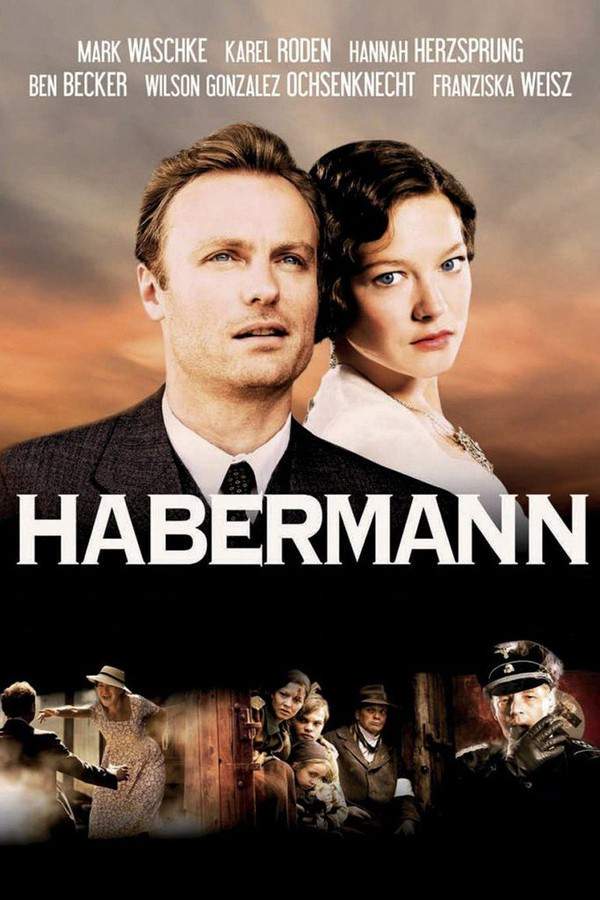
Habermann (2011) movie poster

Characters & Themes

Habermann (2011) Characters, Setting & Themes Explained

Release, runtime and language
2011 · 104 min · German
JustWatch #2,978 17
Directed by
Juraj Herz

As tensions escalate in 1938's tumultuous Europe, a prosperous mill owner's tranquil existence in the Sudetenland is shattered, his world torn apart by the looming specter of war.

On this page (8)
  1. 1 Where to watch
  2. 2 Characters explained (10)
  3. 3 Where & when it takes place
  4. 4 Themes & meaning (3)
  5. 5 Character & meaning questions
  6. 6 Movie threads
  7. 7 Movies like Habermann
  8. 8 Every angle

Where to watch

Where to Watch Habermann (2011)

Where can you watch Habermann? Stream, rent or buy it in the US, including on Amazon Prime Video, Fawesome and Amazon MX Player: current JustWatch availability with up-to-date prices.

Streaming availability powered by JustWatch

10 main characters · contains spoilers

Habermann Characters Explained: Who Is Who

The main characters of Habermann (2011), heroes and villains: what drives them, how they change over the course of the story and what each of them reveals about the film's bigger ideas.

  • August Habermann

    Wealthy ethnic German mill owner in Eglau who believes in peaceful coexistence between Sudeten Germans and Czechs. He is apolitical and marries Jana, a Czech woman who is later revealed to be half-Jewish. He is protective of his Czech workers, especially Masek, the son of his housekeeper Eliška, and he tries to shield them from abuse. He ultimately succumbs to the regime’s cruelty, bribing Koslowski to stop executions, and dies when the mob hangs him at the mill.

    • 💼 Industrialist
    • 🕊️ Moral Dilemma
    • 👨‍👩‍👧 Family
  • Jana Habermann

    A Czech wife of August; she is later revealed to be half-Jewish. She endures persecution and is separated from her husband, facing a concentration camp ordeal before escaping with her daughter with help from Red Army soldiers. Her resilience anchors the family’s memory after their exile and she carries the weight of the marriage’s tragic consequences.

    • ❤️ Family
    • 🧭 Survival
    • 🇨🇿 Czech identity
  • Karel Březina

    August’s Czech best friend who warns him about the fate of Czechs after annexation and later confronts the consequences of collaboration. He is a cautious ally who tries to navigate a dangerous landscape and ultimately exposes the truth about mob violence after liberation.

    • 🗺️ Loyalty
    • 🕰️ Memory
    • 🇨🇿 Czech identity
  • Kurt Koslowski

    SS Sturmbannführer who brutalizes Czech workers, enforces harsh orders, and arranges executions to punish resistance. He escalates violence, breaks his word, and becomes a key instrument of oppression that catalyzes the town’s descent into terror.

    • ⚔️ Oppression
    • 💀 Brutality
  • Masek

    Son of Eliška, the Habermann housekeeper, and a Czech worker who becomes entangled in the mill’s deadly power struggles. He is involved in violence and is later claimed as Habermann’s heir, only to be lynched by a local mob that views him as a traitor.

    • 🪙 Inheritance
    • ⚔️ Violence
    • 🧭 Ethnic tension
  • Eliška

    Housekeeper to the Habermann family and mother of Masek; her secret about Habermann’s paternity adds to the film’s web of loyalties and betrayals. She aids in the revelation of hidden inheritance and becomes part of the combustible power dynamics surrounding the mill.

    • 👩‍👧‍👦 Family
    • 💰 Exploitation
    • 🧭 Loyalty
  • Hans Habermann

    August’s younger brother who joins the Wehrmacht, adopts Nazi ideology, is wounded, and later deserts. His arc explores the friction between family ties and ideological allegiance during the war.

    • 🪖 Family conflict
    • 🧭 Ideology
  • Hora

    The Czech bookkeeper at Habermann’s mill who is killed by Koslowski, a death that sparks further violence and escalates the town’s fear and resistance.

    • 🧾 Bookkeeping
    • ⚰️ Violence
  • Hartel

    The collaborating mayor of Eglau who supports the Nazis and fuels the mob’s violence; he is implicated in the later memory debates about leadership of the mob and the real Hubert Habermann’s lynching.

    • 🏛️ Authority
    • ⚖️ Betrayal
  • Jana's Daughter

    The daughter of Jana, who endures displacement and exile alongside her mother. She embodies the human cost of war and forced migration in the Sudetenland.

    • 👧 Child
    • 🆘 Rescue

Last updated: November 22, 2025 at 15:26

Was this helpful?

Setting

Where and When Does Habermann Take Place?

The setting of Habermann (2011): the year and time period, the places and locations, and how they shape the characters, the mood and the tension of the story.

Time period

1937–1945

The story unfolds from 1937 through the war’s end in 1945. It begins with the pre-war milieu and the Munich Agreement, then follows the occupation and Nazi rule in the Sudetenland. The period culminates in liberation and a violent post-war reckoning that rewrites local memory.

Location

Eglau, Sudetenland

Eglau is a mill town in the Sudetenland where a family-owned mill operates as both a sawmill and a gristmill. The community comprises Sudeten Germans and Czechs living side by side, with rising tension as political changes sweep through the region. The mill, hospital/spa, and local administration anchor life here as World War II approaches.

  • 🏭 Industrial town
  • 🧭 Ethnic tension
  • 🗺️ Border region

Last updated: November 22, 2025 at 15:26

Was this helpful?

3 major themes

Habermann Meaning: Themes & Message Explained

What is Habermann (2011) really about? The emotional, social and philosophical themes the film keeps returning to, its symbolism and the message beneath the surface.

  • Moral Dilemma

    August Habermann strives to keep peace by employing both Sudeten Germans and Czechs, navigating a fragile coexistence. He confronts abuse from Koslowski and makes difficult compromises to protect workers, family, and business. The film shows how ordinary people bend or break under political pressure, raising questions about complicity, memory, and responsibility.

  • Oppression

    Koslowski’s brutality and the loyalty of local authorities reveal how state power weaponizes fear. The random executions, forced transfers, and mass intimidation devastate communities and erode trust. The violence is intimate as it seeps into work, family life, and everyday choices, culminating in a murderous mob.

  • Memory & Betrayal

    After liberation, a lynch-mob atmosphere erupts as old grievances collide with new memories. The revelation that Masek’s claimed inheritance is tied to a crime unsettles perceptions of kinship and property. The epilogue notes that Karel Březina accused the mayor of leading the mob that lynched the real Hubert Habermann, underscoring how memory can be contested and unresolved.

Last updated: November 22, 2025 at 15:26

Was this helpful?

Character & theme questions

Habermann Characters & Meaning: Your Questions Answered

The questions people ask about Habermann (2011): who the characters really are, their relationships, what the symbols mean, where it takes place and what the movie is really about. Each answer contains spoilers.

Q1

Where is Habermann set and what makes the Sudetenland significant?

The movie is set in Eglau, a fictional mill town in the Sudetenland, a border region between Germany and Czechoslovakia. This area was historically contested, home to both Sudeten Germans and Czechs living side by side. The Sudetenland's significance comes from its ethnic tensions and political volatility leading up to World War II, as Nazi Germany annexed this territory following the 1938 Munich Agreement.

Foreshadowing: The opening scenes establish Eglau as a peaceful multi-ethnic community before political changes shatter that coexistence.

  • sudetenland
  • eglau
  • setting
  • czechoslovakia
  • ethnic tension
  • border region
Q2

What time period does Habermann cover?

The story spans from 1937 through the end of World War II in 1945. It begins in the pre-war period before the Munich Agreement, then follows the Nazi occupation of the Sudetenland, and concludes with liberation and the violent post-war reckoning that follows.

Foreshadowing: The film opens in a relatively peaceful pre-war milieu that contrasts sharply with the oppression to come.

  • 1937
  • 1945
  • time period
  • world war ii
  • munich agreement
  • occupation
Q3

Who is August Habermann and what does he represent?

August Habermann is the wealthy German owner of a family mill in Eglau. He represents the moral complexity of ordinary people facing extraordinary political pressure, a man who believes in peaceful coexistence between Germans and Czechs but ultimately succumbs to the regime's cruelty, making compromises to protect his family and workers.

Foreshadowing: His early attempts to maintain peace by employing both Sudeten Germans and Czechs establish his ideals before they are tested.

  • august habermann
  • mill owner
  • sudeten germans
  • moral compromise
  • protagonist
Q4

What is the moral dilemma explored in Habermann?

The film explores how ordinary people bend or break under political pressure. August Habermann faces impossible choices, trying to protect his Czech workers while maintaining his business, ultimately bribing an SS officer to stop executions. The movie raises questions about complicity, responsibility, and how people respond when faced with threats to their family and livelihood.

Foreshadowing: August's early decisions to employ both ethnicities and shield workers hint at the moral costs he will ultimately pay.

  • moral dilemma
  • complicity
  • responsibility
  • ethical choice
  • compromise
Q5

Who is Jana Habermann and what is her background?

Jana is August's Czech wife, who is later revealed to be half-Jewish. She represents the personal cost of the Holocaust on mixed families. Her marriage to a German places her in constant danger as the Nazis tighten control, and she endures persecution and separation from her husband before ultimately escaping a concentration camp.

Foreshadowing: Her Czech identity and marriage to August place her at risk from the earliest scenes of Nazi occupation.

  • jana habermann
  • half-jewish
  • czech wife
  • persecution
  • concentration camp
Q6

Who is Karel Březina and what is his relationship to August?

Karel Březina is August's Czech best friend and a cautious ally who warns him about the fate of Czechs after the German annexation. He navigates the dangerous landscape of the occupied Sudetenland and ultimately plays a key role in exposing the truth about mob violence after liberation, representing those who try to maintain integrity in impossible circumstances.

Foreshadowing: His early warnings about Czechs' fate establish him as someone who understands the coming danger better than August does.

  • karel brezina
  • best friend
  • czech ally
  • warning
  • truth
Q7

How does Habermann portray oppression in the Sudetenland?

The film depicts how state power weaponizes fear through characters like SS officer Kurt Koslowski, who brutalizes Czech workers, orders random executions, and enforces forced transfers. This violence seeps into everyday life, at work, in family life, and in simple choices, showing how terror becomes embedded in the fabric of the community.

Foreshadowing: Koslowski's arrival marks the turning point from political tension to systematic oppression.

  • oppression
  • koslowski
  • ss officer
  • terror
  • executions
  • fear
Q8

What role does memory and betrayal play in Habermann?

After liberation, the story explores how memory becomes contested. A violent mob mentality erupts as old grievances resurface, with the reveal that Masek's claimed inheritance is tied to a crime. The film's epilogue notes that the real Hubert Habermann was lynched by a mob, underscoring how communities rewrite or fight over their history of collaboration and violence.

Foreshadowing: The post-war mob violence shows how the war's conflicts continue through memory and revenge.

  • memory
  • betrayal
  • post-war
  • mob violence
  • lynching
  • contested history
Q9

Who is Kurt Koslowski and what does he symbolize?

Kurt Koslowski is an SS Sturmbannführer who becomes the primary instrument of terror in Eglau. He brutalizes Czech workers, arranges executions to punish resistance, and breaks his promises without hesitation. He symbolizes how the Nazi regime transforms ordinary spaces into sites of systematic violence and how state power corrupts every relationship in a community.

Foreshadowing: His presence transforms the mill from a place of economic activity to one of danger and fear.

  • kurt koslowski
  • ss
  • brutality
  • executions
  • oppression
  • symbol
Q10

How does the mill in Eglau represent the community's tensions?

The mill serves as both an economic anchor and a microcosm of the Sudetenland's ethnic tensions. August employs both Sudeten Germans and Czechs, creating a fragile coexistence that reflects the broader region's divisions. As the Nazis take control, this workplace becomes a battleground where political pressures shatter the multi-ethnic harmony that existed before.

Foreshadowing: The mill's diverse workforce established in early scenes makes its later destruction more impactful.

  • mill
  • eglau
  • sudeten germans
  • czechs
  • ethnic tension
  • workplace

Movie threads

More Movies Like Habermann, by Mood & Story

Curated lists built around what makes Habermann tick: the same mood, the same kind of story or the same emotional payoff. Each list explains why these movies belong together.

Dramas about war-torn families like in Habermann

Intimate dramas where ordinary families are crushed by the machines of war. Explore movies like Habermann that chronicle the personal tragedies of families caught in the gears of history. These stories share a bleak tone, heavy emotional weight, and a focus on the brutal intersection of a peaceful life with the chaos of war and ethnic conflict.

  • tragic
  • sobering
  • haunting
  • grim
  • oppressive
  • melancholic
  • Tone: bleak, tragic, sobering
  • Pacing: steady, chronological
Why these movies?

The story pattern: Stories in this thread often follow a family or community whose peaceful existence is shattered by an encroaching war or political movement. The narrative unfolds chronologically, showing the gradual or sudden loss of safety, home, and moral certainty, typically culminating in profound tragedy and a sense of irrevocable loss.

Why they belong together: Movies are grouped here based on their shared focus on the domestic sphere as a microcosm for larger historical trauma. They share a steady, immersive pacing that builds a sobering, oppressive mood, a high-intensity emotional journey, and a consistently bleak outlook on human nature during times of crisis.

Movies with grim moral dilemmas like Habermann

Stories where characters face impossible choices under the weight of tyranny. If you liked Habermann's exploration of complicity and impossible choices during wartime, you'll find similar themes here. These films are characterized by their tense, oppressive mood, high emotional stakes, and focus on the moral collapse of individuals within brutal systems.

  • tense
  • oppressive
  • grim
  • sobering
  • tragic
  • unsettling
  • Tone: tense, grim, sobering
  • Pacing: steady, immersive
Why these movies?

The story pattern: The narrative pattern involves characters living within a system of escalating brutality, such as a war or totalitarian regime. They are confronted with choices that pit survival against their own morals, often leading to tragic consequences and a profound sense of complicity or guilt. The journey is typically one of moral decay rather than redemption.

Why they belong together: These films are connected by their shared atmosphere of oppression and their central theme of moral ambiguity. They create a similar viewing experience through high tension, a sobering tone, and a focus on the psychological toll of making compromises in the face of overwhelming force.

If you liked this

Movies Like Habermann

Similar movies to Habermann: the same genre, themes or kind of story. Each one comes with its own plot summary, timeline and ending explained.

Browse all movie summaries

Every angle

Habermann (2011) Explained: Plot, Timeline & Characters

Everything about Habermann in one place: what happens in the plot summary, the timeline in chronological order, the characters and meaning and a spoiler-free summary. What's After the Movie adds the cast, box office and post-credit scenes.

Coming soon on iOS and Android

The Plot Explained Movie Summary App

Plot summaries, endings explained and timelines on your phone. Catch up on any movie in minutes, save your favorites and never miss a twist again.

Be the first to know when we launch. Your email stays private, always.

Learn more about the app