Plot Explained Spoilers guaranteed!
Plot Explained

Browse by genre

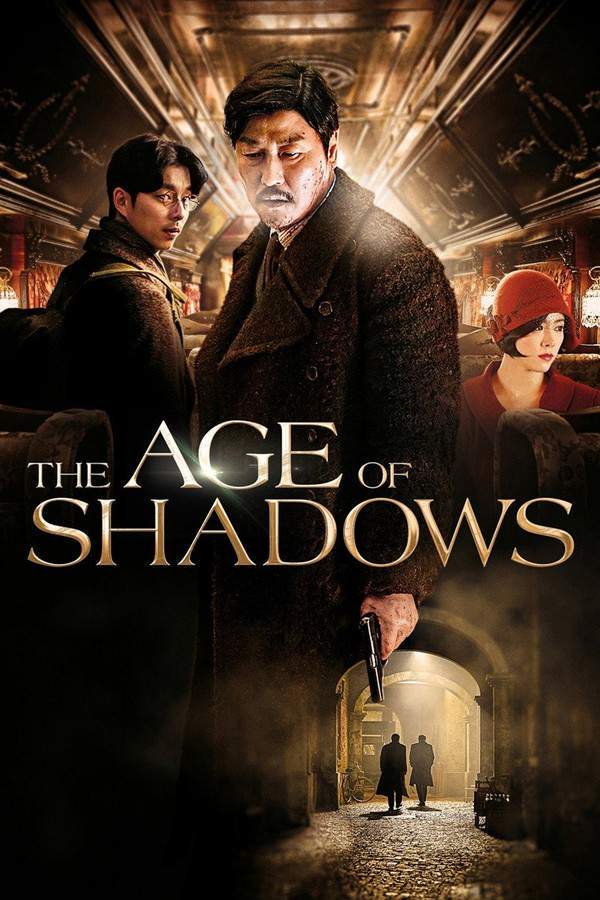
The Age of Shadows (2016) movie poster

Plot Summary

The Age of Shadows (2016) Plot Summary Explained

Release, runtime and language
2016 · 140 min · Korean
Loading streaming availability…
Directed by
Ji-woon Kim

During the 1920s, Korea struggles under Japanese occupation. Captain Lee Jung-chool is ordered to infiltrate the Korean independence movement, placing him in a precarious position between conflicting loyalties. He unexpectedly develops a complicated relationship with Kim Woo-jin, a leader of the resistance. A tense cat-and-mouse game unfolds as informants operate within both the Japanese forces and the independence fighters, blurring the lines of trust and betrayal.

On this page (6)
  1. 1 Where to watch
  2. 2 What happens: full plot
  3. 3 Plot questions answered
  4. 4 Movie threads
  5. 5 Movies like The Age of Shadows
  6. 6 Every angle
Loading streaming availability…

Full plot summary · contains spoilers

What Happens in The Age of Shadows: Full Plot Summary

The whole story of The Age of Shadows (2016) explained, from the opening scene to the final frame: every key event, every twist and what it all adds up to. Read it as a quick recap before the sequel, to check a scene you missed, or to finally understand what really happened.

Kim Jang-ok and Joo Dong-sung, both members of the Korean independence group Heroic Corps, approach the affluent Kim Hwang-sub, ostensibly to secure military funding. However, this meeting turns out to be a trap laid by the Japanese forces. In a fierce gun battle, Kim Jang-ok fights valiantly but is ultimately faced with a heart-wrenching situation when his old friend, Lee Jung-chool, now an officer with the Japanese police, confronts him. To escape the turmoil, Kim takes his own life. Meanwhile, Lee chooses to discreetly release Joo Dong-sung, which raises eyebrows within the ranks of Heroic Corps. Tensions escalate as Jo Hwe-ryung accuses Joo of being a traitor, leading to Kim Woo-jin's intervention, which results in Joo's banishment due to his compromised identity.

In the aftermath, the Japanese authorities assign Lee Jung-chool to investigate Kim Woo-jin. Despite their shared past and recognizing each other's true roles, both men opt to maintain a facade of friendship. Lee's new partner, Hashimoto, is actually tasked with surveilling him. As the pressure mounts, Lee tries to protect the Heroic Corps by delaying Hashimoto's efforts, but they only narrowly manage to escape to Shanghai. There, amidst the tensions, Heroic Corps leader Jung Chae-san and Kim Woo-jin persuade Lee to join their efforts. Under growing pressure, Lee ultimately shifts his allegiance, agreeing to help transport explosives back to Korea.

On Korean soil, Lee cautions Kim Woo-jin that a spy lurks within their ranks. To unmask the mole, Kim concocts a plan involving varied rendezvous times for each member of the group. The ploy works, revealing Jo Hwe-ryung as the traitor. In a dramatic encounter aboard a train, Kim executes Jo in the name of Heroic Corps, emphasizing the group's commitment to their cause. However, upon their arrival in Gyeongseong, chaos ensues when police confront them. In the midst of it, Yeon Gye-soon bravely kills officers who attempt to arrest her, igniting a violent shootout that results in numerous casualties, including many resistance members. Kim, however, manages to evade capture and successfully smuggles the explosives into Korea.

As scrutiny falls on Lee, he is commanded to locate Kim and resorts to torturing Gye-soon to keep his cover intact. However, he falls into a trap set by Joo Dong-sung, leading the authorities directly to Kim's hideout. Following a desperate attempt to escape, Kim is apprehended. In a desperate bid to keep his secrets safe during interrogation, he bites off his own tongue. Lee also finds himself imprisoned but pretends to remain loyal to the Japanese authorities to obtain a lighter sentence. During the trial, he emotionally declares that he was never with the resistance, adhering to Kim’s earlier request to pose as a non-ally so their mission could persevere.

Once released, Lee learns of Gye-soon’s tragic demise and hears about a gathering hosted by Japanese collaborators. Holding onto Kim’s last wish that at least one individual survive to finish their quest, Lee strategically plants explosives at the party. Concurrently, a Heroic Corps operative carries out the assassination of Joo Dong-sung. When the bomb detonates, it claims the lives of several high-ranking officials, including Higashi. Back in prison, a mute Kim Woo-jin gains knowledge of the successful mission, causing him to smile with relief, knowing that his sacrifices held significance. Eventually, Lee confronts Kim Hwang-sub, whose betrayal was responsible for Kim Jang-ok’s death, and takes vengeance by killing him, honoring his fallen friend's memory.
Last updated: June 11, 2025 at 15:03

Was this helpful?

Plot questions answered

The Age of Shadows Plot Explained: Your Questions Answered

The questions people ask most about The Age of Shadows (2016): what happens in the confusing scenes, why the characters do what they do, the twists, hidden details and what the ending means. Each answer contains spoilers.

Q1

Why does Kim Jang-ok commit suicide when confronted by Lee Jung-chool?

Kim Jang-ok takes his own life because he recognizes his former close friend Lee Jung-chool among the Japanese police officers. Rather than be captured or killed by someone he once trusted, Kim chooses suicide as a way to avoid betraying his fellow resistance members under interrogation. This tragic choice highlights the impossible position Lee occupies as an infiltrator.

Foreshadowing: Earlier in the film, Lee and Kim's deep friendship is established, making this confrontation particularly devastating.

  • kim jang-ok suicide
  • lee jung-chool
  • hero corps
  • independence movement
Q2

Why does Lee Jung-chool release Joo Dong-sung after the trap?

Lee releases Joo Dong-sung because despite working undercover for the Japanese, he cannot bring himself to fully betray his fellow Koreans fighting for independence. This act also serves to maintain his cover, allowing Joo to escape makes it appear that Lee was outmatched, rather than deliberately letting resistance members go.

  • lee jung-chool
  • joo dong-sung
  • hero corps
  • undercover
Q3

How does Lee Jung-chool shift his loyalty to the resistance?

Lee's shift happens gradually in Shanghai, where he witnesses the Heroic Corps' dedication and faces mounting pressure from both sides. After protecting them from Hashimoto's surveillance, Jung Chae-san and Kim Woo-jin persuade him that his skills could better serve Korea by joining their cause. The weight of his Korean identity ultimately overrides his forced cooperation with the Japanese.

Foreshadowing: Lee's initial release of Joo Dong-sung foreshadows his eventual complete switch to the resistance.

  • lee jung-chool
  • hero corps
  • double agent
  • shanghai
  • loyalty shift
Q4

How is Jo Hwe-ryung exposed as the spy within Heroic Corps?

Kim Woo-jin devises a plan where each Heroic Corps member receives a different rendezvous time. When Japanese police intercept all members at different times simultaneously, it proves someone leaked the information. Jo Hwe-ryung is identified as the traitor because only he would have known all the fake meeting times.

Foreshadowing: Earlier suspicion toward Joo Dong-sung distracts from the real traitor, making Jo's betrayal more shocking.

  • jo hwe-ryung
  • spy
  • traitor
  • hero corps
  • mole
Q5

Why does Kim Woo-jin execute Jo Hwe-ryung aboard the train?

Kim executes Jo in order to maintain the Heroic Corps' discipline and secrecy. With Japanese police closing in and Jo's betrayal already endangering the mission, Kim makes the difficult decision to kill him as a traitor. This demonstrates the harsh realities of espionage where suspected betrayals must be dealt with decisively to protect the larger cause.

  • kim woo-jin
  • jo hwe-ryung
  • execution
  • train
  • hero corps
Q6

Why does Kim Woo-jin bite off his own tongue during interrogation?

Kim bites off his own tongue to prevent himself from revealing any information under torture. By making himself mute, he ensures the Japanese authorities cannot extract details about the resistance network, the bomb location, or other operatives. This act of extreme self-sacrifice demonstrates his unwavering commitment to the cause.

  • kim woo-jin
  • torture
  • tongue
  • interrogation
  • sacrifice
Q7

What happens to Lee Jung-chool after he is arrested by the Japanese?

After being tricked by Joo Dong-sung into leading authorities to Kim's hideout, Lee is imprisoned. He pretends to remain loyal to the Japanese authorities, which results in a lighter sentence. During his trial, he emotionally declares he was never with the resistance, a performance meant to satisfy both his captors and fulfill Kim's request that Lee appear as a non-ally so their mission could continue.

  • lee jung-chool
  • arrest
  • trial
  • imprisonment
  • japanese police
Q8

How does the bomb attack at the Japanese collaborators' party succeed?

After being released from prison, Lee learns of Gye-soon's death and remembers Kim's final wish that someone survive to complete the mission. He plants explosives at a gathering of Japanese collaborators and high-ranking officials. The bomb detonates successfully, killing several key Japanese figures including Higashi. Meanwhile, a Heroic Corps operative assassinates Joo Dong-sung, who had betrayed them.

Foreshadowing: Kim's earlier request that at least one person survive to finish the mission sets up this final operation.

  • bomb
  • party
  • higashi
  • lee jung-chool
  • mission accomplished
Q9

Why does Lee Jung-chool kill Kim Hwang-sub at the end?

Lee kills Kim Hwang-sub to avenge his close friend Kim Jang-ok's death. Hwang-sub was the one who set up the trap that led to Jang-ok's suicide during the initial ambush. By killing Hwang-sub, Lee honors his fallen friend's memory and completes the cycle of vengeance that began with the film's opening tragedy.

Foreshadowing: The film opens with the trap laid by Kim Hwang-sub, establishing his role in Jang-ok's death.

  • kim hwang-sub
  • vengeance
  • lee jung-chool
  • kim jang-ok
  • death
Q10

What is the relationship between Lee Jung-chool and Kim Woo-jin?

Lee and Kim share a complex history, they recognize each other as true patriots despite Lee's position in the Japanese police. Throughout the film, they maintain a careful facade of friendship while Lee investigates Kim. Both men understand the other's real identity and work indirectly toward the same goal. Their mutual respect survives the impossible circumstances, with Kim even smiling in prison upon learning their mission succeeded.

Foreshadowing: From their first meeting, there's a palpable tension as they navigate their dual roles.

  • lee jung-chool
  • kim woo-jin
  • relationship
  • trust
  • recognition

Movie threads

More Movies Like The Age of Shadows, by Mood & Story

Curated lists built around what makes The Age of Shadows tick: the same mood, the same kind of story or the same emotional payoff. Each list explains why these movies belong together.

Movies with tense undercover spy games like The Age of Shadows

Tense stories of double agents and impossible loyalties in oppressive regimes. If you liked the high-stakes infiltration and moral conflict in The Age of Shadows, explore more movies like it. This collection features similar tense spy thrillers and espionage stories set in oppressive regimes, where characters face impossible choices between duty and loyalty.

  • tense
  • suspenseful
  • paranoid
  • grim
  • desperate
  • anxious
  • Tone: tense, grim, morally ambiguous
  • Pacing: fast, driven by suspense
Why these movies?

The story pattern: Narratives in this thread follow a protagonist embedded within an enemy organization, often forced to commit acts that conflict with their true loyalties. The plot typically unfolds as a series of close calls, betrayals, and difficult sacrifices, building towards a climax where their cover is dangerously threatened.

Why they belong together: These films are grouped together based on their shared focus on the undercover experience, creating a consistent vibe of paranoia and high tension. They feature similar pacing driven by missions and close calls, and explore heavy themes of betrayal and moral compromise.

Bittersweet resistance stories with heavy sacrifice like The Age of Shadows

Stories of freedom fighters who win the battle but bear heavy scars. For viewers who appreciated the heavy cost of victory in The Age of Shadows, this section highlights similar movies about resistance and war. These stories share a bittersweet ending feel, where the mission's success is tempered by immense personal loss and sacrifice for the greater good.

  • grim
  • melancholic
  • desperate
  • sacrificial
  • oppressive
  • somber
  • Tone: grim, melancholic, bittersweet
  • Pacing: fast, steady
Why these movies?

The story pattern: The narrative pattern involves a group or individual fighting against an oppressive force. The journey is marked by significant losses among allies, personal sacrifice by the protagonist, and a final outcome where the strategic goal is achieved, but the human cost casts a long shadow, leaving a feeling of somber reflection rather than pure celebration.

Why they belong together: These movies are connected by their exploration of resistance and the inevitable price of fighting for a cause. They share a heavy emotional weight, a grim and oppressive atmosphere, and, crucially, a bittersweet conclusion where success is inseparable from loss.

If you liked this

Movies Like The Age of Shadows

Similar movies to The Age of Shadows: the same genre, themes or kind of story. Each one comes with its own plot summary, timeline and ending explained.

Browse all movie summaries

Every angle

The Age of Shadows (2016) Explained: Plot, Timeline & Characters

Everything about The Age of Shadows in one place: what happens in the plot summary, the timeline in chronological order, the characters and meaning and a spoiler-free summary. What's After the Movie adds the cast, box office and post-credit scenes.

Coming soon on iOS and Android

The Plot Explained Movie Summary App

Plot summaries, endings explained and timelines on your phone. Catch up on any movie in minutes, save your favorites and never miss a twist again.

Be the first to know when we launch. Your email stays private, always.

Learn more about the app