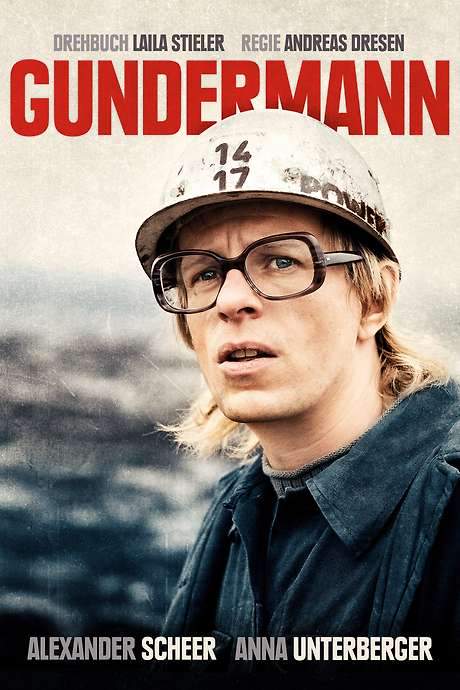
Beginning in 1992 with the unmasking of Gerhard Gundermann Alexander Scheer as a former unofficial collaborator of the East German security service Stasi, the film offers a careful look at selected episodes from the life of the singer-songwriter and excavator operator. The narrative unfolds through moments that illuminate his public and private roles, painting a portrait of a man pulled between art, work, and ideology.
As the story moves, we see Gundermann entangled in the politics of the GDR and quietly forming a life with his partner, his wife Conny Anna Unterberger. Cutbacks and compromises ripple through his world, and his father’s decisive break with him marks a turning point that weighs heavily on Gundermann’s sense of belonging. The film does not shy away from the contradictions that define his life: he draws creative fire from the landscapes he works to mine, using a bucket-wheel excavator to uncover coal even as his songs celebrate the beauty of nature that this very labor threatens to erase.
Though he is portrayed as a committed communist, Gundermann’s directness and willfulness clash with the era’s pressure to conform, ultimately leading to his exclusion from the Socialist Unity Party of Germany (SED). In a bid to affect real change for his fellow workers, he becomes an unofficial collaborator—an IM—with the hope of improving working conditions and safety measures on the job. The film makes clear that his motives are complex: not merely self-preservation, but a belief that practical reforms could align his political ideals with lived reality.
The collapse of the GDR becomes a harsh mirror, forcing Gundermann to confront the harm that his choices may have caused. He discovers that he, too, was surveilled by friends and acquaintances, and that his Stasi file—sometimes referred to in German as a Täterakte—has vanished from the Stasi Records Agency. In a pivotal interview, he refuses the easy, formulaic apology that many former IMs offer, choosing instead to acknowledge the weight of his past. He reaches out to several of his colleagues and bandmates, confessing his past involvement with the Stasi and opening the door to difficult, but necessary, conversations.
As life goes on, Gundermann becomes a father, and his wife expects a new balance: less time on the road and more time at home. He pledges change and follows through, aiming to repair trust and rebuild relationships. The emotional center of the film rests on his willingness to own up to his history, a move that softens hard lines between creator and audience, performer and friend.
In the end, the resonance of Gundermann’s confession finds its audience and his bandmates ready to listen. The film culminates in a fragile but honest reconciliation with both his music and the people who helped shape it, suggesting that truth, even when painful, can serve as a path back to community. Throughout, the atmosphere remains grounded in the tension between artistry and industry, conviction and consequence, memory and consequence, offering a portrait that is at once intimate and political.
The result is a nuanced, deeply human portrayal that invites viewers to reflect on the costs—and the courage—of living with one’s past while still searching for a future that feels true.