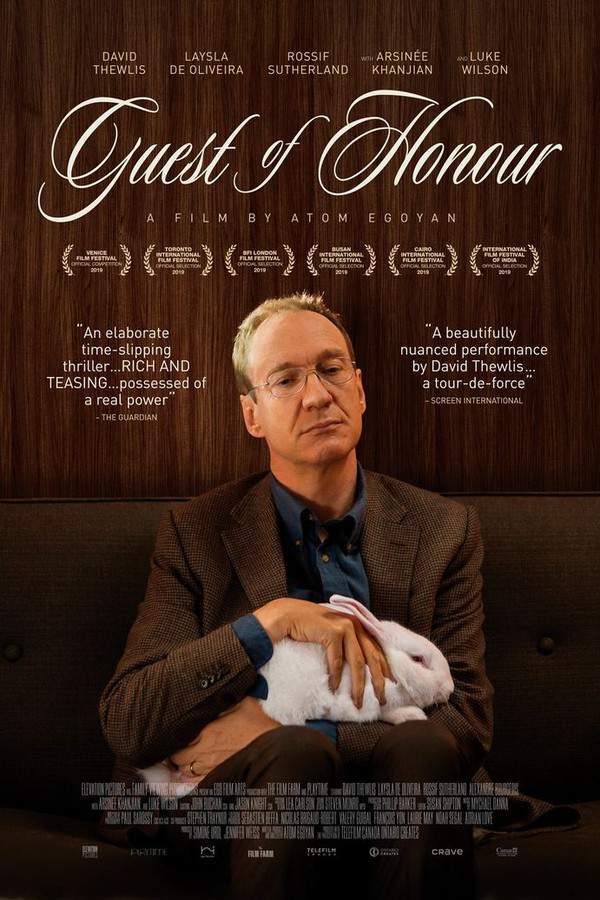
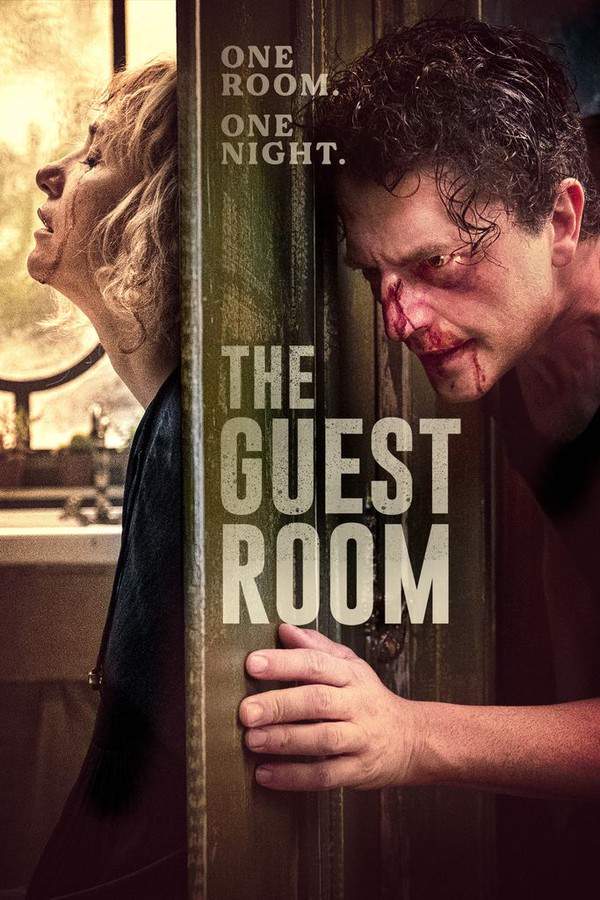
Jim [David Thewlis] is a meticulous food safety inspector whose career at the City of Hamilton often collides with restaurant owners who come from diverse immigrant communities. When the present-day thread begins, he looms large in Veronica’s life as she visits a church to discuss funeral arrangements for her father. In this opening sequence, the church becomes a quiet stage where the past starts to spill into the present through a series of careful flashbacks. Veronica [Laysla De Oliveira] sits with Father Greg [Luke Wilson], and their uneasy dialogue about Jim’s life becomes a doorway into a deeper history. Father Greg questions why Jim would choose this particular church for his own funeral, given that he was not a regular parishioner, and he asks Veronica to fill in the blanks so he can deliver a meaningful eulogy. What follows is a careful excavation of loyalty, guilt, and memory, all filtered through Veronica’s insistence on truth even when truth is painful.
The story quickly widens beyond the church walls to reveal Jim’s professional pride and his blunt code of health and safety. He enforces regulations with a seriousness that risks alienating the small business owners he inspects, many of whom arrive from abroad and may not share the same familiarity with Canadian standards. His work becomes a recurring flashpoint in the family’s life, as he also makes regular, uneasy visits to Veronica in prison. Veronica, who was a high school music teacher, is serving time for a crime she insists she did not commit, a charge tied to Clive’s troubling adolescence. Yet Veronica is evasive about her case and refuses to engage with her lawyer, signaling that her imprisonment is tied to something else from her past—something she believes she must own rather than vindicate in court.
The film then shifts into a longer, overnight school band trip that explains Veronica’s prison sentence in stark, unsettling terms. A bus driver and chaperone named Mike grows resentful of Clive’s attention to Veronica, and he exploits Veronica’s phone to send a sexually suggestive text to Clive. Veronica and Clive deduce that Mike was the author, but rather than exposing him, they decide to play a prank. The late-night motel scene they share triggers a memory that will haunt Veronica—Walter’s suicide—which she experiences as a flashback while alone with Mike in the room, visible to him and to the audience as her panic escalates. She explains to Father Greg that she chose the longest possible sentence on a plea deal to shield others from testifying against her and to keep the focus off the true, deeper guilt she carries.
Two major strands of memory then unfold, tracing Veronica’s childhood and the volatile entanglements with her father. Veronica began taking music lessons at the home of Alicia, a single mother who also teaches her own son, Walter. The two children form a close musical bond as Veronica’s mother, Roseangela, falls gravely ill and dies not long after. Jim’s relationship with Alicia unfolds as a byproduct of Veronica’s musical life, a relationship Veronica comes to resent because it threatens the family she imagines for herself. Veronica recalls seeing Jim hold Alicia’s hand at a recital, and she suspects more intimate interactions upstairs, rumors Jim vigorously denies. These memories are presented with uncertainty, as Veronica explains that her recollections are often distorted by her own distress.
Against this personal backdrop, the film returns to the present with Jim’s investigations into a string of restaurant practices. He visits an Armenian restaurant called Wild Orchid and uncovers serious violations regarding rabbit meat processing. The owners call it a private event, not for sale to the public, but Jim remains skeptical and intends to verify the claim. His next stop is a German restaurant owned by Clive’s family, where he engages in a provocative act—spreading altered rabbit feces on the bathroom floor to pressure the owner for a private talk with Clive. In a tense exchange, Clive admits the truth about the school trip and confirms the scope of Veronica’s feelings about Walter’s death, acknowledging that Veronica felt responsible for what happened to him.
That same night, Jim is drawn back to Wild Orchid, where a public event is underway. He is unexpectedly treated as the guest of honor and, after a wine-soaked speech, he speaks with raw candor about Veronica’s imprisonment and the pain she and her family endured. His words spark concern among the restaurant owners, who report him to the police when he hints at wanting to kill the bus driver. The following day, Jim discovers that Benjamin, Veronica’s beloved rabbit, has died in his cage, a death that coincides with mounting police interest in whether Jim and Veronica might be plotting something more sinister. Jim returns to the restaurant with Benjamin’s feet, a macabre request to keep them as good luck charms, which the owners comply with in a bid to restore calm and move on.
In a final, quiet sequence during their last prison visit, Jim tells Veronica about the police’s suspicions and clarifies that their investigation is simply doing its job. Veronica’s reaction is complicated: she asks whether her sentence might be extended, and Jim’s bewildered response gives way to a sharp, bittersweet truth. Veronica confesses that Jim’s actions—and the memories of what she endured as a child—are both the source of her guilt and what keeps her alive in a complicated way. The funeral scene closes the circle with Father Greg recounting his memory of Alicia’s importance to Veronica’s musical education, and Veronica’s request to place Benjamin’s feet in the casket with Jim—one kept for herself and another to gift to Father Greg. He agrees, keeping a small portion of the ritual for the living and a piece of the past for the departed.
The film’s final frame returns to Veronica as a music teacher, offering a quiet, intimate coda. During a recital, she explains that the last piece she played was written during a painful chapter of her life when she was alone in the piano room at Alicia’s home. The piece anchors memory to craft, pain to resilience, and becomes a closing note on how the past continually informs the present, even as Veronica seeks to redefine what is true and what should be left behind. Throughout, the story keeps its tone measured and lucid, delivering a dense, multilayered meditation on guilt, family, and the uneasy but enduring pull of memory.