





Plot Explained Spoilers guaranteed!
Plot Explained

Browse by genre

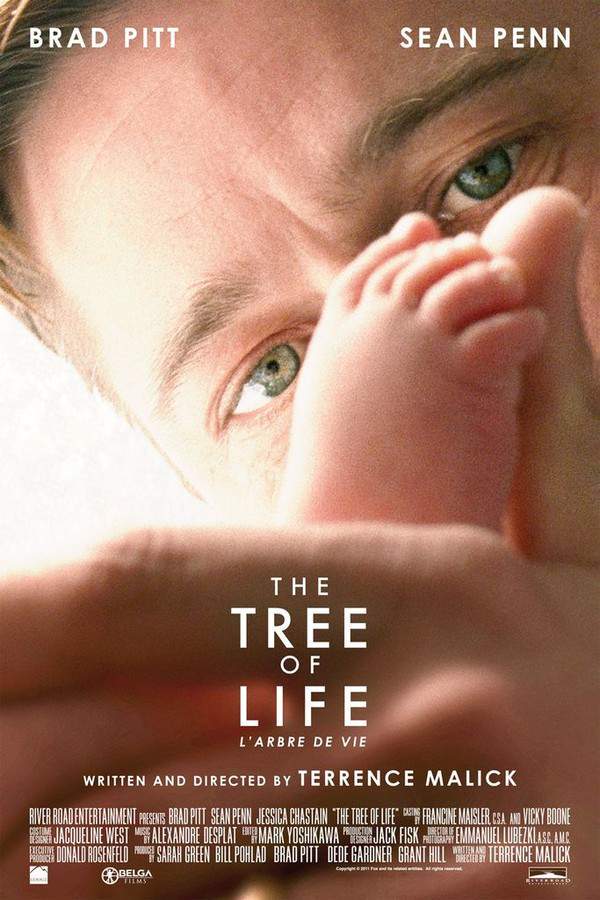
The Tree of Life (2011) movie poster

Plot Summary

The Tree of Life (2011) Plot Summary Explained

Release, runtime and language
2011 · 139 min · English
Directed by
Terrence Malick
Starring
Brad Pitt, Jessica Chastain, Sean Penn
Budget
$32M

A visually striking drama, the film explores a man's search for meaning and his complex relationship with his father. Through flashbacks, it recounts Jack's childhood in the 1950s and his evolving understanding of family, loss, and faith. As he reflects on his past, he grapples with profound existential questions about the universe, human suffering, and the possibility of finding purpose in life.

On this page (6)
  1. 1 Where to watch
  2. 2 What happens: full plot
  3. 3 Plot questions answered
  4. 4 Movie threads
  5. 5 Movies like The Tree of Life
  6. 6 Every angle

Where to watch

Where to Watch The Tree of Life (2011)

Where can you watch The Tree of Life? Stream, rent or buy it in the US, including on Amazon Video, Apple TV Store and Fandango At Home: current JustWatch availability with up-to-date prices.

Streaming availability powered by JustWatch

Full plot summary · contains spoilers

What Happens in The Tree of Life: Full Plot Summary

The whole story of The Tree of Life (2011) explained, from the opening scene to the final frame: every key event, every twist and what it all adds up to. Read it as a quick recap before the sequel, to check a scene you missed, or to finally understand what really happened.

Tree of Life is a poignant period drama that unfolds in the 1950s, focusing on three brothers. Central to the narrative is the eldest son, played by Hunter McCracken, who navigates the challenges of losing his innocence. At the heart of the story stand his parents, Mr. O'Brien and Mrs. O'Brien, both of whom profoundly influence his upbringing.

The film emerges as a metaphysical exploration and a lyrical tapestry, centering on Jack—now an adult, depicted by Sean Penn—who bears profound scars from the stringent discipline instilled by his father and the grief from his younger brother's untimely passing.

We are taken through the eyes of eleven-year-old Jack, a child experiencing the Midwest's beauty and innocence. Initially, life seems magnificent, as he views the world through his mother's compassionate heart, embodying love and grace. In contrast, his father represents a harsher reality, pushing Jack to adopt a self-serving outlook on life. Each parent vies for Jack's loyalty, forcing him to navigate this emotional turmoil. The narrative takes a darker turn as Jack recoils from his first encounters with pain, suffering, and mortality.

Juxtaposed with Jack's childhood is the perspective of adult Jack, who finds himself as a lost spirit in the modern era. He strives to uncover the unchanging truths amidst the ever-shifting fabric of life, ultimately recognizing the miraculous nature of our existence. His journey of understanding leads him to forgive Mr. O'Brien, allowing him to embark on a transformative pathway to find purpose.

The film culminates in a message of hope, celebrating the beauty inherent in every aspect of existence—especially within our families. It serves as the foundation of our education, where we decipher the essential lessons of life, centering on the power of selfless love.

Last updated: November 16, 2024 at 11:54

Was this helpful?

Plot questions answered

The Tree of Life Plot Explained: Your Questions Answered

The questions people ask most about The Tree of Life (2011): what happens in the confusing scenes, why the characters do what they do, the twists, hidden details and what the ending means. Each answer contains spoilers.

Q1

Why was Mr. O'Brien so strict with Jack and his brothers?

Mr. O'Brien believed in discipline and toughness as a way to prepare his sons for a harsh world. He pushed Jack toward a self-serving outlook, believing this would make him strong enough to survive life's challenges. His strict approach contrasts sharply with his wife Mrs. O'Brien's philosophy of grace and selfless love, creating an emotional tug-of-war for Jack's loyalty throughout his childhood.

Foreshadowing: Earlier scenes show Mr. O'Brien practicing his trumpet and insisting his sons practice rigorously, establishing his belief that success requires hard discipline.

  • mr o brien
  • father
  • discipline
  • strict parenting
  • 1950s
Q2

How did Jack's younger brother die in The Tree of Life?

The summary indicates Jack's younger brother passed away unexpectedly, though the exact circumstances are not detailed in the provided text. This tragic loss occurs during Jack's childhood and leaves profound emotional scars that adult Jack continues to carry. The brother's death becomes a pivotal moment that shapes Jack's understanding of grief, mortality, and the fragility of life.

  • brother death
  • loss
  • younger brother
  • grief
  • tragedy
Q3

Why does adult Jack need to forgive his father?

Adult Jack carries deep emotional wounds from his childhood experiences with his father's strict discipline. Through reflection and introspection, he confronts the pain caused by his father's harsh approach to parenting. This forgiveness represents a transformative moment in Jack's journey, allowing him to release past resentment, find healing, and move toward purpose and meaning in his adult life.

Foreshadowing: The emotional turmoil Jack experiences as a child, caught between his parents' conflicting philosophies, plants the seeds for this unresolved conflict.

  • forgiveness
  • father son relationship
  • healing
  • adult jack
  • emotional scars
Q4

What is adult Jack searching for in the modern world?

Adult Jack, portrayed as a lost spirit navigating contemporary life, seeks to uncover timeless truths amid the chaos of modern existence. Haunted by his past and burdened by unresolved emotions, he embarks on an introspective quest for meaning and redemption. His journey involves reconciling his childhood experiences with his adult understanding, ultimately leading him to recognize the miraculous nature of ordinary existence.

  • adult jack
  • meaning
  • truth
  • redemption
  • modern life
Q5

What do the cosmic and creation sequences represent in The Tree of Life?

The film's famous visual sequences depicting the origins of life, from the creation of the universe to the emergence of single-celled organisms, serve as a metaphysical backdrop that connects Jack's personal journey to a broader cosmic narrative. These poetic images reinforce the film's themes of existence, natural forces, and the interconnectedness of all life. They reflect the philosophical dimensions of Jack's search for meaning within the vast fabric of existence.

  • cosmic
  • creation
  • universe
  • origins of life
  • metaphysical
Q6

What does Mrs. O'Brien represent in the film?

Mrs. O'Brien embodies grace, compassion, and unconditional love. She represents the "way of grace" in contrast to her husband's "way of nature" or self-reliance. Through her nurturing presence, Jack experiences the beauty and innocence of childhood, learning to see the world with wonder and compassion. Her influence provides Jack with an alternative path toward understanding life, one rooted in selflessness and love.

Foreshadowing: The opening scenes establish Mrs. O'Brien as the embodiment of love and grace, showing Jack viewing the world through her compassionate heart.

  • mrs o brien
  • mother
  • grace
  • love
  • compassion
Q7

Why does The Tree of Life jump between timelines?

The non-linear structure reflects the film's exploration of memory and consciousness. By weaving between Jack's 1950s childhood and his adult present, the film mirrors how memory works, past experiences continuously shapes present understanding. This structure emphasizes that Jack's adult search for meaning is directly connected to his childhood experiences, particularly his relationship with his parents and the loss of his brother.

  • non linear
  • timeline
  • memory
  • structure
  • storytelling
Q8

What is the "way of grace" versus "way of nature" in the film?

The film presents two opposing philosophies: the "way of grace" embodied by Mrs. O'Brien, emphasizing love, compassion, and selflessness, versus the "way of nature" represented by Mr. O'Brien, focused on discipline, self-reliance, and toughness. Jack must navigate between these two influences throughout his childhood, and his adult journey involves reconciling these opposing forces within himself to find peace and purpose.

Foreshadowing: The parents' competing philosophies for Jack's loyalty are introduced from the very first scenes of the film.

  • grace
  • nature
  • philosophy
  • parenting
  • contrast
Q9

Why does Jack lose his innocence in the film?

Jack's loss of innocence occurs when he confronts pain, suffering, and mortality for the first time. The harsh realities presented by his father and the tragic loss of his younger brother force Jack to abandon his childlike wonder. These experiences mark his transition from the beautiful innocence of childhood into a more complicated understanding of life, setting the stage for his adult struggles with grief and meaning.

Foreshadowing: Early scenes of Jack experiencing the beauty and innocence of childhood directly contrast with later scenes showing his confrontation with pain and mortality.

  • innocence
  • lost
  • pain
  • suffering
  • mortality
  • growth
Q10

What does the ending of The Tree of Life mean? Does Jack find peace?

The film's ending delivers a message of hope, with Jack ultimately finding reconciliation and purpose through forgiveness and understanding. By forgiving his father and embracing the lessons of his childhood, including both hardship and love, Jack discovers beauty in existence and the transformative power of selfless love. The ending suggests that despite life's trials and losses, one can find meaning and peace by honoring the connections within family.

  • ending
  • peace
  • hope
  • resolution
  • forgiveness
  • family

Movie threads

More Movies Like The Tree of Life, by Mood & Story

Curated lists built around what makes The Tree of Life tick: the same mood, the same kind of story or the same emotional payoff. Each list explains why these movies belong together.

Philosophical Movies Like The Tree of Life

Films that blend intimate human stories with grand, cosmic contemplation. If you liked The Tree of Life's cosmic scale and deep philosophical questions, explore these similar films. This collection features movies like The Tree of Life that blend intimate drama with grand, metaphysical themes, offering profound viewing experiences for those seeking meaning.

  • philosophical
  • transcendent
  • dreamlike
  • reflective
  • meditative
  • existential
  • Tone: reflective, transcendent, melancholic
  • Pacing: slow, meditative
Why these movies?

The story pattern: Narratives in this thread often eschew traditional, linear plots in favor of impressionistic structures that move fluidly between a character's personal memories, present-day reflections, and sweeping, non-literal sequences representing the origins of life or the universe. The journey is more about internal understanding than external conflict.

Why they belong together: Movies are grouped here by their shared ambition to tackle life's biggest questions through a unique cinematic language. They connect through a contemplative mood, visually stunning and often abstract imagery, and a focus on existential themes like grief, faith, and the nature of consciousness.

Movies About Memory and Grief Like The Tree of Life

Emotional voyages into the past, grappling with family, loss, and memory. Discover movies like The Tree of Life that explore themes of memory, grief, and childhood. These similar drama films use reflective, non-linear storytelling to delve into complex family relationships and the lasting impact of loss, perfect for viewers who appreciate emotional depth.

  • melancholic
  • nostalgic
  • reflective
  • grief
  • coming of age
  • family drama
  • Tone: melancholic, nostalgic, bittersweet
  • Pacing: slow, reflective
Why these movies?

The story pattern: Stories typically follow an adult protagonist looking back on their formative years, often in a specific time period like the 1950s. The narrative is driven by emotional recollection rather than plot, unpacking complex relationships with parents and siblings, and connecting childhood innocence to adult understandings of pain and grace.

Why they belong together: These films are united by their central focus on processing grief through the excavation of memory. They share a melancholic and nostalgic tone, a slow, reflective pace that mimics the act of remembering, and a heavy emotional weight centered on themes of family, loss of innocence, and the search for healing.

If you liked this

Movies Like The Tree of Life

Similar movies to The Tree of Life: the same genre, themes or kind of story. Each one comes with its own plot summary, timeline and ending explained.

Browse all movie summaries

Every angle

The Tree of Life (2011) Explained: Plot, Timeline & Characters

Everything about The Tree of Life in one place: what happens in the plot summary, the timeline in chronological order, the characters and meaning and a spoiler-free summary. What's After the Movie adds the cast, box office and post-credit scenes.

Coming soon on iOS and Android

The Plot Explained Movie Summary App

Plot summaries, endings explained and timelines on your phone. Catch up on any movie in minutes, save your favorites and never miss a twist again.

Be the first to know when we launch. Your email stays private, always.

Learn more about the app