Plot Explained Spoilers guaranteed!
Plot Explained

Browse by genre

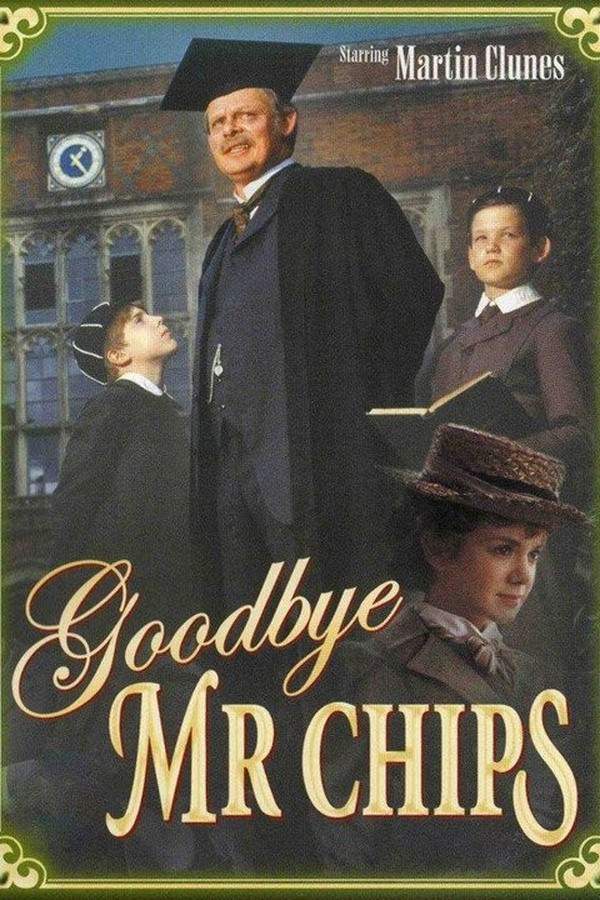
Goodbye, Mr. Chips (1939) movie poster

Timeline

Goodbye, Mr. Chips (1939) Timeline Explained – Every Event in Order

Release, runtime and language
1939 · 114 mins · English
Loading streaming availability…
Directed by
Sam Wood
Starring
John Mills, Martita Hunt, Cyril Raymond, Judith Furse, Robert Donat, David Tree

Celebrated as one of the year’s top ten films, this 1939 classic secures a proud place in cinema history. It follows a shy British schoolteacher who, as he nears retirement, reflects nostalgically on a long career, recalling the various students, colleagues and moments that shaped his life and left a lasting impression.

On this page (6)
  1. 1 Where to watch
  2. 2 Events in order (13)
  3. 3 Timeline questions answered
  4. 4 Movie threads
  5. 5 Movies like Goodbye, Mr. Chips
  6. 6 Every angle
Loading streaming availability…

13 events in order · contains spoilers

Goodbye, Mr. Chips Timeline: Events in Chronological Order

Every key event of Goodbye, Mr. Chips (1939) in order, scene by scene, with when and where it takes place. Use it to untangle flashbacks, time jumps and parallel storylines, to refresh your memory before the sequel or to find the exact scene you are thinking of.

  1. Chips arrives at Brookfield as Latin teacher

    The twenty-five-year-old Charles Edward Chipping arrives as Latin teacher at Brookfield Public School for the first time. He endures practical jokes on his first day, but his response is a firm display of discipline. Over time he becomes both disliked and respected by students and colleagues.

    When
    1870
    Where
    Brookfield Public School, Brookfield
  2. Becomes senior master; misses housemaster appointment; invited to Austria

    Twenty years after his arrival, Chips has become the senior master and still longs for a housemaster post. He is disappointed when such an appointment does not come, and his friend Max Staefel invites him to share a walking holiday to Austria. The trip sets him on a new arc beyond the classroom.

    When
    circa 1890
    Where
    Brookfield Public School, Brookfield, England
  3. Meets Kathy Ellis during mountain-climbing in the Austrian Alps

    During a mountain-climbing excursion in the Austrian Alps, Chips encounters Kathy Ellis, a feisty English suffragette on a cycling holiday. Her spirited presence begins to soften his reserve. The chance meeting plants the seed of a profound change in his life.

    When
    circa 1890
    Where
    Austrian Alps
  4. Vienna reunion and the Blue Danube Waltz

    In Vienna the couple reunites and Kathy persuades him to dance to the Blue Danube Waltz. The waltz becomes a leitmotif, symbolizing Chips's blossoming love. They discuss life and hopes as their bond deepens.

    When
    circa 1890-1891
    Where
    Vienna, Austria
  5. Kathy and Chips marry and return to England

    Kathy and Chips marry and return to England, where she takes up residence at Brookfield and wins over the school's staff and pupils with her warmth. Their home life begins to reshape Chips's approach to teaching. The school community gradually embraces the couple.

    When
    circa 1891
    Where
    Brookfield, England
  6. Tragic death: Kathy dies in childbirth

    Kathy's life is cut tragically short when she dies in childbirth along with their baby. Chips is left widowed, yet her influence continues to shape his teaching. He discovers a new gentleness and humor in his approach to students.

    When
    circa 1900
    Where
    Brookfield, England
  7. Chips becomes a beloved part of school life

    Over the years Chips cultivates a rapport with generations of pupils, teaching not only Latin but a love of learning. He crafts playful Latin puns and builds lasting connections with the sons and grandsons of his earliest students. He becomes a true institution within Brookfield.

    When
    1900s
    Where
    Brookfield Public School, Brookfield
  8. 1909: retirement pressure and continued tenure

    In 1909 Chips faces pressure to retire from a more modern headmaster, but the students and the board side with him. They declare he can stay on until he is 100 and approve his unique pronunciation of Cicero. The scene affirms his value to the school and its culture.

    When
    1909
    Where
    Brookfield Public School, Brookfield
  9. 1914: retires but is recalled as interim headmaster

    Chips retires permanently in 1914 at the age of 69, yet a shortage of teachers in World War I brings him back as interim headmaster. He accepts the role with his usual mix of gentleness and quiet authority. He remains a steady center for the school during a time of upheaval.

    When
    1914
    Where
    Brookfield Public School, Brookfield
  10. WWI: Zeppelin attack and classroom resilience

    During a German Zeppelin bombing, Chips urges the boys to keep translating Latin, insisting they stay focused on Julius Caesar's campaigns. The act maintains morale and demonstrates his dedication to education under danger. The event cements his role as a source of steadiness for the pupils.

    When
    1915
    Where
    Brookfield Public School, Brookfield
  11. Roll of Honour and Staefel's death

    As the war drags on, Chips reads aloud the Roll of Honour on Sundays, honoring former pupils and teachers who have died. He learns that Max Staefel has died fighting for the German side and solemnly reads his name in chapel. The moment binds his memory to the complexities of war.

    When
    1916-1918
    Where
    Brookfield Public School, Brookfield
  12. 1918: permanent retirement and quiet life nearby

    Chips retires permanently in 1918, choosing to live nearby rather than continue at the school. He remains a figure of affection and respect in the community. His decades of service leave a lasting imprint on Brookfield and its alumni.

    When
    1918
    Where
    Brookfield, England
  13. 1933: death and the final answer to his legacy

    On his deathbed in 1933, he overhears colleagues commenting on his legacy. He declares that he has children—thousands of them—referring to the countless boys he taught over the decades. The remark seals his life as a teacher whose influence outlived him.

    When
    1933
    Where
    Brookfield, England

Last updated: October 09, 2025 at 10:49

Was this helpful?

Timeline questions answered

Goodbye, Mr. Chips Timeline Explained: Your Questions Answered

When does it happen, and why in that order? The questions people ask about the chronology of Goodbye, Mr. Chips (1939): time jumps, flashbacks, cause and effect between scenes and the correct order of events, each answered with spoilers.

Q1

Why was Mr. Chips so strict with students when he first arrived?

When Charles Chipping arrived at Brookfield in 1870 at age 25, he faced practical jokes from students on his very first day. Rather than yield to their mischief, he responded with firm discipline and unyielding authority. This strict approach earned him a mix of dislike and respect, but it was also a defense mechanism for a shy, reserved young man who lacked confidence. Over two decades, this strictness helped him rise to become senior master, though it also kept him emotionally distant from students until Kathy entered his life.

Foreshadowing: His rigid first-day response foreshadows the disciplined educator who would command respect for decades, though his later transformation shows this strictness was a shell rather than his true nature.

  • mr chips
  • chipping
  • brookfield
  • latin teacher
  • strict teacher
  • students
  • practical jokes
Q2

How did Kathy Ellis change Mr. Chips?

Kathy Ellis, a spirited English suffragette he met during a mountain-climbing holiday in Austria, fundamentally transformed Chips. Her zest for life and infectious warmth pulled him out of his shell, showing him there was life beyond the classroom. When they reunited in Vienna and danced the Blue Danube Waltz, she awakened his capacity for love and joy. After their marriage, Kathy settled at Brookfield and won over the staff and boys with laughter and warmth that had been absent from the corridors. Even after her tragic death in childbirth, her influence persisted, Chips discovered a talent for gentler humor and Latin puns that resonated with generations of students.

Foreshadowing: The mountain meeting plants the seed of change; the Blue Danube Waltz in Vienna seals his transformation from rigid teacher to warmer educator.

  • kathy ellis
  • transformation
  • love
  • marriage
  • vienna
  • blue danube
  • waltz
  • suffragette
Q3

Why did Kathy die in childbirth and what impact did it have?

Kathy Ellis died in childbirth around 1900, taking both herself and the baby with her. This tragic event devastated Chips, leaving him a widower. However, her death became a turning point in his teaching career, she left him with a new approach to education. After losing her, Chips discovered a talent for Latin puns and gentler humor that connected with students in ways his earlier strictness never had. Her death transformed him from a respected but distant teacher into a beloved figure who taught not just Latin but also warmth and storytelling.

Foreshadowing: The wedding scene shows Kathy bringing laughter and life to Brookfield, making her death feel like a profound loss of that newly found light.

  • kathy death
  • childbirth
  • tragedy
  • impact
  • teaching transformation
  • london
  • brookfield
Q4

What was the significance of the Blue Danube Waltz in the film?

The Blue Danube Waltz becomes the film's leitmotif and symbolizes Chips's blossoming love. In Vienna, Kathy persuades the reserved Chips to dance with her to this famous waltz, and it marks the moment their bond deepens into romance. The film adds a poetic detail that the Danube appears blue only to those who are in love, making the waltz a visual and musical symbol of emotional awakening. Throughout the film, the waltz represents the brief but transformative period of happiness Chips experienced with Kathy.

Foreshadowing: The mountain meeting in Austria plants the seed; the Vienna reunion and waltz execute the romantic transformation.

  • blue danube
  • waltz
  • vienna
  • romance
  • symbol
  • leitmotif
  • love
Q5

Why was Mr. Chips recalled to teach during World War I?

Chips officially retired in 1914 at age 69, but when World War I created a shortage of teachers, the school urgently needed someone to step in. Chips was recalled to serve as interim headmaster during the war years. His return symbolized steady leadership during turmoil, he insisted students continue translating Latin even as a German Zeppelin attacked nearby, choosing Julius Caesar's military campaigns as a mirror to the era's brutality. His presence provided stability and normalcy during one of England's most challenging periods.

Foreshadowing: The 1909 retirement defense scene establishes how invaluable Chips was to Brookfield, explaining why the school would call him back.

  • world war 1
  • recall
  • headmaster
  • teacher shortage
  • 1914
  • brookfield
  • zeppelin
Q6

Why did students and the board defend Mr. Chips in 1909?

In 1909, pressure mounted for Chips to retire as the school sought a younger, more modern head. However, both students and the school's board rose to defend him. They declared he could stay until age 100 if he wished and approved his unique pronunciation of Cicero (SIS-er-ro rather than the traditional KIK-er-ro). This defense reflected the deep affection and respect Chips had cultivated over decades. He had become an institution at Brookfield, someone whose value transcended modernity trends. The students and board recognized that his wisdom, character, and institutional knowledge were irreplaceable.

Foreshadowing: His decades of dedicated service and the relationships he built with generations of students made him worth defending.

  • 1909
  • retirement
  • defense
  • students
  • board
  • brookfield
  • modern headmaster
  • cicero
Q7

What happened to Max Staefel and why was his death significant?

Max Staefel was Chips's German colleague and friend who first invited him to the walking holiday in Austria, the trip that led to meeting Kathy. During World War I, as Chips read the Roll of Honour on Sundays to honor fallen students and teachers, he learned that Staefel had died fighting for the German side. Despite being on opposite sides of the war, Chips solemnly read Staefel's name in the chapel memorial. This moment added a poignant, personal sting to the war's tragedy, showing how the conflict touched even the most personal relationships. It demonstrated Chips's capacity for compassion and his belief in honoring all lives lost, regardless of nationality.

Foreshadowing: The Austria trip and friendship with Staefel established their bond before war divided their nations.

  • max staefel
  • german
  • death
  • ww1
  • roll of honour
  • friend
  • brookfield
  • chapel
Q8

Why did Mr. Chips insist on teaching Latin during the Zeppelin attack?

During a German Zeppelin bombing of England in 1915, students were understandably frightened as destruction rattled the school windows. Instead of stopping class, Chips insisted the boys continue translating Latin, specifically Julius Caesar's campaigns. This choice was deliberate, Chips used Caesar's military campaigns as a mirror to the brutal era his students were living through. By maintaining academic focus during aerial attack, Chips provided stability and normalcy, showing that learning and civilization must continue even amid war. It was an act of quiet defiance that kept morale intact.

Foreshadowing: The earlier scene establishing Caesar's Latin texts as his teaching staple makes this choice feel natural and purposeful.

  • zeppelin attack
  • latin
  • teaching
  • julius caesar
  • ww1
  • bombing
  • brookfield
  • classroom
Q9

What did Mr. Chips mean by his final quote about having thousands of children?

On his deathbed in 1933, Chips overheard colleagues remarking that it was a pity he never had children. In his final moments, he replied that he did have thousands of children, all the boys he had taught over his five decades at Brookfield. This quote encapsulates his legacy: a teacher who viewed every student as his family. Rather than biological children, he left behind generations of former pupils, sons and grandsons of his earliest students, who carried forward his teachings and remembered him with affection. It represents the profound impact a dedicated educator can have, creating a family tree of knowledge that spans lifetimes.

Foreshadowing: The earlier scenes showing his growing rapport with generations of students, teaching their sons and grandsons, set up this satisfying conclusion.

  • final quote
  • children
  • legacy
  • death
  • 1933
  • brookfield
  • students
  • teaching
  • thousands
Q10

Why did Mr. Chips miss his chance at becoming a housemaster?

After twenty years at Brookfield, Chips had risen to senior master and longed for a housemaster position, which would have given him more authority and a different role. However, the appointment went to someone else, leaving him disappointed. This setback came at a pivotal moment, shortly after, his friend Max Staefel invited him on a walking holiday to Austria. That trip changed everything, leading him to Kathy and ultimately reshaping his entire life. In retrospect, missing the housemaster position proved fortuitous, as it pushed him toward the transformative experiences that made him the beloved figure he became.

Foreshadowing: The disappointment sets up the pivotal Austria trip that becomes his true life-changing opportunity.

  • housemaster
  • appointment
  • disappointment
  • brookfield
  • career
  • missed opportunity
  • staefel
  • austria

Movie threads

More Movies Like Goodbye, Mr. Chips, by Mood & Story

Curated lists built around what makes Goodbye, Mr. Chips tick: the same mood, the same kind of story or the same emotional payoff. Each list explains why these movies belong together.

Gentle Life Reflections like in Goodbye, Mr. Chips

Quiet stories that look back on a lifetime of service, love, and quiet influence. If you liked the reflective and gentle nature of Goodbye, Mr. Chips, you'll appreciate these movies that explore a life in retrospect. These films share a slow, thoughtful pace, a melancholic yet warm tone, and focus on the legacy built through simple, consistent acts of kindness and dedication over many years.

  • nostalgic
  • reflective
  • bittersweet
  • heartwarming
  • gentle
  • sentimental
  • Tone: melancholic, reflective, heartwarming
  • Pacing: slow, deliberate
Why these movies?

The story pattern: These stories often use a flashback or frame narrative structure, moving between the protagonist's present and their past. The central conflict is often internal, a quiet reckoning with time, memory, and the meaning of one's contributions. The journey is one of acceptance and finding fulfillment in the impact one has had on others.

Why they belong together: These films are grouped by their shared focus on a single life's retrospective journey. They prioritize emotional resonance over plot complexity, featuring a low-key intensity, a slow, deliberate pace, and a tone that balances melancholy with warmth, resulting in a profoundly bittersweet and comforting viewing experience.

Bittersweet Legacies like in Goodbye, Mr. Chips

Stories where personal loss is softened by the profound and lasting impact left behind. Fans of the bittersweet yet fulfilling ending of Goodbye, Mr. Chips will connect with these movies. They explore themes of legacy, where a character's influence lives on through others after a personal tragedy, creating stories that are emotionally moving but ultimately uplifting and hopeful in their resolution.

  • bittersweet
  • moving
  • hopeful
  • melancholic
  • heartfelt
  • poignant
  • Tone: bittersweet, melancholic, hopeful
  • Pacing: steady, character-driven
Why these movies?

The story pattern: The narrative pattern often involves a transformative event, such as the loss of a loved one, that refocuses the protagonist's life on a greater purpose. The story then follows how their dedication, often in a nurturing role like teaching or mentoring, creates a ripple effect that outlasts them. The conclusion validates that their life had deep meaning.

Why they belong together: These films are united by their specific emotional conclusion: a bittersweet ending that masterfully blends sadness with fulfillment. They share a medium emotional weight, focusing on how love and dedication can transcend personal tragedy, resulting in a deeply moving and philosophically comforting experience for the viewer.

If you liked this

Movies Like Goodbye, Mr. Chips

Similar movies to Goodbye, Mr. Chips: the same genre, themes or kind of story. Each one comes with its own plot summary, timeline and ending explained.

Browse all movie summaries

Every angle

Goodbye, Mr. Chips (1939) Explained: Plot, Timeline & Characters

Everything about Goodbye, Mr. Chips in one place: what happens in the plot summary, the timeline in chronological order, the characters and meaning and a spoiler-free summary. What's After the Movie adds the cast, box office and post-credit scenes.

Coming soon on iOS and Android

The Plot Explained Movie Summary App

Plot summaries, endings explained and timelines on your phone. Catch up on any movie in minutes, save your favorites and never miss a twist again.

Be the first to know when we launch. Your email stays private, always.

Learn more about the app