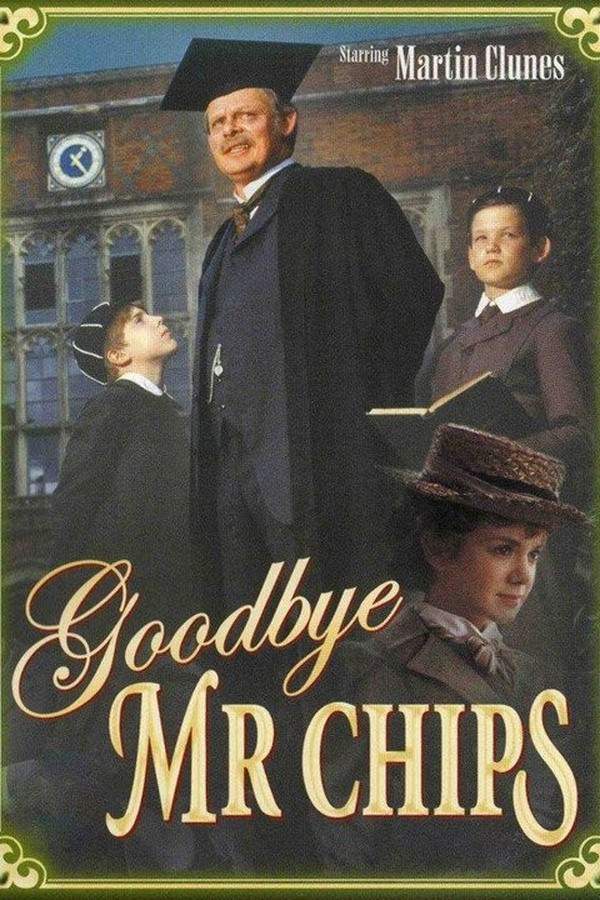
Arthur Chipping Peter O'Toole is the longtime Latin and Greek teacher at Brookfield School, a traditional public school just outside London. Known to his pupils as “Ditchy” for his stern, old-fashioned manner, he moves through the school year with quiet integrity, balancing duty and a longing for something gentler in life. The opening pages sketch a man who is respected, even loved, but whose routines barely disguise a certain loneliness beneath the chalk and disciplined routine.
In the dining room of the Savoy Hotel, on the eve of a summer holiday, Chips meets Katherine Bridges Petula Clark, a music-hall performer wrestling with the limits of her career and the circle she moves in. Their encounter is brief yet electric, and fate nudges them toward a Mediterranean cruise that promises escape and new possibilities. A chance reunion in Paestum, Italy, blossoms into a day spent together filled with easy companionship and shared tenderness. Katherine sees in Chips a lonely, sensitive soul who mirrors her own hunger for meaning beyond public appearances, and a quiet romance begins to unfold between them.
Back in Britain, Chips returns to Brookfield with Katherine by his side, now Mrs. Chips. The dynamic shifts almost instantly: pupils respond to the new, more approachable Mrs. Chips with warmth, and the staff must recalibrate to a married head who is both reformer and mentor. The change softens Chips in unexpected ways, and his students begin to respond to him with renewed respect and affection, drawn by a gentler, more human presence in the classroom and in the corridors.
Trouble surfaces when the wealthy Lord Sutterwick [George Baker] learns of Chips’s marriage to Katherine and tries to withhold a coveted endowment that would fund a new playing field at Brookfield. Katherine, however, refuses to be sidelined and uses her connections to threaten Sutterwick with exposure of a past dalliance with her friend Ursula Mossbank [Siân Phillips], a maneuver that shifts the balance of power. The initial tactic sends Katherine back to London, but Chips takes a two-week leave to bring her back, and she returns with resolve and ammunition to confront her adversary. In a tense confrontation, Ursula Mossbank’s reputation is leveraged to force Sutterwick to relent, at least for a time, and the school gains the promised endowment.
As the shadow of war rises, the headmaster of Brookfield retires in 1939, and Lord Sutterwick uses his influence to catalyze a more junior appointment, bypassing Chips for the moment. This turn shakes Chips’s confidence and prompts him to resign, feeling the weight of disappointment as the school community looks to him for leadership. Yet the approaching global crisis—World War II—changes the calculus. The headmaster’s departure leads to a government post for another administrator, and Chips is finally offered the long-awaited promotion, a full five years late as the conflict rages.
The war’s churn does not pause the couple’s tragedy. Before Chips can share the news of his advancement with Katherine, she is killed by a German V-1 flying bomb while entertaining troops at a local Royal Air Force base. The sudden loss leaves Chips to navigate a postwar world that has reshaped the school and his own sense of purpose. He retires after the war, but remains connected to Brookfield in town life and in the memories of his former pupils, who continue to visit and reminisce about a woman who brought grace and warmth into the school’s life, and a man who grew from strict mentor to a more compassionate, reflective teacher.
In the quiet decades that follow, Chips carries Katherine’s memory as a steady beacon. He remains engaged with Brookfield, drawing strength from the students who kept his stride and spirit alive. The film closes on a note of remembered affection and the sense that a life spent in service to others—through teaching, connection, and the occasional quiet romance—leaves a lasting, hopeful imprint on both the school and the man who walked its halls with a steady, generous heart.