Plot Explained Spoilers guaranteed!
Plot Explained

Browse by genre

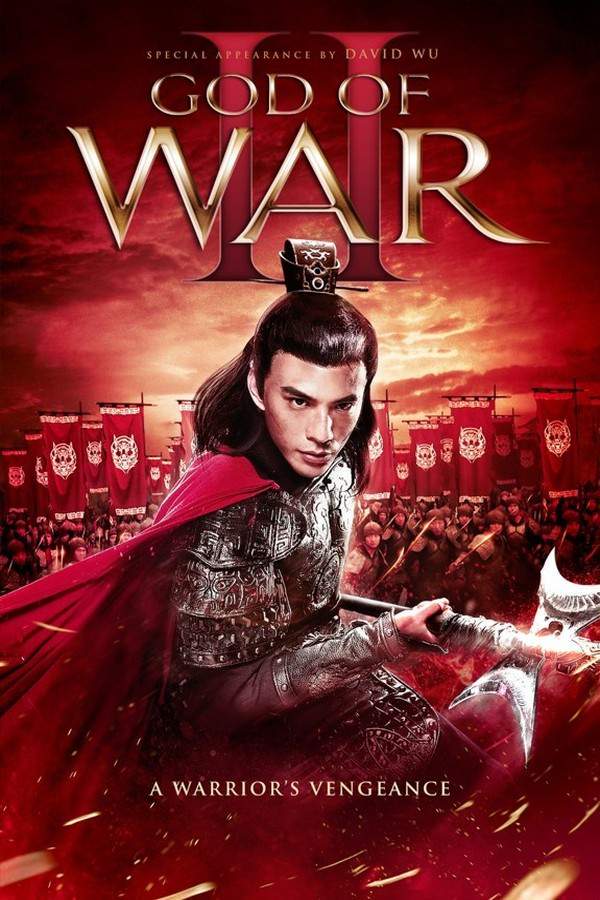
God of War (2017) movie poster

Plot Summary

God of War (2017) Plot Summary Explained

Release, runtime and language
2017 · 128 min · English
Echo score 64
JustWatch #5,759 75
Directed by
Gordon Chan
Starring
Regina Wan, Yasuaki Kurata, Ban Wang, Junxiao Liu, Keisuke Koide, Man Cheuk Chiu
Budget
$25M

Pirates terrorize the Chinese coast, preying on vulnerable villages and instilling fear in the population. Commander Yu, a skilled and unconventional officer, teams up with a clever young general to thwart their attacks. Facing off against ruthless invaders, they must use strategy and strength to protect their people and restore order in this action-packed historical epic from director Gordon Chan.

On this page (6)
  1. 1 Where to watch
  2. 2 What happens: full plot
  3. 3 Plot questions answered
  4. 4 Movie threads
  5. 5 Movies like God of War
  6. 6 Every angle

Where to watch

Where to Watch God of War (2017)

Where can you watch God of War? Stream, rent or buy it in the US, including on Amazon Prime Video, Hi-YAH and Fawesome: current JustWatch availability with up-to-date prices.

Streaming availability powered by JustWatch

Full plot summary · contains spoilers

What Happens in God of War: Full Plot Summary

The whole story of God of War (2017) explained, from the opening scene to the final frame: every key event, every twist and what it all adds up to. Read it as a quick recap before the sequel, to check a scene you missed, or to finally understand what really happened.

In 16th century China, a Ming army pursues a dangerous mission as they assault a fortress held by the wokou, a pirate faction that raids the coast. The Ming force is commanded by General Yu Dayou, Sammo Hung Kam-Bo. The siege ends in heavy Ming casualties, and the fortress holds. It is revealed that the wokou are a composite force: Japanese ronin, disgruntled Han Chinese soldiers, and a cadre of samurai under Commander Kumasawa, who are working to free a Chinese nobleman who has funded the daimyo.

After another failed assault, a new Ming commander, General Qi Jiguang, arrives to rally the people. He begins to recruit hardened villagers to form a new army, a move born of necessity and resolve rather than wealth or status. Qi launches a night raid that disrupts the Japanese fortress, forcing a retreat. Yet his leadership is questioned: he is nearly arrested for failing to capture the target and is even accused of colluding with the enemy, a precarious stance that tests his authority and the loyalty of those around him.

Meanwhile, the Japanese divide into three groups and plan simultaneous strikes. Kumasawa's forces aim at Xinhe and Taizhou at the same time, while the ronin attack Ninghai. Taizhou serves as the provincial capital, and Xinhe houses the families of Qi's soldiers, including Qi's wife, Regina Wan. Commander Kumasawa believes the three-pronged assault will stretch Ming defenses too thin, while his ward, young Lord Imagawa, argues for a single massive blow against Taizhou. The tension between strategic risk and bold ambition threads through every decision, setting the stage for a brutal contest of wills.

Qi learns of the plan and moves to intercept the ronin, defeating them before returning to Taizhou to defend the capital, even though this leaves Xinhe vulnerable. Qi's wife courageously helps rally the soldiers' families to hold Xinhe together through a desperate, improvised defense, turning homes and workshops into makeshift barricades and fueling a stubborn resistance.

At Taizhou, Qi is pushed to the brink, nearly overwhelmed, until Lord Imagawa defies Commander Kumasawa to press the attack with the surviving ronin. Yet last-minute reinforcements arrive, and the Ming forces prevail, forcing the Japanese to retreat to their ships. Qi then hurries back to Xinhe to relieve the city from the invaders, rallying his troops with steady resolve.

Not content with retreating, Qi and his forces strike as the Japanese attempt to load onto their ships. Commander Kumasawa sends Lord Imagawa to safety before engaging Qi in a final duel, which ends with Kumasawa's defeat and his suicide. The film closes with Qi's wife waiting at home for her husband, hopeful for his return, as life in the village settles into a fragile, guarded peace.
Last updated: October 09, 2025 at 16:20

Was this helpful?

Plot questions answered

God of War Plot Explained: Your Questions Answered

The questions people ask most about God of War (2017): what happens in the confusing scenes, why the characters do what they do, the twists, hidden details and what the ending means. Each answer contains spoilers.

Q1

Why did Qi Jiguang prioritize defending Taizhou over Xinhe where his wife was?

Qi Jiguang chose to defend Taizhou because it was the provincial capital and a much more significant strategic target than Xinhe. While his wife was indeed in Xinhe with the families of other soldiers, Taizhou's fall would have meant losing the entire region to the Japanese. Qi made the difficult decision to protect the larger population center first, trusting that his wife would help organize the defense of Xinhe alongside the soldiers' families until reinforcements could arrive.

Foreshadowing: Earlier in the film, Qi is shown recruiting villagers and building a new army, demonstrating his focus on protecting the broader population rather than personal interests.

  • qi jiguang
  • taizhou
  • xinhe
  • strategic decision
  • defense
Q2

Why was Qi Jiguang accused of colluding with the enemy?

Qi Jiguang was accused of colluding with the Japanese because his sneak attack on the fortress, while successful in forcing a retreat, failed to capture the Japanese commanders or eliminate the main threat. His enemies at the Ming court used this perceived failure as evidence of betrayal, nearly resulting in his arrest. The accusation stemmed from political jealousy and skepticism about his unconventional military tactics rather than actual evidence of treason.

Foreshadowing: The initial assault by General Yu Dayou had already failed badly, establishing that the wokou were formidable opponents even to experienced commanders.

  • qi jiguang
  • accusation
  • collusion
  • japanese
  • arrest
Q3

What was the Japanese three-pronged attack plan?

Commander Kumasawa devised a three-pronged assault to overwhelm Ming defenses: his main forces would attack both Xinhe and Taizhou simultaneously, while the ronin would strike Ninghai. The strategy aimed to stretch the already thin Ming forces too thin to respond effectively to all three threats. Kumasawa believed this division would prevent the Ming from concentrating their defenses on any single location.

Foreshadowing: Earlier, the wokou are revealed to be a composite force of Japanese ronin, Han Chinese soldiers, and samurai, diverse enough to execute coordinated multi-front attacks.

  • three-pronged attack
  • kumasawa
  • xinhe
  • taizhou
  • ninghai
Q4

How did Qi's wife help defend Xinhe?

When the Japanese attacked Xinhe and Qi was unable to return in time, his wife took initiative to rally the soldiers' families into an improvised defense force. She organized them to convert homes and workshops into makeshift barricades, creating a stubborn resistance that held the city together until Qi could arrive with reinforcements. Her leadership transformed civilian refugees into defenders.

Foreshadowing: The film establishes early that Qi recruits hardened villagers, setting up that the families of these fighters would also possess a fighting spirit.

  • qi wife
  • xinhe
  • defense
  • families
  • improvised
Q5

Why did Lord Imagawa defy Commander Kumasawa during the Taizhou battle?

Lord Imagawa defied Kumasawa because he believed in seizing total victory rather than accepting a cautious strategy. While Kumasawa preferred a calculated approach, Imagawa pressed the attack on Taizhou with the surviving ronin, believing a single decisive blow against the provincial capital would end the campaign. His youthful ambition and desire for glory drove him to override the more experienced commander's orders.

Foreshadowing: Earlier, the tension between Kumasawa's caution and Imagawa's boldness is established when Imagawa argues for a massive single attack rather than the three-pronged approach.

  • lord imagawa
  • kumasawa
  • defiance
  • taizhou
  • attack
Q6

Why did Commander Kumasawa commit suicide after being defeated?

After Qi defeated Kumasawa in their final duel, Kumasawa chose seppuku (suicide) rather than capture. This was consistent with the samurai code of honor, if a warrior could not achieve victory, they must accept death with dignity rather than live in defeat. Before his death, Kumasawa sent Lord Imagawa to safety, ensuring the young lord survived to potentially fight another day.
Foreshadowing: Kumasawa's role as a samurai commander and his leadership of the Japanese forces established early on that he would follow the warrior code.

  • kumasawa
  • suicide
  • defeat
  • samurai
  • honor
Q7

What made the wokou forces so difficult for the Ming army to defeat?

The wokou were not a single pirate faction but a composite army consisting of Japanese ronin, disgruntled Han Chinese soldiers, and samurai under Commander Kumasawa. This diversity gave them multiple combat styles, samurai discipline, ronin swordsmanship, and Chinese local knowledge. Their combined strength allowed them to hold fortified positions, execute coordinated attacks, and resist multiple assault waves that had defeated ordinary Ming forces.

Foreshadowing: The opening sequence shows the wokou fortress holding against General Yu Dayou's assault, demonstrating their defensive capabilities from the start.

  • wokou
  • ronin
  • samurai
  • kumasawa
  • pirates
Q8

How was Qi Jiguang able to defeat the ronin at Ninghai?

Qi Jiguang learned of the Japanese three-pronged plan and strategically intercepted the ronin force heading toward Ninghai before they could reach their target. By moving quickly and striking first, he caught the ronin in transit rather than in a defensive position, defeating them decisively. This victory allowed him to then pivot back toward Taizhou to defend the capital.

Foreshadowing: Qi's earlier sneak attack on the Japanese fortress demonstrated his ability to use surprise and unconventional tactics to overcome numerically superior or more experienced enemies.

  • qi jiguang
  • ronin
  • ninghai
  • intercept
  • battle
Q9

What role did reinforcements play in defending Taizhou?

At Taizhou, Qi was nearly overwhelmed by Lord Imagawa's aggressive attack despite having initially held the line. Just when the situation seemed dire, last-minute Ming reinforcements arrived, turning the tide of battle and forcing the Japanese to retreat. These reinforcements provided the critical numerical advantage needed to push back the invaders and secure the provincial capital.

Foreshadowing: The three-pronged attack was specifically designed to overwhelm Ming defenses by dividing their forces, making reinforcements difficult to summon.

  • reinforcements
  • taizhou
  • battle
  • turn tide
Q10

How did Qi Jiguang manage to relieve Xinhe after defending Taizhou?

After securing Taizhou with the help of reinforcements, Qi Jiguang did not rest. He pursued the fleeing Japanese forces, preventing their escape by sea, then rushed back to Xinhe to relieve the city still under siege by Kumasawa's remaining troops. His swift movement between battlefields demonstrated the physical and strategic toll of defending multiple fronts simultaneously.

Foreshadowing: Qi's decision to return to Taizhou instead of staying in Xinhe earlier had already established the pattern of him moving between threatened locations.

  • qi jiguang
  • xinhe
  • relief
  • pursuit
  • return

Movie threads

More Movies Like God of War, by Mood & Story

Curated lists built around what makes God of War tick: the same mood, the same kind of story or the same emotional payoff. Each list explains why these movies belong together.

Desperate Stand Movies like God of War

Stories of heroic resistance where strategy and sacrifice are the only hope. If you enjoyed the high-stakes defense in God of War, explore more movies about desperate last stands. These films feature strategic commanders, courageous soldiers, and tense battles against overwhelming forces. Find similar historical epics and war stories where the fate of many rests on the bravery of a few.

  • tense
  • strategic
  • desperate
  • patriotic
  • urgent
  • somber
  • Tone: tense, resolute, somber
  • Pacing: fast, urgent
Why these movies?

The story pattern: Narratives in this thread typically involve a fortified position, a vulnerable community, or a homeland under imminent threat. The protagonists must quickly devise a strategy to counter a superior enemy, often facing significant casualties and moments of near-defeat before a hard-won victory.

Why they belong together: These movies are grouped by their core premise of a defensive struggle against a more powerful foe. They share a tense, urgent mood, heavy emotional weight from the stakes involved, and a focus on leadership and strategy in the face of chaos.

Tense Historical War Movies like God of War

Fast-paced historical conflicts where every decision carries life-or-death consequences. Fans of the relentless action and tense atmosphere in God of War will enjoy this selection of similar historical war epics. Discover films that capture the urgency of combat, the burden of leadership, and the brutal reality of historical warfare. Find your next intense, action-packed history lesson.

  • tense
  • action-packed
  • urgent
  • somber
  • historical
  • war
  • Tone: tense, somber, urgent
  • Pacing: fast, relentless
Why these movies?

The story pattern: The narrative pattern follows a military campaign or a series of connected battles. The plot is propelled by enemy attacks and counter-strategies, creating a sense of constant pressure. Character arcs often revolve around the weight of command and the psychological toll of war, even when the overall conflict is won.

Why they belong together: These films are united by their specific combination of a historical setting, a fast pacing driven by warfare, and a consistently tense tone. They deliver an experience that is both educational and thrilling, focusing on the visceral reality of combat and leadership under duress.

If you liked this

Movies Like God of War

Similar movies to God of War: the same genre, themes or kind of story. Each one comes with its own plot summary, timeline and ending explained.

Browse all movie summaries

Every angle

God of War (2017) Explained: Plot, Timeline & Characters

Everything about God of War in one place: what happens in the plot summary, the timeline in chronological order, the characters and meaning and a spoiler-free summary. What's After the Movie adds the cast, box office and post-credit scenes.

Coming soon on iOS and Android

The Plot Explained Movie Summary App

Plot summaries, endings explained and timelines on your phone. Catch up on any movie in minutes, save your favorites and never miss a twist again.

Be the first to know when we launch. Your email stays private, always.

Learn more about the app