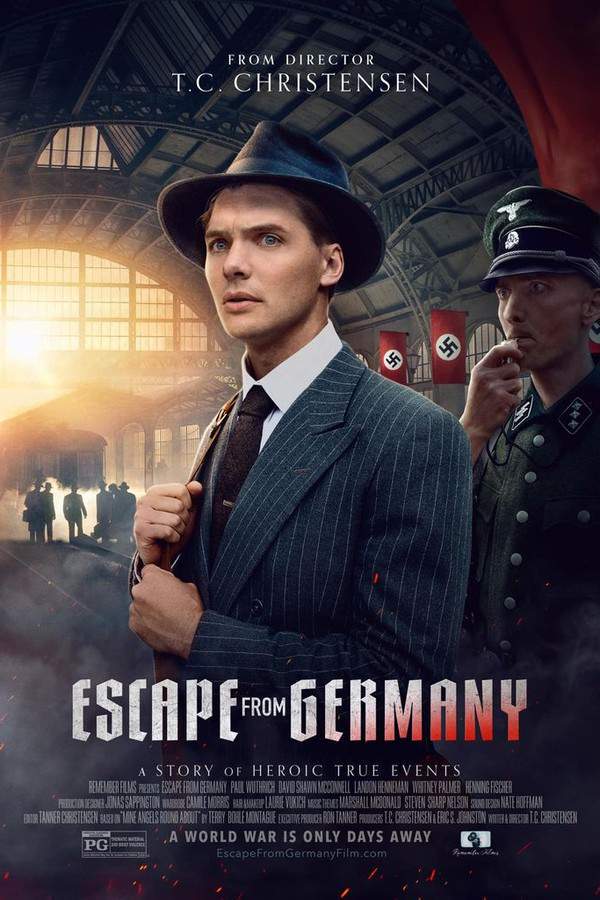
During Kristallnacht in Berlin in 1938, Varian Fry, a journalist, witnesses the Nazis’ brutal treatment of Jews. He is helpless and physically sick as the SA brownshirts openly attack and beat their victims. The horrifying scene leaves him with a deep resolve to do something to help the Jews.
Back in the United States, Fry tries to mobilize his influential friends, only to meet apathy and, in some cases, outright antisemitism. He brings a plan to the State Department, armed with a list of notable names, and earns a crucial ally in First Lady Eleanor Roosevelt, who intervenes on his behalf. She specifically asks Fry to check on Lion Feuchtwanger, who has been imprisoned by the French authorities in Camp des Milles. The context grows more urgent as Fry learns that the Nazis are already targeting artists and intellectuals, and he begins to picture a risky, clandestine rescue operation.
In 1940, Fry heads to Marseille in Vichy France—the unoccupied zone where many refugees have sought shelter—bringing money and a hope to bribe officials into allowing passage. The mission is delicate. U.S. Consul Jamieson proves difficult and uncooperative, but Vice Consul Harry Bingham becomes an ally, having previously helped others escape. The operation gains momentum as the Chagalls and other expatriates weigh their chances, and word begins to spread that an American is actively working to help Jews escape. Fry sets up a makeshift office out of his hotel room and is soon approached by Miriam Davenport, a pivotal ally who helps him screen the crowded lines of refugees.
Two more accomplices join the effort: Beamish, a clever con-man Fry names to help with forged documents, and Bill Freier, a skilled counterfeit expert. With picture-perfect passes and identification cards, Fry starts directing the evacuation, sending Jewish artists from France to Spain where they can arrange transport to the United States. The authorities on both sides—French and German—grow suspicious of Fry’s activities and assign investigators to shadow him, including Nazi officer Marius Franken, a figure Fry must outmaneuver to keep the operation alive. The tension rises as the team navigates ever-tightening controls and risked captures.
Despite the danger, the operation gains momentum. Even Chagall joins forces with other exiles like Heinrich Mann, all seeking passage out of Marseille. Fry and Davenport become a steadfast team, shepherding a large group of frightened refugees—first by train, then on a grueling hike through a mountain forest toward a checkpoint that can grant entry to neutral Spain. If the documents pass scrutiny, the group will finally be free to cross the border.
The journey is perilous and punctuated by near misses, but the refugees persevere. In just under a year, Fry’s clandestine network—with Davenport at his side—facilitates the escape of more than 2,000 artists, authors, scientists, and intellectuals from Vichy France. The closing credits acknowledge many of the notable figures saved, including those who would go on to influence culture and history, underscoring the breadth and impact of Fry’s courageous initiative.