Plot Explained Spoilers guaranteed!
Plot Explained

Browse by genre

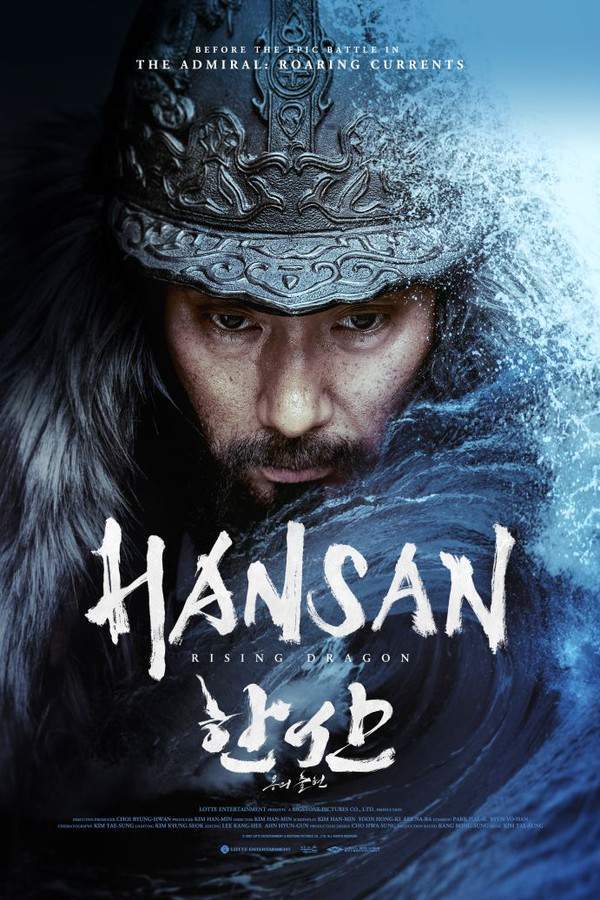
Hansan: Rising Dragon (2022) movie poster

Plot Summary

Hansan: Rising Dragon (2022) Plot Summary Explained

Release, runtime and language
2022 · 130 min · Korean
Echo score 70
JustWatch #6,026 3
Directed by
Han-min Kim
Starring
Hae-il Park, Sung-kee Ahn, Taecyeon, Yo-han Byuen

In 1592, Admiral Yi Sun-sin leads his Korean fleet against the formidable Japanese navy in the crucial Battle of Hansando. Facing seemingly insurmountable odds, the determined admiral devises a daring plan, utilizing his revolutionary geobukseon "turtle ships" to launch a surprise attack. This innovative maneuver shifts the balance of power, allowing for a remarkable comeback against a vastly superior force and marking a turning point in the Imjin War.

On this page (6)
  1. 1 Where to watch
  2. 2 What happens: full plot
  3. 3 Plot questions answered
  4. 4 Movie threads
  5. 5 Movies like Hansan: Rising Dragon
  6. 6 Every angle

Where to watch

Where to Watch Hansan: Rising Dragon (2022)

Where can you watch Hansan: Rising Dragon? Stream, rent or buy it in the US, including on Amazon Prime Video, Hi-YAH and Rakuten Viki: current JustWatch availability with up-to-date prices.

Streaming availability powered by JustWatch

Full plot summary · contains spoilers

What Happens in Hansan: Rising Dragon: Full Plot Summary

The whole story of Hansan: Rising Dragon (2022) explained, from the opening scene to the final frame: every key event, every twist and what it all adds up to. Read it as a quick recap before the sequel, to check a scene you missed, or to finally understand what really happened.

As the chaos from the fierce sea battle at Sacheon subsides in the sweltering summer of 1592, Daimyo Wakisaka Yasuharu (Sung-kee Ahn) arrives in Busan to take control of the Japanese naval base with an iron grip. His objective is straightforward: to eliminate the threat of Joseon commander Yi Sun-sin (Hae-il Park), whose indomitable spirit and strategic mind have unsettled the Japanese forces. Wakisaka's initial mission involves gathering intelligence on the enemy, leading him to interview frightened survivors from the recent battle. They recount chilling tales of a formidable new Joseon battleship, labeled the "bokkaisen" (sea monster) and "mekurabune" ("blind ship"). Despite the dread they inspire, the discussions also reveal significant weaknesses in the design of this ship. Its inflexible dragon head can get stuck after violent ramming, and its flank armor is alarmingly vulnerable. Yet, determined to turn the tide, Wakisaka resolves to collaborate with the remaining Japanese navy in an effort to secure a decisive victory and subsequently set his sights on Ming China.

Simultaneously, Yi is gathering his finest admirals at the Left Jeolla Navy base in Yeosu for a critical meeting concerning their imminent naval actions. Won Gyun (Taecyeon), who leads the Western Fleet, passionately advocates for a defensive approach rather than being the first to strike. As news of the Japanese assault on Pyongyang spreads and the king's hasty retreat to Uiju becomes known, many commanders begin to acknowledge the merit of his argument. However, Yi remains undeterred and focused on crafting an innovative strategy, calling it "Crane Wing", a daring crescent-shaped formation to trap the enemy from multiple sides. His audacity earns him praise from Junsa (yohan-byuen), a samurai he had previously wounded during battle and who had since been taken captive at Sacheon. Just as Yi seems to be gaining traction, the clever maneuvering of Japanese spies leads to chaos as they infiltrate his base, liberating their comrades, sabotaging the turtle ships, and stealing essential construction documents. In a hasty reaction, Yi travels to Suncheon to consult with Na Dae-yong (the inventor of the vessel), realizing the imperative to conceal his turtle ships from Wakisaka until their design can truly shine.

While Wakisaka scrambles to understand Yi's intricate battle plans, his aggressiveness is further amplified by reinforcements led by Katō Yoshiaki, his fierce rival, who arrives with superior ships and artillery along with Kuki Yoshitaka. They formulate a vigorous two-pronged attack targeting the Left Jeolla Navy headquarters with their full force.

Yet, unbeknownst to Wakisaka, Yi's skilled operatives—Lim Jun-young and Jeong Bo-reum—have successfully infiltrated his ranks and are feeding him vital information. As suspicions rise, Wakisaka decides to sever ties with Katō and Kuki, seizing command of their fleets and resources in a bold move to assert his dominance. Additionally, Yi remains alert, bracing himself for a trap that he suspects will be laid by Wakisaka at the significant Gyeonnaeryang Strait. Formerly aligned with Wakisaka, Junsa discreetly shares critical details with Yi, alerting him about the imminent ambush.

Despite Junsa’s warning reaching Jeonju—the fortress that shields the land access to the naval base—his pleas for caution are ignored as Wakisaka launches a surprise attack. Junsa finds himself captured by Joseon’s Righteous Army, where he encounters Hwang Bak, the militia's commander, who, while skeptical, decides to unite forces with Junsa.

Cunningly, Yi responds to Wakisaka's advance by drawing him into the open waters around Hansan Island. When Wakisaka's fleet approaches the strait, the commanders Eo Yeong-dam and Lee Un-ryong serve as bait, though they are almost too powerful for Wakisaka to manage. Unwavering in purpose, Yi deploys the upgraded turtle ships as Na advised, awaiting the opportune moment to initiate his assault.

As the battle ensues, the negligence of Won Gyun provides a window for Wakisaka's troops to invade the Joseon lines. Yet, Yi quickly counters using the improved turtle ships, merging the flanks of Eo and Lee as they culminate the Crane Wing formation. Cornered and outmaneuvered, Wakisaka faces a devastating defeat, with his forces shattered and himself left injured and afloat.

In his final, desperate bid, as Wakisaka attempts to ram Yi's flagship, an arrow from Yi finds its target, leaving the Japanese commander reeling. Back on land, the Righteous Army, rallying around Hwang Bak, successfully defends the passage, even at the cost of their commander's life.

This hard-won victory emboldens Yi as he continues his assault, striking at Angolpo and Busan, ultimately compelling the Japanese to halt further naval engagements. As he withdraws to his base, Yi reflects on the formidable achievements in his campaign, knowing that his most remarkable triumph - the establishment of a new base on Hansan Island within the year ahead - stands to showcase the resilience of his unwavering resolve.
Last updated: November 17, 2024 at 21:17

Was this helpful?

Plot questions answered

Hansan: Rising Dragon Plot Explained: Your Questions Answered

The questions people ask most about Hansan: Rising Dragon (2022): what happens in the confusing scenes, why the characters do what they do, the twists, hidden details and what the ending means. Each answer contains spoilers.

Q1

Why did Admiral Yi Sun-sin use the Crane Wing formation against Wakisaka?

Yi designed the Crane Wing as a crescent-shaped formation to trap the Japanese fleet from multiple sides simultaneously. This bold tactic allowed his commanders Eo Yeong-dam and Lee Un-ryong to act as bait, drawing Wakisaka's forces into an encirclement where the upgraded turtle ships could attack from the flanks. The formation maximized the effectiveness of the turtle ships while neutralizing Wakisaka's numerical advantage.

Foreshadowing: Yi first introduced the Crane Wing strategy during the meeting at Yeosu, where he faced skepticism from commanders advocating for a defensive approach.

  • yi sun-sin
  • crane wing formation
  • turtle ships
  • battle tactics
  • strategy
Q2

What weaknesses in the turtle ships did Wakisaka discover?

From interviewing survivors of the battle at Sacheon, Wakisaka learned that the turtle ship's dragon head could get stuck after violent ramming, and its flank armor was vulnerable to attack. These intelligence gaps motivated Wakisaka to launch a decisive attack before Yi could address these design flaws. However, Yi consulted with inventor Na Dae-yong and upgraded the ships before the Battle of Hansan Island.

Foreshadowing: The survivors' accounts at Busan provided Wakisaka with false confidence about the turtle ships' weaknesses.

  • turtle ships
  • weaknesses
  • wakisaka
  • na dae-yong
  • bokkaisen
Q3

Why did Won Gyun's negligence almost cost Korea the battle?

Won Gyun, commander of the Western Fleet, had advocated for a defensive strategy throughout the campaign. During the battle at Hansan Island, his negligence created a gap in the Joseon lines, allowing Wakisaka's troops to invade and threaten the naval base. Yi was forced to quickly adapt by deploying the turtle ships and executing the Crane Wing formation to compensate for this lapse.

Foreshadowing: Won Gyun's defensive stance at the Yeosu meeting foreshadowed his reluctance to fully commit to aggressive tactics.

  • won gyun
  • negligence
  • western fleet
  • battle
  • hansan island
Q4

Why did Wakisaka turn against Katō Yoshiaki and Kuki Yoshitaka?

Wakisaka's aggressive ambition drove him to seize control of Katō and Kuki's fleets rather than cooperate with them. After receiving reinforcements from these rival commanders, Wakisaka decided to take sole command of their superior ships and artillery to pursue his own goal of defeating Yi Sun-sin and then attacking Ming China. His rivalry with Katō made collaboration impossible.

Foreshadowing: Wakisaka's earlier interview with survivors already showed his determination to secure victory alone.

  • wakisaka
  • kato yoshiaki
  • kuki yoshitaka
  • fleet
  • betrayal
Q5

How did Yi's spies inside Wakisaka's camp help win the battle?

Yi Sun-sin's operatives Lim Jun-young and Jeong Bo-reum successfully infiltrated Wakisaka's ranks and provided crucial intelligence about Japanese movements and battle plans. This information allowed Yi to anticipate Wakisaka's trap at the Gyeonnaeryang Strait and prepare his counter-ambush at Hansan Island. The spy network gave Yi strategic awareness that directly countered Wakisaka's offensive.
Foreshadowing: The timeline notes the spies were active before the main battle, feeding information that shaped Yi's decisions.

  • lim jun-young
  • jeong bo-reum
  • spies
  • intelligence
  • infiltration
Q6

Why did Junsa, a captured samurai, help Admiral Yi?

Junsa was a samurai whom Yi had wounded at Sacheon and taken captive. Despite being Yi's prisoner, Junsa developed respect for the admiral's tactical genius and honorable conduct. When Wakisaka ignored his warnings about the ambush at Gyeonnaeryang Strait, Junsa discreetly shared critical details with Yi, alerting him to the impending trap. His change of allegiance was motivated by admiration for Yi's leadership.
Foreshadowing: Junsa's praise of Yi's Crane Wing strategy at Yeosu hinted at his growing respect for the Korean commander.

  • junsa
  • samurai
  • prisoner
  • loyalty
  • intelligence
  • warnings
Q7

What happened to Wakisaka after his defeat at Hansan Island?

Wakisaka's forces were shattered by Yi's Crane Wing formation and the devastating turtle ship assault. Cornered and outmaneuvered, the Japanese commander was left injured and afloat on the open water. In a final desperate attempt to ram Yi's flagship, Wakisaka was struck by an arrow from Yi himself, completing his downfall.

Foreshadowing: Yi's successful execution of the Crane Wing at Hansan Island made Wakisaka's defeat inevitable.

  • wakisaka
  • defeat
  • arrow
  • flagship
  • death
  • hansan island
Q8

How did the Righteous Army become involved in the naval battle?

When Junsa was captured by the Righteous Army while seeking help to warn Yi about Wakisaka's ambush, he convinced militia commander Hwang Bak to unite forces. On land, the Righteous Army successfully defended the passage against Wakisaka's forces, though they lost their commander Hwang Bak in the process. Their victory complemented Yi's naval triumph.

Foreshadowing: Junsa's capture at Jeonju directly led to the alliance with the Righteous Army.

  • righteous army
  • hwang bak
  • junsa
  • land battle
  • defense
Q9

Why were the turtle ships considered game-changing in the battle?

The turtle ships were revolutionary warships with a dragon head prow and armored tops, designed by Na Dae-yong. Referred to by Japanese survivors as the "bokkaisen" (sea monster) and "mekurabune" (blind ship), they could ram enemy vessels and withstand cannon fire. Yi deployed the upgraded versions at Hansan Island, using them to break through Wakisaka's fleet and execute the Crane Wing encirclement.

Foreshadowing: Wakisaka's obsession with learning about the turtle ships' weaknesses in Busan foreshadowed their central role in his defeat.

  • turtle ships
  • geobukseon
  • na dae-yong
  • weapon
  • naval
  • bokkaisen
Q10

Why did Yi lure Wakisaka to Hansan Island instead of fighting near the base?

Yi strategically drew Wakisaka into the open waters around Hansan Island, where he could execute his Crane Wing formation away from the narrow straits where the Japanese might have the advantage. This location allowed Yi to use the turtle ships in deep water while trapping Wakisaka's larger fleet in a pincer movement. Hansan Island provided the perfect terrain for Yi's tactical plan.

Foreshadowing: Yi suspected a trap at Gyeonnaeryang Strait and deliberately chose a different battlefield.

  • hansan island
  • location
  • strategy
  • battle
  • trap
  • strait
Q11

What was the significance of the Battle of Hansan Island in the Imjin War?

The victory at Hansan Island marked a turning point in the Imjin War, halting Japanese naval engagements and boosting Korean morale. After defeating Wakisaka's fleet, Yi continued his assault on Angolpo and Busan, compelling the Japanese to abandon further naval operations. This established Yi Sun-sin as a legendary strategist and set the stage for his eventual establishment of a new base on Hansan Island.

Foreshadowing: The summary concludes with Yi's reflection that his greatest achievement, establishing a base on Hansan Island, would come within the year.

  • imjin war
  • historical significance
  • victory
  • turning point
  • japanese navy
  • legacy

Movie threads

More Movies Like Hansan: Rising Dragon, by Mood & Story

Curated lists built around what makes Hansan: Rising Dragon tick: the same mood, the same kind of story or the same emotional payoff. Each list explains why these movies belong together.

Tense Underdog Military Victories like Hansan: Rising Dragon

Gripping tales of outmatched forces achieving impossible victories through strategy and will. If you enjoyed the strategic tension and triumphant underdog story of Hansan: Rising Dragon, explore movies like it. These films feature gripping historical battles, brilliant military leaders, and stories of overcoming overwhelming odds, delivering a similar mix of high-stakes action and hopeful victory.

  • tense
  • strategic
  • underdog
  • historical
  • urgent
  • hopeful
  • Tone: tense, determined, hopeful
  • Pacing: fast, strategic
Why these movies?

The story pattern: The narrative follows a clear path: a capable but outnumbered force faces an existential threat. The focus is on meticulous planning, strategic innovation, and moments of high suspense leading to a decisive, history-altering battle. The emotional journey is one of mounting pressure culminating in a resonant victory.

Why they belong together: Movies in this thread share a core appeal of strategic intelligence prevailing over brute force. They create a specific, intense vibe through a combination of high-stakes warfare, a tense and fast-paced build-up, and a ultimately hopeful, satisfying conclusion that celebrates resilience and tactical genius.

Epic Historical Battle Movies like Hansan: Rising Dragon

Large-scale cinematic recreations of pivotal battles that changed the course of history. For viewers seeking the immersive experience of Hansan: Rising Dragon, this section features movies centered on decisive historical battles. These films capture the scale, strategy, and high-stakes tension of warfare, offering a direct and intense look at pivotal moments in history with a straightforward, action-driven narrative.

  • historical
  • large-scale
  • intense
  • strategic
  • immersive
  • urgent
  • Tone: tense, urgent, grandiose
  • Pacing: fast, linear
Why these movies?

The story pattern: The narrative is often straightforward, building chronologically toward the central battle with a clear focus on the historical figures, troop movements, and key decisions that led to the outcome. Character arcs are frequently secondary to the logistical and strategic unfolding of the conflict, serving the larger historical event.

Why they belong together: These films are grouped by their shared commitment to recreating a specific, important historical battle with cinematic scale and accuracy. They offer a similar viewing experience defined by high intensity, fast pacing, a tense tone, and a focus on the mechanics and outcome of warfare over complex personal subplots.

If you liked this

Movies Like Hansan: Rising Dragon

Similar movies to Hansan: Rising Dragon: the same genre, themes or kind of story. Each one comes with its own plot summary, timeline and ending explained.

Browse all movie summaries

Every angle

Hansan: Rising Dragon (2022) Explained: Plot, Timeline & Characters

Everything about Hansan: Rising Dragon in one place: what happens in the plot summary, the timeline in chronological order, the characters and meaning and a spoiler-free summary. What's After the Movie adds the cast, box office and post-credit scenes.

Coming soon on iOS and Android

The Plot Explained Movie Summary App

Plot summaries, endings explained and timelines on your phone. Catch up on any movie in minutes, save your favorites and never miss a twist again.

Be the first to know when we launch. Your email stays private, always.

Learn more about the app