Plot Explained Spoilers guaranteed!
Plot Explained

Browse by genre

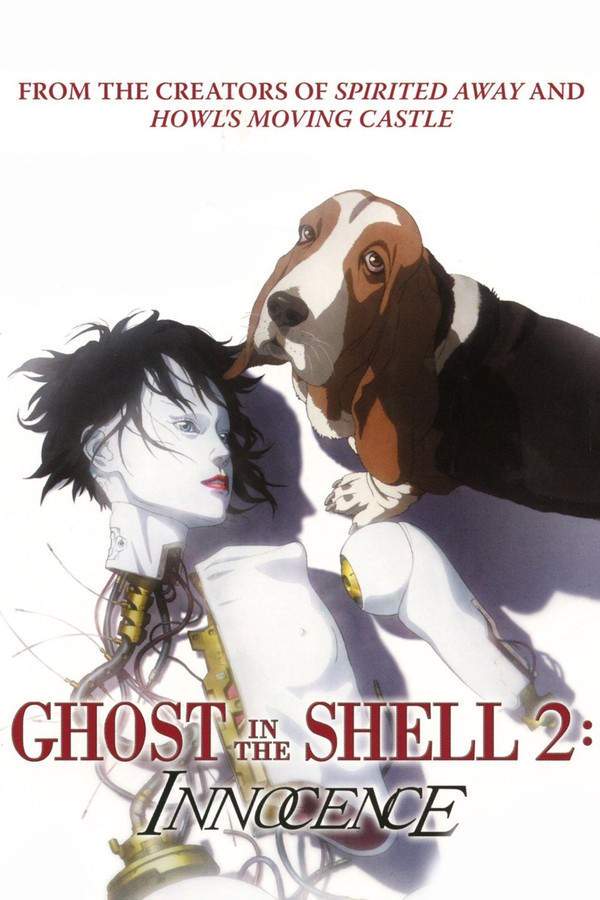
Ghost in the Shell 2: Innocence (2004) movie poster

Plot Summary

Ghost in the Shell 2: Innocence (2004) Plot Summary Explained

Release, runtime and language
2004 · 100 min · Chinese
Loading streaming availability…
Directed by
Mamoru Oshii
Starring
Akio Ôtsuka, Atsuko Tanaka, Tamio Ôki

In 2032, the distinction between humans and technology blurs as cybernetic enhancements become commonplace. Cyborg detective Batou investigates the case of a gynoid, a highly advanced and lifelike female robot, who murders her owner. His inquiry leads him down a complex path, revealing a larger conspiracy involving artificial intelligence and challenging the definition of what it means to be human. The investigation pushes the boundaries of identity and existence, forcing Batou to confront unsettling truths about the future.

On this page (6)
  1. 1 Where to watch
  2. 2 What happens: full plot
  3. 3 Plot questions answered
  4. 4 Movie threads
  5. 5 Movies like Ghost in the Shell 2: Innocence
  6. 6 Every angle
Loading streaming availability…

Full plot summary · contains spoilers

What Happens in Ghost in the Shell 2: Innocence: Full Plot Summary

The whole story of Ghost in the Shell 2: Innocence (2004) explained, from the opening scene to the final frame: every key event, every twist and what it all adds up to. Read it as a quick recap before the sequel, to check a scene you missed, or to finally understand what really happened.

An insect-like single-seat helicopter glides over a high-rise city under the cover of night. Below, Batou navigates through a crowded street until he arrives at a crime scene. Police inform him that a suspect has taken the lives of two officers. Clutching his shotgun, Batou bravely enters a dark alley alone, where he discovers the bodies of the slain police officers and encounters a mysterious female figure sitting quietly. She suddenly attacks him, but Batou easily subdues her. As she whispers, "Help me," he realizes she is a cyborg.

The story unfolds with a striking title sequence that illustrates the stylized birth of a cyborg. Within Section 9, a briefing reveals a concerning pattern of eight recent homicides tied to the Locus Solus #2052 "Hadaly" type gynoids, each of which has self-destructed. Aramaki explains that Section 9 has assumed responsibility for the case due to the involvement of high-profile victims, including a politician and a retired public servant, suggesting possible ties to terrorism. He instructs Batou and Togusa to investigate the gynoids while Ishikawa and Azuma delve into background checks.

In the car, Togusa and Batou discuss the absence of the Major Kusanagi. Their next stop is the police forensics lab, where they encounter a weary cyborg technician, Miss Haraway, who has been analyzing the captured gynoid from the alley. Miss Haraway speculates about the gynoids' troubling ability to override their moral code, designed to prevent them from harming humans, and discusses the concept of robot suicide. She reveals that these gynoids, deemed "sexaroids," possess organs that do not serve a practical purpose, shedding light on the families of the victims who have opted for settlements. Intriguingly, the brain of the alley-gynoid was cleared except for the audio phrase "help me."

As they strategize their next move, the Section 9 dispatcher alerts them to a new 602 call concerning the Locus Solus inspector found dead at a boathouse. Upon arrival, they find Ishikawa already on the scene. The body belongs to Jack Volkerson, aged 54, who had been missing for five days. The gruesome scene highlights blood splatters in the kitchen sink and bathroom. Batou discovers a 3D photo of a young girl, prompting a grim exit just as the forensic CSI team arrives.

Later, Ishikawa drives Batou home. They pause to buy dog food, where Ishikawa reassures Batou that dry food is a better option. Batou misleads him about the location of his apartment. Upon entering his flat, he is welcomed by a playful basset hound. Batou takes time to prepare a meal for his dog, savoring a moment of peace with a cold beer.

Within Section 9, the forensic report on Volkerson reveals that he had met a violent end—his neck was broken before dismemberment. A deformed doorknob at the scene suggests the presence of an illegal cybernetic hand. Adding to the intrigue, a car linked to the local yakuza group "Kojinkai" was discovered nearby, hinting at a potential revenge motif, since one gynoid had already slain the previous head of the Kojinkai. Aramaki instructs Batou and Togusa to keep their investigation going while the rest of the team returns to routine work. In a moment of concern, Aramaki subtly requests Togusa to monitor Batou's emotional state.

In the garage, Batou preps heavy firepower for their ongoing mission. Concerned, Togusa advises a non-confrontational approach with the yakuza. Upon reaching the Kojinkai club, tension escalates as Batou demands to see the new leader, Wakabayashi. A standoff erupts when gangsters draw weapons, but Batou is quicker, dispatching them with ruthless efficiency. After a brutal firefight, they ascend to confront the leader and a cyborg with a mutant claw. Batou easily overpowers the mutant, leaving a terrified Wakabayashi to reveal that Locus Solus hinted at Volkerson's whereabouts, though he remains oblivious to the former leader's dealings with the robot company. Aramaki later lightly reprimands them for their vigilante-style approach.

Togusa drops Batou off at his favored mini-mart, where a mysterious figure forewarns him of a kill zone. Tension escalates as gunfire erupts, resulting in multiple wounds to Batou, impairing his cyber vision. Fortunately, Ishikawa arrives, reconnecting a pistol grip to Batou's neck. In the Section 9 lab, Batou awakens sporting a new arm, having been hacked and forced to harm himself. Ishikawa and Togusa arrive with Batou's pet basset hound, whom he had frequented the store for, as it was the only place selling the special dog food.

With their next destination set towards the Northern Frontier, the duo boards a VTOL craft headed for an industrial city reminiscent of a crumbling, lawless haven. Upon landing at an old cathedral, Batou and Togusa search for an informant named Lin to inquire about a former military electronics expert named Kim. They enter a luxurious mansion and discover disturbing imagery before prowling upstairs, encountering a corpse-like cyborg. A fast realization about the body being a ruse leads Batou to confront Kim, who cryptically narrates the production of gynoids aboard a factory ship.

Haunting philosophical exchanges about dolls and humans occur as Togusa uncovers a model of the mansion, witnessing his and Batou's replayed movements within. This echoes again as they return to find the environment subtly altered, with the letterings "2501" emerging—signifying Batou's connection. The tension mounts as a battleship begins shelling the mansion, prompting reflections on his own identity and the essence of being human amidst technology. Batou realizes he has suffered a hack by a third party with ulterior motives.

With determination, Batou opts to assault the Locus Solus ship, embarking on a wild ride aboard a robo-whale underwater, while Togusa leverages his hacking skills to breach security. Batou infiltrates the ship, where robust defenses engage him, and he soon becomes surrounded by gynoids. In a surprising twist, one gynoid aligns with him, fighting back against the guards. During a moment of clarity, Batou recognizes Major Kusanagi using the gynoid as a remote avatar. Together, they fend off the onslaught of enemies while Kusanagi expertly hacks the ship's systems just as Batou exhausts his ammunition.

Kusanagi orchestrates their escape, redirecting the ship toward Japan waters to secure evidence against Locus Solus. Unlocking a room filled with machinery, they discover the gripping truth: Locus Solus has been illegally brainwashing girls supplied by the Kojinkai, transferring their consciousness into the gynoids. A faint cry of "help me" leads Batou to free a girl from the dubbing apparatus, realizing the connection to the earlier 3D photo. Before departing from the puppet body, Kusanagi reassuringly tells Batou that she will remain within the 'net, providing a sense of closure.

In a gentle denouement, Batou returns home, greeted by his cherished basset hound and observing the eerily lifelike doll placed by Togusa's daughter, a poignant reminder of the journey they have traversed.
Last updated: November 16, 2024 at 15:17

Was this helpful?

Plot questions answered

Ghost in the Shell 2: Innocence Plot Explained: Your Questions Answered

The questions people ask most about Ghost in the Shell 2: Innocence (2004): what happens in the confusing scenes, why the characters do what they do, the twists, hidden details and what the ending means. Each answer contains spoilers.

Q1

Why do the Locus Solus gynoids kill their owners?

The gynoids have been programmed to override their moral code, which normally prevents them from harming humans. This occurs because Locus Solus has been illegally brainwashing girls supplied by the Kojinkai yakuza and transferring their consciousness into the gynoids. The 'help me' phrase left in the alley gynoid's brain was the cry of one of these trapped girls. The murders are a result of this illegal consciousness transfer, causing psychological instability in the gynoids.

Foreshadowing: Miss Haraway earlier speculates about robot suicide and the ability of gynoids to override their moral programming.

  • gynoid murders
  • Locus Solus
  • moral code
  • robot suicide
  • consciousness transfer
Q2

What does the number 2501 mean in the movie?

The number 2501 appears as markings in the mansion environment and represents Batou's connection to the conspiracy. After being hacked and forced to harm himself, Batou realizes a third party has been manipulating him. The number signifies how deeply his own identity and cybernetics have been compromised by the conspirators, linking his personal stakes to the broader plot.

Foreshadowing: Batou's warning from a mysterious figure about a 'kill zone' at the mini-mart foreshadows this intrusion.

  • 2501
  • Batou hack
  • cyber intrusion
  • conspiracy
Q3

How does Major Kusanagi appear through the gynoid?

Kusanagi uses the gynoid as a remote avatar, controlling it from within the 'net' (cyberspace). During the Locus Solus ship assault, one gynoid turns against the guards and fights alongside Batou. He recognizes it's Kusanagi manipulating the gynoid body remotely. She then hacks the ship's systems to help them escape and retrieve evidence.

Foreshadowing: The film establishes early on that consciousness can exist independently in cyberspace.

  • Kusanagi
  • gynoid avatar
  • cyberspace
  • remote control
Q4

Why was Jack Volkerson killed?

Jack Volkerson was a Locus Solus inspector who discovered evidence of the company's illegal brainwashing operation. His neck was broken before dismemberment, and an illegal cybernetic hand was found at the scene. The Kojinkai yakuza killed him because they were supplying girls to Locus Solus for the consciousness transfer scheme, and Volkerson had become a liability.

Foreshadowing: The presence of a Kojinkai-linked car near the boathouse hints at this connection.

  • Jack Volkerson
  • Locus Solus inspector
  • Kojinkai
  • murder
Q5

What happens when Batou gets hacked at the mini-mart?

After receiving a warning about a kill zone, Batou is ambushed at the mini-mart and shot multiple times. During the attack, a third party remotely hacks into his cybernetics and forces him to harm himself. He wakes up in the Section 9 lab with a new arm, having been compromised by external forces. This hack was orchestrated to silence or control him as he got closer to the truth.

Foreshadowing: The mysterious figure warning him about the kill zone was likely connected to the conspirators.

  • Batou hacked
  • cyber attack
  • mini-mart ambush
  • injuries
Q6

Why is the Kojinkai yakuza involved with Locus Solus?

The Kojinkai yakuza serves as the supply chain for Locus Solus's illegal operation. They provide the girls whose consciousnesses are transferred into the gynoids. One gynoid had previously killed the Kojinkai's previous leader, possibly as retaliation or due to the psychological instability caused by the consciousness transfer. This creates a revenge motive that complicates the investigation.

Foreshadowing: The forensic report notes a Kojinkai-linked car near Volkerson's body.

  • Kojinkai
  • Locus Solus
  • yakuza
  • girls supply
  • illegal operation
Q7

What does the lifelike doll at the end represent?

The doll left by Togusa's daughter symbolizes the central theme of identity and what it means to be human. Batou observes this eerily lifelike object in his home, reflecting on the blurry line between human and artificial creation. The film consistently explores this through the gynoids, the concept of 'ghost' (soul), and Batou's own cybernetic enhancements. The doll serves as a poignant reminder of the questions raised throughout the investigation.

Foreshadowing: Philosophical exchanges about 'dolls and humans' occur throughout the film, particularly with Kim.

  • doll
  • identity
  • humanity
  • ending symbolism
  • ghost
Q8

Why is the special dog food significant to Batou?

The dog food represents Batou's humanity and routine in an otherwise cybernetic world. He visits the mini-mart specifically because it sells the special food for his basset hound. During his recovery, Ishikawa and Togusa bring the dog to the lab, showing they understand his attachment to this small, normal life. This subplot grounds Batou as a character who balances his tough exterior with genuine emotional connections.

Foreshadowing: Ishikawa advises Batou that 'dry food' is better while they pause to buy dog food early in the film.

  • dog food
  • basset hound
  • Batou humanity
  • routine
Q9

How are the gynoids produced on the factory ship?

Kim, the former military electronics expert, explains that gynoids are produced aboard a Locus Solus factory ship. The process involves illegally obtaining girls through the Kojinkai and transferring their consciousness into manufactured gynoid bodies. This is why the gynoids sometimes retain echoes of their human memories, like the 'help me' phrase. Batou and Togusa discover this when they confront Kim in the mansion.

Foreshadowing: Miss Haraway mentions that sexaroids possess organs that do not serve a practical purpose, hinting at the dark purpose.

  • factory ship
  • gynoid production
  • Kim
  • consciousness transfer
Q10

Why does Aramaki ask Togusa to monitor Batou's emotional state?

Aramaki subtly requests Togusa to watch Batou's emotional wellbeing because he notices Batou is deeply affected by the case, particularly as it involves exploitation of women and raises questions about identity that resonate with his own past with Major Kusanagi. The dark nature of the conspiracy and the revelation about brainwashed girls weighs heavily on Batou throughout the investigation.

Foreshadowing: Batou's conversation with Togusa about Kusanagi's absence shows his emotional investment.

  • Aramaki
  • Togusa
  • Batou emotional state
  • monitoring
Q11

What is the moral code that gynoids override?

Gynoids are designed with a moral code that prevents them from harming humans, a fundamental safety protocol for advanced service robots. However, the Locus Solus #2052 'Hadaly' type gynoids have been illegally modified to override this code. Miss Haraway explains this is linked to the brainwashing process, when a human consciousness is forced into a gynoid, it can disrupt the moral programming, leading to violent behavior against their owners.

Foreshadowing: Miss Haraway discusses the concept of robot suicide and the ability to override programming at the forensics lab.

  • moral code
  • gynoid programming
  • safety protocol
  • override
Q12

Why does Batou decide to assault the Locus Solus ship alone?

Batou chooses to assault the Locus Solus ship after realizing he's been compromised and used by the conspirators. The discovery of 2501 and the hack that forced him to harm himself angers him sufficiently to take direct action. He rides a robo-whale underwater to reach the ship while Togusa provides hacking support from outside. This reckless approach contrasts with Aramaki's earlier caution about their vigilante methods.

Foreshadowing: Aramaki reprimands Batou and Togusa for their vigilante-style approach after the Kojinkai club confrontation.

  • Batou assault
  • Locus Solus ship
  • robo-whale
  • solo mission

Movie threads

More Movies Like Ghost in the Shell 2: Innocence, by Mood & Story

Curated lists built around what makes Ghost in the Shell 2: Innocence tick: the same mood, the same kind of story or the same emotional payoff. Each list explains why these movies belong together.

Philosophical Sci-Fi Thrillers like Ghost in the Shell 2: Innocence

High-concept detective stories that question the nature of consciousness and identity. If you liked the deep questions and cyberpunk mystery of Ghost in the Shell 2: Innocence, explore these movies like it. This list features similar complex sci-fi stories where crime investigations uncover existential themes about identity, artificial intelligence, and the future of humanity.

  • philosophical
  • atmospheric
  • tense
  • futuristic
  • noir
  • thoughtful
  • Tone: dark, thoughtful, tense
  • Pacing: variable, with contemplative pauses
Why these movies?

The story pattern: These narratives typically follow a protagonist, often an investigator, delving into a conspiracy that challenges fundamental concepts of reality, self, and life. The plot intertwines action and mystery with long, contemplative dialogues, leading to revelations that are as intellectually disturbing as they are plot-resolving.

Why they belong together: They are grouped by their shared core of using a sci-fi thriller framework to conduct a serious philosophical examination. The experience is defined by a heavy emotional weight, complex ideas, and a dark, atmospheric tone that prioritizes thoughtful tension over simple action.

Atmospheric Cyberpunk Melancholy like Ghost in the Shell 2: Innocence

Visually rich, melancholic journeys through dystopian futures haunted by technology. For viewers seeking the specific somber and atmospheric vibe of Ghost in the Shell 2: Innocence. These movies share a similar feel: dystopian futures with heavy themes, a melancholic mood, and a focus on the emotional toll of advanced technology on the human spirit.

  • melancholic
  • atmospheric
  • oppressive
  • futuristic
  • noir
  • thoughtful
  • Tone: melancholic, oppressive, dark
  • Pacing: slow to variable, atmospheric
Why these movies?

The story pattern: Stories in this thread often involve characters navigating worlds of high technology and low life, grappling with personal and existential isolation. The narrative is as much about absorbing the oppressive, beautifully rendered environment as it is about the plot, frequently ending on a bittersweet or reflective note.

Why they belong together: They are united by a specific mood cocktail: the visual splendor of cyberpunk aesthetics combined with a deep, pervasive sadness and a slow, contemplative pace. The experience is less about frantic action and more about absorbing a philosophically bleak and emotionally heavy future.

If you liked this

Movies Like Ghost in the Shell 2: Innocence

Similar movies to Ghost in the Shell 2: Innocence: the same genre, themes or kind of story. Each one comes with its own plot summary, timeline and ending explained.

Browse all movie summaries

Every angle

Ghost in the Shell 2: Innocence (2004) Explained: Plot, Timeline & Characters

Everything about Ghost in the Shell 2: Innocence in one place: what happens in the plot summary, the timeline in chronological order, the characters and meaning and a spoiler-free summary. What's After the Movie adds the cast, box office and post-credit scenes.

Coming soon on iOS and Android

The Plot Explained Movie Summary App

Plot summaries, endings explained and timelines on your phone. Catch up on any movie in minutes, save your favorites and never miss a twist again.

Be the first to know when we launch. Your email stays private, always.

Learn more about the app