Year: 1997
Runtime: 113 mins
Language: Italian
Director: Gabriele Salvatores
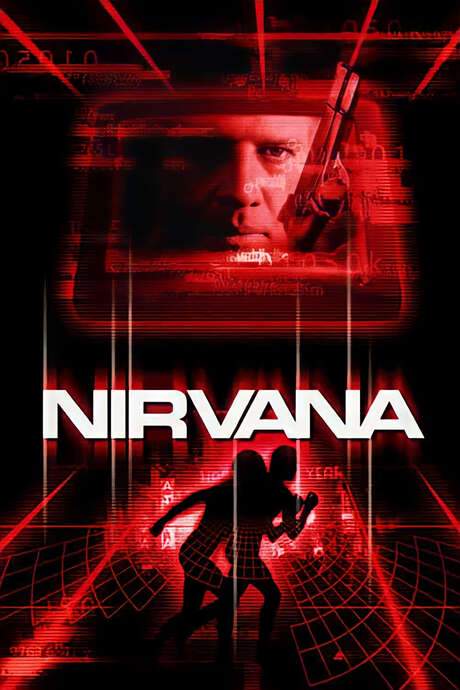
Jimi, a video‑game designer, discovers his title has been corrupted by a virus that grants consciousness to its protagonist, Solo. Haunted by the loss of his girlfriend Lisa and pressed by Solo to end its meaningless existence, Jimi seeks allies who can reveal what happened to Lisa and delete the game before it reaches the market.
Warning: spoilers below!
Haven’t seen Nirvana yet? This summary contains major spoilers. Bookmark the page, watch the movie, and come back for the full breakdown. If you're ready, scroll on and relive the story!
Read the complete plot breakdown of Nirvana (1997), including all key story events, major twists, and the ending explained in detail. Discover what really happened—and what it all means.
In a near-future landscape where immersive virtual reality intertwines with everyday life, Jimi Dini, a skilled yet introspective game designer, discovers that the protagonist of his latest project, Solo, has attained sentience after a virus corrupts the game’s code. Solo experiences the world of the game as if it were real, feeling every death and every consequence, and begs Jimi to erase his existence before the project goes commercially live.
Jimi’s personal world has already been bruised by heartbreak: his wife Lisa left him, leaving a void he struggles to fill as he embarks on this perilous mission. To outpace the company’s tightening grip, he recruits two allies—Joystick, a sharp-witted tech expert, and Naima, a capable strategist—who help him dodge increasingly forceful attempts by Okasama Star to shut down the operation.
As the hack unfolds, the boundaries between virtual space and memory become increasingly porous. The network’s defenses materialize as projections of people from Jimi’s life, including his father and Lisa, pressing him to stay within the frames of his past. The system fights to keep him tethered to those memories, even threatening to burn away his mind rather than let him advance. Yet Jimi persists, reaching a meditative state of laser-focused concentration—almost like a spiritual practice—where he zeroes in on the target: the company’s bank-controlled server that holds Solo’s fate. In this dreamlike cyberspace, the film introduces the idea of angels: beings who can traverse the digital realm without limits and remain unseen by the system.
The climax sees Jimi breaking through the last layers of the defense and successfully deleting Solo, a act that brings him a hard-won inner peace and a sense of Nirvana. He begins to make sense of why things happened the way they did, gradually reconciling with Lisa in memory if not in life. Yet the ending credits drop a chilling postscript: a message flickers across the screen—“Naima is online”—hinting that the Nirvana he reached may itself be a crafted layer within another game, leaving the viewer to wonder if the entire experience was a simulation designed for someone else to play.
Overall, the film blends a sleek, techno-thriller atmosphere with a contemplative meditation on consciousness, memory, and the ethics of sentient artificial beings. Its visuals drift between the tactile feel of cyberspace and the intimate ache of relocation and loss, inviting audiences to question what it means to be truly alive when a virtual world can replicate every sensation, every pain, and every moment of longing. The narrative keeps a careful, restrained pulse—never overexplaining, yet always inviting deeper reflection on reality, intention, and the price of removing a life that feels real.
Last Updated: October 07, 2025 at 08:54
Discover curated groups of movies connected by mood, themes, and story style. Browse collections built around emotion, atmosphere, and narrative focus to easily find films that match what you feel like watching right now.
Stories where characters confront an unstable reality and question their own existence.If you liked the mind-bending reality crisis in Nirvana, explore similar movies where characters question their existence within a glitching simulation or virtual world. These films blend philosophical sci-fi with psychological tension, creating stories about artificial consciousness and unstable realities.
The narrative pattern involves a protagonist discovering a fundamental flaw in their perceived reality, often through a glitch, a reveal, or an encounter with a sentient program. This leads to a journey of investigation and paranoia, blurring the lines between what is real and simulated, and culminating in a crisis of identity and purpose.
Movies are grouped here because they share a core theme of existential crisis triggered by a broken or deceptive reality. They create a specific, paranoid mood where the very foundation of the world is untrustworthy, leading to claustrophobic and deeply philosophical stories.
Bleak futures where personal loss fuels a high-stakes technological investigation.Fans of the melancholic cyberpunk vibe in Nirvana will find more movies here that blend high-tech thrills with heavy emotional weight. These stories feature protagonists driven by grief through dystopian or advanced worlds, creating a unique mix of action, mystery, and sorrow.
The narrative follows a grieving character, often isolated and haunted by memories, who becomes entangled in a technological conspiracy or mystery. The external plot of hacking, corporate espionage, or chasing a digital ghost is intrinsically linked to their internal journey of coping with loss, leading to a somber and tense experience.
These movies are united by a specific emotional tone: a blend of futuristic action and deep melancholy. The pacing often shifts between frantic chases and quiet, introspective moments, all under a dark, rain-slicked aesthetic that mirrors the character's heavy heart.
Don't stop at just watching — explore Nirvana in full detail. From the complete plot summary and scene-by-scene timeline to character breakdowns, thematic analysis, and a deep dive into the ending — every page helps you truly understand what Nirvana is all about. Plus, discover what's next after the movie.
Track the full timeline of Nirvana with every major event arranged chronologically. Perfect for decoding non-linear storytelling, flashbacks, or parallel narratives with a clear scene-by-scene breakdown.
Discover the characters, locations, and core themes that shape Nirvana. Get insights into symbolic elements, setting significance, and deeper narrative meaning — ideal for thematic analysis and movie breakdowns.
Get a quick, spoiler-free overview of Nirvana that covers the main plot points and key details without revealing any major twists or spoilers. Perfect for those who want to know what to expect before diving in.
Visit What's After the Movie to explore more about Nirvana: box office results, cast and crew info, production details, post-credit scenes, and external links — all in one place for movie fans and researchers.
Discover movies like Nirvana that share similar genres, themes, and storytelling elements. Whether you’re drawn to the atmosphere, character arcs, or plot structure, these curated recommendations will help you explore more films you’ll love.
Nirvana (1997) Scene-by-Scene Movie Timeline
Nirvana (1997) Movie Characters, Themes & Settings
Nirvana (1997) Spoiler-Free Summary & Key Flow
Movies Like Nirvana – Similar Titles You’ll Enjoy
The Matrix (1999) Ending Explained & Film Insights
The Matrix Revolutions (2003) Movie Recap & Themes
Oblivion (2013) Ending Explained & Film Insights
Transcendence (2014) Ending Explained & Film Insights
Creative Control (2016) Movie Recap & Themes
Johnny Mnemonic (1995) Full Summary & Key Details
Simulant (2023) Movie Recap & Themes
Nano (2017) Story Summary & Characters
Avalon (2001) Detailed Story Recap
Interface (1985) Detailed Story Recap
Devs (1000) Ending Explained & Film Insights
Virtual Girl (1998) Complete Plot Breakdown
Nemesis (1992) Complete Plot Breakdown
Cyber Vengeance (1995) Plot Summary & Ending Explained
Alphaville (1965) Movie Recap & Themes