Plot Explained Spoilers guaranteed!
Plot Explained

Browse by genre

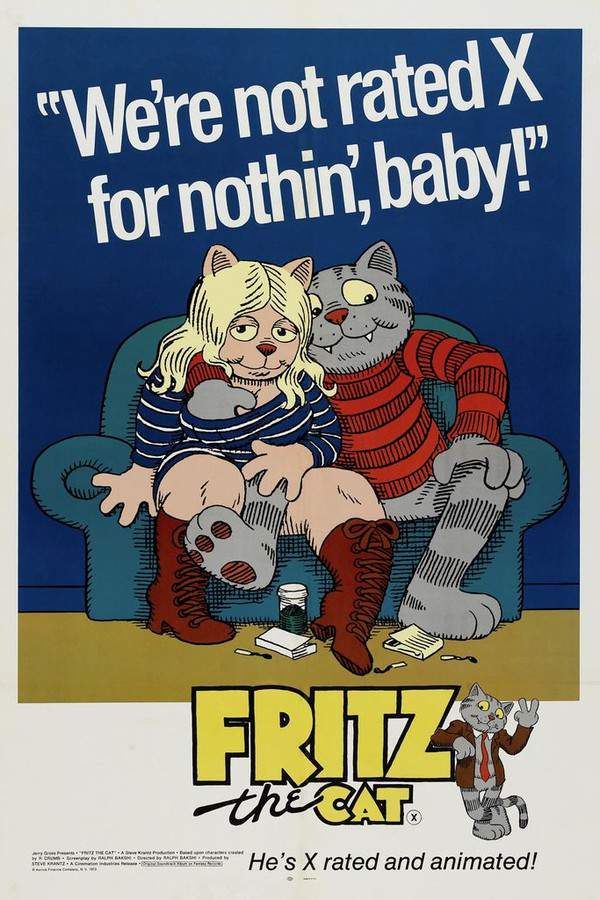
Fritz the Cat (1972) movie poster

Timeline

Fritz the Cat (1972) Timeline Explained – Every Event in Order

Release, runtime and language
1972 · 78 min · English
Loading streaming availability…
Directed by
Ralph Bakshi
Starring
Judy Engles, Charles Spidar, John McCurry, Mary Dean, Phil Seuling, Rosetta LeNoire

A charming and rebellious cat embodies the spirit of the 1960s counterculture. Fritz explores the hypocrisy and excesses of college life, encountering a colorful cast of characters and navigating a changing world. He's a charismatic provocateur, using wit and charm to challenge societal norms and embrace a life of freedom and anarchy.

On this page (7)
  1. 1 Where to watch
  2. 2 Events in order (15)
  3. 3 Timeline questions answered
  4. 4 The book behind the movie
  5. 5 Movie threads
  6. 6 Movies like Fritz the Cat
  7. 7 Every angle
Loading streaming availability…

15 events in order · contains spoilers

Fritz the Cat Timeline: Events in Chronological Order

Every key event of Fritz the Cat (1972) in order, scene by scene, with when and where it takes place. Use it to untangle flashbacks, time jumps and parallel storylines, to refresh your memory before the sequel or to find the exact scene you are thinking of.

  1. Gathering in Washington Square Park

    In the vibrant setting of 1960s Washington Square Park, a spirited group of hippies congregates. They unite to share their beliefs through protest songs and messages that reflect their rebellion against societal norms.

    When
    1960s
    Where
    Washington Square Park
  2. Fritz's Introduction

    Fritz, a charming tabby cat with a strong sense of adventure, joins the lively crowd. With an eye for romance, he and his feline friends embark on a fun-filled quest to impress the attractive ladies nearby.

  3. The Arrival of the Enchanting Trio

    Fritz and his friends attempt to serenade those passing by, but they initially encounter indifference. This all changes with the arrival of a trio of captivating young women who are drawn in by a majestic crow perched nearby.

  4. The Crow's Rebuke

    As the women make dismissive remarks about people of color, the crow retorts sharply. This unexpected response stirs interest, allowing Fritz to step forward and present himself as a misunderstood soul promising enlightening experiences.

  5. Raucous Party at a Friend's Apartment

    The quartet travels to a friend's apartment, where they dive into a lively party. Fritz encourages the girls to join him in festive activities, leading to a wild night filled with vivacious celebrations.

    Where
    Friend's apartment
  6. NYPD Disruption

    As the party heats up, two heavyset NYPD officers barged in to break up the fun. However, the attendees cleverly evade their attempts to restore order, indulging in the chaos instead.

  7. Fritz's Bold Act

    Caught in a cloud of marijuana smoke, Fritz embodies defiance by seizing one officer's gun and firing a shot. This startling act causes a water main to burst, prompting a chaotic exit as guests flee in all directions.

  8. Escape into the Synagogue

    Fritz escapes the fracas and finds himself inside a nearby synagogue, where a congregation celebrates military aid to Israel. In moments of distraction, he slips away, blending into the crowd like a ghost.

    Where
    Synagogue
  9. Destructive Frustration

    Returning to his dormitory, Fritz finds his roommates engrossed in their studies, igniting his dissatisfaction. In a fierce act of rebellion, he burns his books and notes, causing a fire that engulfs his entire building.

    Where
    Dormitory
  10. High-Stakes Encounter in Harlem

    In Harlem's nightlife, Fritz meets Duke the Crow at a pool table. After a close call with the bartender, Duke persuades Fritz to 'bug out,' leading them on a reckless ride that ends with a dramatic near-miss off a bridge.

    Where
    Harlem
  11. Meeting Bertha

    The duo arrives at the apartment of Bertha, a notorious drug dealer, where they indulge in potent cannabis. Loosening his inhibitions, Fritz feels an overwhelming desire to share his revolutionary spirit with the world.

    Where
    Bertha's apartment
  12. Inciting Chaos on the Streets

    Stepping back into the city, Fritz incites a riot that escalates chaos, prompting police and the NY Air National Guard to intervene. The unrest reaches a terrifying climax as F-104 jets drop bombs over Harlem.

    Where
    Streets of Harlem
  13. The Road Trip with Winston

    Fritz finds refuge in an alley, where he reunites with his older fox girlfriend, Winston Schwartz. They embark on a road trip to San Francisco, although Fritz soon abandons Winston when they run out of fuel in the desert.

    Where
    Desert
  14. Betrayal Amidst Revolution

    In an underground hideout, Fritz encounters Blue and Harriet along with two revolutionaries planning to explode a power station. Tensions rise and lead to a violent confrontation resulting in a tragic assault on Harriet.

    Where
    Underground hideout
  15. The Recovery in Los Angeles

    Fritz, gravely injured, finds himself in a Los Angeles hospital, where his companions gather to show their support. Remarkably recovering, he delivers an impassioned speech that reignites love and celebration among his friends.

    Where
    Los Angeles Hospital

Last updated: November 19, 2024 at 17:58

Was this helpful?

Timeline questions answered

Fritz the Cat Timeline Explained: Your Questions Answered

When does it happen, and why in that order? The questions people ask about the chronology of Fritz the Cat (1972): time jumps, flashbacks, cause and effect between scenes and the correct order of events, each answered with spoilers.

Q1

Why does Fritz shoot the police officer at the party?

Fritz shoots the officer in a moment of drug-fueled defiance during a police raid. When two NYPD officers arrive to break up the party, Fritz is caught in a cloud of marijuana smoke. Rather than submitting to arrest, he seizes one officer's gun and fires a shot, which bursts a water main and creates chaos that allows everyone to escape. This act represents Fritz's complete rejection of authority and his willingness to use violence to maintain his freedom.

Foreshadowing: The shooting establishes Fritz's pattern of escalating confrontations throughout the film, showing he will not be constrained by societal rules.

  • fritz
  • police officer
  • shooting
  • party
  • rebellion
Q2

Why does Fritz burn his books and start a fire in his dorm?

Fritz burns his books because he is deeply frustrated with the monotony of academic life. When he returns to his dormitory after the chaotic party and synagogue escape, he finds his roommates completely absorbed in their studies, ignoring him entirely. This triggers his rebellious nature, he torches his notes and books in a dramatic act of rejection against conformity and mainstream education, causing a fire that engulfs the entire building.

Foreshadowing: This moment demonstrates Fritz's contempt for structured society, foreshadowing his later embrace of radical revolution.

  • fritz
  • dormitory
  • fire
  • books
  • rebellion
  • college
Q3

Why does Fritz abandon Winston in the desert?

Fritz abandons his older fox girlfriend Winston Schwartz when their vehicle runs out of fuel in the desert during their road trip to San Francisco. Rather than waiting for help or finding another solution, Fritz simply leaves her behind and continues his journey alone. This reflects his self-centered nature, he consistently uses people for his own gratification and discards them when they no longer serve his desires or when obstacles arise.

Foreshadowing: Winston's abandonment illustrates Fritz's pattern of using people and then moving on, consistent with his treatment of other characters like Bertha.

  • fritz
  • winston
  • desert
  • abandonment
  • road trip
Q4

What happens in the underground hideout with Blue and Harriet?

In the underground hideout, Fritz encounters Blue (a drug-addled rabbit biker), his horse girlfriend Harriet, and two revolutionaries planning to blow up a power station. Tension escalates when Harriet encourages Blue to join her for a meal, but Blue responds with violence. Fritz attempts to intervene but is overpowered, and the situation culminates in a horrific assault on Harriet. Fritz later tries to dismantle the explosives but is caught in the explosion itself, resulting in grave injuries.

Foreshadowing: The assault represents the dark turn of revolutionary idealism into brutality, a theme the film critiques throughout.

  • fritz
  • blue
  • harriet
  • underground hideout
  • assault
  • revolution
Q5

Why does Fritz incite the riot that leads to Harlem being bombed?

After leaving Bertha's apartment following their encounter, Fritz feels an overwhelming desire to spread his revolutionary spirit. He steps onto the city streets and actively incites a riot that escalates dramatically. The chaos prompts police and the NY Air National Guard to intervene, culminating in F-104 jets dropping bombs over Harlem. This represents the catastrophic consequences of Fritz's reckless activism, his actions directly bring violent military force onto a civilian neighborhood.

Foreshadowing: This event demonstrates how Fritz's selfish "revolution" harms innocent people, setting up the film's cynical view of 1960s counterculture.

  • fritz
  • harlem
  • riot
  • bombing
  • military
  • chaos
Q6

What is the significance of Fritz escaping into the synagogue?

Fritz escapes into a synagogue during a moment when the congregation is celebrating America's decision to bolster military aid to Israel. He uses the distraction of their celebration to slip away unnoticed, blending into the crowd. This scene highlights Fritz's opportunistic nature and the film's satirical take on political celebrations, while also showcasing his ability to exploit any situation, even religious gatherings, for his own escape.

Foreshadowing: The scene establishes Fritz as a survivor who will use any social or political moment to his advantage.

  • fritz
  • synagogue
  • escape
  • military aid
  • israel
Q7

How does Fritz survive the power station explosion?

Fritz attempts to dismantle the explosives after having a change of heart about the planned destruction. However, he is caught in the devastating aftermath of the explosion itself, suffering grave injuries. He survives but ends up in a Los Angeles hospital in critical condition, surrounded by his companions who gather to mourn him. His survival is portrayed as somewhat miraculous given the severity of his injuries.

Foreshadowing: The explosion and subsequent hospitalization represent the inevitable consequences of Fritz's violent lifestyle.

  • fritz
  • explosion
  • power station
  • hospital
  • survival
Q8

Why does the film end with Fritz back to his old ways despite being gravely ill?

Despite being gravely injured in the hospital, Fritz makes a remarkable recovery. Once healed, he immediately reverts to his old charming ways, delivering the same passionate speech he used to impress women in New York. This triggers another celebration and romantic escapade. The deputy sheriff's final line, "Ah, poor cat... he was a tough kid, wasn't he?", suggests Fritz's life of reckless hedonism is ultimately tragic. The film implies he cannot change; destruction and hedonism are his inevitable path.

Foreshadowing: This ending reinforces the film's dark, cynical view that some people are incapable of genuine transformation.

  • fritz
  • hospital
  • recovery
  • ending
  • sheriff
  • hedonism
Q9

What is Duke the Crow's role in the story?

Duke the Crow appears in Harlem's nightlife scene, where he plays pool with Fritz at a bar. After a close call with the bartender, Duke warns Fritz to "bug out" and they flee together in a reckless vehicle ride that ends with Fritz nearly driving off a bridge, only Duke saves him at the last second. Duke serves as a guide into Harlem's underground world and represents the dangerous, wild associates Fritz attracts throughout his journey.

Foreshadowing: Duke's warning to "bug out" exemplifies Fritz's pattern of being warned about impending danger but ignoring it until it's too late.

  • duke
  • crow
  • harlem
  • pool
  • bridge
  • warning
Q10

Why does Fritz leave Bertha after their encounter?

Fritz leaves Bertha, the drug dealer, immediately after their passionate encounter because he feels an overwhelming urge to spread his revolutionary message to the world. The potent cannabis loosened his inhibitions and fueled his desire for grand activism. However, his departure also reflects his pattern of using people for immediate gratification and then abandoning them, he has no genuine connection or commitment to anyone.

Foreshadowing: This abandonment mirrors his later abandonment of Winston, showing his inability to maintain meaningful relationships.

  • fritz
  • bertha
  • drug dealer
  • cannabis
  • abandonment
  • revolution
Q11

What is the political message of Fritz the Cat?

The film presents a cynical critique of 1960s counterculture, portraying revolutionary idealism as self-serving and destructive. Fritz claims to seek truth and enlightenment but uses these ideas merely to seduce women and avoid consequences. His actions, inciting riots, promoting violence, abandoning allies, show how pseudo-revolutionary behavior harms real communities. The film suggests the counterculture movement devolved into hedonism and violence, ultimately betraying its stated ideals.

Foreshadowing: The progression from idealistic protest songs in the park to bombs dropping on Harlem illustrates this thematic descent.

  • counterculture
  • 1960s
  • revolution
  • satire
  • politics
  • hypocrisy

Movie threads

More Movies Like Fritz the Cat, by Mood & Story

Curated lists built around what makes Fritz the Cat tick: the same mood, the same kind of story or the same emotional payoff. Each list explains why these movies belong together.

Counterculture Satire Movies Like Fritz the Cat

Rebellious stories that use chaotic energy to tear down social and political norms. If you enjoyed the rebellious energy and chaotic satire of Fritz the Cat, explore more movies that use humor and anarchy to critique society. This collection features films with a similar darkly comedic, confrontational vibe, from gritty animated features to live-action stories of political and social dissent.

  • satirical
  • rebellious
  • anarchic
  • chaotic
  • confrontational
  • provocative
  • Tone: dark, cynical, satirical
  • Pacing: fast, chaotic, relentless
Why these movies?

The story pattern: Narratives often follow a picaresque structure, where a charismatic anti-hero moves through a series of episodic encounters that expose societal absurdities. The journey is less about a linear plot and more about a cumulative assault on institutions, leading to climaxes of chaotic violence or destruction that reflect the ultimate failure or complexity of the revolutionary ideal.

Why they belong together: These movies are grouped by their shared commitment to using satire as a weapon. They possess a specific blend of dark humor, political critique, and a fast, often surreal pacing that creates an overwhelming and provocative viewing experience aimed at challenging the viewer.

Movies With Disillusioned Anti-Heroes Like Fritz the Cat

Charismatic provocateurs whose quests for freedom lead to bittersweet reality. Fans of Fritz the Cat's provocative protagonist will find similar stories here. Discover movies featuring charismatic but troubled characters whose rebellious paths lead to complex, bittersweet endings. These films explore the heavy cost of challenging societal norms and the often painful transition from idealism to reality.

  • confrontational
  • disillusioned
  • charismatic
  • provocative
  • bittersweet
  • rebellious
  • Tone: dark, bittersweet, confrontational
  • Pacing: fast, episodic
Why these movies?

The story pattern: The narrative arc focuses on a character's descent from idealism into a more cynical, realistic understanding of the world. The protagonist's charm and rebelliousness initially bring success or notoriety, but the consequences of their actions—betrayal, violence, exhaustion—accumulate, leading to an ending that is more reflective and bittersweet than triumphant.

Why they belong together: These films share a specific character journey and emotional payoff. They are united by a focus on a provocative central figure, a heavy emotional weight derived from their choices, and a concluding feeling that is complex and bittersweet, acknowledging both the thrill of rebellion and its inevitable costs.

If you liked this

Movies Like Fritz the Cat

Similar movies to Fritz the Cat: the same genre, themes or kind of story. Each one comes with its own plot summary, timeline and ending explained.

Browse all movie summaries

Every angle

Fritz the Cat (1972) Explained: Plot, Timeline & Characters

Everything about Fritz the Cat in one place: what happens in the plot summary, the timeline in chronological order, the characters and meaning and a spoiler-free summary. What's After the Movie adds the cast, box office and post-credit scenes.

Coming soon on iOS and Android

The Plot Explained Movie Summary App

Plot summaries, endings explained and timelines on your phone. Catch up on any movie in minutes, save your favorites and never miss a twist again.

Be the first to know when we launch. Your email stays private, always.

Learn more about the app