Plot Explained Spoilers guaranteed!
Plot Explained

Browse by genre

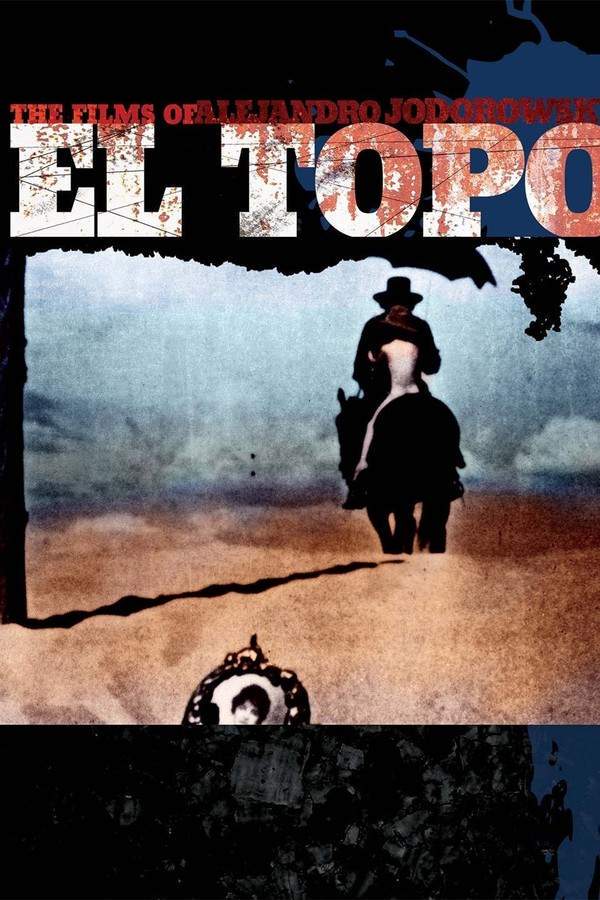
El Topo (1970) movie poster

Plot Summary

El Topo (1970) Plot Summary Explained

Release, runtime and language
1970 · 125 min · Spanish
Loading streaming availability…
Starring
Alfonso Arau, Alejandro Jodorowsky, Brontis Jodorowsky, Ali Junco, Federico Gonzáles, Gerardo Zepeda

A mysterious gunslinger, draped in black, journeys through a desolate and surreal Old West. Seeking redemption, he encounters a land consumed by sin and decay, reminiscent of Sodom and Gomorrah. He faces a series of trials and violent confrontations, confronting both external enemies and his own inner turmoil as he searches for enlightenment in this lawless realm.

On this page (6)
  1. 1 Where to watch
  2. 2 What happens: full plot
  3. 3 Plot questions answered
  4. 4 Movie threads
  5. 5 Movies like El Topo
  6. 6 Every angle
Loading streaming availability…

Full plot summary · contains spoilers

What Happens in El Topo: Full Plot Summary

The whole story of El Topo (1970) explained, from the opening scene to the final frame: every key event, every twist and what it all adds up to. Read it as a quick recap before the sequel, to check a scene you missed, or to finally understand what really happened.

El Topo, a figure shrouded in mystery, journeys through a vast desert while evoking poignant emotions as he rides alongside his young son, Hijo, who is barely dressed apart from a hat and a pair of moccasins. Their trek brings them to a lone pole where El Topo presents Hijo with a teddy bear and a hand mirror that holds a picture of his mother. In a moment of profound meaning, El Topo explains to Hijo that he has now reached the age of seven and is thus a man, urging him to bury his cherished toys—his mother's portrait and the teddy bear—beneath the sands. As Hijo buries his first cherished belongings, El Topo enchants the atmosphere with his flute melodies.

However, their journey soon takes a dark turn as they stumble upon a town that has been mercilessly ravaged. Consumed with rage, El Topo sets out on a vengeful quest to hunt down those responsible for the massacre. On their travels, they encounter three bandits who threaten them; El Topo skillfully deals with them, leaving only one alive. Through a tense confrontation, the surviving bandit reveals that a Colonel, with five others, has orchestrated the chaos and is residing at the nearby Franciscan mission.

The situation escalates when one of the bandits, now hidden in the cathedral town, gruesomely slaughters several townsfolk, while the others engage in illicit activities with the monks. El Topo arrives, delivering deadly justice by slaying two bandits and castrating the Colonel, which drives the tyrant to take his own life. In the aftermath, the townspeople rise and eliminate the remaining three bandits. Following this bloody encounter, El Topo makes a heart-wrenching decision to leave his son with the monks and departs with a woman named Mara, who had previously been enslaved by the Colonel.

Mara, a compelling character, inspires El Topo to confront and defeat four legendary gun masters in his pursuit to become the most renowned gunman in the land. Each master's philosophy or religion provides El Topo with vital lessons as he challenges them. Surprisingly, El Topo prevails not through sheer skill, but rather through cunning and sheer luck.

After securing his first victory, a mysterious black-clad woman finds them and guides El Topo to the remaining masters. As his wins accumulate, so too does El Topo's inner turmoil, yet Mara's manipulation keeps the fire of ambition alive within him. Ultimately, having triumphed over all four masters, he becomes engulfed in guilt and remorse, which leads him on a poignant pilgrimage to the sites of his violent encounters. He discovers that the first master’s grave is adorned with honeycombs and buzzing bees, the second covered with a neat stack of sticks, and the third engulfed in flames.

The unnamed woman confronts El Topo yet again, inflicting wounds reminiscent of the stigmata. In a devastating twist, Mara betrays him, riding off with the mysterious woman, leaving El Topo to collapse, only to be carried away by a group of deformed outcasts.

Upon awakening in a cave, El Topo learns that these outcasts, who see him as a God-like figure during his slumber, have been fervently caring for him. Realizing their state—trapped in caves with no means of escape due to their deformities—El Topo is reborn with a newfound purpose. Determined to aid them, he strives to reach an exit while forming a romantic relationship with a dwarf woman among the outcasts. To support their escape, he performs for the local depraved cultists to raise money for dynamite.

Meanwhile, Hijo matures into a young monk and arrives in the same town expecting to serve as its new priest. However, he is immediately disheartened by the corrupted version of religion practiced by the cultists. In a surprising twist of fate, El Topo unknowingly approaches Hijo with a proposal to marry him to the dwarf woman, inadvertently bringing joy to Hijo, who relishes that love still exists. Yet, once the recognition dawns, Hijo feels a surge of rage and contemplates vengeance on the man who abandoned him, choosing instead to wait until the outcasts are freed.

As the project to excavate a tunnel progresses, impatience grips Hijo, leading him to join El Topo in hastening the monumental task. Just as Hijo is about to give up hope, El Topo breaks through, unearthing the path to freedom. However, when the outcasts pour into the town, they are met with a vicious hail of gunfire from the cultists, tragically threatening all that he has fought for.

In a desperate act of defiance, El Topo witnesses the slaughter of his newfound community, ultimately succumbing to his own wounds. Ignoring his agony, he exacts vengeance by taking down the cultists and, in a final act of self-sacrifice, ignites an oil lamp, leading to his own immolation. As this tragedy unfolds, his beloved gives birth simultaneously, and together with Hijo, they lay him to rest, creating a grave adorned with the same honeycombs as the first gun master’s final resting place. The image of Hijo riding away with his newborn sibling in his father's iconic black gunfighter attire echoes the legacy of El Topo, embedded forever in the sands of time.
Last updated: November 03, 2024 at 15:16

Was this helpful?

Plot questions answered

El Topo Plot Explained: Your Questions Answered

The questions people ask most about El Topo (1970): what happens in the confusing scenes, why the characters do what they do, the twists, hidden details and what the ending means. Each answer contains spoilers.

Q1

Why does El Topo leave his son with the monks?

After exacting revenge on the Colonel and the bandits who slaughtered the town, El Topo decides to leave his young son Hij0 with the monks at the monastery. This decision stems from his realization that his path of violence and vengeance is not one he can share with a child. He chooses to depart with Mara, a woman he rescued from the Colonel's enslavement, because she ignites a new ambition within him to challenge the legendary gun masters. El Topo believes he must pursue this transformative journey alone, leaving Hij0 in what he hopes will be a safer, more peaceful environment surrounded by the monks.

Foreshadowing: Earlier, El Topo performed a rite of passage for Hij0, treating him as a man and burying his childhood toys, suggesting he was preparing his son for separation.

  • el top0
  • hij0
  • monks
  • abandonment
  • revenge
  • maria
Q2

How does El Topo defeat the four legendary gun masters?

El Topo defeats all four gun masters not through superior shooting skill, but through cunning and sheer luck. Each master possesses a different philosophy or religion that El Topo must first understand and exploit. Rather than facing them in straightforward duels, he uses psychological manipulation and takes advantage of unexpected circumstances. This is significant because it establishes that El Topo's journey is less about being the best marksman and more about evolving through encounters with different belief systems. His victories are opportunistic rather than demonstrations of pure martial prowess.

  • gun masters
  • duels
  • cunning
  • luck
  • philosophy
  • religion
Q3

Why does Mara betray El Topo?

Mara betrays El Topo by riding away with the mysterious black-clad woman who has been guiding them to the remaining gun masters. The exact motivation for this betrayal is left ambiguous, but it occurs after El Topo has become overwhelmed with guilt and remorse following his victories over the masters. Mara appears to be motivated by ambition or perhaps a deeper connection with the mysterious woman. Her betrayal leaves El Topo emotionally devastated, leading to his collapse and subsequent rescue by the deformed outcasts.

  • mara
  • betrayal
  • mysterious woman
  • desertion
  • guilt
Q4

What do the gun masters' graves symbolize?

Each of the four gun masters' graves bears a distinctive symbolic element: the first master's grave is adorned with honeycombs and buzzing bees, the second is covered with a neat stack of sticks, and the third is engulfed in flames. These symbols likely represent the philosophical teachings or spiritual nature of each master. The honeycombs at the first master's grave, which later reappears at El Topo's own grave, may symbolize sweetness, community, or rebirth. The sticks suggest structure or perhaps preparation. The flames could represent transformation or destruction. El Topo's pilgrimage to these graves shows his attempt to reconcile with the violence he has committed and find meaning in his actions.

  • grave sites
  • symbolism
  • honeycombs
  • bees
  • sticks
  • flames
  • philosophy
Q5

Who is the mysterious black-clad woman?

The mysterious black-clad woman appears multiple times throughout El Topo's journey, guiding him toward the remaining gun masters after each victory. She inflicts wounds on El Topo that resemble the stigmata, the wounds of Christ's crucifixion. She ultimately leaves with Mara, suggesting she may represent a spiritual or transcendent force. Her exact identity remains ambiguous, she could be interpreted as a spiritual guide, a manifestation of fate, or perhaps a figure representing divine judgment. The stigmata wounds she bestows upon El Topo foreshadow his eventual sacrificial death.

  • mysterious woman
  • stigmata
  • spiritual guide
  • black clothing
Q6

Why do the deformed outcasts treat El Topo as a god?

When El Topo collapses from his emotional devastation after Mara's betrayal, the deformed outcasts find him and care for him during his slumber. They begin to view him as a god-like figure, likely because they see him as a savior who will free them from their cave prison. The outcasts, who have physical deformities that have isolated them from society, are desperate for liberation. El Topo's arrival represents hope to them, and they enthusiastically care for him in anticipation that he will help them escape their underground existence.

  • deformed outcasts
  • cave
  • worship
  • liberation
  • escape
Q7

Why does El Topo sacrifice himself by self-immolation?

After the outcasts emerge from the tunnel into the town, they are immediately met with vicious gunfire from the cultists, resulting in the tragic slaughter of the community El Topo fought to protect. Witnessing this massacre, and having already sustained mortal wounds, El Topo takes desperate vengeance against the cultists. In his final act, he ignites an oil lamp, causing himself to burn alive. This self-sacrifice mirrors the path of redemption he has sought throughout his journey. By giving his life to avenge the outcasts and destroy the corrupt cultists, El Topo achieves the spiritual enlightenment he has been searching for, transforming from a violent avenger into a self-sacrificing savior.

  • self-immolation
  • sacrifice
  • redemption
  • cultists
  • death
  • vengeance
Q8

Why does Hij0 become a monk and what happens when he meets his father?

Hij0 matures into a young monk and arrives in the town expecting to serve as its new priest, only to discover the corrupted version of religion practiced by the local cultists. When El Topo unknowingly approaches him to arrange a marriage between himself and the dwarf woman, Hij0 initially experiences joy at the possibility of love existing. However, once he realizes who the man is, the father who abandoned him, Hij0 feels a surge of rage and contemplates vengeance. He ultimately chooses to wait, deciding to help free the outcasts first, showing his moral development despite his desire for revenge.

  • hij0
  • monk
  • priest
  • cultists
  • revenge
  • father son
Q9

Why does the Colonel kill himself after being castrated?

After El Topo tracks down the bandits at the cathedral town, he delivers deadly justice by killing two bandits and then castrating the Colonel in a brutal act of retribution. Overwhelmed by the physical pain, profound humiliation, and likely despair at having his power and identity destroyed, the Colonel takes his own life. His suicide represents the ultimate result of tyranny when confronted with the same violence and brutality he inflicted upon others, the Colonel, who ordered the massacre of the town and enslaved Mara, cannot survive the loss of his masculinity and power.

  • colonel
  • castration
  • suicide
  • justice
  • tyranny
  • humiliation
Q10

What is the significance of the ending scene with Hij0 riding away?

In the final moments, as El Topo succumbs to his wounds and is consumed by flames, his beloved dwarf woman gives birth to his child. Hij0 then lays El Topo to rest, creating a grave adorned with honeycombs, identical to the first gun master's grave. The film concludes with Hij0 riding away with his newborn sibling, wearing El Topo's iconic black gunfighter attire. This image represents the cyclical nature of the story: violence, redemption, and legacy. El Topo's journey has come full circle, and his son now carries forward his father's mantle, suggesting that the patterns of the past will continue, though perhaps with the possibility of change represented by the newborn child.

  • ending
  • cyclical
  • legacy
  • honeycombs
  • newborn
  • hij0 riding away
Q11

Why does El Topo perform for the cultists to raise money?

To support the outcasts' escape plan, El Topo begins performing for the local depraved cultists in order to raise money for dynamite needed to excavate the tunnel. This represents a profound moral compromise for El Topo, as he must engage with the very corrupt and depraved forces that oppress the outcasts. He essentially becomes a performer for the enemy to fund the means of liberation for those he has come to protect. This sacrifice further demonstrates his transformation from a solitary violent figure to someone willing to humble himself for the sake of others.

  • cultists
  • dynamite
  • tunnel
  • performance
  • escape
  • money

Movie threads

More Movies Like El Topo, by Mood & Story

Curated lists built around what makes El Topo tick: the same mood, the same kind of story or the same emotional payoff. Each list explains why these movies belong together.

Surreal Spiritual Journeys like in El Topo

Characters traverse symbolic, dream-like landscapes seeking enlightenment or judgment. If you liked the hallucinatory quest for meaning in El Topo, you'll find similar cinematic pilgrimages here. Discover movies that blend stark, mythic landscapes with deep philosophical questions, creating a unique and challenging viewing experience focused on enlightenment.

  • surreal
  • mythic
  • philosophical
  • hallucinatory
  • spiritual
  • bleak
  • Tone: mythic, bleak, philosophical
  • Pacing: variable, contemplative
Why these movies?

The story pattern: These narratives follow a central figure on a path through a symbolic world. The plot is often less about conventional goals and more about a series of trials or encounters that represent stages of an internal transformation, leading to a profound, often ambiguous personal revelation.

Why they belong together: These films are grouped by their shared commitment to using cinematic language for spiritual allegory. They prioritize mood, symbolism, and philosophical inquiry over linear plotting, offering a bleak but profound viewing experience centered on existential themes.

Violent Redemption Stories like in El Topo

Graphic violence serves as the crucible for a protagonist's search for atonement. For viewers who appreciated El Topo's use of stark violence to explore themes of sin and salvation. This collection features movies where bloody confrontations are central to a character's difficult and emotionally heavy journey toward a form of redemption.

  • violent
  • bleak
  • melancholic
  • philosophical
  • mythic
  • grueling
  • Tone: dark, bleak, serious
  • Pacing: variable, deliberate
Why these movies?

The story pattern: Stories typically begin with a protagonist steeped in or surrounded by violence. Their journey is a series of confrontations that force them to confront their own nature. The path to redemption is paved with further violence, leading to a conclusion that is morally complex and emotionally draining, rarely offering simple forgiveness.

Why they belong together: These films are connected by their unflinching portrayal of violence not as mere spectacle, but as a narrative tool to explore profound themes of guilt, sacrifice, and the possibility of grace in a fallen world. They share a dark tone and high emotional intensity.

If you liked this

Movies Like El Topo

Similar movies to El Topo: the same genre, themes or kind of story. Each one comes with its own plot summary, timeline and ending explained.

Browse all movie summaries

Every angle

El Topo (1970) Explained: Plot, Timeline & Characters

Everything about El Topo in one place: what happens in the plot summary, the timeline in chronological order, the characters and meaning and a spoiler-free summary. What's After the Movie adds the cast, box office and post-credit scenes.

Coming soon on iOS and Android

The Plot Explained Movie Summary App

Plot summaries, endings explained and timelines on your phone. Catch up on any movie in minutes, save your favorites and never miss a twist again.

Be the first to know when we launch. Your email stays private, always.

Learn more about the app